Hands-on Instrumentation Course
Hands-on Instrumentation Course
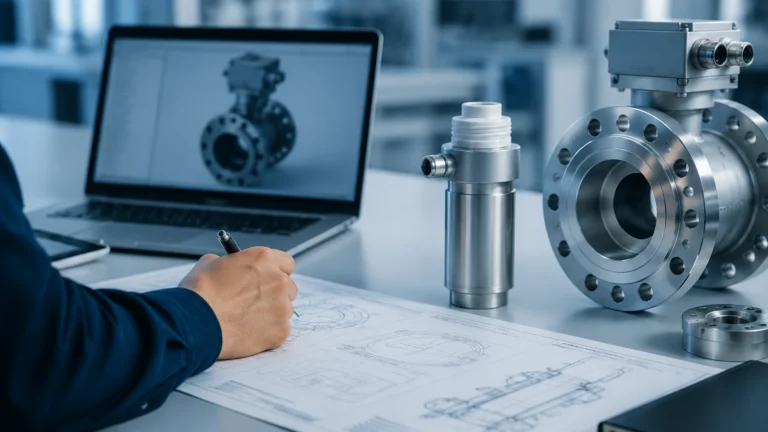
In the modern industrial landscape, the accuracy of process control systems depends heavily on the proficiency of the engineers and technicians who install, calibrate, and maintain them. While theoretical knowledge provides the foundation, a hands-on instrumentation course is essential for bridging the gap between classroom physics and field-ready expertise. This is particularly true in the field of level measurement, where environmental variables such as vapor, turbulence, and corrosive media can significantly impact sensor performance.
For professionals managing water treatment, chemical processing, or oil and gas facilities, understanding the nuances of different measurement technologies is the first step toward operational efficiency. This guide explores the core principles of industrial level measurement and the practical skills required to manage these systems effectively.
Principles of Level Measurement Technologies
Before selecting or installing an instrument, one must understand the physical principles that govern its operation. In a professional hands-on instrumentation course, students typically rotate through several primary technologies used by manufacturers like Welk.
1. Radar Level Measurement (Non-Contact)
Radar level meters operate on the Time of Flight (ToF) principle. The device emits high-frequency electromagnetic waves (typically in the 26 GHz or 80 GHz range) toward the medium's surface. These waves reflect off the surface and return to the sensor. The distance is calculated based on the time interval between emission and reception.
* Advantages: Unaffected by temperature, pressure, or vacuum. Highly accurate over long distances (up to 30 meters or 98.4 feet).
* Key Consideration: The dielectric constant ($ε_r$) of the material is critical. Materials with low dielectric constants, such as certain oils, reflect less energy, requiring more sensitive high-frequency radar units.
2. Ultrasonic Level Sensors
Ultrasonic sensors use sound waves rather than electromagnetic waves. The transducer emits an ultrasonic pulse that bounces off the liquid surface. Because sound speed is affected by air temperature, these sensors almost always include an integrated temperature sensor for compensation.
* Advantages: Cost-effective for water and wastewater applications.
* Key Consideration: Ultrasonic waves can be absorbed by foam or deflected by heavy vapor, making them less suitable for volatile chemical tanks than radar.
3. Hydrostatic Level Transmitters
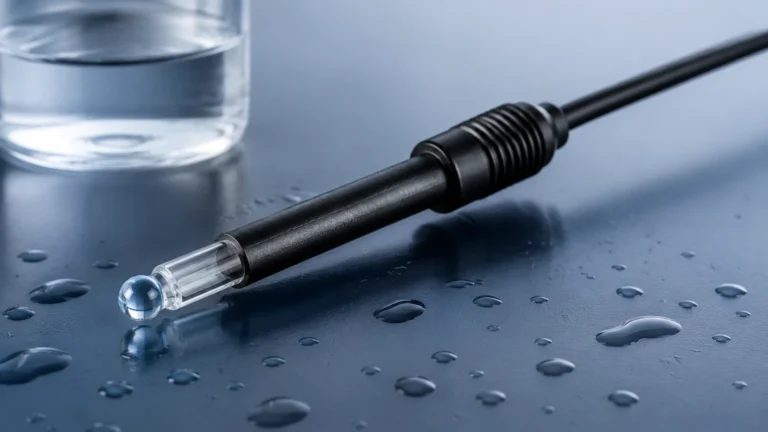
Hydrostatic measurement relies on the relationship between the height of a liquid column and the pressure it exerts at the base. The formula $P = ρgh$ (Pressure = Density × Gravity × Height) is used to derive the level.
* Advantages: Simple to install in vented tanks; highly reliable for deep wells or reservoirs.
* Key Consideration: Any change in the liquid's density (due to temperature fluctuations or concentration changes) will introduce errors unless the transmitter is recalibrated or compensated.
4. Magnetic Level Gauges
These are mechanical-visual systems that use a float containing a magnet. As the float rises or falls with the liquid level, it flips magnetic flags or moves an external indicator. They are often used in high-pressure boilers or hazardous environments where electronic displays might be difficult to view or power.
The Value of a Hands-on Instrumentation Course
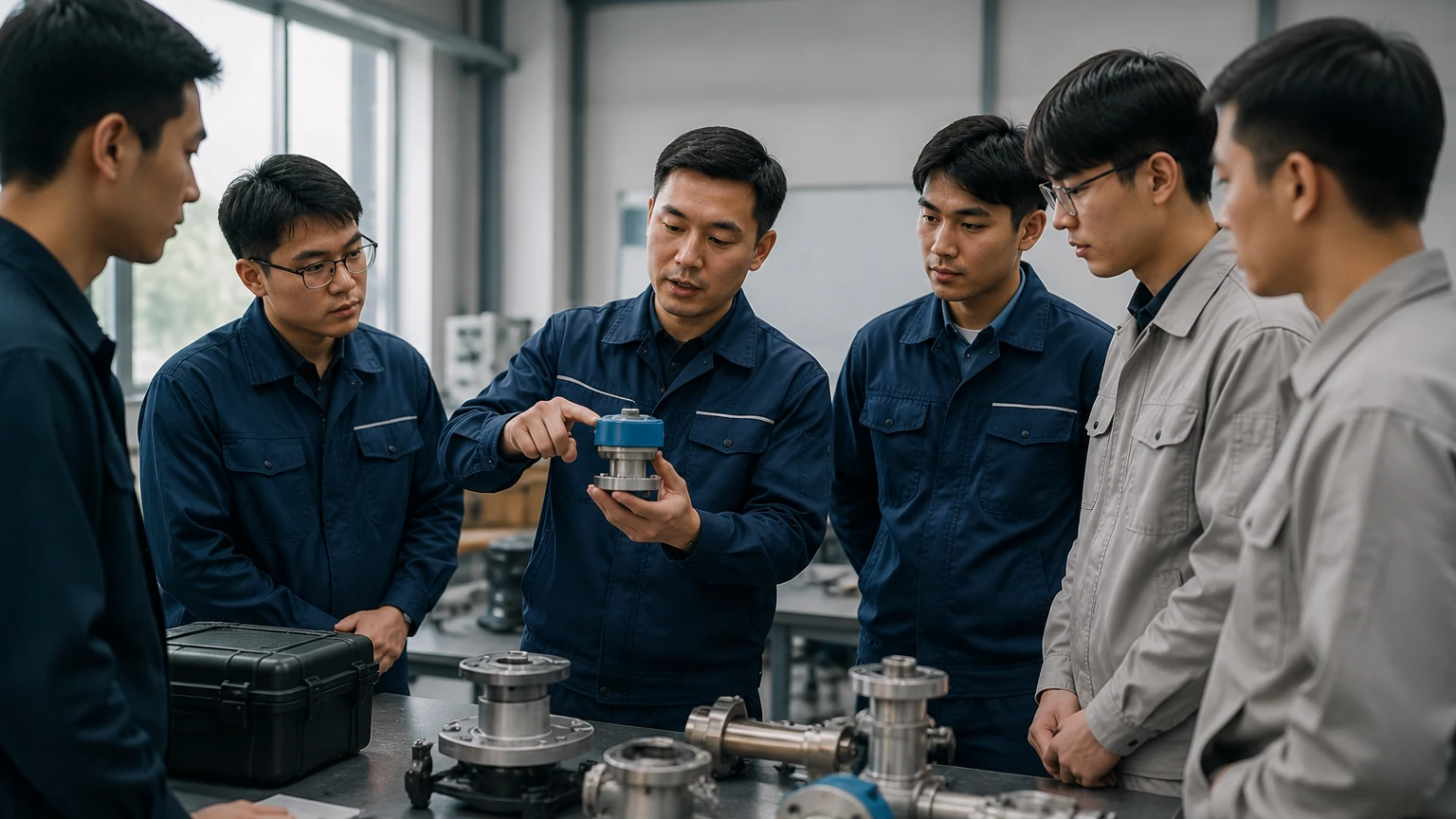
Transitioning from theory to practice requires a deep dive into the "how-to" of field instrumentation. A structured hands-on instrumentation course focuses on four critical areas:
1. Wiring and Loop Testing: Technicians must learn to wire 4-20mA HART loops correctly, ensuring power supplies are adequate for the total loop impedance.
2. Configuration and Calibration: Modern instruments are rarely "plug-and-play." Setting the 4mA (Empty) and 20mA (Full) points, adjusting damping values, and configuring the "blocking distance" (dead zone) are skills best learned through physical interaction with the hardware.
3. Signal Troubleshooting: Using an oscilloscope or a HART communicator to identify signal noise or intermittent echoes is a core competency developed in practical workshops.
4. Safety Protocols: Understanding the difference between Intrinsically Safe (IS) and Explosion-Proof (XP) installations is vital for hazardous area operations.
For those seeking to source hardware that supports these advanced industrial standards, visiting the Main Page of a professional manufacturer provides insight into the technical specifications required for modern control loops.
Technology Selection Table
Choosing the right instrument depends on the specific process conditions. The following table provides a general guideline for technology selection.
| Application Criteria | Radar (80 GHz) | Ultrasonic | Hydrostatic | Magnetic Gauge |
| :— | :— | :— | :— | :— |
| Accuracy | ±2 mm | ±0.25% of range | ±0.1% to 0.5% | ±5 mm to 10 mm |
| Max Temperature | Up to +250°C | Up to +80°C | Up to +100°C | Up to +400°C |
| Pressure | Vacuum to 4 MPa | Atmospheric | Submersible | Up to 16 MPa |
| Foam Presence | Good (with 80GHz) | Poor | Excellent | Excellent |
| Corrosive Media | Excellent (PTFE) | Good (PVDF) | Excellent (SS316L) | Good |
| Installation Type | Top-mount | Top-mount | Bottom/Side-mount | Side-mount |
Practical Installation Considerations
Even the most expensive radar meter will fail if installed incorrectly. A hands-on instrumentation course emphasizes the following installation best practices:
Avoiding Obstructions
Instruments that rely on wave reflection (Radar and Ultrasonic) must have a clear path to the liquid surface. Internal tank structures such as ladders, agitators, or heating coils can create "false echoes." In a practical setting, engineers learn to use "False Echo Suppression" software to tell the instrument to ignore these fixed reflections.
The Nozzle Effect
If a sensor is mounted on a tall, narrow nozzle, the signal can reflect off the nozzle walls before it even enters the tank. This is known as the "ringing effect." Technicians are taught to ensure the sensor face extends slightly below the nozzle or to use instruments with narrower beam angles (such as 80 GHz radar) to minimize wall interference.
Dead Zone Management
Every non-contact sensor has a "dead zone" or "blocking distance" (typically 0.1 to 0.5 meters). If the liquid level rises into this zone, the sensor cannot provide a reading. Proper mounting requires calculating the maximum possible fill level and ensuring the sensor is positioned high enough to avoid this range.
Hydrostatic Venting
For hydrostatic transmitters in vented tanks, the reference side of the pressure diaphragm must be open to the atmosphere. This is usually achieved via a small vent tube in the cable. If this tube is kinked or blocked by moisture, the readings will drift as atmospheric pressure changes.
Limitations and Environmental Factors
No single technology is a universal solution. Understanding limitations is a key outcome of any hands-on instrumentation course.
* Vapor and Gas Layers: In chemical tanks, heavy vapors can change the speed of sound, causing ultrasonic sensors to report incorrect levels. Radar is generally immune to this as electromagnetic waves are not significantly slowed by gas density.
* Turbulence: Rapidly mixing liquids create a chaotic surface. This can be mitigated by using a "stillpipe" or "stilling well"—a vertical pipe that protects the sensor from waves while allowing the level to equalize. Radar and ultrasonic sensors can both be used inside stillpipes.
* Build-up: In wastewater or slurry applications, material can build up on the sensor face. While some radar units can "see through" thin layers of build-up, ultrasonic sensors will eventually fail as the transducer becomes muffled.
Frequently Asked Questions (FAQ)
Q: How often should industrial level meters be calibrated?
A: While many solid-state radar meters are designed for long-term stability, it is standard practice to perform a verification check annually. In regulated industries like pharmaceuticals, calibration may be required every six months.
Q: Can I use an ultrasonic sensor on a vacuum tank?
A: No. Sound waves require a medium (air or gas) to travel. In a vacuum, there is no medium to carry the sound pulse. Radar is the preferred choice for vacuum applications.
Q: What is the difference between a level transmitter and a level switch?
A: A level transmitter provides a continuous measurement (e.g., 0% to 100% full), whereas a level switch provides a point-level alert (e.g., "Tank is Full" or "Tank is Empty").
Q: Does the color of the liquid affect radar measurement?
A: No. Radar is an electromagnetic technology and is unaffected by the optical properties (color, transparency) of the liquid. It is only concerned with the dielectric constant and surface condition.
Conclusion
Mastering industrial instrumentation requires a combination of technical knowledge and practical application. By participating in a hands-on instrumentation course, engineers gain the confidence to select the right technology, perform precise installations, and troubleshoot complex process issues. Whether you are dealing with the precision of 80 GHz radar or the rugged reliability of hydrostatic transmitters, the goal remains the same: achieving accurate, repeatable data for safer and more efficient industrial operations.
For more detailed technical specifications and to explore a full range of level measurement solutions, please visit the Welk Main Page.