Water Quality Monitoring Tools
Water Quality Monitoring Tools
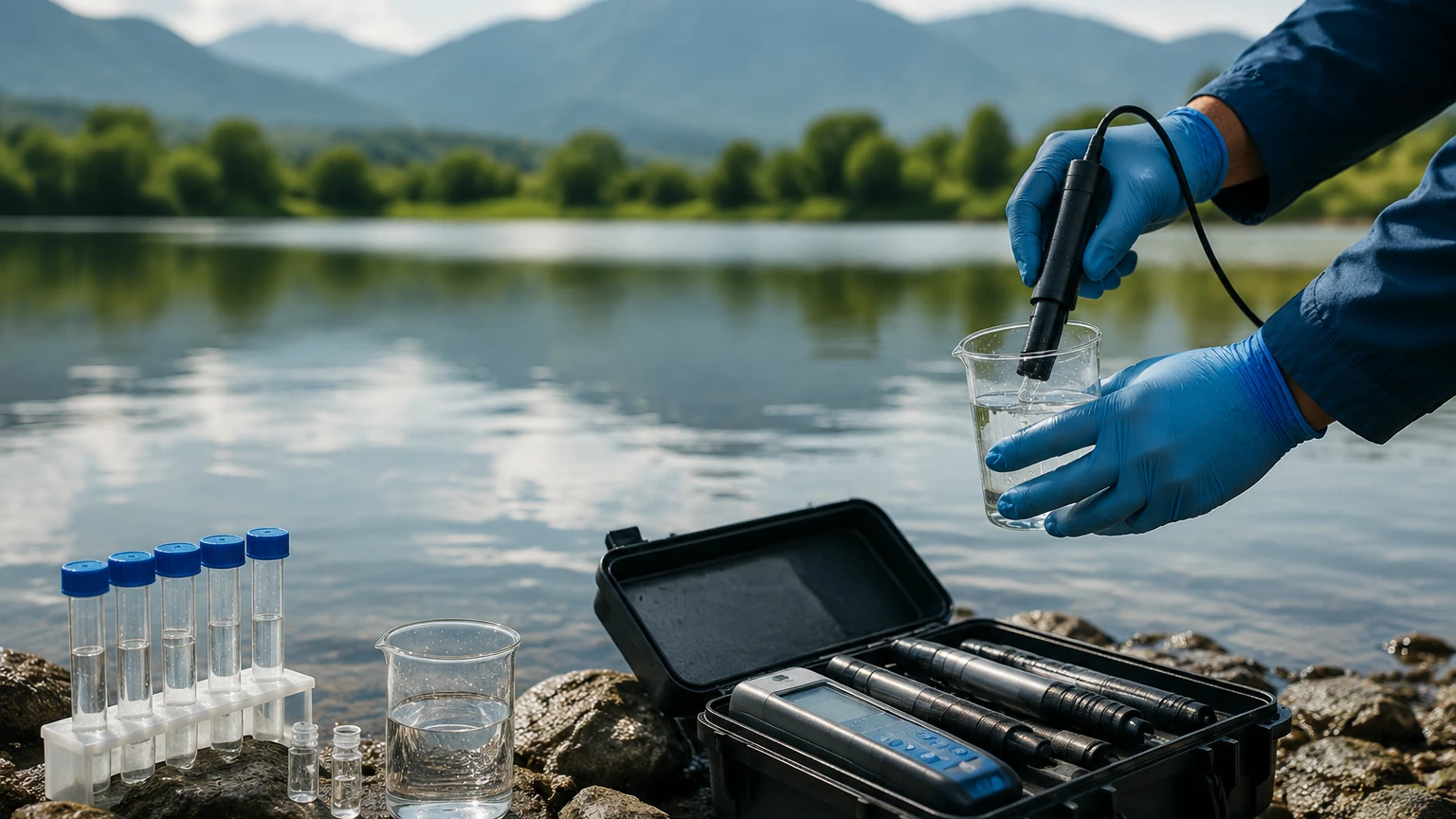
In industrial and municipal water management, the term "water quality monitoring tools" encompasses a diverse array of sensors and instruments designed to ensure that water meets specific safety, environmental, and process standards. While chemical sensors (such as pH, ORP, and dissolved oxygen probes) are essential for analyzing the composition of water, physical measurement instruments—particularly level and flow sensors—form the backbone of any automated monitoring system. Precise level measurement is critical for managing chemical dosing, monitoring reservoir capacities, and preventing overflows in wastewater treatment plants.
Effective water management requires a holistic approach where level measurement data is integrated with analytical quality data. This guide provides a technical overview of the level measurement technologies used as foundational water quality monitoring tools, explaining their principles, selection criteria, and practical application in industrial environments.
The Role of Level Instrumentation in Water Quality Monitoring
Level measurement instruments are indispensable in water quality applications for several reasons. First, they facilitate accurate chemical dosing. To maintain the correct pH or disinfectant levels, dosing pumps must know the exact volume of chemical reagents available in storage tanks. Second, in wastewater treatment, level sensors monitor the flow through flumes and weirs, which is essential for calculating the total pollutant load being processed.
Furthermore, many water quality monitoring tools are sensitive to immersion depth or flow velocity. Hydrostatic and ultrasonic sensors provide the necessary data to ensure that analytical probes are positioned correctly and that the overall system is operating within its designed hydraulic parameters.
Core Technologies and Measurement Principles
Before selecting a specific instrument, it is vital to understand the physics behind the measurement. Each technology has distinct advantages and limitations based on the physical properties of the water and the environment of the installation.
1. Radar Level Measurement (Non-Contact)
Radar level meters utilize high-frequency microwave pulses (typically in the 26GHz or 80GHz range). These pulses are emitted from the antenna, reflect off the surface of the water, and return to the sensor. The instrument measures the time-of-flight to calculate the distance to the liquid surface.
* Principle: $D = (c \times t) / 2$, where $D$ is the distance, $c$ is the speed of light, and $t$ is the transit time.
* Advantages: Because radar waves do not require a medium for propagation, they are unaffected by air temperature, pressure, or the presence of steam and dust. This makes them ideal for chemical storage tanks and outdoor reservoirs where environmental conditions fluctuate.
* Applications: Corrosive chemical tanks, large-scale wastewater basins, and high-precision industrial processes.
2. Ultrasonic Level Sensors
Ultrasonic sensors function similarly to radar but use sound waves instead of microwaves. The sensor emits an ultrasonic pulse that reflects off the water surface. The time taken for the echo to return is used to determine the level.
* Principle: Distance is calculated based on the speed of sound. Since the speed of sound changes with air temperature, these sensors usually include an integrated temperature probe for automatic compensation.
* Advantages: Cost-effective and non-contact, reducing maintenance requirements compared to submerged sensors.
* Limitations: Ultrasonic waves can be absorbed by heavy foam or scattered by high turbulence. They are also sensitive to significant temperature gradients in the air space above the liquid.
3. Hydrostatic Level Transmitters
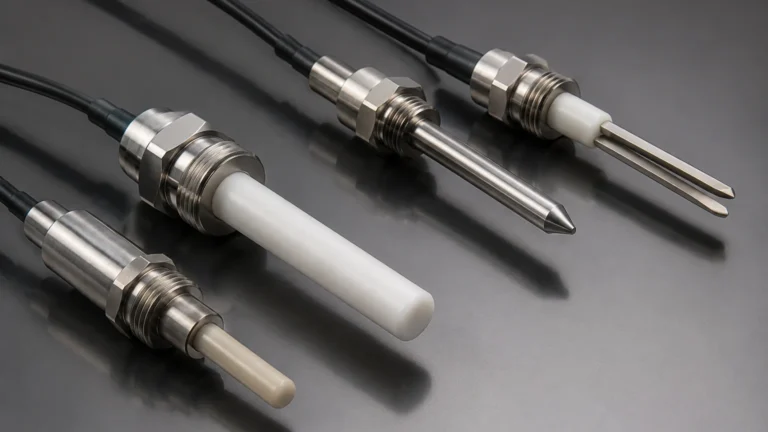
Hydrostatic measurement is a contact-based method that determines the level by measuring the pressure exerted by the liquid column at a specific depth. A submersible pressure transducer is lowered to the bottom of the tank or well.
* Principle: $P = \rho \cdot g \cdot h$, where $P$ is pressure, $\rho$ is the density of the liquid, $g$ is gravity, and $h$ is the height of the liquid column.
* Advantages: Simple to install in deep wells, boreholes, and open reservoirs. They provide a direct measurement of the liquid mass, which is useful in applications where the density is constant.
* Limitations: Changes in liquid density (due to temperature or concentration changes) will affect accuracy. The sensor is also in constant contact with the media, requiring compatible materials for corrosive liquids.
Selecting Water Quality Monitoring Tools: A Comparison
Choosing the right level sensor depends on the specific requirements of the water treatment process. The following table provides a comparison of the primary technologies used in the industry.
| Feature | Radar Level Meter | Ultrasonic Sensor | Hydrostatic Transmitter |
| :— | :— | :— | :— |
| Measurement Type | Non-contact (Microwave) | Non-contact (Sound) | Contact (Pressure) |
| Accuracy | High (±1mm to ±3mm) | Moderate (±0.25% of range) | Moderate to High (±0.1% to 0.5%) |
| Ideal Media | Chemicals, Sludge, Water | Clean Water, Open Channels | Deep Wells, Clean Water |
| Impact of Foam | Low (80GHz models) | High (Can lose signal) | None (Measures pressure) |
| Impact of Steam/Vapor | None | High (Affects sound speed) | None |
| Maintenance | Very Low | Low | Moderate (Cleaning required) |
| Typical Range | Up to 30m – 120m | 0.3m to 15m | 1m to 200m+ |
For engineers looking to integrate these technologies into a broader automation system, it is helpful to Review product options and application support on our Main Page to ensure compatibility with existing PLC or SCADA frameworks.
Installation Considerations for Water Quality Applications
Proper installation is just as important as selecting the correct technology. Incorrect mounting can lead to false readings, signal loss, or premature equipment failure.
Avoiding the Dead Zone
Every non-contact sensor (radar and ultrasonic) has a "dead zone" or "blind zone" directly beneath the sensor face. In this area, the instrument cannot accurately process the returning signal. For example, if an ultrasonic sensor has a 0.3m dead zone, the tank should be designed so that the maximum water level never reaches within 0.3m of the sensor.
Mounting Position
* Obstructions: Sensors should be mounted away from internal tank structures like ladders, agitators, or inlet pipes. These can cause "false echoes" that the sensor might mistake for the water surface.
* Surface Turbulence: In tanks with high agitation, a stilling well (a vertical pipe) can be used to provide a calm surface for the sensor to measure, ensuring a stable reading.
* Beam Angle: Ensure the signal beam does not hit the tank walls. High-frequency radar (80GHz) typically has a narrower beam angle, allowing for installation in smaller nozzles or closer to walls.
Chemical Compatibility
In water quality monitoring, sensors often come into contact with aggressive chemicals like sodium hypochlorite, sulfuric acid, or ferric chloride. For hydrostatic sensors, the housing and cable must be made of resistant materials like PTFE, PVDF, or high-grade stainless steel. For non-contact sensors, the flange or antenna face must be protected from corrosive vapors.
Common Risks and Limitations
While modern water quality monitoring tools are highly advanced, engineers must remain aware of specific risks:
1. Build-up and Scaling: In wastewater applications, fats, oils, and grease (FOG) can build up on submerged hydrostatic sensors or the face of ultrasonic transducers. Regular cleaning schedules are necessary to prevent measurement drift.
2. Atmospheric Pressure Changes: For hydrostatic sensors, the transmitter must be vented to the atmosphere (usually via a tube in the cable) to compensate for changes in barometric pressure. If this vent becomes blocked or moisture enters, the readings will be inaccurate.
3. Signal Interference: In environments with heavy electrical noise (near large motors or VFDs), shielded cabling and proper grounding are essential to prevent signal jitter in 4-20mA or RS485 Modbus circuits.
Frequently Asked Questions (FAQ)
Q: Can I use an ultrasonic sensor for measuring the level of boiling water?
A: It is not recommended. Heavy steam and high temperature gradients significantly alter the speed of sound, leading to large errors. A radar level meter is a much better choice for such conditions.
Q: How do I measure the level in a very deep borehole?
A: A hydrostatic level transmitter is the standard tool for boreholes. These are designed with long, reinforced cables and slim diameters to fit into narrow well casings.
Q: Is radar always better than ultrasonic?
A: Not necessarily. While radar is more versatile, ultrasonic sensors are often more cost-effective for simple, stable applications like monitoring clean water levels in a shallow basin or open channel flow measurement.
Q: What maintenance is required for a non-contact radar?
A: Very little. Because it does not touch the liquid, there is no mechanical wear. Periodic checks to ensure the antenna face is free of significant condensation or debris are usually sufficient.
Conclusion
Selecting the appropriate water quality monitoring tools requires a thorough understanding of the process environment and the physical properties of the water being measured. Whether utilizing the precision of radar, the cost-effectiveness of ultrasonic, or the simplicity of hydrostatic pressure, accurate level data is the foundation of efficient water treatment and resource management. By following established engineering principles and installation best practices, facilities can ensure long-term reliability and compliance with environmental standards. For more detailed specifications on industrial level measurement hardware, visit our Main Page.