Water Treatment Food Processing Industry
Water Treatment Food Processing Industry
In the global food and beverage sector, water is an indispensable resource used for everything from raw material washing and steam generation to Clean-in-Place (CIP) systems and cooling. The water treatment food processing industry faces unique challenges, primarily the need to balance high-volume throughput with stringent hygiene standards and environmental regulations. Efficient water management in these facilities relies heavily on accurate instrumentation to monitor storage tanks, chemical dosing stations, and wastewater treatment plants.
Reliable level measurement is the cornerstone of process automation in these environments. Without precise data, plants risk overflow, dry-running pumps, or inadequate chemical treatment, all of which can lead to costly downtime or safety violations. This guide explores the technical principles of level measurement and provides a framework for selecting the right technology for water treatment applications within food processing.
Principles of Level Measurement Technology
Before selecting an instrument for the water treatment food processing industry, it is essential to understand the physical principles governing different measurement technologies. Each method has distinct advantages depending on the media properties and vessel geometry.
Radar Level Measurement (Non-Contact)
Radar level meters, particularly high-frequency 80GHz models, emit electromagnetic pulses that reflect off the surface of the liquid. The time-of-flight between emission and reception determines the distance. Because radar waves do not require a physical medium to travel, they are unaffected by air temperature, pressure, or vacuum conditions. In food-grade water treatment, radar is preferred for its high accuracy (often ±2 mm) and its ability to measure through steam and light foam.
Ultrasonic Level Measurement
Ultrasonic sensors function by emitting high-frequency sound waves. The sensor measures the time it takes for the echo to return from the liquid surface. This is a cost-effective, non-contact solution ideal for open-air applications like raw water basins or large atmospheric storage tanks. However, ultrasonic performance can be degraded by heavy steam, surface foam, or significant temperature fluctuations, which alter the speed of sound.
Hydrostatic Pressure Measurement
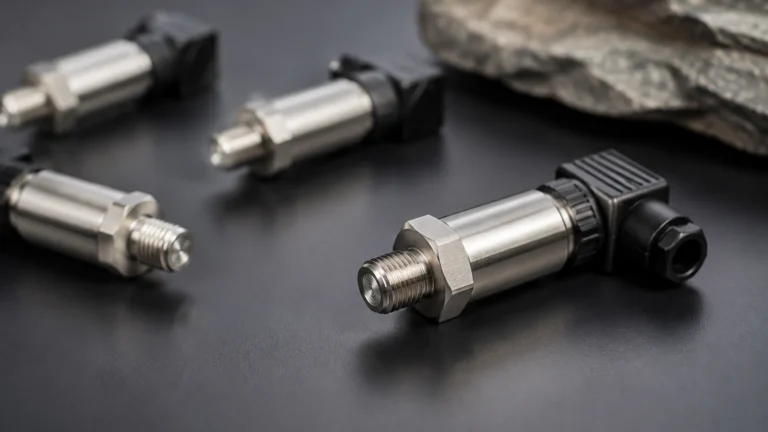
Hydrostatic transmitters measure the pressure exerted by the liquid column at the bottom of a tank. Since pressure is directly proportional to the height of the liquid and its density ($P = \rho gh$), the level can be calculated precisely. These sensors are robust and widely used in clean water storage where the density of the fluid remains constant. They are typically installed via a flange or a submersible probe.
Magnetic Level Gauges and Switches
Magnetic level gauges provide a visual indication of the level using a float system within a bypass chamber. For point-level detection (e.g., high-level alarms or pump control), magnetic switches or tuning fork switches are used. These mechanical or semi-mechanical systems offer high reliability for safety-critical applications where a secondary, non-electronic confirmation of level is required.
Key Applications in Food Industry Water Treatment
Water management in food processing is categorized into three main stages: influent (raw water), process water, and effluent (wastewater). Each requires a specific approach to level monitoring.
1. Raw Water Intake and Pre-treatment
Water sourced from municipal lines or private wells must be stored and filtered. Large storage tanks (often 5 to 15 meters or 16 to 49 feet in height) use ultrasonic or radar sensors to ensure a continuous supply. Level monitoring here prevents the plant from running dry during peak production hours.
2. Process Water and CIP Systems
Clean-in-Place (CIP) systems are critical for maintaining hygiene. These systems use tanks of water, caustic soda, and acid at varying temperatures (often up to 85°C or 185°F). Level sensors must withstand these temperatures and the corrosive nature of the cleaning agents. Radar sensors with PTFE-lined antennas are frequently used here to avoid corrosion and maintain sanitary conditions.
3. Wastewater Treatment (Effluent)
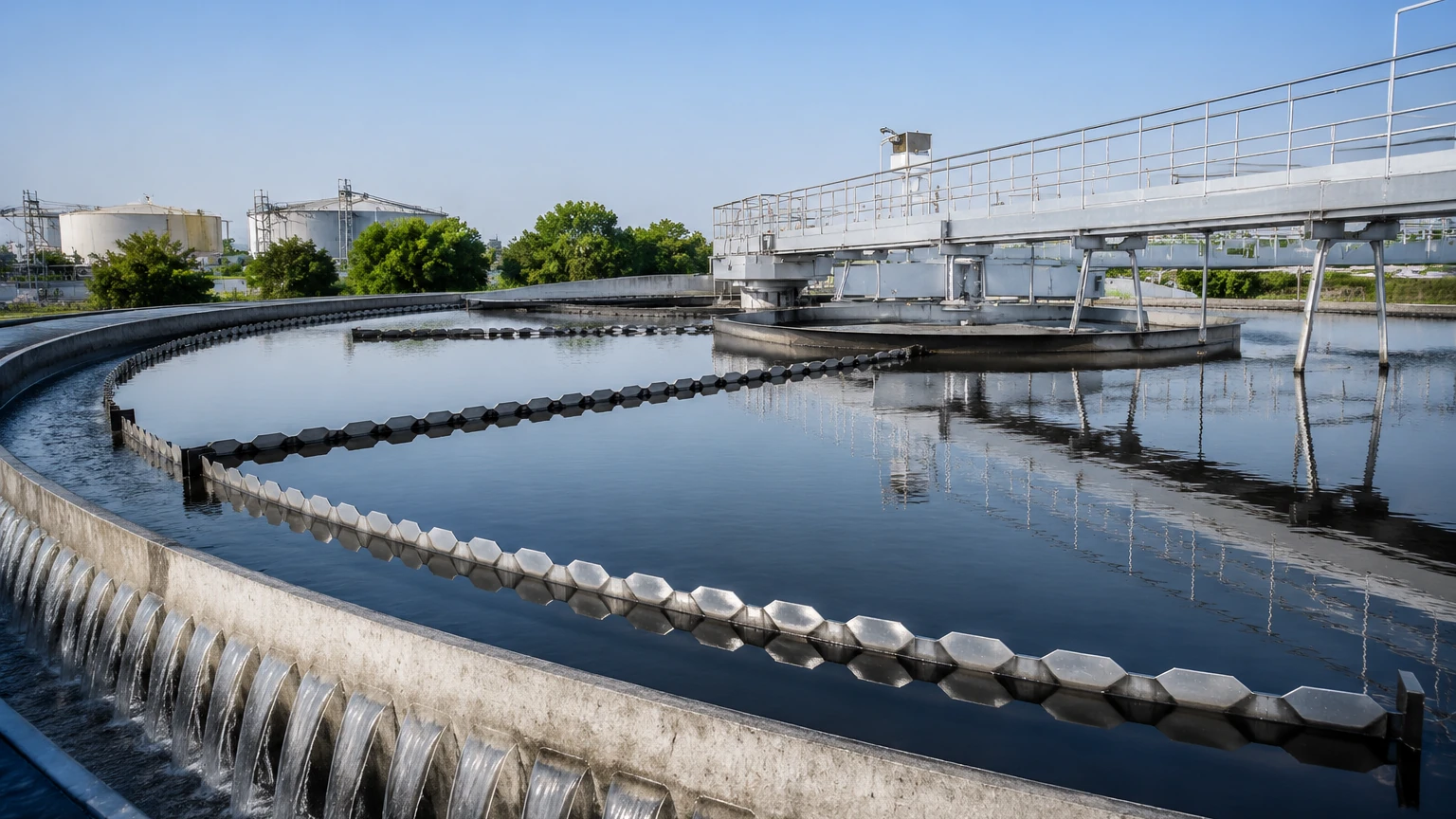
The water treatment food processing industry generates significant wastewater containing organic solids, fats, oils, and greases (FOG). Level measurement in equalization tanks and sludge thickeners is challenging due to the presence of foam and suspended solids. Non-contact radar is often the most reliable choice to avoid sensor fouling.
Selection Criteria for Level Instruments
Choosing the correct instrument requires an evaluation of the specific process environment. Engineers should consider the following factors:
* Hygiene Requirements: Instruments in contact with process water must often meet 3-A or EHEDG standards. Sanitary fittings like Tri-clamp are standard.
* Media Characteristics: Is the water clean, or does it contain solids? Is there surface foam? Radar handles foam better than ultrasonic.
* Tank Geometry: Internal obstructions like agitators or spray balls can create false echoes. Modern radar units use software to "mask" these reflections.
* Environmental Conditions: High humidity and frequent washdowns (IP68/IP69K ratings) are mandatory for sensors located in production areas.
Practical Selection Table
| Application | Recommended Technology | Primary Benefit | Limitation |
| :— | :— | :— | :— |
| Raw Water Basins | Ultrasonic | Cost-effective | Affected by wind/vapor |
| CIP Chemical Tanks | Radar (PTFE Coated) | Chemical resistance | Higher initial cost |
| Finished Product Water | Hydrostatic | Simple, high accuracy | Contact-based |
| Wastewater Sump | Radar | Ignores foam/vapors | Requires clear mounting |
| High-Level Alarm | Tuning Fork Switch | Fail-safe redundancy | Point level only |
Installation and Engineering Considerations
Proper installation is as important as technology selection. For non-contact sensors (radar and ultrasonic), the following rules apply:
1. Avoid the "Dead Zone": Every sensor has a minimum distance (blocking distance) it cannot measure. Ensure the sensor is mounted high enough that the maximum liquid level does not enter this zone.
2. Nozzle Dimensions: The mounting nozzle should be short and wide enough to prevent the signal from reflecting off the nozzle walls. For radar, the antenna should ideally extend slightly past the nozzle.
3. Orientation: Sensors should be mounted perpendicular to the liquid surface. In tanks with agitators, the sensor should be positioned to avoid the vortex or the blades.
4. Hydrostatic Positioning: For hydrostatic sensors, ensure the diaphragm is not located in an area of high turbulence (e.g., directly opposite an inlet pipe) to avoid erratic pressure readings.
For a comprehensive look at specific hardware configurations and technical specifications, engineers can Review product options and application support on the Welk Main Page.
Limitations and Challenges
While modern instrumentation is highly advanced, certain physical limitations remain. Foam is the most common disruptor in the water treatment food processing industry. Thick, dense foam can absorb ultrasonic signals entirely and may attenuate radar signals. In such cases, a stilling well (a pipe that acts as a guide for the signal) may be necessary to provide a clear surface for measurement.
Furthermore, rapid temperature changes—common during CIP cycles—can cause condensation on sensor faces. While many Welk radar units feature "drip-off" antenna designs to shed condensation, extreme cases may require an air purge system to keep the sensor face clear.
Frequently Asked Questions (FAQ)
Q: Can one sensor type be used for all water treatment stages?
A: While radar is the most versatile, it may not be the most cost-effective for simple raw water storage where ultrasonic or hydrostatic sensors perform adequately. A tiered approach based on the criticality and conditions of each tank is usually recommended.
Q: How do I handle level measurement in tanks with heavy agitation?
A: Radar sensors with fast response times and advanced signal processing can filter out the noise from agitator blades. Alternatively, installing the sensor in a stilling well protects the measurement from surface turbulence.
Q: What maintenance is required for these sensors?
A: Non-contact sensors are virtually maintenance-free as they do not touch the media. Hydrostatic sensors should be checked periodically for buildup on the diaphragm, especially in wastewater applications.
Q: Is 80GHz radar better than 26GHz for food processing?
A: Generally, yes. The higher frequency (80GHz) allows for a narrower beam angle, which makes it easier to avoid internal tank obstructions and provides better performance on turbulent surfaces.
Conclusion
In the water treatment food processing industry, the accuracy of level measurement directly impacts product safety, operational efficiency, and environmental compliance. By understanding the principles of radar, ultrasonic, and hydrostatic measurement, and by accounting for the specific challenges of the food production environment—such as steam, foam, and hygiene requirements—facilities can implement robust automation solutions. Selecting high-quality instrumentation from specialized manufacturers like Welk ensures long-term reliability and precision in these demanding applications.