What Is a Differential Pressure
What Is a Differential Pressure
In the realm of industrial process control and fluid mechanics, understanding the fundamental question of what is a differential pressure is essential for ensuring accurate measurement and system safety. Differential pressure (DP or ΔP) is not a measurement of pressure at a single point, but rather the difference in pressure between two distinct points in a system. While absolute pressure measures against a perfect vacuum and gauge pressure measures against atmospheric pressure, differential pressure focuses solely on the variance between two inputs.
For engineers and technicians working with liquid level, flow, and filtration, differential pressure serves as a versatile proxy for various physical states. In level measurement specifically, it is one of the most established and reliable methods used globally. By measuring the hydrostatic head of a liquid column, DP transmitters can determine the height of the liquid within a vessel, whether that vessel is open to the atmosphere or pressurized.
The Fundamental Principle of Differential Pressure
To grasp what is a differential pressure in a practical sense, one must look at the mathematical relationship:
ΔP = P1 – P2
Where P1 is the pressure at the high-pressure (HP) tap and P2 is the pressure at the low-pressure (LP) tap. In a level measurement application, the sensor calculates the weight of the liquid column above the measurement point. This is governed by the hydrostatic pressure formula:
P = ρ × g × h
* P: Hydrostatic pressure
* ρ (rho): Density of the liquid (kg/m³)
* g: Acceleration due to gravity (approximately 9.81 m/s²)
* h: Height of the liquid column (meters)
Because gravity is constant and the density of the process fluid is usually known, the pressure measured is directly proportional to the height of the liquid. If the density remains stable, the differential pressure transmitter provides a highly accurate reading of the level. For professionals seeking specific instrument specifications or technical support for these systems, visiting the Main Page of a specialized manufacturer like Welk provides a comprehensive overview of available hardware.
Differential Pressure in Level Measurement Applications
The application of DP technology varies significantly depending on whether the tank is vented or pressurized. Understanding these configurations is critical for correct instrument selection.
Open (Vented) Tanks
In an open tank, the surface of the liquid is exposed to the atmosphere. To measure the level, the high-pressure side of the transmitter is connected to the bottom of the tank, while the low-pressure side is vented to the atmosphere. In this scenario, the differential pressure is simply the pressure exerted by the liquid column, as the atmospheric pressure acting on the liquid surface and the LP side of the sensor cancel each other out.
Closed (Pressurized) Tanks
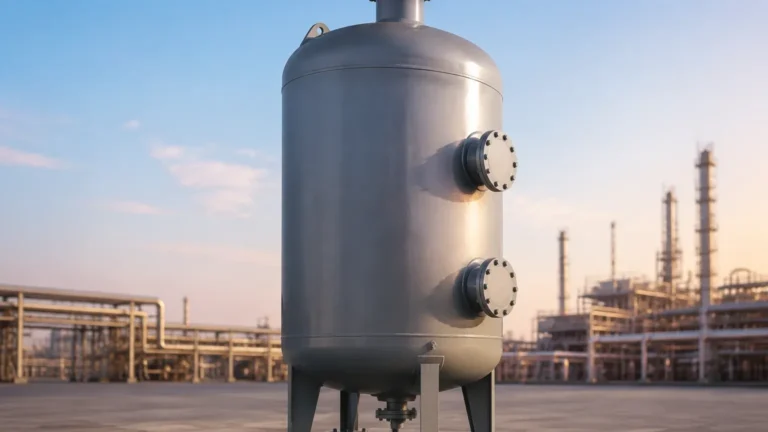
In closed vessels, such as those found in chemical processing or oil and gas refining, the space above the liquid (the vapor space) is often pressurized. If we used a simple gauge pressure sensor at the bottom, the reading would include both the liquid weight and the gas pressure, leading to a false level reading.
By connecting the LP side of a differential pressure transmitter to the top of the tank, the gas pressure is applied to both sides of the sensor's internal diaphragm. This "cancels out" the vapor pressure, leaving only the pressure generated by the liquid height to be measured. This method ensures that fluctuations in tank pressure do not affect the level accuracy.
Selection Criteria for Differential Pressure Transmitters
Choosing the right DP transmitter requires more than just knowing the tank height. Engineers must evaluate several environmental and process variables to ensure long-term reliability.
| Criteria | Description | Impact on Performance |
| :— | :— | :— |
| Static Pressure | The total pressure the vessel operates under. | Transmitters must be rated for the maximum system pressure, not just the DP range. |
| Turndown Ratio | The ratio of the maximum span to the minimum span. | High turndown allows one device to be used for various ranges without losing accuracy. |
| Wetted Materials | The materials in contact with the fluid (e.g., 316L SS, Hastelloy, Tantalum). | Critical for preventing corrosion in chemical applications. |
| Temperature Limits | Process and ambient temperature ranges. | Extreme heat may require remote seals or cooling elements to protect electronics. |
| Accuracy Class | Usually expressed as a percentage of the calibrated span. | Standard industrial accuracy is typically ±0.075% to ±0.1%. |
Advanced Configurations: Remote Seals and Capillaries
In many industrial scenarios, the process fluid is too corrosive, viscous, or hot to come into direct contact with the transmitter’s sensing diaphragm. This is where remote seals (also known as chemical seals) are utilized.
A remote seal system consists of a flexible diaphragm connected to the transmitter via a capillary tube filled with a transmission fluid (usually silicone oil or specialized high-temp fluids). When the process pressure presses against the seal diaphragm, the pressure is transmitted through the capillary to the sensor.
When to use remote seals:
1. Extreme Temperatures: To isolate the transmitter electronics from high process heat.
2. Corrosive Media: When exotic materials like Tantalum are required only for the seal, reducing the cost of the transmitter body.
3. Hygienic Requirements: In food and beverage or pharmaceutical industries where "dead legs" in impulse lines must be avoided to prevent bacterial growth.
4. Viscous or Slurry Fluids: To prevent the clogging of standard impulse piping.
Installation Considerations and Best Practices
Correct installation is the most significant factor in the longevity and accuracy of a differential pressure system. Even the most expensive transmitter will fail to provide accurate data if the physical installation is flawed.
Impulse Line Routing
Impulse lines are the pipes that connect the process taps to the transmitter.
* Slope: Lines should be sloped at least 1:12 (8%) to allow gas bubbles to travel back to the tank (in liquid service) or condensate to drain back (in gas service).
* Length: Keep impulse lines as short as possible to reduce lag time and potential leak points.
* Support: Ensure lines are supported to prevent vibration, which can introduce noise into the signal.
Zero Suppression and Elevation
In many installations, the transmitter cannot be mounted exactly at the 0% level line of the tank.
* Zero Suppression: If the transmitter is mounted *below* the bottom of the tank, the weight of the liquid in the impulse line creates a positive pressure even when the tank is empty. The transmitter must be calibrated to "suppress" this constant pressure so that it reads 0% when the tank is empty.
* Zero Elevation: This occurs most often with remote seals on closed tanks. The capillary on the LP side is often filled with fluid that exerts a constant pressure on the sensor. This must be "elevated" out of the calculation to ensure an accurate zero point.

Limitations of Differential Pressure Measurement
While DP measurement is a workhorse of the industry, it is not a "one-size-fits-all" solution. Understanding its limitations is part of asking what is a differential pressure system's boundary.
1. Density Sensitivity: Since DP measures weight, any change in the fluid's density (caused by temperature fluctuations or concentration changes) will result in a level error. If the density drops by 5%, the measured level will appear 5% lower than it actually is, even if the physical height hasn't changed.
2. Impulse Line Maintenance: Impulse lines can freeze in cold climates, requiring heat tracing or insulation. They can also become plugged with solids or trapped air, requiring periodic "blowing out" or maintenance.
3. Complex Calibration: Calculating the correct range for zero suppression and elevation, especially with remote seals, requires precise engineering math compared to non-contact methods like radar.
Comparison: DP vs. Other Technologies
| Feature | Differential Pressure | Radar (Non-Contact) | Ultrasonic |
| :— | :— | :— | :— |
| Cost | Moderate to High | High | Low to Moderate |
| Moving Parts | None | None | None |
| Density Dependent | Yes | No | No |
| Vapor Sensitivity | Low | Low | High |
| Installation | Invasive (requires taps) | Top-mount | Top-mount |
| Maintenance | Medium (Impulse lines) | Very Low | Low |
Frequently Asked Questions (FAQ)
1. Can differential pressure be used for interface measurement?
Yes. DP transmitters are excellent for measuring the interface between two immiscible liquids (like oil and water) provided the densities of both liquids remain relatively constant. The transmitter measures the change in total weight as the ratio of the two liquids changes.
2. What happens if the LP side of a closed tank transmitter leaks?
If the LP (reference) line leaks, the transmitter will no longer be able to cancel out the vapor pressure. If the tank is pressurized, the level reading will spike significantly, potentially causing an overfill alarm or system shutdown. This highlights the importance of regular leak checks on impulse piping.
3. How does temperature affect DP level measurement?
Temperature affects the density of the process fluid and the fill fluid in capillaries. High-quality transmitters include internal temperature compensation to correct for the electronics' drift, but they cannot correct for the physical change in the process fluid's density unless integrated with a secondary temperature sensor and a flow computer.
4. Is DP measurement suitable for vacuum service?
Yes, but it requires careful selection of the transmitter and potentially the use of remote seals. Under vacuum, the fill fluids in capillaries can outgas if not properly processed during manufacturing, which would lead to measurement errors.
Conclusion
Defining what is a differential pressure involves looking at the intersection of mechanical engineering and fluid dynamics. As a measurement technology, it remains a cornerstone of industrial automation due to its reliability and the depth of understanding engineers have developed over decades of use. While newer technologies like guided wave radar offer advantages in density-variable applications, the differential pressure transmitter continues to be the preferred choice for high-pressure, high-temperature, and high-reliability environments.
For those designing new systems or upgrading existing ones, selecting the correct manifold, seal material, and transmitter range is the key to success. By adhering to strict installation guidelines and understanding the physical properties of the process media, differential pressure measurement provides a robust and cost-effective solution for complex level sensing challenges worldwide.