What Is a Good Static Water Level in a Well
What Is a Good Static Water Level in a Well
In industrial water management, municipal supply, and agricultural irrigation, monitoring the static water level (SWL) is a fundamental practice for ensuring the longevity of pumping equipment and the sustainability of the water source. Identifying what is a good static water level in a well requires an understanding of hydrogeology, pump mechanics, and the specific requirements of the application. A "good" level is not a universal number but rather a state of equilibrium that supports operational efficiency without depleting the aquifer.
Understanding Static Water Level Principles
The static water level is defined as the distance from the land surface (or a fixed reference point like the top of the well casing) to the water surface when the pump is not operating and the water level has had sufficient time to stabilize. This measurement represents the natural pressure of the aquifer at that specific location.
To accurately determine if a level is optimal, engineers must first understand the physics of the measurement. There are three primary methods used in professional industrial settings:
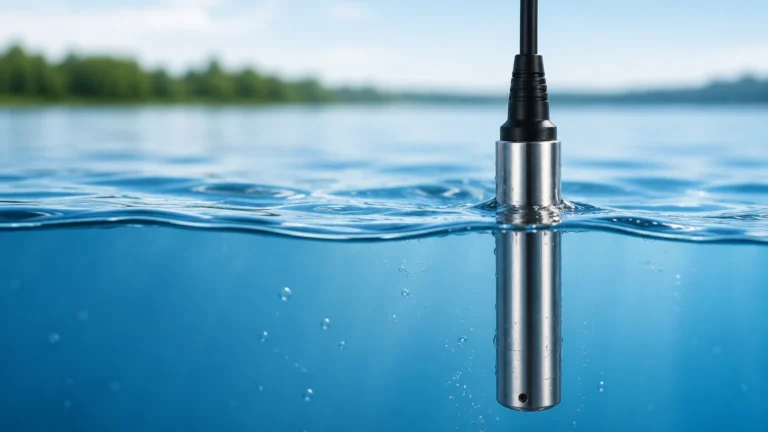
1. Hydrostatic Pressure Measurement: This involves submerging a pressure transducer below the water line. The sensor measures the pressure exerted by the column of water above it. Using the formula $P = \rho gh$ (where $P$ is pressure, $\rho$ is water density, $g$ is gravity, and $h$ is the height of the water column), the transmitter calculates the depth. This is the most common method for deep-well monitoring because it is unaffected by surface foam or narrow casing constraints.
2. Ultrasonic Level Sensing: A non-contact method where a sensor emits high-frequency sound waves. The time it takes for the echo to return from the water surface determines the distance. While effective for shallower wells (typically under 15 to 20 meters), ultrasonic sensors can be affected by temperature gradients and humidity within the well casing.
3. Radar Level Measurement: Utilizing high-frequency microwave pulses, radar sensors provide extreme precision. Unlike ultrasonic waves, radar signals are not influenced by air temperature or vapor, making them ideal for deep industrial wells where high accuracy is required for automated control systems.
Defining "Good" Static Water Level Criteria
A good static water level is characterized by several key factors rather than a single depth measurement. In professional water management, we evaluate the following criteria:
1. Sufficient Pump Submergence
The most critical aspect of a good static water level is that it remains high enough to keep the pump intake fully submerged during operation. When a pump starts, the water level drops to what is known as the "dynamic" or "pumping" water level. A good static level provides enough "head" (vertical distance) so that even after the drawdown occurs, the pump remains sufficiently underwater to prevent cavitation and air intake.
2. Seasonal Stability
Aquifers are dynamic systems. A good static water level is one that shows resilience against seasonal fluctuations. In many regions, the SWL will rise during rainy seasons (recharge) and fall during dry periods (discharge). If the static level remains within a predictable 3-meter to 5-meter (10 to 16 feet) range throughout the year, the well is generally considered to be in a healthy, sustainable state.
3. Proximity to Historical Benchmarks
For established industrial sites, a good static water level is one that aligns with the well's historical data. If the original well log recorded a static level of 30 meters (98 feet) and current readings show 32 meters (105 feet) after a decade of use, the decline is minimal. However, a sudden drop of 10 meters (33 feet) indicates potential over-extraction or a failing aquifer, regardless of how deep the water currently sits.
Comparison of Level Measurement Technologies
Choosing the right instrument is essential for accurately determining what is a good static water level in a well. The following table compares common industrial solutions provided by manufacturers like Welk.
| Technology | Typical Range | Accuracy | Best Application |
| :— | :— | :— | :— |
| Hydrostatic Transmitters | 0–500m | ±0.1% to 0.5% | Deep boreholes, constant submersion, remote monitoring. |
| Radar Level Meters | 0–120m | ±2mm to 5mm | High-precision industrial wells, non-contact requirements. |
| Ultrasonic Sensors | 0–20m | ±0.25% | Shallow wells, open-top tanks, water treatment basins. |
| Electric Tapes (Manual) | 0–300m | Manual | Periodic spot checks, calibration of automated sensors. |
Factors Influencing the "Good" Level
Several environmental and technical variables influence what constitutes a healthy level for a specific site:
* Aquifer Type: In a confined aquifer, the static water level (often called the potentiometric surface) may actually be above the top of the aquifer itself. In an unconfined aquifer, the SWL is synonymous with the water table. A "good" level in a confined aquifer is one that maintains enough pressure to prevent the aquifer from becoming unconfined, which can lead to land subsidence.
* Well Efficiency: If the well screen is clogged with mineral deposits or biofouling, the transition from static to dynamic level will be much more drastic. In this case, even a high static level might not prevent the pump from running dry if the well cannot recharge fast enough.
* Interference from Nearby Wells: In industrial clusters, multiple wells may draw from the same aquifer. A good static level must account for the "cone of depression" created by neighboring pumps. If nearby operations cause your static level to drop significantly, it may be necessary to adjust pump depths or implement automated level-based shut-off controls.
Installation and Maintenance Considerations
To ensure that the data used to evaluate the static water level is accurate, proper installation of measurement instruments is paramount. For those seeking advanced instrumentation, you can Main Page to review product options and application support.
1. Stilling Wells: In wells with high turbulence or narrow diameters, installing a stilling well (a small diameter pipe inside the casing) can protect hydrostatic sensors and provide a calm surface for radar or ultrasonic waves.
2. Atmospheric Venting: Hydrostatic level sensors must be vented to the atmosphere via a capillary tube in the cable. This compensates for changes in barometric pressure, which can otherwise cause errors of several centimeters in the level reading.
3. Cable Management: In deep wells, the weight of the sensor cable can lead to stretching over time. Using a strain-relief clamp at the wellhead is necessary to maintain the accuracy of the depth reference point.
Risks of Poor Static Water Levels
If the static water level falls below the "good" threshold for your specific pump configuration, several risks emerge:
* Pump Burnout: If the level drops below the intake, the motor will overheat rapidly without the cooling effect of the water flow.
* Aeration and Corrosion: Dropping levels can expose well screens to oxygen, promoting the growth of iron bacteria and increasing the rate of corrosion on metal components.
* Water Quality Degradation: In coastal areas, a significant drop in the static water level can lead to saltwater intrusion, rendering the well useless for industrial or potable applications.
Frequently Asked Questions (FAQ)
Q: How often should I measure the static water level?
A: For industrial applications, continuous monitoring is recommended. If using manual methods, a monthly check is the minimum standard, though weekly readings provide a better picture of seasonal trends.
Q: Can a static water level be too high?
A: Yes. In some regions, an exceptionally high static water level can lead to artesian conditions where water flows out of the top of the well casing, potentially causing flooding or requiring specialized wellhead seals.
Q: Does the diameter of the well affect the static water level?
A: No. The static water level is a measure of pressure/elevation within the aquifer and is independent of the well's diameter. However, the diameter *does* affect the volume of water stored in the well and the rate of drawdown during pumping.
Q: How long should I wait for the level to stabilize after pumping?
A: This depends on the aquifer's transmissivity. In high-yield sand and gravel aquifers, stabilization may occur in minutes. In tight clay or fractured rock, it may take 24 hours or longer to reach a true static state.
Conclusion
Determining what is a good static water level in a well is an exercise in balancing operational needs with environmental reality. A level is considered good when it is stable, provides ample submergence for the pump, and shows consistent recovery after pumping cycles. By utilizing advanced hydrostatic or radar measurement technologies, industrial operators can gain the data-driven insights necessary to protect their infrastructure and manage water resources sustainably. For a comprehensive range of measurement solutions, professionals are encouraged to consult technical documentation and selection guides to match the right sensor to their specific well depth and environmental conditions.
Download What Is a Good Static Water Level in a Well as a PDF