What Is Cdu in Data Center
What Is Cdu in Data Center
As data centers evolve to support high-density workloads, such as artificial intelligence (AI), machine learning (ML), and high-performance computing (HPC), traditional air-cooling methods are reaching their physical limits. The shift toward liquid cooling has introduced specialized hardware into the white space, most notably the Coolant Distribution Unit (CDU). Understanding what is cdu in data center environments is essential for engineers and facility managers tasked with maintaining thermal stability and operational efficiency.
A Coolant Distribution Unit is a sophisticated heat exchange system that manages the distribution of coolant between a facility’s primary cooling loop and the secondary loop that directly cools the IT equipment. By isolating these two systems, the CDU provides precise control over temperature, pressure, and flow rates while minimizing the risk of contamination or leaks within the server racks.
The Fundamental Role of the CDU in Liquid Cooling
To answer the question of what is cdu in data center infrastructure, one must look at the architecture of modern liquid cooling. The CDU acts as the "heart" of the cooling system. It facilitates the transfer of heat from the secondary loop (which circulates through cold plates or immersion tanks) to the primary loop (typically connected to the building's chilled water system or dry coolers).
Heat Exchange Principles
In most CDU designs, a liquid-to-liquid heat exchanger is used. The primary loop carries cold water from the facility’s central plant. Inside the CDU, this cold water passes through a heat exchanger—often a plate-and-frame or brazed plate type—where it absorbs heat from the secondary loop. Crucially, the two fluids never mix. This isolation allows the data center to use treated, high-purity coolant in the secondary loop (to protect sensitive electronics) while using standard industrial water in the primary loop.
Pressure and Flow Management
The CDU contains pumps that circulate the secondary coolant at specific flow rates. Maintaining the correct pressure is vital; if the pressure is too high, it risks damaging connections at the server level; if it is too low, the flow may be insufficient to remove heat effectively. Integrated sensors monitor these parameters in real-time, often feeding data back to a Building Management System (BMS).
Measurement Principles in CDU Operations
Before selecting instrumentation for a CDU, it is critical to understand the measurement principles involved. Because a CDU relies on a closed or semi-closed loop, monitoring the volume of coolant is a primary safety requirement. This is achieved through advanced level measurement technologies.
Hydrostatic Pressure Measurement
Hydrostatic level transmitters measure the pressure exerted by the liquid column in the CDU’s internal reservoir or expansion tank. The principle is based on the formula: $P = \rho \cdot g \cdot h$, where $P$ is pressure, $\rho$ is the density of the coolant, $g$ is gravity, and $h$ is the height of the liquid. This method is highly reliable for stationary tanks where the density of the coolant (such as a glycol-water mix) is known and constant.
Ultrasonic Time-of-Flight (ToF)
Ultrasonic sensors are non-contact devices that emit high-frequency sound waves. These waves reflect off the surface of the coolant and return to the sensor. By measuring the time it takes for the pulse to return, the sensor calculates the distance to the liquid surface. This is ideal for CDUs where the coolant might be corrosive or where minimal physical intrusion into the tank is desired.
Magnetic Level Indication
For visual confirmation and electrical feedback, magnetic level gauges use a float equipped with a magnet. As the float rises and falls with the coolant level, it flips magnetic flags on the outside of the chamber and can trigger reed switches or transmit a 4-20mA signal. This provides a fail-safe mechanical backup to digital systems.
Level Sensor Recommendations for Data Center CDUs
Selecting the right sensor depends on the CDU's form factor—whether it is an in-row unit, an in-rack unit, or a large floor-mount system. As a professional manufacturer, Welk provides various Main Page resources to help engineers match sensors to their specific cooling architecture.
1. Radar Level Meters: For large-scale CDUs or immersion cooling tanks, 80GHz high-frequency radar provides millimeter-level accuracy. It is unaffected by vapor or temperature fluctuations within the CDU cabinet.
2. Ultrasonic Level Sensors: Best suited for standard coolant reservoirs. They offer a cost-effective, maintenance-free solution for monitoring the expansion tanks that compensate for fluid thermal expansion.
3. Hydrostatic Transmitters: These are preferred for compact, integrated CDU designs where top-mounting a sensor is not feasible due to space constraints. The sensor can be mounted at the bottom or side of the reservoir.
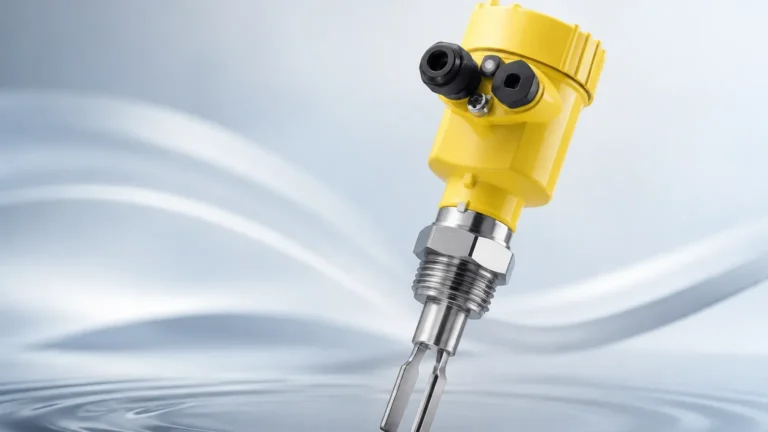
4. Level Switches: Essential for leak detection and overflow prevention. A point-level switch can trigger an immediate emergency shutdown if coolant levels drop below a critical threshold, indicating a breach in the secondary loop.
Practical Selection Table for CDU Level Instrumentation
| Sensor Type | Ideal Application | Accuracy | Pros | Cons |
| :— | :— | :— | :— | :— |
| Ultrasonic | Expansion Tanks | ±0.25% | Non-contact, easy install | Affected by heavy foam |
| Hydrostatic | Compact Reservoirs | ±0.1% | Small footprint, reliable | Requires contact with fluid |
| Radar (80GHz) | Immersion Cooling | ±1mm | Extremely precise, ignored vapor | Higher initial cost |
| Magnetic Switch | Leak/Overflow Alarm | N/A | Low cost, fail-safe | Point level only |

Installation Considerations and Best Practices
When integrating level measurement into a CDU, several engineering factors must be addressed to ensure long-term reliability:
* Material Compatibility: Data center coolants often consist of deionized water, propylene glycol, or specialized dielectric fluids. Ensure that the wetted parts of the level sensor (e.g., 316L stainless steel, PTFE, or PP) are chemically resistant to the specific coolant used.
* Turbulence and Bubbles: The return line in a CDU reservoir can create turbulence or entrained air. Level sensors should be installed away from the inlet or equipped with a stilling well to ensure a stable reading.
* Signal Integration: Most modern CDUs require integration with Modbus, BACnet, or 4-20mA HART protocols. Ensure the chosen sensor is compatible with the CDU’s internal controller or the facility’s broader monitoring infrastructure.
* Dead Zones: All non-contact sensors (ultrasonic and radar) have a "dead zone" or "blocking distance" near the sensor face. In small CDU tanks, this must be accounted for to prevent inaccurate readings when the tank is full.
Limitations of CDU Monitoring Systems
While CDUs are highly efficient, they are not without limitations. The primary challenge is the risk of a "single point of failure." If the CDU’s pump or level sensor fails, the entire row of servers may overheat within seconds. Therefore, redundancy is critical. Many Tier III and Tier IV data centers utilize an N+1 or 2N CDU configuration.
Furthermore, level sensors cannot detect micro-leaks that occur far away from the CDU (e.g., at the cold plate interface) unless the total volume of the system is monitored with extreme precision. For this reason, level measurement should always be paired with floor-mounted leak detection cables and flow meters.
Frequently Asked Questions (FAQ)
Q: Why can't I just use a simple float switch in my CDU?
A: While a float switch is excellent for high/low alarms, it does not provide continuous data. Continuous level monitoring allows the system to detect gradual fluid loss over time, which can indicate a slow leak or evaporation before it becomes a critical failure.
Q: How often should CDU level sensors be calibrated?
A: For hydrostatic and ultrasonic sensors, an annual calibration check is recommended. However, radar sensors are generally drift-free and may only require periodic verification against a manual reference.
Q: Does the type of coolant affect the sensor choice?
A: Yes. For example, ultrasonic sensors rely on the speed of sound, which varies slightly with air temperature and vapor composition above the liquid. If using a highly volatile dielectric fluid, a radar sensor or hydrostatic transmitter may be more accurate.
Q: What is the difference between an in-row CDU and a floor-mount CDU?
A: An in-row CDU is sized to fit within a standard server rack row and typically manages 300kW to 800kW of heat. A floor-mount CDU is a larger, centralized unit that can handle several megawatts, requiring much larger reservoirs and more robust level monitoring systems.
Conclusion
Understanding what is cdu in data center operations is the first step toward implementing a successful liquid cooling strategy. These units are vital for managing the thermal loads of the next generation of computing. By selecting high-quality level measurement instruments—such as those offered by Welk—operators can ensure that their CDUs remain reliable, leak-free, and efficient. For more technical specifications and product options, visit the Main Page to explore our full range of industrial level measurement solutions.