Which Type of Thermometer Checks the Surface Temperature
Which Type of Thermometer Checks the Surface Temperature
In industrial process control and facility maintenance, determining the thermal state of equipment often requires measuring the exterior of a component rather than its internal core. When engineers and technicians ask which type of thermometer checks the surface temperature, the answer depends heavily on the required accuracy, the material of the surface, and the accessibility of the measurement point. Surface temperature monitoring is vital for ensuring the integrity of storage tanks, monitoring motor bearings, and calibrating sensitive level measurement instruments.
To select the correct tool, one must understand the two primary categories of surface temperature measurement: non-contact (radiometric) and contact (conductive). This guide explores the technologies available, their underlying principles, and how they integrate into broader industrial automation systems.
Understanding the Principles of Surface Temperature Measurement
Before recommending specific instruments, it is essential to distinguish between the two physical methods used to capture surface data.
1. Thermal Radiation (Non-Contact)
Every object with a temperature above absolute zero emits electromagnetic radiation in the infrared spectrum. The intensity of this radiation is proportional to the fourth power of its absolute temperature (Stefan-Boltzmann Law). Infrared thermometers capture this energy and convert it into a temperature reading without physically touching the object. This is the primary method used when answering which type of thermometer checks the surface temperature in high-voltage or moving-part applications.
2. Thermal Conduction (Contact)
Contact measurement relies on the transfer of kinetic energy from the surface molecules to the sensor's probe. For an accurate reading, the sensor must reach thermal equilibrium with the surface. This requires specialized probe designs, as standard immersion probes used for liquids do not have sufficient surface area contact to provide an accurate reading of a flat or curved exterior solid surface.
Infrared (IR) Thermometers: The Non-Contact Standard
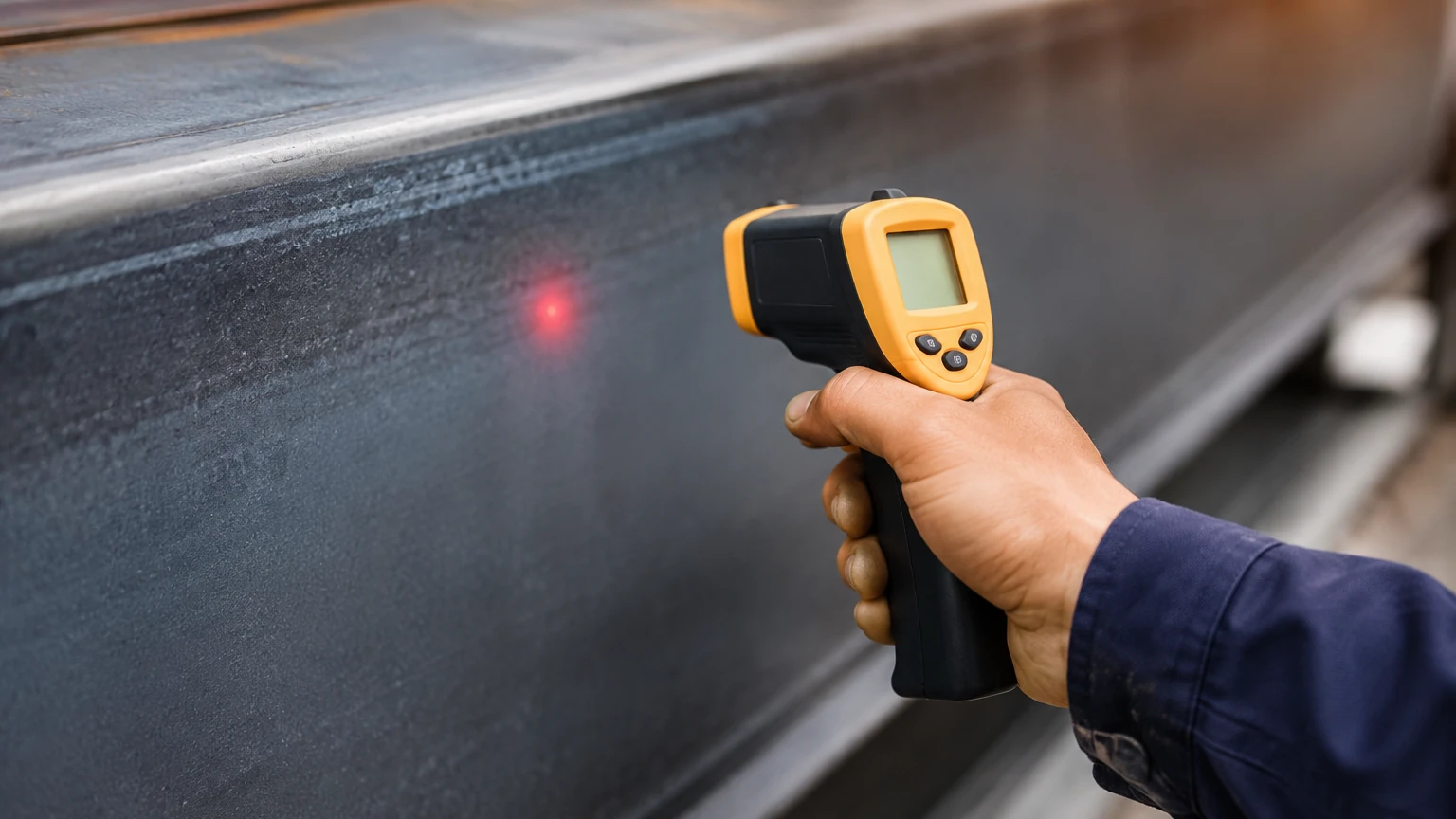
Infrared thermometers, often called laser thermometers or IR pyrometers, are the most common answer to the question of surface temperature checks. They are favored for their speed and safety.
How IR Thermometers Work
An IR thermometer consists of a lens that focuses infrared energy onto a detector called a thermopile. The thermopile converts the heat energy into an electrical signal, which is then processed and displayed as a temperature value.
Critical Considerations for IR Measurement
* Emissivity (ε): This is the measure of a material's ability to emit infrared energy. A perfect blackbody has an emissivity of 1.0. Most organic materials and painted surfaces have an emissivity around 0.95. However, shiny or polished metals (like stainless steel tanks) have very low emissivity (0.1 to 0.3), which can cause IR thermometers to provide significantly lower readings than the actual temperature unless the device is adjustable.
* Distance-to-Spot Ratio (D:S): This ratio defines the size of the measurement area compared to the distance from the target. For example, a 12:1 D:S ratio means that at a distance of 120 cm (approx. 47 inches), the thermometer is measuring a circle with a diameter of 10 cm (approx. 4 inches). If the target is smaller than this spot, the thermometer will average the target temperature with the background temperature, leading to errors.
Contact Surface Thermometers: Precision Through Conduction
While IR thermometers are convenient, contact thermometers are often required for high-precision laboratory work or when dealing with low-emissivity surfaces where IR technology fails.
Surface Thermocouples
Thermocouples are the workhorse of industrial contact measurement. To check surface temperatures, they utilize a specialized "surface probe" tip. These tips often feature a flat, spring-loaded disk or a thin ribbon of thermocouple alloy. The design ensures maximum surface contact and minimizes the cooling effect of the surrounding air.
* Type K Thermocouples: Common in industrial settings for surfaces ranging from -200°C to 1260°C (-328°F to 2300°F).
* Type T Thermocouples: Preferred for lower temperature ranges and cryogenic surface checks due to higher accuracy at sub-zero temperatures.
Resistance Temperature Detectors (RTDs)
RTDs, specifically Pt100 sensors, can be configured as "patch" sensors. These are thin, flexible sensors that can be taped or glued directly onto a pipe or tank wall. They offer higher stability and accuracy than thermocouples but have a slower response time and a narrower temperature range.
The Role of Surface Temperature in Industrial Level Measurement
At Welk, we specialize in level measurement technologies such as radar and ultrasonic sensors. While these devices primarily measure the distance to a liquid or solid surface, temperature plays a critical role in their accuracy and the physical integrity of the installation.
For instance, ultrasonic level sensors calculate distance based on the speed of sound. Since the speed of sound in air changes by approximately 0.6 m/s for every degree Celsius change, knowing the air temperature—and by extension, the surface temperature of the liquid or the vessel walls—is vital for compensation. If the surface temperature of a chemical in a tank is high, it creates a temperature gradient in the vapor space that must be accounted for to prevent measurement errors.
Similarly, in radar level measurement, extreme surface temperatures can affect the dielectric constant of certain materials or require specialized cooling flanges for the sensor electronics. Monitoring the surface temperature of the tank exterior helps engineers determine if heat tracing is functioning correctly, which prevents viscous fluids from solidifying and interfering with level probes. For a complete overview of how temperature-compensated level sensors operate, you can visit our Main Page for detailed technical specifications.
Practical Selection Table and Comparison
When deciding which type of thermometer checks the surface temperature for your specific application, refer to the following comparison table:
| Feature | Infrared Thermometer | Surface Thermocouple Probe | RTD Surface Patch |
| :— | :— | :— | :— |
| Contact Requirement | Non-contact | Physical contact | Permanent attachment |
| Response Time | < 1 second | 2–5 seconds | 10–30 seconds |
| Best Surface Type | Painted, dark, rough | Any (if contact is possible) | Flat or slightly curved |
| Accuracy | Moderate (±1-2%) | High (±0.5-1%) | Very High (±0.1-0.3%) |
| Safety | Excellent for live/moving parts | Requires proximity | Safe after installation |
| Common Application | Motor bearings, HVAC ducts | Hot plates, mold dies | Pipe wall monitoring |
Installation and Maintenance Best Practices
To ensure that the chosen thermometer provides reliable data, follow these engineering guidelines:
1. Surface Preparation: For contact sensors, the surface must be clean of rust, scale, and oil. Use a thermal conductive paste to eliminate air gaps between the probe and the surface.
2. Angle of Incidence (IR): When using an IR thermometer, aim as close to perpendicular (90°) to the surface as possible. Measuring at an acute angle increases the likelihood of reflecting infrared radiation from other nearby heat sources.
3. Thermal Equilibrium: Allow contact probes sufficient "dwell time" to reach the temperature of the surface. A common mistake is removing the probe before the display has stabilized.
4. Emissivity Correction: If measuring bare metal with an IR thermometer, apply a piece of black electrical tape or a dab of matte paint to the surface. Measure the temperature of the tape/paint (which has a known emissivity of ~0.95) to get an accurate reading of the underlying metal.
Limitations of Surface Measurement
It is important to recognize that surface temperature is rarely identical to the internal temperature of a process. In a pipe carrying hot oil, the exterior surface temperature will be lower than the oil temperature due to the thermal resistance of the pipe wall and the cooling effect of the ambient air. Engineers should use heat transfer calculations to estimate internal conditions based on surface readings.
Furthermore, IR thermometers cannot measure through transparent barriers like glass or plastic. If you point an IR thermometer at a glass window, you are measuring the surface temperature of the glass itself, not the object behind it.
Frequently Asked Questions (FAQs)
Q: Can I use a standard meat thermometer to check a surface temperature?
A: No. A meat thermometer is an immersion probe designed to be surrounded by a medium. Using it on a flat surface results in minimal contact area and significant heat loss to the air, leading to a massive underestimation of the temperature.
Q: Why is my IR thermometer giving different readings on different parts of the same metal tank?
A: This is likely due to varying emissivity. If one part of the tank is polished and another is rusted or painted, the IR thermometer will perceive different levels of radiation even if the temperature is uniform.
Q: How does surface temperature affect Welk level meters?
A: Surface temperature impacts the vapor pressure and density of the medium. For hydrostatic level transmitters, changes in temperature affect the density of the liquid, which can change the pressure reading. Our Main Page provides resources on how to select sensors with integrated temperature compensation to mitigate these effects.
Q: What is the best way to measure the surface of a moving conveyor belt?
A: A non-contact infrared thermometer or a thermal imaging camera is the only safe and effective way to measure a moving surface without causing friction heat or mechanical damage.
By selecting the appropriate technology—whether the rapid convenience of infrared or the steady precision of a contact thermocouple—industrial operators can maintain safer and more efficient processes. Understanding the nuances of emissivity and thermal conduction ensures that the data collected is not just a number, but a reliable metric for decision-making.
Download Which Type of Thermometer Checks the Surface Temperature as a PDF