Mass Flow Meters for Gas
Mass Flow Meters for Gas
In industrial process control, the measurement of gas flow is significantly more complex than that of liquids due to the inherent compressibility of gases. Traditional volumetric flow measurement often falls short because the volume of a gas changes drastically with fluctuations in temperature and pressure. To achieve precision in applications ranging from chemical processing to combustion control, engineers rely on mass flow meters for gas. These instruments provide a direct measurement of the molecular mass of the gas moving through a system, independent of ambient or process conditions.
Understanding the underlying physics and the specific requirements of gas applications is essential for selecting the correct instrumentation. This guide explores the principles, selection criteria, and installation requirements for industrial gas mass flow measurement.
The Significance of Mass Flow in Gas Measurement
Gas molecules are widely spaced and highly sensitive to thermal and barometric changes. In a volumetric measurement system, a flow of 100 cubic meters per hour at 1 bar (100 kPa) represents a completely different amount of substance than the same volume at 10 bar (1,000 kPa). To correct this, volumetric meters require additional sensors for pressure and temperature, along with a flow computer to calculate "standard" or "normal" flow.
Mass flow meters for gas eliminate the need for these external compensations. By measuring the mass directly, they provide a consistent data point that relates directly to the stoichiometry of a chemical reaction, the energy content of a fuel gas, or the precise dosing of an additive. This reliability is why mass flow measurement is the standard in high-stakes industries like semiconductor manufacturing, pharmaceutical production, and environmental monitoring.
Primary Measurement Principles
There are two dominant technologies used for direct mass flow measurement in gas applications: Thermal Dispersion and Coriolis. Each operates on distinct physical laws and offers unique advantages depending on the process environment.
1. Thermal Dispersion (Thermal Mass Flow)
Thermal mass flow meters operate based on the heat transfer properties of the gas. The instrument typically features two sensors: a velocity sensor (heated) and a temperature sensor (reference). As gas flows past the heated sensor, it carries away heat. The amount of heat lost is directly proportional to the mass flow rate of the gas.
There are two primary methods within this technology:
* Constant Temperature Differential: The electronics maintain a fixed temperature difference between the heated sensor and the reference sensor. The electrical power required to maintain this differential is the flow signal.
* Constant Power: A fixed amount of power is supplied to the heated sensor, and the resulting temperature difference between the two sensors is measured.
Thermal meters are highly sensitive to low flow rates and are widely used for compressed air, nitrogen headers, and vent gas monitoring.
2. Coriolis Mass Flow
Coriolis meters utilize the inertia of the gas. The meter consists of one or more vibrating tubes. As gas flows through these tubes, the Coriolis force causes the tubes to twist or shift in phase. Sensors at the inlet and outlet of the tubes detect this phase shift, which is directly proportional to the mass flow rate.
While traditionally used for liquids, advancements in sensor sensitivity have made Coriolis meters highly effective for high-pressure gas applications. They are regarded as the "gold standard" for accuracy, often reaching ±0.5% of reading or better for gas.
Selection Criteria for Gas Mass Flow Instrumentation
Choosing the right instrument requires a detailed analysis of the process fluid and the operational environment. Engineers should evaluate the following factors:
Gas Composition and Purity
Thermal mass flow meters are calibrated for specific gas species (e.g., 100% CO2 or a specific Natural Gas blend). If the gas composition changes, the thermal conductivity changes, leading to measurement errors. Coriolis meters are generally less sensitive to composition changes but may struggle with very low-density gases at low pressures.
Turndown Ratio
Turndown ratio refers to the range between the maximum and minimum flow the meter can accurately measure. Thermal mass flow meters offer exceptional turndown, often exceeding 100:1, making them ideal for detecting leaks or measuring wide seasonal variations in gas usage.
Pressure Drop
In low-pressure systems, the pressure drop across the meter is a critical concern. Thermal meters (especially insertion styles) offer negligible pressure drop. In contrast, Coriolis meters, which require the gas to move through specific tube geometries, may introduce a more significant pressure drop that must be accounted for in the system design.
Technical Comparison of Flow Technologies
The following table provides a generalized comparison of common technologies used for gas mass flow measurement.
| Feature | Thermal Mass Flow | Coriolis Mass Flow | Differential Pressure (with Compensation) |
| :— | :— | :— | :— |
| Primary Measurement | Mass Flow | Mass Flow | Volumetric Flow |
| Accuracy (Typical) | ±1% to ±2% of reading | ±0.5% of reading | ±1% to ±3% of full scale |
| Turndown Ratio | 100:1 or higher | 20:1 to 50:1 | 4:1 to 10:1 |
| Pressure Drop | Very Low | Moderate to High | High |
| Moving Parts | None | None (Vibrating tubes) | None |
| Calibration | Gas-specific | Independent of gas type | Independent of gas type |
| Ideal Application | Low-pressure, clean gas | High-pressure, high-accuracy | Steam, high-temperature gas |
Installation and Engineering Best Practices
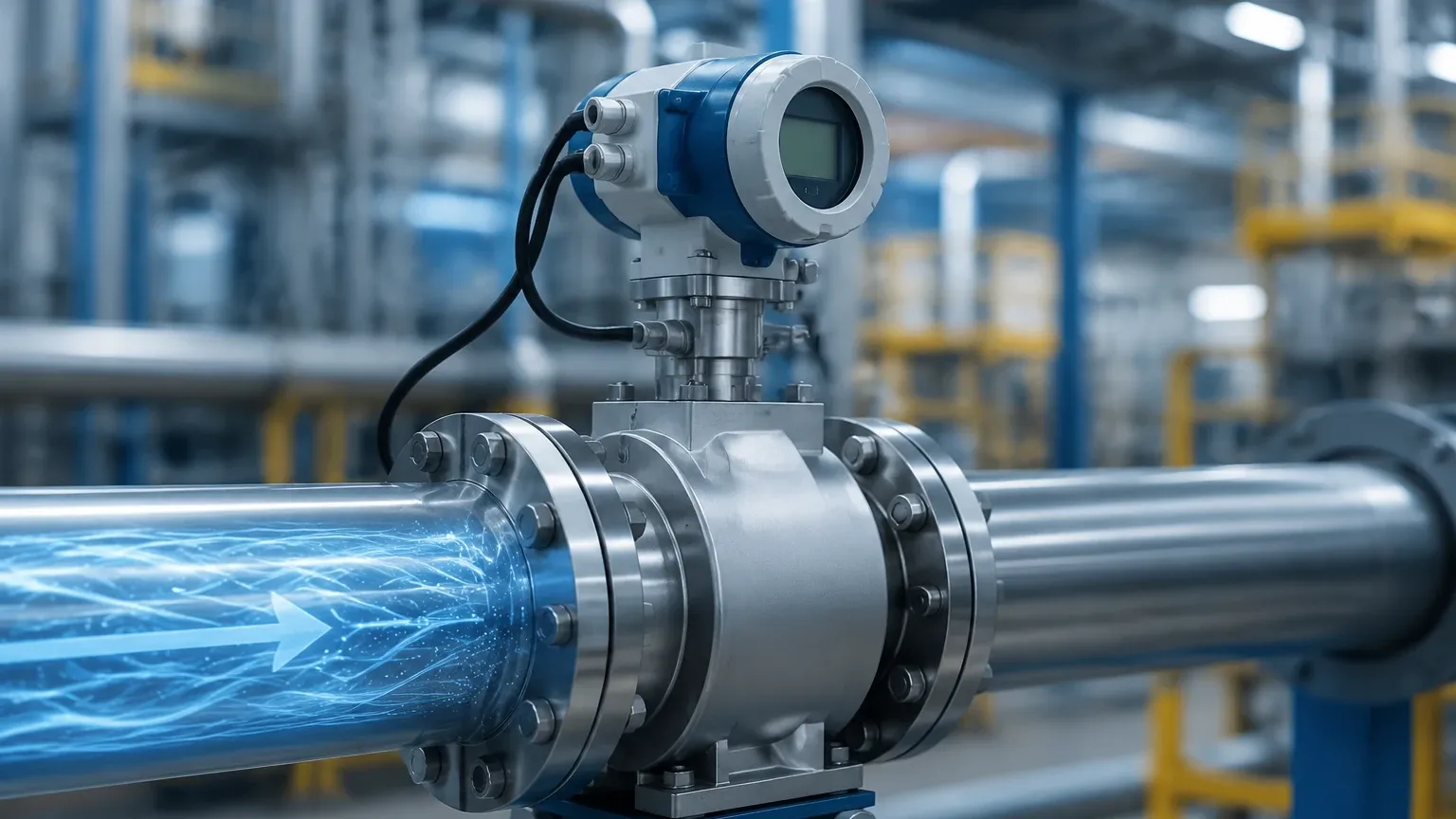
To ensure the accuracy of mass flow meters for gas, specific installation protocols must be followed. Even the most advanced meter will provide inaccurate data if the flow profile is disturbed.
Straight Pipe Runs
Thermal mass flow meters are sensitive to the flow profile. Turbulence caused by elbows, valves, or reducers can skew readings. Generally, a minimum of 20 diameters (20D) of straight pipe upstream and 5 to 10 diameters (5D-10D) downstream is required. If space is limited, flow conditioners (perforated plates or vane-type) can be used to stabilize the flow.
Orientation and Mounting
* Horizontal Mounting: Most common for dry gases. For thermal meters, the sensor should be positioned to avoid any potential moisture accumulation.
* Vertical Mounting: Preferred if there is a risk of condensation in the gas stream. Flowing upward ensures that any liquid droplets do not pool around the sensor elements.
Gas Quality and Filtration
While many mass flow meters are robust, particulates or oil mist can coat sensors. In thermal meters, a coating on the heated element acts as an insulator, leading to an under-reporting of flow. Installing a 50-micron filter upstream is a standard recommendation for industrial gas lines.
Common Risks and Operational Limitations
Despite their precision, mass flow meters for gas face specific challenges in industrial environments:
1. Moisture and Condensation: Thermal mass flow meters can interpret a water droplet hitting the sensor as a massive surge in flow because water carries away heat much more efficiently than gas. If the gas is saturated, knockout pots or heated sensors may be necessary.
2. Vibration: Coriolis meters are sensitive to external mechanical vibrations. If installed near a large compressor or reciprocating pump, the vibration may interfere with the meter's internal frequency, causing measurement noise.
3. Low Gas Density: At very low pressures (e.g., near vacuum), there may not be enough mass in the Coriolis tubes to generate a measurable phase shift. In these scenarios, thermal dispersion is usually the superior choice.
4. Flow Pulsation: Rapidly pulsing flow, common in some burner applications, can outpace the response time of the meter’s electronics. Selecting a meter with a fast response time (typically <1 second) is vital for control loops.
For engineers seeking comprehensive instrumentation solutions, visiting the Main Page provides access to a broader range of process measurement technologies, including level and flow systems designed for demanding industrial environments.
Frequently Asked Questions (FAQ)
Can a thermal mass flow meter be used for any gas?
Most thermal meters can be used for a wide variety of non-corrosive and corrosive gases, but they must be calibrated for the specific gas or gas mixture. Because the measurement relies on the gas's specific heat capacity, using a meter calibrated for Air on a Hydrogen line will result in significant errors.
What is the difference between "Standard" and "Normal" flow?
These terms refer to volumetric flow corrected to specific reference conditions. "Standard" (STP) usually refers to 15.6°C (60°F) and 1.01 bar (14.7 psia), while "Normal" (NTP) often refers to 0°C and 1.01 bar. Mass flow meters can be programmed to output in these units automatically.
Do mass flow meters require frequent recalibration?
In clean gas applications, mass flow meters are very stable. However, in applications with potential sensor coating (like flare gas or untreated biogas), annual verification or cleaning is recommended to maintain accuracy.
Is a pressure regulator necessary before the meter?
For mass flow meters, a pressure regulator is not strictly necessary for the measurement itself, as they are independent of pressure. However, maintaining a stable pressure is often beneficial for the overall process stability and to ensure the flow remains within the meter's calibrated range.
Conclusion
Mass flow meters for gas represent a critical investment in process efficiency and safety. By providing direct mass data, these instruments allow for tighter control of chemical balances, more accurate billing for industrial gases, and optimized energy consumption. When selecting a meter, engineers must balance the high accuracy and gas-independence of Coriolis technology against the wide turndown and low pressure drop of thermal dispersion. Proper attention to gas composition, straight-run requirements, and moisture management will ensure the long-term reliability of the measurement system.