Oil and Gas Equipment Monitoring Solutions Us Gulf Coast
Oil and Gas Equipment Monitoring Solutions Us Gulf Coast
The United States Gulf Coast remains one of the most critical hubs for the global energy industry, housing a dense concentration of refineries, petrochemical plants, and offshore platforms. In this high-stakes environment, the demand for robust oil and gas equipment monitoring solutions us gulf coast is driven by the need for operational safety, environmental compliance, and inventory accuracy. Effective level measurement is a cornerstone of these monitoring systems, ensuring that volatile fluids are managed within strict tolerances.
For engineers and facility managers operating in Texas, Louisiana, and Mississippi, selecting the right instrumentation requires an understanding of both the physics of measurement and the specific environmental stressors of the region. This guide examines the primary level measurement technologies used in the sector and provides a framework for selecting the most reliable solutions.
Principles of Level Measurement in Industrial Applications
Before implementing a monitoring solution, it is essential to understand the underlying physical principles of the sensors. In the oil and gas sector, level measurement is typically categorized into continuous measurement and point level detection.
Radar Level Measurement (FMCW and Pulse)
Radar technology is the gold standard for hydrocarbon storage. It operates on the principle of electromagnetic wave reflection.
* Non-Contact Radar: These sensors emit high-frequency microwave signals (often in the 26 GHz or 80 GHz range). The signal travels through the vapor space, reflects off the liquid surface, and returns to the sensor. The time-of-flight or frequency shift is used to calculate the distance.
* Guided Wave Radar (GWR): This technology uses a physical probe (cable or rod) to guide the microwave signal. It is particularly effective for low-dielectric fluids like liquefied natural gas (LNG) or light condensates, as the probe concentrates the energy of the signal.
Ultrasonic Level Sensors
Ultrasonic sensors function similarly to radar but use sound waves instead of electromagnetic waves. The transducer emits a mechanical pulse that reflects off the surface. While cost-effective, ultrasonic sensors are sensitive to the composition of the vapor space. In the Gulf Coast, where high temperatures can cause significant evaporation, the changing speed of sound in the vapor space can introduce errors unless temperature compensation is precisely calibrated.
Hydrostatic Level Transmitters
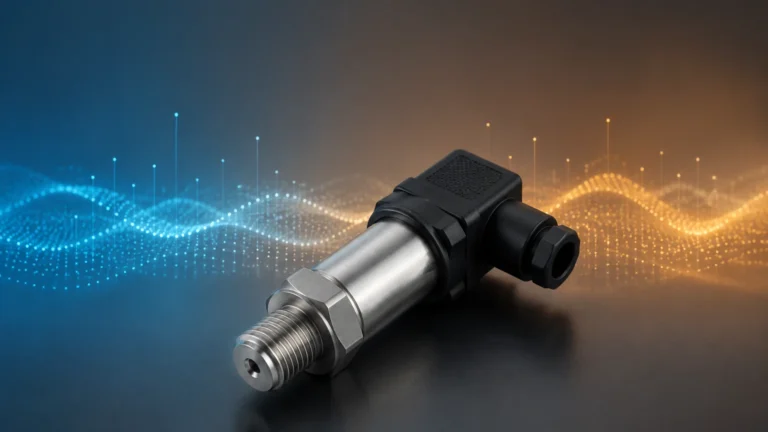
Hydrostatic measurement relies on the relationship between liquid height and pressure: $P = \rho gh$, where $P$ is pressure, $\rho$ is the density of the fluid, $g$ is gravity, and $h$ is the height of the liquid. By installing a pressure transmitter at the bottom of a tank, the level can be inferred. This method is highly reliable for vented tanks but requires a second pressure sensor at the top for pressurized vessels to calculate the differential pressure.
Magnetic Level Gauges (MLG)
MLGs provide both a visual indication and a remote signal. A float containing a magnet assembly moves with the liquid level inside a bypass chamber. This magnet flips external flags for visual monitoring and can interact with a magnetostrictive transmitter for high-precision remote data. They are favored for high-pressure and high-temperature applications where glass gauges would be a safety risk.
Regional Considerations for the US Gulf Coast
Implementing oil and gas equipment monitoring solutions us gulf coast involves addressing unique environmental challenges that can degrade equipment performance over time.
Corrosion and Salinity
The proximity to the Gulf of Mexico means that ambient air is highly saline. Standard aluminum housings often fail prematurely due to pitting corrosion. Engineering specifications for this region typically mandate 316L stainless steel for all wetted parts and often for the instrument housings themselves to ensure a service life exceeding 10 years.
Humidity and Condensation
With relative humidity often reaching 100%, condensation inside instrument enclosures is a common cause of electronic failure. Selecting instruments with dual-compartment housings—separating the wiring terminal from the electronics—is a critical design choice. Furthermore, encapsulated electronics (potting) provide an additional layer of protection against moisture ingress.
Hazardous Area Classifications
Most monitoring points in oil and gas facilities are classified as Class I, Division 1 or Division 2 (or ATEX/IECEx Zone 0/1). Instruments must be certified as explosion-proof or intrinsically safe. When reviewing Main Page specifications, engineers must verify that the selected device meets the specific gas group requirements (typically Group D for methane/oil or Group B for hydrogen-rich environments).
Technology Selection Table
The following table provides a comparison of common level measurement technologies used in oil and gas equipment monitoring solutions us gulf coast.
| Technology | Typical Accuracy | Max Range | Best For | Limitations |
| :— | :— | :— | :— | :— |
| 80 GHz Radar | ±2 mm (0.08 in) | 30 m (98 ft) | Crude oil, refined products | High cost; sensitive to heavy foam |
| Guided Wave Radar | ±3 mm (0.12 in) | 60 m (197 ft) | Interface (oil/water), low DK | Probe can attract paraffin buildup |
| Ultrasonic | ±0.25% of span | 15 m (49 ft) | Produced water, chemical totes | Not for high pressure or heavy vapors |
| Hydrostatic | ±0.1% of span | N/A (Pressure) | Deep underground tanks | Density must remain constant |
| Magnetic Gauge | ±5 mm (0.2 in) | 6 m (20 ft) | High-pressure separators | Mechanical moving parts subject to wear |
Installation and Engineering Best Practices
Proper installation is as critical as the technology selection itself. In the context of oil and gas equipment monitoring solutions us gulf coast, the following practices are recommended:
1. Nozzle Optimization: For non-contact radar, the nozzle height should be kept as short as possible to prevent signal interference from the nozzle wall. If a long nozzle is unavoidable, a horn antenna extension or an 80 GHz sensor with a narrow beam angle should be used.
2. Stilling Wells: In tanks with high turbulence or internal obstructions (like heating coils), installing the level sensor inside a stilling well (a perforated pipe) can provide a calm surface for measurement and eliminate false echoes.
3. Grounding and Surge Protection: The Gulf Coast is prone to frequent lightning strikes. Every monitoring node should be equipped with dedicated surge protection and bonded to the facility's grounding grid to prevent transient voltage damage to sensitive CMOS components.
4. Calibration and Verification: While many modern sensors are "maintenance-free," periodic verification against a manual tape dip is required for custody transfer applications. Ensure that the instrument supports a HART or Modbus interface for remote diagnostics and calibration.

Limitations and Constraints
No single monitoring solution is universal. Engineers must be aware of the following limitations:
* Dielectric Constant (DK): Radar depends on the DK of the fluid. Hydrocarbons typically have low DK values (1.9 to 2.5), which results in a weaker reflected signal. This often necessitates the use of high-sensitivity electronics or Guided Wave Radar.
* Paraffin and Scaling: In crude oil applications, paraffin wax can build up on probes and antennas. While non-contact radar is less affected, it may still require periodic cleaning of the lens if the oil is prone to heavy splashing.
* Vapor Blanketing: Many tanks use nitrogen blanketing to prevent explosions. While radar is unaffected by nitrogen, ultrasonic sensors will require recalibration because the speed of sound in nitrogen differs from that in air.
Frequently Asked Questions (FAQ)
Q: Why is 80 GHz radar becoming the preferred choice for Gulf Coast refineries?
A: The 80 GHz frequency allows for a much narrower beam angle (typically 3 to 6 degrees). This allows the sensor to avoid internal tank obstructions like ladders or agitators and provides better performance in tanks with small nozzles.
Q: Can hydrostatic transmitters be used for oil/water interface measurement?
A: Only if the densities of both the oil and the water are known and remain constant. Generally, Guided Wave Radar or Magnetic Level Gauges with specialized floats are more reliable for interface applications.
Q: What is the impact of ambient heat on Gulf Coast monitoring equipment?
A: Ambient temperatures in summer can exceed 40°C (104°F), with internal enclosure temperatures rising even higher. It is vital to check the operating temperature rating of the electronics. Some high-temp applications may require the use of remote-mounted electronics or cooling fins on the sensor flange.
Conclusion
Selecting oil and gas equipment monitoring solutions us gulf coast requires a balance between advanced measurement physics and ruggedized hardware design. By prioritizing materials like 316L stainless steel and technologies like 80 GHz radar or guided wave radar, operators can ensure high uptime and accurate data in one of the world's most demanding industrial environments. For further technical specifications and product selection support, engineers should consult comprehensive resources on industrial instrumentation to match the specific chemical and physical properties of their process fluids.
To explore specific hardware configurations and technical data sheets for industrial level measurement, you may Review product options and application support to find the system that best fits your site's operational requirements.
Download Oil and Gas Equipment Monitoring Solutions Us Gulf Coast as a PDF