Who Invented the First Thermometer
Who Invented the First Thermometer
In the realm of industrial process control, the measurement of temperature is as fundamental as the measurement of level, pressure, or flow. Understanding the origins of temperature measurement provides critical context for the sophisticated sensors used today in chemical processing, water treatment, and oil and gas applications. While we often take the digital readouts on a modern control panel for granted, the journey from the first "thermoscope" to the high-precision instruments offered on our Main Page spans over four centuries of engineering evolution.
The Evolution of Temperature Measurement: From Thermoscopes to Thermometers
The question of who invented the first thermometer does not have a single-name answer, as the device evolved through several stages of refinement. The distinction between a "thermoscope" (which shows changes in temperature) and a "thermometer" (which measures those changes against a scale) is vital to this history.
Galileo Galilei and the Thermoscope (1593)
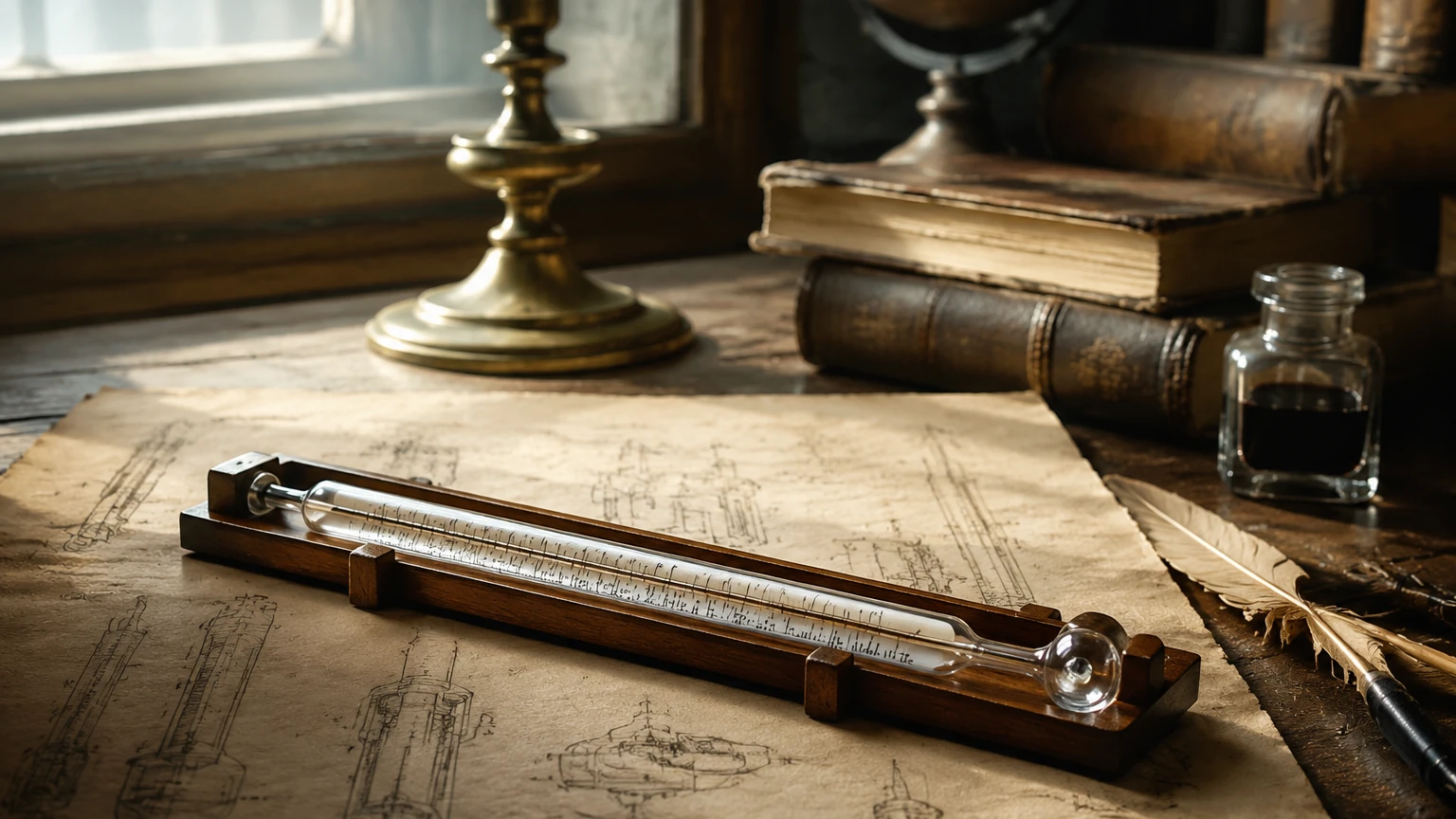
Most historians credit Galileo Galilei with the invention of the first thermoscope around 1593. Galileo’s device utilized the expansion and contraction of air to move a column of water in a tube. While innovative, the Galileo thermoscope had a significant limitation: it was open to the atmosphere. This meant the device reacted to changes in atmospheric pressure as much as it did to temperature, making it unreliable for precise scientific measurement.
Santorio Santorio and the Numerical Scale (1612)
Santorio Santorio, an Italian physician, is often recognized as the first to apply a numerical scale to the thermoscope. By adding markings to the glass tube, he attempted to quantify the heat of the human body. However, like Galileo’s device, Santorio’s instrument remained sensitive to barometric pressure.
Ferdinand II de' Medici and the Sealed Liquid-in-Glass (1654)
The transition toward a modern thermometer occurred in 1654 when Ferdinand II de' Medici, the Grand Duke of Tuscany, developed the first sealed liquid-in-glass thermometer. By using alcohol (spirit of wine) as the expanding medium and sealing the glass tube, he isolated the measurement from atmospheric pressure. This was a pivotal moment in the history of instrumentation, as it allowed for consistent readings regardless of local weather conditions.
The Transition to Precision: Fahrenheit and Celsius
Precision measurement required standardization. Without a universal scale, data could not be shared or replicated across different laboratories or industrial sites.
Daniel Gabriel Fahrenheit (1714)
In 1714, Daniel Gabriel Fahrenheit, a Dutch-German-Polish physicist, revolutionized the field by inventing the mercury thermometer. Mercury offered a much wider temperature range than alcohol and did not stick to the glass walls of the tube. Fahrenheit also developed the first standardized temperature scale. He chose 0°F as the freezing point of a brine solution, 32°F as the freezing point of water, and 96°F (later adjusted to 98.6°F) as the human body temperature. Mercury remained the industrial standard for centuries until environmental regulations began favoring electronic alternatives.
Anders Celsius (1742)
In 1742, Swedish astronomer Anders Celsius proposed a decimal-based scale. Interestingly, his original scale set 0°C as the boiling point of water and 100°C as the freezing point. This was later reversed by Carolus Linnaeus to the 0–100 scale we use today in the metric system. For industrial applications, the Celsius scale (part of the SI system) is the global standard for engineering calculations.
Fundamental Principles of Thermal Expansion
To understand how these historical inventions relate to modern industrial level measurement, one must understand the physics of thermal expansion. Most substances expand when heated and contract when cooled. In liquid-in-glass thermometers, the volumetric expansion of the liquid $(\Delta V = \beta V_0 \Delta T)$ is used to indicate temperature.
In modern industrial settings, this principle is still relevant, though the methods of detection have changed. We now use:
1. Thermal Expansion of Solids: Used in bimetallic strips.
2. Electrical Resistance: Resistance Temperature Detectors (RTDs) like the Pt100 utilize the predictable change in electrical resistance of platinum as temperature fluctuates.
3. Seebeck Effect: Thermocouples generate a voltage proportional to the temperature difference between two dissimilar metals.
Temperature Sensing in Industrial Level Measurement
In B2B industrial environments, temperature is rarely measured in isolation. It is a critical variable that affects the accuracy of level measurement instruments. At Welk, we integrate temperature compensation into our sensor suites to ensure process reliability.
Density Compensation in Hydrostatic Level Transmitters
Hydrostatic level sensors measure the pressure exerted by a liquid column. The formula for level is $L = P / (\rho \times g)$, where $\rho$ is the density of the liquid. Because density changes with temperature, a hydrostatic sensor without temperature compensation will report an incorrect level if the process fluid heats up or cools down. Modern transmitters include an internal temperature sensor to adjust the density calculation in real-time.
Speed of Sound in Ultrasonic Level Sensors
Ultrasonic level sensors calculate distance based on the time it takes for a sound wave to travel to the surface and back. The speed of sound in air is highly dependent on temperature ($v \approx 331.3 + 0.606T$, where $T$ is in degrees Celsius). A change of just 10°C can result in a measurement error of nearly 2%. Therefore, high-quality ultrasonic sensors must feature integrated temperature probes to calibrate the time-of-flight calculation.
Selection Criteria for Industrial Temperature and Level Instrumentation
When selecting instrumentation for a facility, engineers must evaluate several criteria to ensure the device is fit for purpose. The following table compares common sensing technologies used in conjunction with level measurement.
| Sensor Type | Operating Range (°C) | Accuracy | Durability | Typical Industrial Use |
| :— | :— | :— | :— | :— |
| RTD (Pt100) | -200 to 850 | High | Moderate | Precision chemical processing |
| Thermocouple | -200 to 1700 | Moderate | High | High-heat furnaces and kilns |
| Thermistor | -50 to 150 | Very High | Low | Specialized laboratory equipment |
| Infrared (IR) | -50 to 3000 | Moderate | N/A (Non-contact) | Moving parts or hazardous zones |
Key Evaluation Factors:
* Process Media: Is the fluid corrosive, viscous, or prone to scaling?
* Pressure Rating: Will the sensor housing (or thermowell) withstand the vessel's internal pressure?
* Response Time: How quickly does the process temperature change? RTDs are generally slower than thermocouples.
* Environmental Ratings: Does the sensor require ATEX or IECEx certification for explosive atmospheres?
Installation Guidelines for Industrial Sensors
Proper installation is as important as the device selection itself. Even the most accurate sensor will provide false data if installed incorrectly.
1. Thermowell Usage: In high-pressure or corrosive environments, sensors should be installed inside a thermowell. This allows the sensor to be removed for calibration without depressurizing the tank or pipe.
2. Insertion Depth: To avoid "stem conduction" errors (where heat escapes through the sensor body), the probe should be inserted to a depth of at least 10 times its diameter.
3. Proximity to Level Sensors: In tanks with significant temperature gradients (stratification), temperature probes should be placed at multiple levels or near the intake/discharge points to provide a representative average for density compensation.
4. Wiring and Shielding: To prevent electromagnetic interference (EMI) from pumps or motors, use shielded cables and ensure proper grounding of the 4-20mA or RS485 loops.
Limitations and Practical Challenges
While technology has advanced significantly since the days of Fahrenheit, certain limitations remain:
* Calibration Drift: All electronic sensors drift over time due to thermal cycling and mechanical stress. Annual calibration against a NIST-traceable standard is recommended.
* Thermal Lag: In large vessels, the temperature at the sensor may not reflect the temperature at the center of the mass immediately. This lag must be accounted for in PID control loops.
* Material Compatibility: The sheath material of the sensor must be compatible with the process fluid. 316L Stainless Steel is standard, but aggressive chemicals may require Tantalum or PTFE coatings.
Frequently Asked Questions (FAQs)
Q: Why was mercury used in the first thermometers?
A: Mercury was chosen because it has a very linear rate of expansion, stays liquid over a wide range of temperatures (-38.8°C to 356.7°C), and is easily visible against glass.
Q: How does temperature affect radar level meters?
A: Unlike ultrasonic sensors, radar (GWR or Non-contact) uses electromagnetic waves, which are largely unaffected by air temperature or pressure. This makes radar a superior choice for high-temperature steam applications where ultrasonic sensors would fail.
Q: Can I use a standard temperature sensor in a vacuum?
A: Yes, but heat transfer in a vacuum occurs only through radiation and conduction, not convection. This means the sensor's response time may be significantly slower than in a pressurized environment.
Q: What is the difference between a Pt100 and a Pt1000?
A: Both are platinum RTDs. The Pt100 has a resistance of 100 ohms at 0°C, while the Pt1000 has 1000 ohms. Pt1000 sensors are often used in battery-powered applications because the higher resistance results in lower power consumption.
For engineers and procurement professionals seeking robust measurement solutions, understanding the legacy of those who invented the first thermometer is the first step toward mastering process control. Whether you require a simple level switch or a complex integrated system with full temperature compensation, our team provides the technical expertise and hardware necessary to maintain efficiency and safety. Explore our full range of industrial instruments on our Main Page.