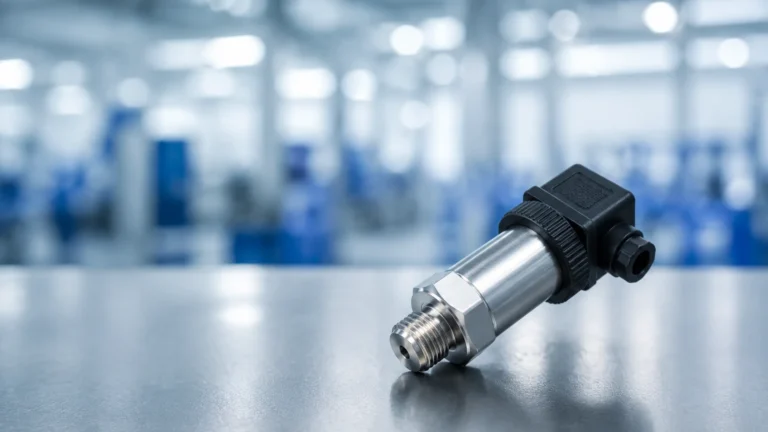
Wireless Flow Transmitter
Wireless Flow Transmitter
In the era of Industrial Internet of Things (IIoT) and smart manufacturing, the ability to monitor fluid dynamics without the constraints of physical wiring has become a cornerstone of process efficiency. A wireless flow transmitter is an integrated device that measures the flow rate of liquids or gases and transmits this data to a control system or cloud platform via radio frequency signals. By eliminating the need for extensive cabling, conduits, and manual data logging, these instruments significantly reduce installation costs and enable monitoring in remote or hazardous locations where traditional wired infrastructure is impractical.
For industrial operators, the transition to wireless instrumentation is not merely about convenience; it is about data accessibility. Whether monitoring water distribution networks, chemical processing lines, or effluent discharge, the wireless flow transmitter provides real-time insights that facilitate predictive maintenance and resource optimization. This guide explores the underlying principles, selection criteria, and engineering considerations essential for deploying these devices effectively.
Measurement Principles and Wireless Architecture
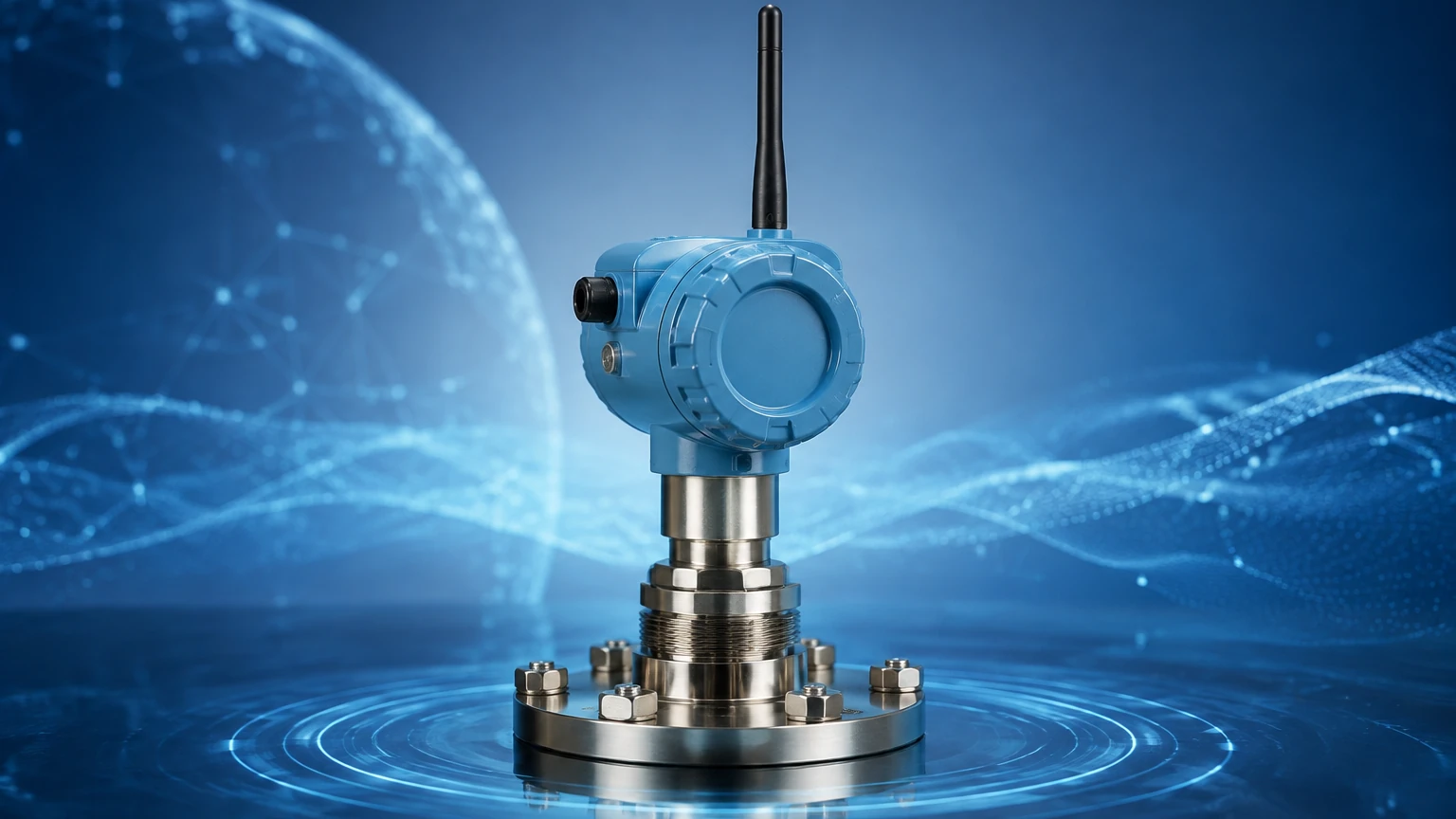
Before selecting a wireless flow transmitter, it is critical to understand both the primary sensing technology and the communication protocol that facilitates data transmission. The "transmitter" is essentially a hybrid device consisting of a flow sensor (the primary element) and a wireless communication module (the secondary element).
Flow Sensing Technologies
Industrial flow measurement typically relies on one of several physical principles, many of which overlap with level measurement techniques:
1. Ultrasonic (Transit-Time and Doppler): Ultrasonic sensors use sound waves to determine fluid velocity. In transit-time meters, signals are sent upstream and downstream; the difference in time is proportional to the flow velocity. This is highly effective for clean liquids. Doppler meters, conversely, reflect signals off particles or bubbles, making them suitable for slurries.
2. Electromagnetic (Magmeters): Based on Faraday’s Law of Induction, these meters measure the voltage generated by a conductive fluid moving through a magnetic field. They are ideal for wastewater and corrosive chemicals.
3. Differential Pressure (DP): By creating a slight constriction in a pipe (using an orifice plate or Venturi tube), the transmitter measures the pressure drop across the constriction to calculate flow rate.
4. Open Channel Flow (Level-to-Flow): In many environmental applications, flow is measured in open channels like flumes or weirs. Here, a radar or ultrasonic level meter measures the head (height) of the liquid. Since the geometry of the channel is known, the level is converted into a flow rate using standardized equations. This is a primary area where level measurement expertise directly informs flow monitoring.
Wireless Communication Protocols
The wireless component typically operates on one of the following industrial standards:
* WirelessHART: A self-organizing mesh network protocol operating at 2.4 GHz. It is highly reliable in dense industrial environments because data can "hop" between devices to find the best path to the gateway.
* LoRaWAN (Long Range Wide Area Network): Designed for low power consumption and long-range transmission (up to 15 km in rural areas). It is ideal for battery-powered transmitters in remote fields.
* NB-IoT / LTE-M: Cellular-based protocols that utilize existing mobile infrastructure, suitable for widely dispersed assets like municipal water meters.
Key Components of a Wireless Flow System
A functional wireless flow transmitter system is comprised of four main functional blocks:
1. The Primary Sensing Element: The hardware in contact with or in close proximity to the fluid (e.g., ultrasonic transducers or electromagnetic electrodes).
2. Signal Processing Electronics: This unit converts the raw analog or digital signal from the sensor into a standardized flow value (e.g., m³/h or L/s). It also handles temperature and pressure compensation if required.
3. Radio Module and Antenna: The component responsible for modulating the data into radio waves. Antenna selection is vital for maintaining signal integrity over distance or through obstacles.
4. Power Management System: Since most wireless transmitters lack a mains power connection, they rely on high-capacity lithium batteries, often supplemented by solar panels in outdoor installations. Power management software determines how often the device "wakes up" to take a measurement and transmit data, which directly impacts battery longevity.
Selection Criteria for Industrial Applications
Choosing the correct wireless flow transmitter requires a balance between hydraulic requirements and wireless network constraints. Engineers should evaluate the following parameters:
Selection Table: Comparison of Wireless Protocols
| Feature | WirelessHART | LoRaWAN | NB-IoT (Cellular) |
| :— | :— | :— | :— |
| Network Topology | Mesh | Star | Star |
| Range | Short (30–200m per hop) | Long (2–15km) | Very Long (Cellular coverage) |
| Battery Life | 2–5 Years | 5–10 Years | 3–8 Years |
| Data Rate | Moderate | Low | Moderate |
| Best Use Case | Dense plant environments | Remote pipelines/Open channels | Distributed municipal assets |
Fluid and Environmental Factors
* Fluid Conductivity: If using electromagnetic sensing, the fluid must have a minimum conductivity (typically >5 μS/cm).
* Pipe Diameter: Ultrasonic clamp-on transmitters are versatile for various pipe sizes, whereas inline meters must be sized exactly to the pipe diameter (e.g., DN50, DN100).
* Hazardous Areas: If the transmitter is installed in a refinery or chemical plant, it must carry appropriate certifications such as ATEX or IECEx for explosive atmospheres.
Installation Considerations and Best Practices
Proper installation is the most significant factor in ensuring the accuracy and reliability of a wireless flow transmitter. Unlike wired devices, the physical placement must account for both hydraulic stability and radio frequency (RF) propagation.
Hydraulic Requirements
To achieve a stable flow profile, most transmitters require a specific length of straight pipe upstream and downstream of the sensor. A common rule of thumb is 10D upstream and 5D downstream (where D is the pipe diameter). This minimizes turbulence caused by elbows, valves, or pumps. For open channel flow using ultrasonic level sensors, the sensor must be mounted perpendicular to the liquid surface and at a specific distance from the flume entrance to avoid the "draw-down" effect.
Wireless Signal Optimization
* Line of Sight (LoS): While mesh networks can route around obstacles, a clear line of sight between the transmitter antenna and the gateway always yields the best performance.
* Fresnel Zone: Avoid placing the antenna too close to large metal surfaces or the ground, as this can cause signal reflections that interfere with the primary wave.
* Antenna Orientation: Ensure antennas are oriented vertically (unless otherwise specified) to match the polarization of the receiving gateway.
Power Management
During commissioning, the "update rate" or "sampling interval" must be configured. Transmitting data every second will deplete batteries rapidly. For most industrial processes, an update rate of 1 to 15 minutes is sufficient. If the process involves rapid changes, consider using "exception-based reporting," where the device only transmits if the flow rate deviates from a set threshold.
Limitations and Potential Risks
While wireless flow transmitters offer significant advantages, engineers must remain aware of their inherent limitations:
1. Latency: Wireless networks introduce a delay between the actual measurement and the data appearing in the control room. This makes wireless transmitters unsuitable for high-speed safety instrumented functions (SIF) or fast-acting control loops.
2. Signal Interference: Industrial environments are full of electromagnetic interference (EMI) from motors and heavy machinery. Choosing a robust protocol like WirelessHART helps mitigate this through frequency hopping.
3. Battery Maintenance: Although batteries last years, they eventually require replacement. In large-scale deployments, tracking battery health across hundreds of devices requires a centralized asset management system.
4. Cybersecurity: Wireless signals can theoretically be intercepted. It is essential to use transmitters that support AES-128 encryption and secure join procedures to prevent unauthorized data access or spoofing.
Applications in Water and Process Industries
Wireless flow transmitters are particularly effective in sectors where infrastructure is spread across large geographic areas or where retrofitting wires is cost-prohibitive.
* Wastewater Treatment: Monitoring the flow of influent and effluent in open channels. By using ultrasonic or radar level sensors as the primary measurement tool, operators can calculate discharge volumes without contacting the corrosive medium.
* Chemical Injection: In large refineries, wireless transmitters monitor the flow of additives into various process streams, allowing for precise dosing without the need for new cable runs in congested pipe racks.
* Irrigation and Agriculture: Tracking water usage in remote fields to ensure compliance with environmental regulations and to optimize pump operations.
For engineers seeking to integrate these sensors into broader automation frameworks, reviewing the Main Page provides a comprehensive overview of compatible instrumentation and technical specifications for various industrial environments.
Frequently Asked Questions (FAQs)
Q: Can a wireless flow transmitter be used for custody transfer?
A: Generally, no. Most custody transfer applications (where money changes hands based on the measurement) require high-speed, high-accuracy wired connections to meet strict regulatory standards. However, they are excellent for internal process monitoring and billing.
Q: How do I know if the wireless signal will reach my gateway?
A: A site survey is recommended. Most manufacturers provide "signal strength" or "RSSI" (Received Signal Strength Indicator) tools within the transmitter's software to test the connection before final mounting.
Q: What happens if the wireless network goes down?
A: Many modern transmitters include internal data logging. They can store flow data locally and "backfill" the records to the gateway once the connection is restored.
Q: Are ultrasonic wireless flow transmitters as accurate as electromagnetic ones?
A: Accuracy depends more on the application than the wireless transmission. Inline electromagnetic meters typically offer higher accuracy (0.5% or better), while clamp-on ultrasonic meters are slightly less accurate (1-2%) but offer the advantage of non-intrusive installation.
Conclusion
The wireless flow transmitter represents a significant leap forward in industrial instrumentation, bridging the gap between traditional mechanical engineering and modern data science. By understanding the measurement principles—ranging from transit-time ultrasonic to level-based open channel flow—and matching them with the appropriate wireless protocol, facilities can achieve a level of visibility that was previously too expensive or complex to implement. As battery technology and low-power wide-area networks (LPWAN) continue to evolve, the role of wireless measurement will only expand, becoming an indispensable tool for the modern process engineer.