Wireless Tank Level Monitor
Wireless Tank Level Monitor
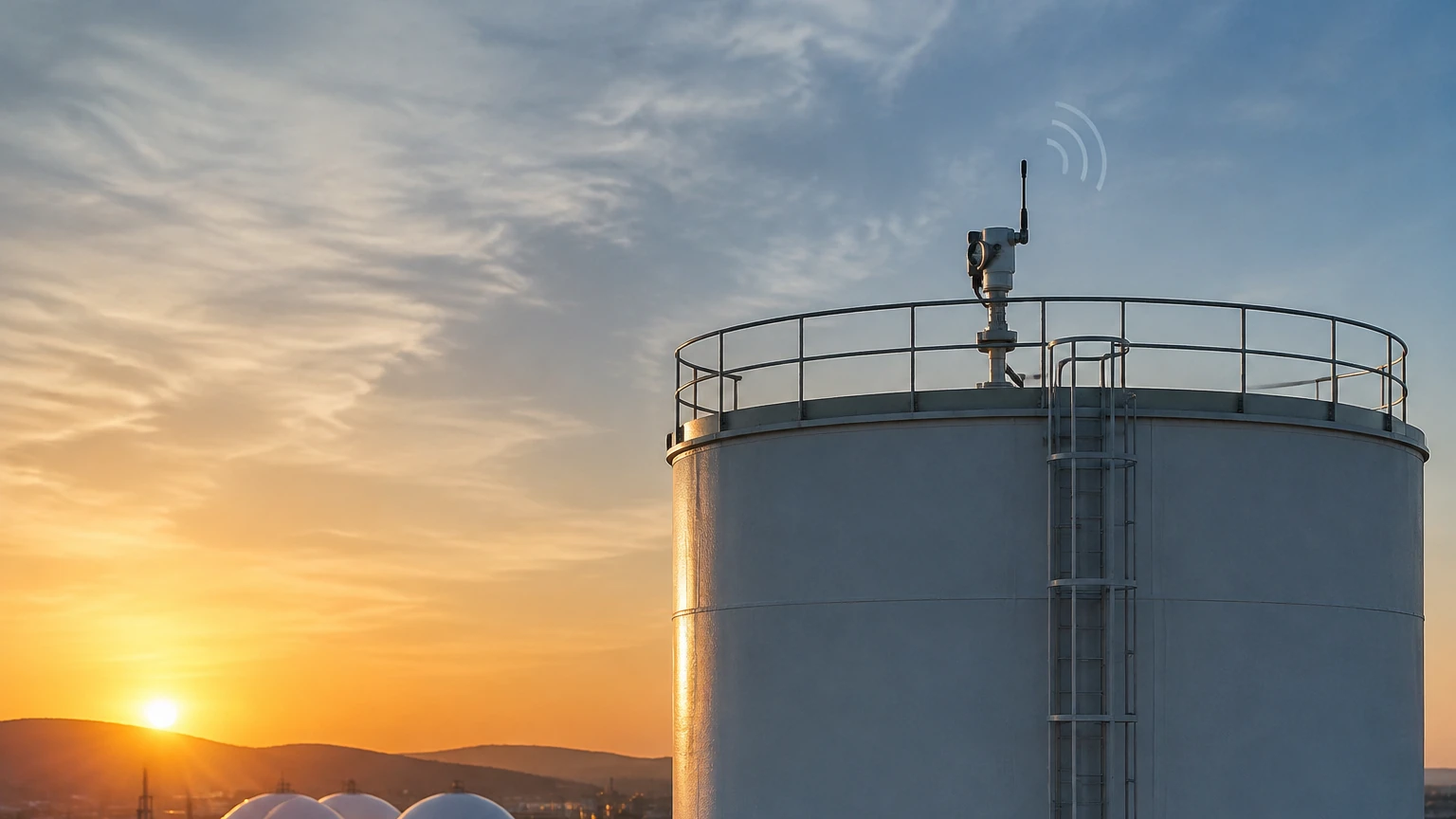
In modern industrial environments, the ability to monitor inventory and process levels remotely has transitioned from a luxury to a necessity. A wireless tank level monitor serves as a critical bridge between physical storage assets and digital management systems. By eliminating the need for extensive trenching and cabling, these systems provide a cost-effective and scalable solution for monitoring water, chemicals, fuels, and industrial fluids across vast sites or in challenging terrains.
For engineers and facility managers, selecting the right wireless system requires an understanding of both the sensing technology and the communication protocols involved. This guide explores the fundamental principles, selection criteria, and practical considerations for deploying wireless level measurement in industrial applications.
Understanding Wireless Level Measurement Principles
Before selecting a wireless tank level monitor, it is essential to understand the underlying sensing technologies. The "wireless" aspect refers to the data transmission method, but the accuracy and reliability of the data depend entirely on the physical measurement principle employed by the sensor.
1. Ultrasonic Level Sensing
Ultrasonic sensors operate on the "Time-of-Flight" (ToF) principle. The device emits high-frequency sound waves that travel through the air, bounce off the surface of the liquid or solid material, and return to the transducer. By measuring the time interval between the emission and the reception of the pulse, the sensor calculates the distance to the material surface.
* Advantages: Non-contact measurement, easy to install, and relatively low cost.
* Limitations: Performance can be affected by heavy foam, high-pressure vapors, or extreme turbulence, which can scatter or absorb the sound waves.
2. Radar Level Measurement (Non-Contact)
Similar to ultrasonic sensors, radar level meters use ToF, but they utilize electromagnetic microwaves rather than sound waves. These waves travel at the speed of light and are much less susceptible to environmental interference such as temperature fluctuations, vacuum conditions, or dust.
* Advantages: Highly accurate (often within ±2 mm), works in high-pressure and high-temperature environments, and is unaffected by vapor or gas layers.
* Limitations: Higher initial cost compared to ultrasonic sensors; requires a clear path to the liquid surface.
3. Hydrostatic Pressure Measurement
Hydrostatic transmitters are contact-based sensors placed at the bottom of a tank or submerged in the liquid. They measure the pressure exerted by the liquid column above them. Since pressure is directly proportional to the height of the liquid and its specific gravity, the level can be calculated accurately.
* Advantages: Excellent for deep tanks, wells, or vented vessels; very stable over long periods.
* Limitations: Requires contact with the fluid; accuracy depends on a constant liquid density.
4. Guided Wave Radar (GWR)
GWR uses a probe or cable to guide the microwave pulse from the sensor to the liquid surface. This technology is particularly effective in tanks with narrow nozzles or internal obstructions that might interfere with a standard non-contact radar signal.
Key Components of a Wireless Tank Level Monitor System
A complete wireless monitoring solution consists of more than just the sensor. To function effectively in an industrial B2B context, several components must work in harmony:
1. The Sensor/Transmitter: This unit performs the physical measurement and converts it into a digital signal. In wireless configurations, the transmitter often includes an integrated battery and a radio module.
2. The Wireless Protocol: This is the "language" the device uses to send data. Common protocols include:
* LoRaWAN: Ideal for long-range (up to 10–15 km) and low power consumption, making it perfect for remote tank farms.
* NB-IoT / LTE-M: Utilizes existing cellular networks, providing high reliability and wide coverage without needing a local gateway.
* Zigbee/WirelessHART: Often used for short-range, mesh-networked industrial environments.
3. The Gateway: For protocols like LoRaWAN, a gateway acts as a local hub that collects data from multiple sensors and forwards it to a central server via Ethernet or Cellular backhaul.
4. Cloud Platform/Software: The final destination where data is visualized, trends are analyzed, and alerts (such as low-level alarms) are generated.
Selection Criteria for Industrial Applications
Choosing a wireless tank level monitor requires a detailed evaluation of the application's physical and chemical constraints. Engineers should consult the Main Page of reputable manufacturers like Welk to review specific product specifications before finalizing a design.
Fluid Characteristics
The chemical compatibility of the sensor is paramount. For corrosive chemicals, sensors with PTFE or PVDF wetted parts are required. If the fluid is prone to foaming, radar is typically preferred over ultrasonic. If the fluid density changes frequently (e.g., in mixing tanks), non-contact methods are superior to hydrostatic pressure sensors.
Tank Geometry and Environment
* Height: Ensure the sensor’s range exceeds the maximum tank height. Ultrasonic sensors typically range up to 15 meters, while radar can reach 30 to 70 meters.
* Internal Obstructions: If the tank has agitators, cooling coils, or ladders, a guided wave radar or a narrow-beam non-contact radar is necessary to avoid false echoes.
* Hazardous Areas: For oil and gas or chemical storage, the monitor must carry appropriate explosion-proof certifications (e.g., ATEX, IECEx).
Practical Selection Table
| Technology | Best Application | Max Range (Typical) | Accuracy | Environmental Resistance |
| :— | :— | :— | :— | :— |
| Ultrasonic | Water/Wastewater, open sumps | 15 m | ±0.25% | Moderate (Affected by foam/vapor) |
| Radar (80GHz) | Chemical tanks, high precision | 30m+ | ±2 mm | High (Works in vacuum/steam) |
| Hydrostatic | Deep wells, fuel tanks | 200m+ | ±0.1% | High (Contact-based) |
| Magnetic Gauge | High-pressure boilers | 6 m | ±5 mm | Very High (Visual + Electronic) |
Installation and Signal Optimization
The primary advantage of a wireless tank level monitor is the ease of installation, but technical precision is still required to ensure data integrity.
1. Positioning and Mounting
Sensors should be mounted perpendicular to the liquid surface. For non-contact sensors, avoid mounting too close to the tank wall to prevent signal interference from side-wall reflections. A common rule of thumb is to mount the sensor at a distance from the wall equal to at least 1/10th of the tank height.
2. Signal Strength and Antenna Orientation
Wireless signals can be attenuated by metal structures, thick concrete walls, or dense foliage. When installing a wireless monitor:
* Line of Sight: Whenever possible, maintain a clear line of sight between the sensor antenna and the gateway.
* Antenna Height: Elevating the gateway antenna can significantly improve the reception range.
* Fresnel Zone: Ensure the path of the radio wave is not partially blocked, as this can cause signal phase shifts and data loss.
3. Power Management
Most wireless monitors are battery-powered to maintain their "no-wire" status. To maximize battery life (which can range from 2 to 7 years depending on the model), engineers should configure the "heartbeat" or transmission interval. For example, a water reservoir may only need to report every hour, whereas a process tank might require updates every 5 minutes.
Limitations and Maintenance Requirements
While wireless technology is highly advanced, it is not without limitations. Understanding these risks is essential for risk management in industrial operations.
* Latency: Wireless systems are generally not suitable for high-speed control loops (e.g., fast-acting emergency shut-off valves) due to the inherent delay in data transmission and sleep cycles used to save battery.
* Interference: In heavily congested industrial environments, RF interference from other wireless equipment can occasionally lead to packet loss.
* Battery Maintenance: While long-lasting, batteries eventually require replacement. A robust maintenance schedule should include checking battery voltage levels via the monitoring software.
* Environmental Build-up: For ultrasonic and radar sensors, the accumulation of condensation or material buildup on the sensor face can degrade signal quality. Periodic cleaning may be necessary in high-humidity or dusty applications.
Frequently Asked Questions (FAQs)
Q: Can wireless tank level monitors be used in pressurized tanks?
A: Yes, but non-contact radar is the preferred technology for pressurized vessels, as it is unaffected by changes in the gas space pressure or composition.
Q: How far can the sensor be from the gateway?
A: This depends on the protocol. LoRaWAN can reach several kilometers in open areas, while Bluetooth or Zigbee systems are typically limited to 10–100 meters.
Q: Is the data secure?
A: Most industrial wireless protocols (like LoRaWAN and NB-IoT) include end-to-end AES-128 encryption to ensure that tank level data cannot be intercepted or tampered with.
Q: What happens if the wireless signal is lost?
A: Many high-quality monitors include local data logging capabilities. If the connection to the gateway is lost, the device stores the readings and uploads them once the connection is restored.
Conclusion
Implementing a wireless tank level monitor provides industrial operators with unparalleled flexibility and data visibility. By selecting the appropriate measurement principle—whether it be radar for precision, ultrasonic for cost-effectiveness, or hydrostatic for depth—and pairing it with a robust wireless protocol, facilities can significantly reduce installation costs while improving inventory accuracy. For those looking to upgrade their current infrastructure, reviewing technical specifications and application-specific designs on the Main Page is the recommended next step to ensure the chosen solution meets the rigorous demands of the industrial environment.