7 Radar Detector
7 Radar Detector
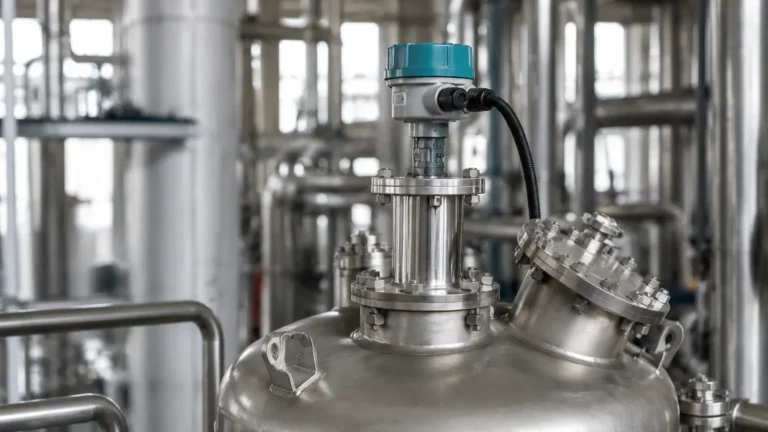
In the landscape of modern industrial automation, the precision of level measurement directly impacts operational efficiency, safety, and inventory management. Among the various technologies available, the high-frequency radar sensor—often categorized under the 76-81GHz spectrum or colloquially referred to as a 7 radar detector in specific industrial contexts—has emerged as the gold standard for challenging environments.
This guide explores the technical architecture of these high-frequency Radar Level Meters, their operational advantages over lower-frequency alternatives, and the critical engineering factors that should guide procurement and installation.
1. Understanding the Measurement Principle
Industrial radar level measurement operates on the principle of Time of Flight (ToF). A sensor emits electromagnetic waves toward the surface of the medium, which then reflects these waves back to the antenna. The distance is calculated based on the time interval between emission and reception.
FMCW Technology
Most modern 7-series radar detectors (operating in the 76-81GHz range) utilize Frequency Modulated Continuous Wave (FMCW) technology rather than simple pulse radar. In an FMCW system, the transmitter emits a continuous signal with a frequency that varies over time (a linear ramp).
When the reflected signal is received, it is compared to the signal being emitted at that exact moment. The frequency difference between the two signals is directly proportional to the distance the wave has traveled. This method allows for significantly higher resolution and accuracy, often within ±1 mm (0.04 in), making it ideal for high-precision custody transfer or narrow-vessel applications.
The Significance of High Frequency
The transition from 6GHz or 26GHz to the 80GHz (7-series) range is not merely a numerical increase; it fundamentally changes the physics of the measurement:
* Narrow Beam Angle: Higher frequencies allow for a much tighter beam angle (as low as 3°) using the same antenna size. This prevents the signal from hitting internal tank obstructions like agitators, ladders, or heating coils.
* Smaller Antennas: Because the antenna size required is inversely proportional to the frequency, an 80GHz sensor can achieve high focus with a 25 mm (1 in) antenna, whereas a 6GHz sensor would require an antenna several times larger to achieve similar focus.
2. Technical Advantages of 7-Series Radar Detectors
When evaluating a 7 radar detector for industrial use, several technical advantages distinguish it from traditional ultrasonic or low-frequency radar instruments.
Enhanced Signal Sensitivity
High-frequency sensors possess a larger bandwidth (up to 4GHz or 5GHz). This provides a higher range resolution, allowing the device to distinguish between the product surface and nearby interference. This is particularly critical when measuring media with a low dielectric constant (εr), such as hydrocarbons or plastic pellets, which reflect very little energy.
Performance in Dust and Steam
While ultrasonic sensors struggle in heavy dust or steam due to the attenuation of sound waves by air density changes, radar waves are electromagnetic and largely unaffected by these conditions. The 7-series radar, with its high energy density and focused beam, can penetrate thick dust clouds in cement silos or heavy steam in boiling chemical reactors with minimal signal loss.
Measurement Near the Tank Bottom
Due to the shorter wavelength of high-frequency signals, the "dead zone" (the area near the antenna where measurement is impossible) is significantly reduced. This allows for accurate level measurement even when the tank is nearly full or nearly empty.
3. Industrial Selection Criteria
Selecting the correct radar instrument requires a thorough analysis of the process conditions. Engineers should use the following table to compare the 7-series (80GHz) against traditional 26GHz models.
Selection Comparison Table
| Feature | 26GHz Radar | 80GHz (7-Series) Radar |
| :— | :— | :— |
| Beam Angle (Typical) | 8° to 20° | 3° to 6° |
| Accuracy | ±3 mm to ±5 mm | ±1 mm to ±2 mm |
| Antenna Size | Large (DN50-DN150) | Small (DN20-DN100) |
| Max Range | Up to 30 m (98 ft) | Up to 120 m (393 ft) |
| Obstacle Immunity | Moderate | High |
| Low Dielectric Media | Challenging | Excellent |
| Application Focus | General storage tanks | Narrow vessels, solids, high-precision |
Media Properties
The Dielectric Constant (εr) is the most critical material property. If the εr is below 1.4, a guided wave radar or a high-sensitivity 7-series non-contact radar is required. For liquids with foam, lower frequencies (26GHz) sometimes perform better as they are less likely to be scattered by the foam bubbles, though modern 80GHz algorithms are increasingly capable of filtering foam interference.
4. Installation and Engineering Constraints
Proper installation is the difference between a reliable instrument and a constant source of false alarms. When installing a 7 radar detector, engineers must adhere to specific geometric constraints.
Nozzle Considerations
The height and diameter of the mounting nozzle can create "ringing" or internal reflections. Because the 80GHz radar has a narrow beam, it is much more forgiving of tall nozzles than lower-frequency units. However, it is still best practice to ensure the antenna extends slightly past the bottom of the nozzle to ensure a clear path for the signal.
Obstruction Management
Even with a 3° beam, the signal expands over distance. At a distance of 10 meters (32.8 ft), a 3° beam has a footprint of approximately 520 mm (20.5 in). Engineers must ensure that no structural members, pipes, or agitators enter this "cone" of measurement. If obstructions are unavoidable, most modern Radar Level Meters offer "False Echo Suppression" software, which allows the user to map out static reflections and ignore them.
Orientation for Solids
When measuring bulk solids (grains, minerals, powders), the material does not form a flat surface but rather an "angle of repose" (a cone or funnel). The radar should be mounted such that the beam is perpendicular to the slope of the material for maximum signal return, or a swiveling flange should be used to optimize the signal strength.

5. Application Case Studies
Case A: Chemical Dosing Tanks
In small chemical tanks (under 2 meters in height), traditional radar often fails due to the large dead zone and interference from the tank walls. A 7-series radar detector with a 1-inch thread connection provides the necessary precision and fits into existing small-diameter ports without requiring tank modification.
Case B: Cement Silo Level
Cement silos create extreme dust environments during pneumatic filling. Ultrasonic sensors fail immediately. A 26GHz radar may lose the signal during the filling cycle. An 80GHz radar, with its high-frequency focus, maintains a stable signal through the dust, providing real-time inventory data even during active filling.
6. Limitations and Risks
While highly versatile, 7-series radar technology is not a universal solution for every scenario:
1. Heavy Foam: Extremely thick, dense foam (like shaving cream) can absorb the high-frequency signal entirely. In these rare cases, a guided wave radar (GWR) or a lower-frequency non-contact radar may be more effective.
2. Cost: High-frequency components are generally more expensive to manufacture, leading to a higher initial purchase price compared to ultrasonic or 26GHz sensors. The ROI must be justified by the need for higher accuracy or smaller installation footprints.
3. Condensation: While 80GHz radars handle light condensation well, heavy water droplets on the antenna lens can refract the beam. Models with PTFE or PEEK lenses and integrated air purge connections are recommended for high-humidity environments.
7. Frequently Asked Questions (FAQ)
Q: Can a 7-series radar detector measure through a plastic tank roof?
A: Yes. Because radar waves penetrate non-conductive materials, the sensor can be mounted outside a plastic (HDPE, PP, or PVC) or fiberglass tank, measuring the level through the roof. This is ideal for corrosive chemicals where the sensor should not contact the fumes.
Q: What is the maintenance requirement for these sensors?
A: Being non-contact, maintenance is minimal. There are no moving parts to wear out. The primary maintenance task is checking the antenna for material buildup in extremely sticky or dusty applications. Many 7-series units include self-diagnostic features that alert the control room if the signal strength drops due to buildup.
Q: Is 80GHz radar safe for human exposure?
A: Industrial radar level meters emit extremely low-power electromagnetic radiation, far below the levels emitted by a standard mobile phone. They are safe for operation in industrial environments when used according to manufacturer specifications.
8. Conclusion for International Buyers
When sourcing a 7 radar detector for industrial level measurement, it is vital to confirm the following specifications with the manufacturer:
* Process Connection: Threaded (G/NPT) or Flanged (ANSI/DIN).
* Output Signal: 4-20mA HART, Modbus RS485, or Profibus PA.
* Housing Material: Aluminum or Stainless Steel (316L) for corrosive environments.
* Certifications: ATEX/IECEx for hazardous zones or SIL2 for safety-instrumented systems.
By prioritizing high-frequency FMCW technology, industrial facilities can achieve a level of measurement reliability that was previously unattainable with older sensor generations. Whether managing volatile chemicals or abrasive solids, the 7-series radar provides the focus and precision required for modern process control.