Cara Kerja Radar Level Transmitter
Cara Kerja Radar Level Transmitter: A Technical Guide to Radar Level Measurement
In the field of industrial process automation, achieving precise level measurement is critical for operational safety, inventory management, and process efficiency. Among the various technologies available, radar-based systems have emerged as the gold standard for challenging environments. Understanding the cara kerja radar level transmitter (the working principle of a radar level transmitter) is essential for engineers and procurement specialists who must select the right instrumentation for complex industrial applications.
Radar Level Meters utilize electromagnetic waves to determine the distance to a liquid or solid surface. Unlike ultrasonic sensors, which rely on sound waves and are susceptible to air temperature and pressure changes, radar signals travel at the speed of light and remain largely unaffected by the vapor space composition. This article provides a comprehensive engineering analysis of how these devices function, their selection criteria, and installation best practices.
1. The Core Principles: Cara Kerja Radar Level Transmitter
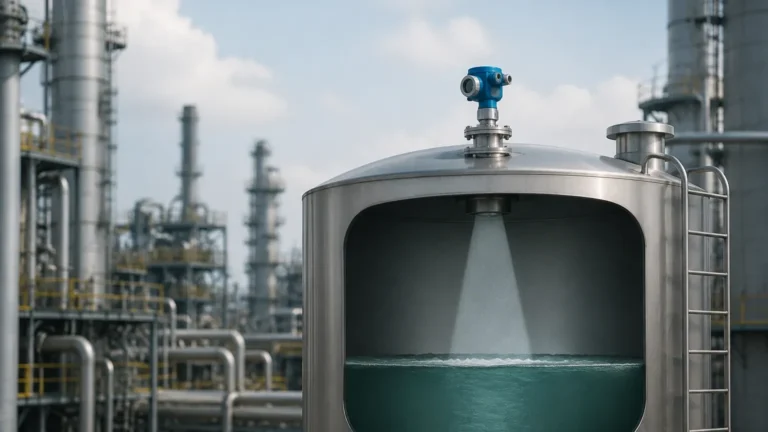
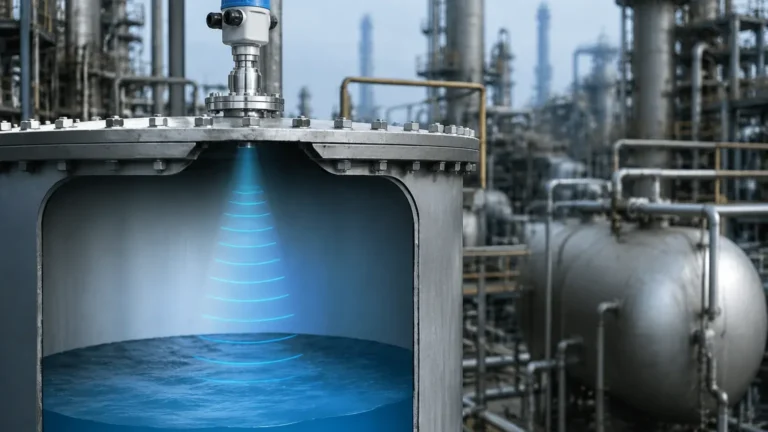
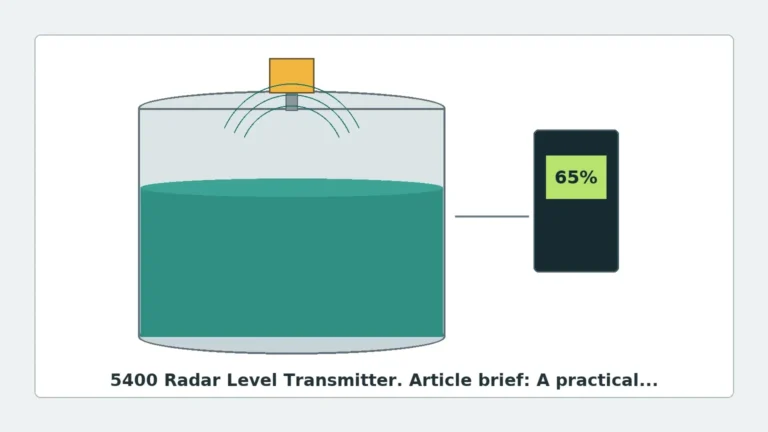
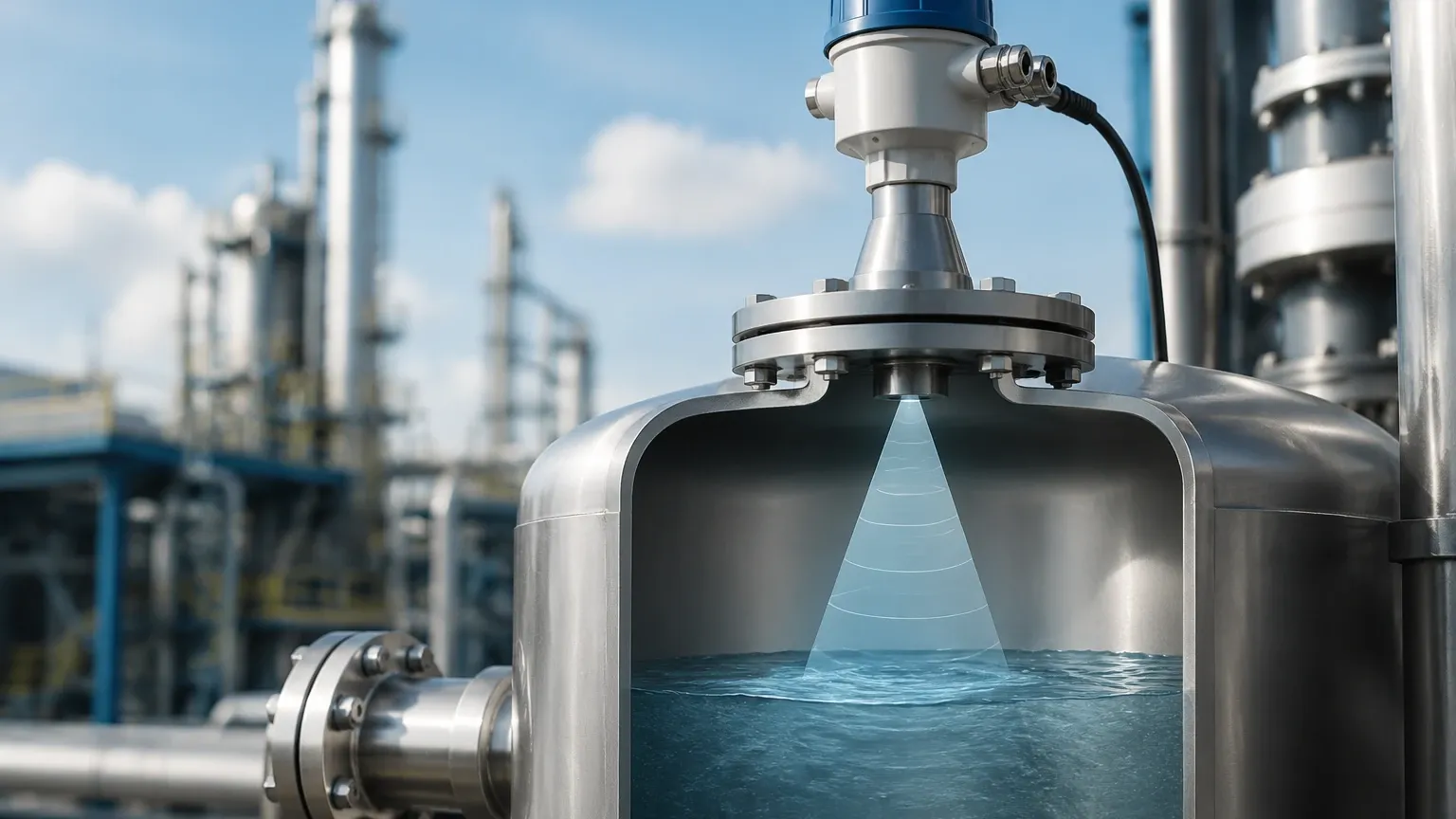
The fundamental cara kerja radar level transmitter involves the emission of high-frequency microwave signals toward a target material. These signals reflect off the surface of the medium and return to the sensor's antenna. By measuring the time it takes for the signal to travel the round trip, the device calculates the distance to the material surface.
There are two primary methods used in modern industrial radar transmitters to process these signals: Time-of-Flight (Pulse Radar) and Frequency Modulated Continuous Wave (FMCW).
Time-of-Flight (Pulse Radar)
In Pulse Radar systems, the transmitter emits a short microwave pulse and then switches to receiving mode. The internal electronics measure the nanosecond interval between the transmission and the reception of the reflected echo. The distance ($D$) is calculated using the formula:
$$D = \frac{c \times t}{2}$$
Where:
* c is the speed of light (approximately 300,000 km/s).
* t is the measured transit time.
Because the speed of light is constant, the accuracy of pulse radar depends on the precision of the high-speed timer within the instrument.
Frequency Modulated Continuous Wave (FMCW)
FMCW radar does not send pulses; instead, it emits a continuous signal with a frequency that changes linearly over time (a frequency sweep). When the reflected signal returns, it is compared to the signal being emitted at that exact moment. The difference in frequency (the "beat frequency") is directly proportional to the distance. FMCW is generally considered more accurate than pulse radar, especially in applications with low-dielectric materials or where high precision is required over long distances.
2. Technology Variations: Non-Contact vs. Guided Wave
When evaluating Radar Level Meters, engineers must choose between non-contacting radar and Guided Wave Radar (GWR).
Non-Contact Radar
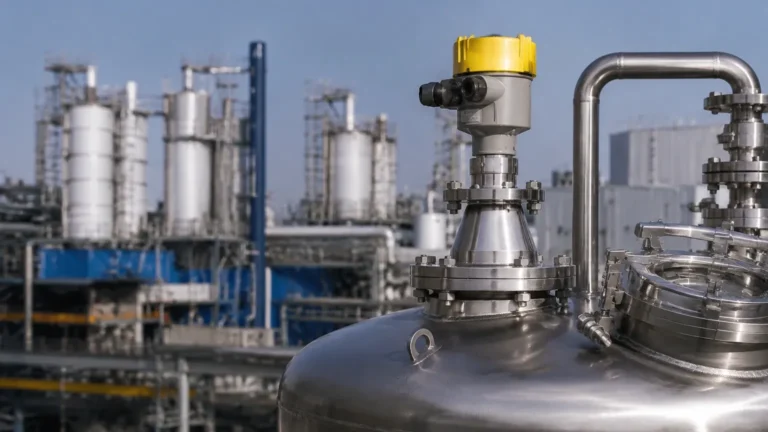
Non-contacting radar transmitters are mounted at the top of the vessel and do not come into physical contact with the medium. They are ideal for corrosive, hot, or sterile environments. The signal is focused through an antenna (horn, parabolic, or rod type). The effectiveness of this method depends heavily on the beam angle; a narrower beam reduces the risk of interference from tank internals like ladders or agitators.
Guided Wave Radar (GWR)
In GWR systems, the microwave pulse is guided along a physical probe (a rod or cable) that extends into the medium. This technology is particularly effective for materials with low dielectric constants or in tanks with heavy turbulence and foam. Because the energy is concentrated along the probe, there is less signal loss compared to non-contact radar, making it highly reliable for interface measurement (e.g., measuring the level of oil sitting on top of water).
3. The Role of the Dielectric Constant ($ε_r$)
The success of the cara kerja radar level transmitter depends on the reflectivity of the material surface, which is determined by its dielectric constant ($ε_r$).
* High Dielectric Materials (ε_r > 10): Water-based liquids, acids, and bases reflect radar signals very strongly, making them easy to measure.
* Low Dielectric Materials (ε_r < 3): Hydrocarbons, solvents, and dry powders reflect only a small portion of the signal. In these cases, high-sensitivity FMCW or Guided Wave Radar is often required to ensure a stable echo.
4. Frequency Selection: 26GHz vs. 80GHz
The frequency of the radar signal significantly impacts its performance. Modern industrial radar transmitters typically operate in the K-band (26GHz) or W-band (80GHz).
| Feature | 26GHz Radar | 80GHz Radar |
| :— | :— | :— |
| Beam Angle | Wider (approx. 10° – 20°) | Narrow (approx. 3° – 8°) |
| Antenna Size | Larger | Compact |
| Dust/Steam Resistance | Better penetration in heavy dust | Sensitive to heavy condensation |
| Accuracy | Standard (±3mm to ±5mm) | High (±1mm) |
| Application | Large silos, general liquids | Small tanks, narrow nozzles, high precision |
5. Installation Considerations and Constraints
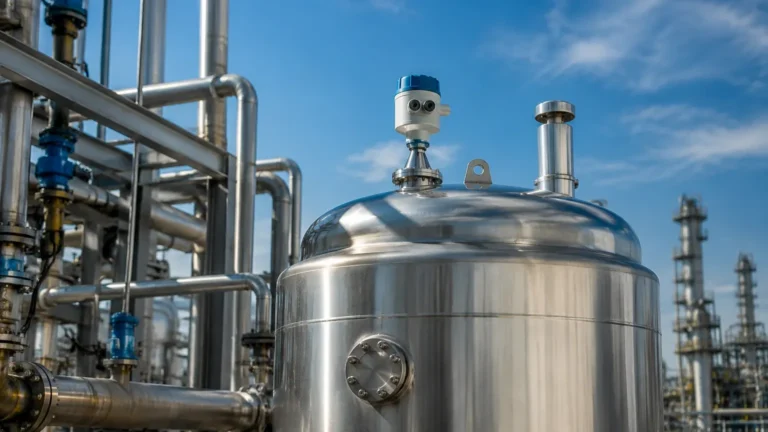
Proper installation is as important as the cara kerja radar level transmitter itself. Failure to follow mechanical guidelines can lead to "false echoes" and measurement errors.
* The 1/6th Rule: For non-contact radar, the sensor should generally be installed at a distance from the tank wall equal to 1/6th of the tank diameter. This avoids interference from wall reflections while staying clear of the center, where multiple reflections can occur.
* Nozzle Height and Diameter: The antenna must extend beyond the mounting nozzle to prevent the signal from reflecting off the nozzle edges. If the nozzle is long and narrow, a wave guide or a specialized antenna may be necessary.
* Obstruction Clearance: Ensure the signal path is clear of internal structures like heating coils, agitator blades, or support beams. Most modern transmitters include "False Echo Suppression" software to map out these static obstructions, but physical clearance is always preferred.
* Dead Zones (Blocking Distance): Every radar sensor has a "dead zone" near the antenna where measurement is not possible. Ensure the maximum expected liquid level does not enter this zone.
6. Practical Selection Table for Industrial Applications
| Application | Recommended Technology | Key Reason |
| :— | :— | :— |
| Water Treatment Tanks | 80GHz Non-Contact Radar | High accuracy, ignores steam/condensation. |
| Oil/Water Interface | Guided Wave Radar (GWR) | Signal passes through top layer to detect interface. |
| Corrosive Chemicals | PTFE-coated Non-Contact Radar | Chemical resistance and no contact with medium. |
| Cement Silos (High Dust) | 26GHz Non-Contact Radar | Lower frequency penetrates dust clouds better. |
| Small Process Vessels | 80GHz Non-Contact Radar | Narrow beam avoids narrow nozzle interference. |
| High Pressure/Temp Steam | Guided Wave Radar | Probe provides stable signal despite vapor turbulence. |
7. Troubleshooting and Limitations
While radar is highly versatile, it is not a universal solution. Engineers should be aware of the following limitations:
1. Heavy Foam: Extremely thick, dense foam can absorb the radar signal entirely, preventing an echo. In such cases, Guided Wave Radar or mechanical level gauges may be more appropriate.
2. Turbulence: Rapidly moving surfaces can scatter the radar signal. This can usually be mitigated by using software filtering or installing the sensor inside a stilling well (a bypass pipe).
3. Vacuum Conditions: While radar works in a vacuum, the mechanical seals of the transmitter must be rated for vacuum service to prevent equipment damage.
4. Coating and Buildup: In non-contact systems, heavy buildup on the antenna can attenuate the signal. For sticky materials, a lens antenna with a flat surface is easier to clean or may even be self-cleaning via a purge connection.
8. Frequently Asked Questions (FAQ)
Q: Does the pressure inside the tank affect the radar measurement?
No. Unlike ultrasonic sensors, radar waves do not require a medium (like air) to travel. They function perfectly in high-pressure vessels or full vacuums.
Q: Can radar measure the level of solids like grain or plastic pellets?
Yes. However, solids often have an angle of repose (a sloped surface). 80GHz radar is preferred for solids because its narrow beam can be aimed at a specific point on the slope for a more consistent reading.
Q: What is the maintenance requirement for a radar level transmitter?
Radar transmitters are solid-state devices with no moving parts, so maintenance is minimal. Periodic checks of the antenna for buildup and verification of the 4-20mA or digital output (HART/Modbus) are typically sufficient.
Q: How does Guided Wave Radar handle low dielectric liquids?
In liquids with a low dielectric constant, the signal might pass through the liquid and reflect off the bottom of the tank. Advanced GWR transmitters use "End-of-Probe" algorithms to calculate the level based on the signal's slowdown as it travels through the medium.
9. Conclusion
Selecting the right instrumentation requires a deep understanding of the cara kerja radar level transmitter. By matching the frequency, antenna type, and measurement method (GWR vs. Non-Contact) to the specific dielectric and physical properties of the medium, industrial operators can achieve unmatched reliability.
For high-performance environments, Radar Level Meters offer the durability and precision needed to maintain safety and optimize throughput. When specifying equipment, always provide the manufacturer with the dielectric constant of the medium, the vessel dimensions, and the presence of any internal obstructions to ensure the highest measurement integrity.