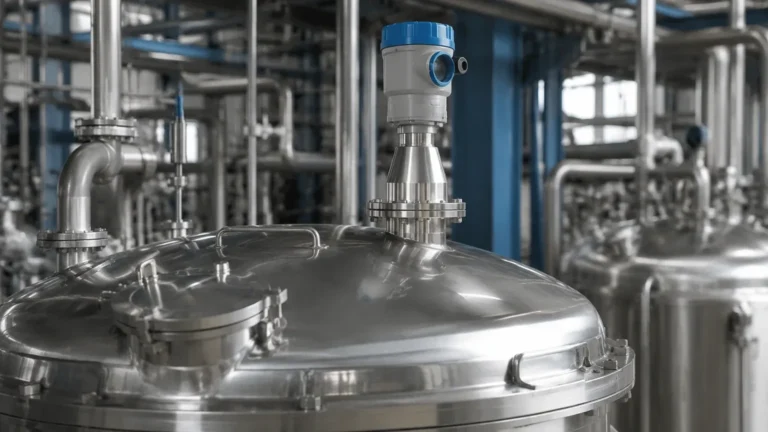
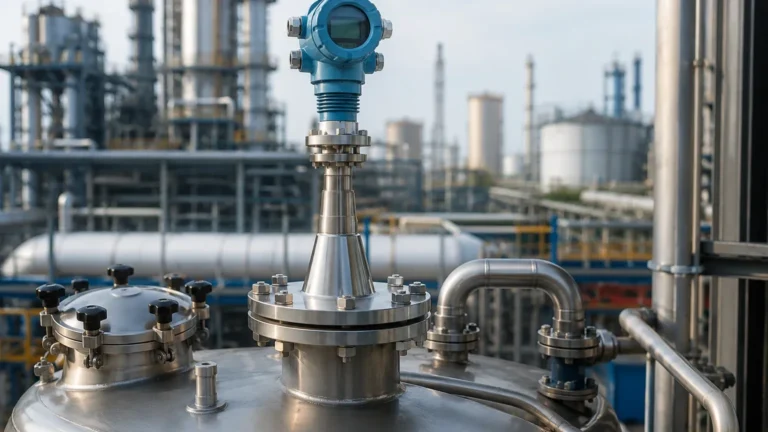
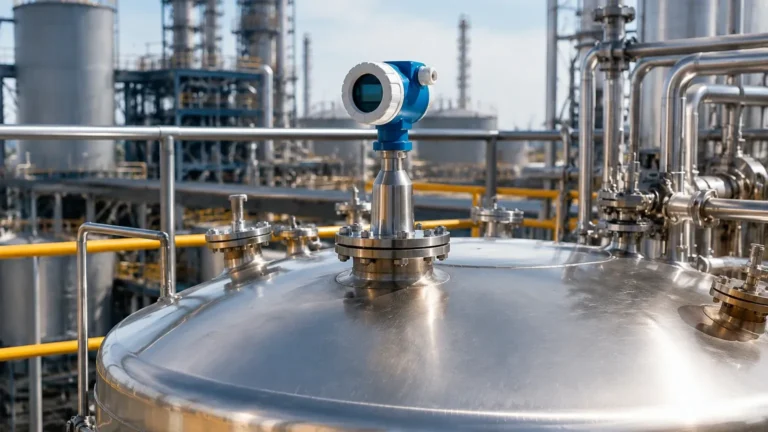
Honeywell Enraf Radar Level Transmitter
Engineering Guide to Honeywell Enraf Radar Level Transmitters
In the demanding environment of industrial bulk storage and process control, the accuracy of level measurement is a critical factor for safety, inventory management, and fiscal accounting. The Honeywell Enraf radar level transmitter has long been recognized as a benchmark for high-precision tank gauging, particularly in the oil and gas, chemical, and liquid storage industries. This guide provides a technical overview of radar measurement principles, the specific advantages of the Enraf series, and the engineering considerations required for successful deployment.
Understanding Radar Level Measurement Principles
Before selecting a specific instrument, it is essential to understand how Radar Level Meters function. Radar technology utilizes electromagnetic waves—specifically microwaves—to determine the distance between the sensor and the surface of the medium.
Time of Flight (ToF)
Most radar transmitters operate on the Time of Flight principle. The device emits a microwave signal that travels at the speed of light. When the signal hits the surface of the liquid or solid, a portion of the energy is reflected back to the antenna. The transmitter calculates the distance based on the time elapsed between emission and reception.
FMCW vs. Pulse Radar
There are two primary methods for processing these signals:
1. Pulse Radar: The transmitter sends out short microwave pulses and measures the time delay. This method is often used in simpler applications where extreme precision is not the primary requirement.
2. Frequency Modulated Continuous Wave (FMCW): This is the technology typically found in high-end units like the honeywell enraf radar level transmitter. The device emits a continuous signal with a varying frequency. The difference in frequency between the transmitted and received signals is directly proportional to the distance. FMCW provides significantly higher resolution and accuracy, making it suitable for custody transfer applications where every millimeter represents substantial financial value.
Key Features of Honeywell Enraf Radar Level Transmitters
Honeywell Enraf specializes in high-accuracy measurement for large-scale storage tanks. Their systems, such as the SmartRadar FlexLine, are designed to integrate seamlessly into tank farm automation systems.
High Precision for Custody Transfer
In many jurisdictions, level measurement for trade purposes (custody transfer) must meet strict legal metrology standards (such as OIML R85). These transmitters are engineered to provide accuracies in the range of ±0.4 mm to ±1 mm, ensuring that inventory calculations are as precise as possible.
Advanced Signal Processing
Industrial tanks are rarely empty voids. They contain heating coils, ladders, agitators, and varying vapor spaces. The Enraf series utilizes sophisticated algorithms to filter out "false echoes" caused by these internal obstructions, ensuring the transmitter tracks the true product level even in complex environments.
Multi-Variable Integration
Modern units often serve as a hub for other tank sensors. A honeywell enraf radar level transmitter can frequently interface with average temperature probes (VITO) and pressure sensors to provide a complete picture of the tank’s contents, including net volume and mass calculations.
Selection Criteria for Radar Level Instrumentation
Choosing the right radar transmitter requires an analysis of the process media and the physical environment. The following table outlines the primary factors engineers must consider:
| Parameter | Consideration | Engineering Impact |
| :— | :— | :— |
| Dielectric Constant (εr) | The reflectivity of the medium. | Low εr (e.g., LPG, LNG) requires high-sensitivity antennas or stilling wells. |
| Operating Frequency | 10 GHz, 24 GHz, or 80 GHz. | Higher frequencies offer narrower beam angles, reducing interference from tank walls. |
| Process Temperature | Range from -200°C to +250°C. | Requires specific cooling fins or specialized antenna materials for extremes. |
| Process Pressure | Vacuum to 100+ bar. | Dictates the type of process seal (e.g., PTFE, Ceramic) and flange rating. |
| Tank Geometry | Height, diameter, and roof type. | Influences antenna selection (horn, parabolic, or planar). |
Installation Considerations and Best Practices
Even the most advanced radar transmitter will perform poorly if installed incorrectly. For a honeywell enraf radar level transmitter to achieve its rated accuracy, several installation constraints must be observed.
Nozzle Positioning and Dimensions
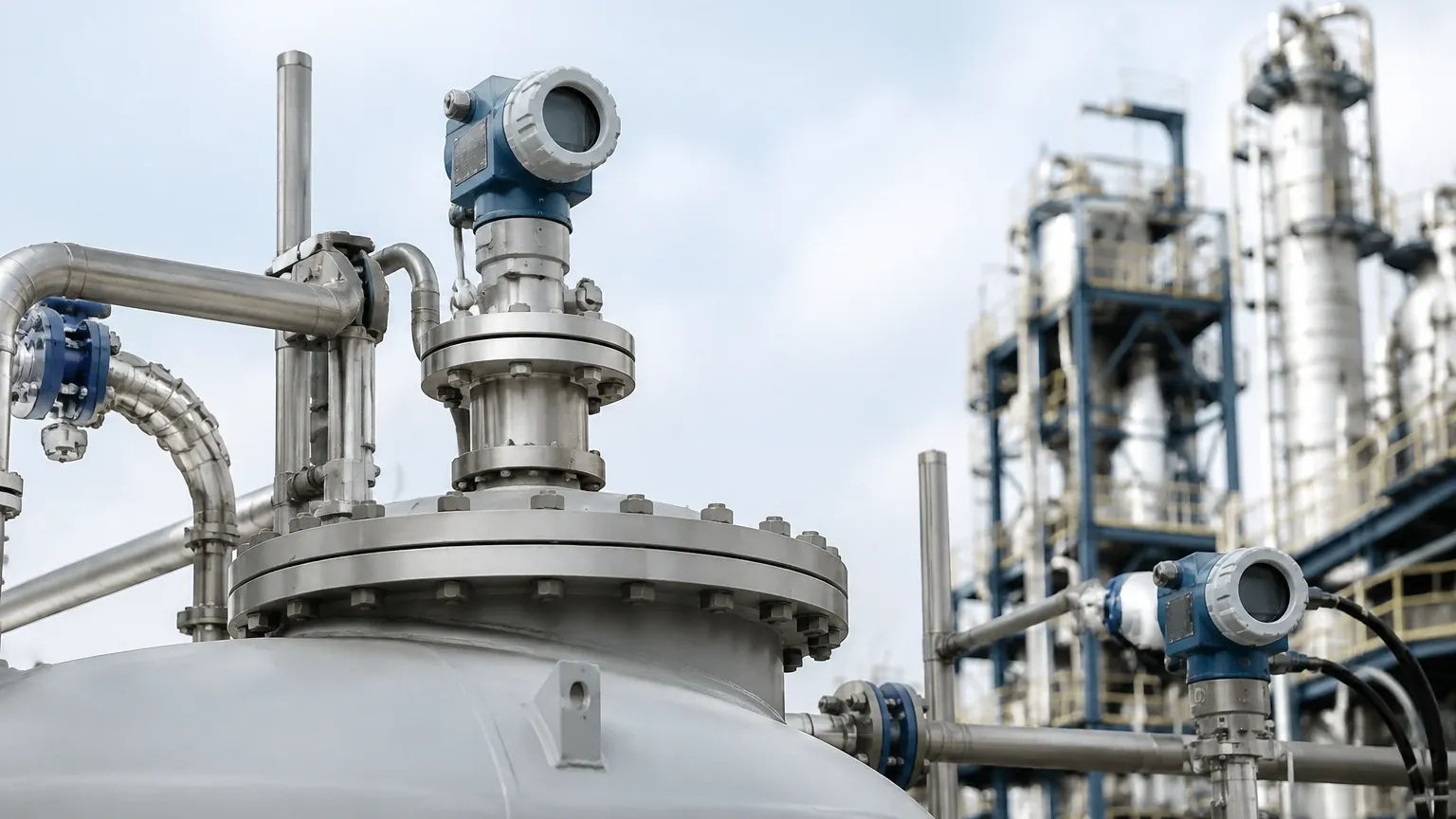
The radar antenna should be mounted perpendicular to the liquid surface. The nozzle height should be kept to a minimum to prevent signal interference within the nozzle itself. If a long nozzle is unavoidable, a larger diameter nozzle or an antenna extension may be required to ensure the microwave beam clears the nozzle edge.
Obstruction-Free Path
The "beam angle" of the radar is a critical concept. As the signal travels downward, it spreads out in a cone shape. Any internal tank structures (ladders, pipes, or agitators) that enter this cone will create reflections. Engineers should consult the beam angle charts provided by the manufacturer to ensure a clear path to the product surface at the lowest possible level.
Stilling Wells and Bypass Pipes
In applications involving high turbulence, heavy foam, or very low dielectric liquids (like liquefied gases), the radar should be installed within a stilling well or a bypass pipe. This pipe acts as a waveguide, concentrating the signal and protecting the surface from ripples, which significantly improves signal stability.
Limitations and Application Risks
While radar is a highly versatile technology, it is not a universal solution. Engineers should be aware of the following limitations:
1. Heavy Foam: Certain types of dense, conductive foam can absorb the radar signal entirely, leading to a "loss of echo" condition. In these cases, hydrostatic or guided wave radar might be more appropriate.
2. Condensation and Build-up: While many Enraf antennas are designed to be self-draining, extreme condensation or sticky product build-up on the antenna can attenuate the signal. Regular inspection or the use of air purging may be necessary.
3. Vapor Space Effects: Changes in the composition of the vapor space (e.g., high-pressure steam or heavy chemical vapors) can slightly alter the speed of the microwave signal. High-precision applications may require vapor compensation sensors to maintain sub-millimeter accuracy.
Information for International Buyers
When procuring a honeywell enraf radar level transmitter for a global project, buyers should confirm the following technical details with their supplier:
* Certifications: Ensure the device carries the necessary ATEX, IECEx, or FM certifications for hazardous areas. For custody transfer, verify OIML or local Weights and Measures approval.
* Communication Protocols: Confirm if the system requires Enraf GPU protocol, HART, Foundation Fieldbus, or Modbus for integration with the existing Distributed Control System (DCS).
* Material Compatibility: Verify that the wetted parts (e.g., 316L Stainless Steel, Alloy C22, or PTFE) are compatible with the stored chemical.
* Digital Integration: Determine if the site requires a Tank Inventory System (like Entis Pro) to manage the data from multiple transmitters.
Frequently Asked Questions (FAQ)
Q: Can a radar level transmitter measure the interface between oil and water?
A: Standard non-contact radar typically reflects off the top liquid layer. For interface measurement, Guided Wave Radar (GWR) is generally preferred as it can detect the change in dielectric constant between the two liquids.
Q: What is the "Dead Zone" in radar measurement?
A: The dead zone, or blocking distance, is the area immediately below the antenna where the device cannot accurately measure. This is usually between 100 mm and 500 mm depending on the antenna design. This must be accounted for when calculating the maximum tank capacity.
Q: Is 80 GHz always better than 10 GHz?
A: Not necessarily. While 80 GHz offers a narrower beam and better resolution, 10 GHz (C-band) radar is more robust in applications with heavy dust, vapor, or turbulence because the longer wavelength can penetrate these obstacles more effectively.
Q: How often does a honeywell enraf radar level transmitter need calibration?
A: For process control, radar units are extremely stable and may only need verification every 2-3 years. However, for custody transfer, local regulations often mandate annual or biennial calibration and verification by a certified third party.
Conclusion
The honeywell enraf radar level transmitter remains a cornerstone of precision tank gauging. By understanding the underlying FMCW principles and carefully evaluating tank geometry and media properties, engineers can implement a solution that provides years of reliable service with minimal maintenance. For those exploring broader options in the market, comparing these high-end units against other Radar Level Meters ensures that the selected technology aligns with both the technical requirements and the budget constraints of the project.