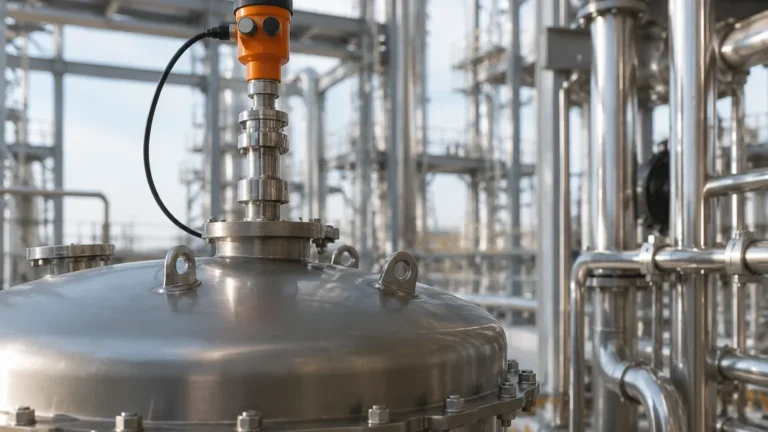
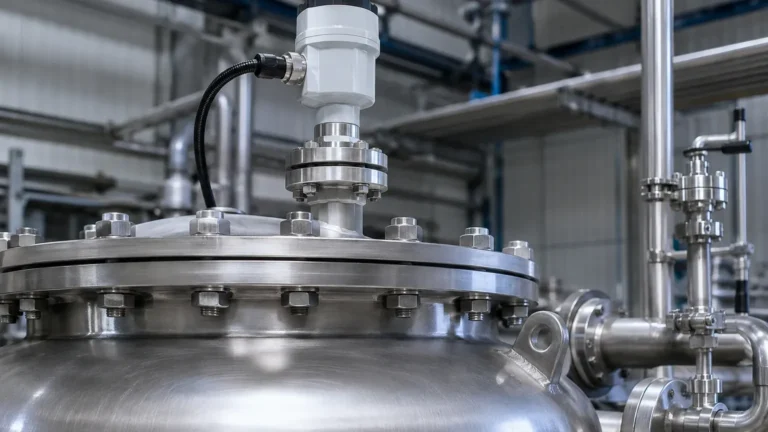
Radar Level 4
Radar Level 4
In the landscape of industrial process automation, non-contact level measurement has become the gold standard for reliability and safety. Among the various technologies available, Radar Level Meters stand out for their ability to provide precise readings in challenging environments where temperature, pressure, and dust would compromise other sensors.
The term "radar level 4" frequently appears in technical specifications and procurement requests. In an industrial context, this typically refers to 4-wire radar configurations or high-performance 4-series radar transmitters designed for complex medium-range and long-range applications. This guide provides a comprehensive technical overview of these systems, their operating principles, and the critical factors international buyers must consider when selecting equipment for industrial use.
Understanding the Measurement Principles
Radar level measurement relies on the emission of electromagnetic waves (microwaves) toward the surface of a stored medium. These waves reflect off the surface and return to the sensor's antenna. By calculating the characteristics of the returned signal, the instrument determines the distance to the product.
Time of Flight (ToF) vs. FMCW
Most industrial radar sensors utilize one of two primary methods:
1. Pulse Radar: The sensor emits a short microwave pulse and measures the time it takes for the pulse to travel to the surface and back. This "Time of Flight" is directly proportional to the distance. Pulse radar is known for its energy efficiency and is common in 2-wire configurations.
2. Frequency Modulated Continuous Wave (FMCW): The sensor emits a continuous signal with a constantly changing frequency. The difference between the frequency of the emitted signal and the reflected signal at any given moment is proportional to the distance. FMCW radar generally offers higher accuracy and better signal-to-noise ratios, making it ideal for the demanding requirements of "radar level 4" applications.
The Role of Frequency
Frequency is a defining characteristic of radar performance. While older systems operated at 6 GHz (C-band) or 26 GHz (K-band), modern high-performance units often operate at 80 GHz (W-band). Higher frequencies allow for smaller antenna sizes and narrower beam angles, which are essential for avoiding internal tank obstructions like agitators or ladders.
The Radar Level 4 Configuration: 4-Wire Systems
When engineers specify a "radar level 4" system, they are often referring to the 4-wire wiring configuration. Understanding the distinction between 2-wire and 4-wire systems is crucial for electrical integration.
* 2-Wire (Loop-Powered): The power supply and the 4-20mA signal share the same pair of wires. These are easier to install but have limited power available for signal processing or internal heating.
* 4-Wire (Independent Power): These systems use two wires for the power supply (typically 24V DC or 110/220V AC) and two separate wires for the signal output (4-20mA/HART, RS485/Modbus, or Profibus).
Advantages of 4-Wire Radar Level Meters
Radar Level Meters utilizing a 4-wire architecture offer several technical advantages for heavy industrial use:
* Higher Signal Strength: With a dedicated power supply, the transmitter can emit stronger pulses or continuous waves, which is vital when measuring low-dielectric materials or through heavy foam.
* Advanced Processing: Extra power allows for more complex Echo Discovery algorithms, which can filter out false reflections in cluttered tanks.
* Integrated Features: 4-wire units can support power-intensive features like backlit displays, internal heaters to prevent condensation on the antenna, and high-speed communication protocols.
Technical Selection Criteria
Selecting the correct radar instrument requires a detailed analysis of the process conditions. The following table outlines the primary considerations for industrial applications.
Radar Selection Matrix
| Feature | 26 GHz Pulse Radar | 80 GHz FMCW Radar | 4-Wire High-Power Radar |
| :— | :— | :— | :— |
| Typical Range | Up to 30m | Up to 120m | Up to 100m+ |
| Beam Angle | 8° to 20° | 3° to 8° | Variable (High Focus) |
| Accuracy | ±3mm to ±5mm | ±1mm | ±2mm |
| Process Temp. | -40°C to +250°C | -40°C to +200°C | -60°C to +400°C |
| Dielectric Constant | εr ≥ 1.9 | εr ≥ 1.4 | εr ≥ 1.2 |
| Best Use Case | Standard liquid storage | Narrow silos, solids | Complex reactors, low DK |
The Dielectric Constant (εr)
The dielectric constant of the medium is the most critical factor in radar measurement. It determines how much energy is reflected back to the sensor.
* High εr (>10): Water-based liquids provide excellent reflection.
* Low εr (<2): Hydrocarbons, oils, and certain plastic pellets reflect very little energy. In these cases, a high-sensitivity 4-wire radar or a guided wave radar may be required.
Installation Guidelines and Constraints
Even the most advanced radar level 4 instrument will fail if installed incorrectly. Engineers must adhere to strict geometric constraints to ensure signal integrity.
1. Nozzle Height and Diameter: The antenna should ideally extend slightly below the mounting nozzle to prevent "ringing" or interference from the nozzle edge. If the nozzle is long, a wave-guide or a horn antenna extension must be used.
2. The 1/6 Diameter Rule: For vertical cylindrical tanks, the radar should be installed at approximately 1/6th of the tank diameter from the outer wall. Installing too close to the wall causes interference, while installing in the center can lead to false echoes from the liquid vortex or multiple reflections.
3. Obstruction Clearance: Ensure the radar beam (calculated by the beam angle and distance) does not intersect with pipes, agitator blades, or reinforcement struts.
4. Orientation: For solid materials, the radar should be mounted with an aiming flange to point the beam at the angle of repose of the material, ensuring the maximum signal returns to the antenna.

Limitations and Application Risks
While radar is highly versatile, it is not a universal solution. Buyers should be aware of the following risks:
* Heavy Foam: Dense, thick foam can absorb microwave signals entirely, leading to a "loss of echo." If foam is a constant factor, mechanical level measurement or low-frequency radar might be more appropriate.
* Condensation and Buildup: While 80 GHz radar handles some buildup well, heavy coating on the antenna face will attenuate the signal. 4-wire units with air purging systems are recommended for these environments.
* Vacuum Conditions: While radar works in a vacuum, the sealing (process interface) must be rated for the specific pressure/vacuum range to prevent sensor damage or process leakage.
International Buyer Checklist
When sourcing radar level 4 equipment globally, international buyers should confirm the following data points with the manufacturer:
1. Certification Compatibility: Ensure the device meets local hazardous area certifications (ATEX, IECEx, or UL/CSA) if being installed in explosive atmospheres.
2. Communication Protocols: Confirm if the existing PLC/DCS supports the radar’s output (e.g., 4-20mA HART vs. Modbus RTU).
3. Material Traceability: Request 3.1 material certificates for wetted parts, especially for chemical and pharmaceutical applications.
4. Process Connection Standards: Specify whether flanges should follow ANSI, DIN, or JIS standards to avoid installation delays.
Frequently Asked Questions (FAQ)
Q: Can radar level 4 sensors measure through plastic tank walls?
A: Yes, if the tank is made of non-conductive material (like PE, PP, or GRP) and the medium has a high dielectric constant, the radar can often measure through the top of the tank without a process opening. However, signal attenuation must be calculated.
Q: How does dust affect radar measurement in silos?
A: High-frequency radar (80 GHz) and 4-wire systems are largely unaffected by dust clouds during filling, as microwaves penetrate dust much more effectively than ultrasonic waves or laser signals.
Q: Is calibration required for radar level meters?
A: Radar sensors are generally factory-calibrated. On-site commissioning involves setting the "Zero" (empty) and "Span" (full) points. Once set, they do not suffer from the drift associated with pressure-based or mechanical level sensors.
Q: What is the lifespan of a 4-wire industrial radar?
A: With no moving parts and robust housing, a high-quality industrial radar can operate for 10 to 15 years, provided the process seals remain intact and the electronics are protected from extreme voltage surges.
Conclusion
Selecting a "radar level 4" solution—whether defined by its 4-wire power architecture or its high-frequency 4-series performance—requires a balance of electrical knowledge and process engineering. By understanding the dielectric properties of the medium and adhering to precise installation geometry, industrial facilities can achieve maintenance-free level monitoring that enhances both safety and operational efficiency. For those managing complex industrial inventories or volatile chemical processes, the investment in high-performance radar technology provides the data accuracy necessary for modern automated control.