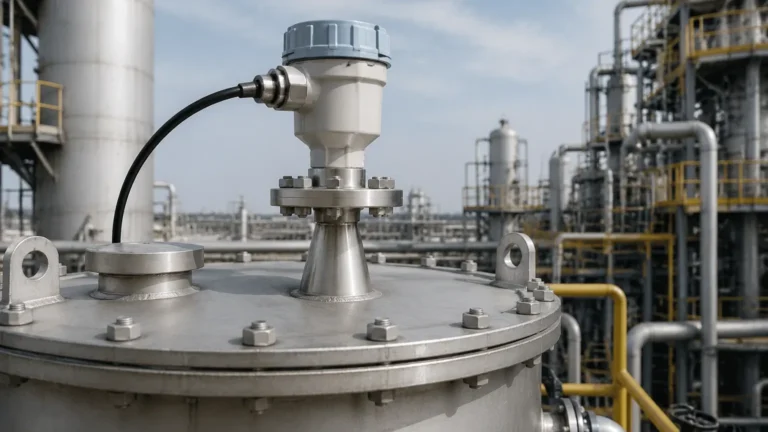
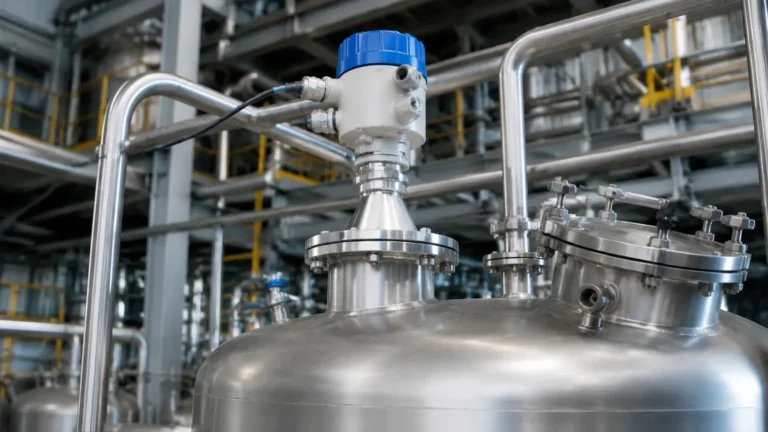
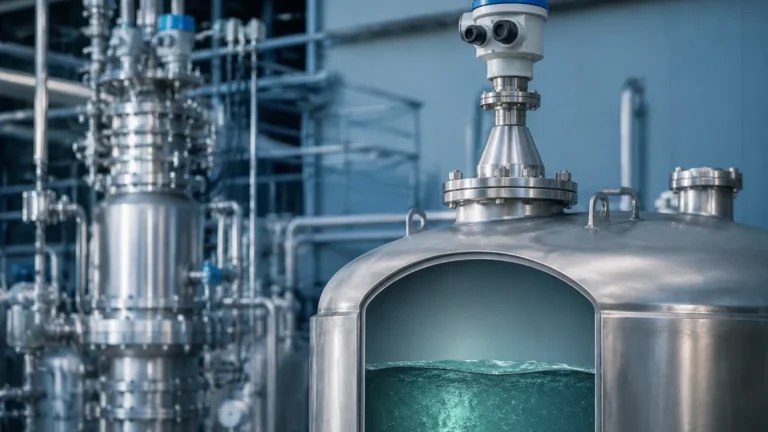
Sitrans Lr110 Radar Level Transmitter
Sitrans LR110 Radar Level Transmitter: A Technical Engineering Guide
In the landscape of industrial automation, the demand for non-contact level measurement has shifted significantly toward high-frequency radar technology. Among the specialized instruments available for liquid and solid monitoring, the sitrans lr110 radar level transmitter represents a modern approach to compact, high-frequency sensing. Utilizing 80 GHz W-band technology, this device is designed to address the limitations of traditional ultrasonic sensors and lower-frequency radar systems in challenging process environments.
For process engineers and procurement specialists, understanding the operational mechanics, installation constraints, and selection criteria for Radar Level Meters is essential to ensuring long-term reliability and accuracy. This guide provides a factual exploration of the LR110, its engineering principles, and practical application considerations.
1. Measurement Principles: 80 GHz FMCW Technology
The sitrans lr110 radar level transmitter operates on the Frequency Modulated Continuous Wave (FMCW) principle. Unlike older pulse-based radar systems that measure the time-of-flight of a single microwave burst, FMCW transmitters emit a continuous signal with a constantly changing frequency.
The 80 GHz Advantage
The shift from 24 GHz to 80 GHz (W-band) technology is a defining characteristic of the LR110. In industrial level measurement, higher frequencies correlate with shorter wavelengths. This provides several technical advantages:
* Narrow Beam Angle: The LR110 typically features a beam angle as narrow as 8 degrees. This allows the signal to avoid internal tank obstructions such as ladders, agitators, or heating coils, which frequently cause "false echoes" in wider-beam 24 GHz systems.
* High Precision: The wide bandwidth available at 80 GHz allows for superior resolution, enabling the transmitter to distinguish between the product surface and nearby obstacles even at the bottom of a tank.
* Small Process Connections: Because the antenna size required is inversely proportional to the frequency, 80 GHz transmitters can achieve high focusing through very small process connections (e.g., 1-inch threads).
2. Technical Specifications and Selection Criteria
Selecting the correct radar transmitter requires an analysis of the process medium, vessel geometry, and environmental conditions. The LR110 is positioned as a compact, basic-performance transmitter suitable for a variety of industries including water treatment and chemical storage.
Key Specifications
| Feature | Specification |
| :— | :— |
| Measurement Range | Up to 15 meters (49.2 ft) |
| Frequency | 80 GHz W-band FMCW |
| Accuracy | ±2 mm (0.08 inch) |
| Process Temperature | -40°C to +80°C |
| Process Pressure | -1 to 3 bar (14.5 to 43.5 psi) |
| Communication | 4-20 mA, HART 7.0, Modbus RTU, or Bluetooth |
| Enclosure Material | PVDF (Polyvinylidene Fluoride) |
| Protection Rating | IP66 / IP68 |
Selection Considerations
When evaluating the sitrans lr110 radar level transmitter against other Radar Level Meters, engineers must consider the dielectric constant (dK) of the material. While 80 GHz radar is highly effective for water-based liquids (high dK), materials with very low dielectric constants (such as certain hydrocarbons or dry powders) may require specialized calibration or higher-end models with greater signal sensitivity.
3. Installation Guidelines and Engineering Constraints
Proper installation is the most critical factor in the performance of a radar level transmitter. Even the most advanced 80 GHz system can fail if the physical mounting ignores the laws of wave propagation.
Mounting Position
The transmitter should be mounted at a distance of at least 200 mm from the vessel wall for every 5 meters of tank height. This prevents the radar beam from reflecting off the side walls, which can attenuate the signal. The device must be installed perpendicular to the liquid surface to ensure the maximum signal return.
Nozzle Design
One of the primary benefits of the LR110 is its ability to be mounted in long, narrow nozzles. However, the nozzle should be as short as possible. If a long nozzle is unavoidable, the bottom edge of the antenna should ideally extend beyond the bottom of the nozzle to prevent internal reflections. For the LR110, the narrow beam allows it to function in nozzles where 24 GHz units would struggle, but the internal surface of the nozzle must still be smooth and free of burrs.
The "Blanking Distance"
Every radar transmitter has a near-field zone, often called the "blanking distance" or "dead zone," where measurements are not possible. For the LR110, this is typically around 0.25 meters (250 mm). The maximum fill level of the tank must be calibrated to remain below this threshold to avoid signal loss or erratic readings when the tank is nearly full.
4. Application Risks and Environmental Limitations
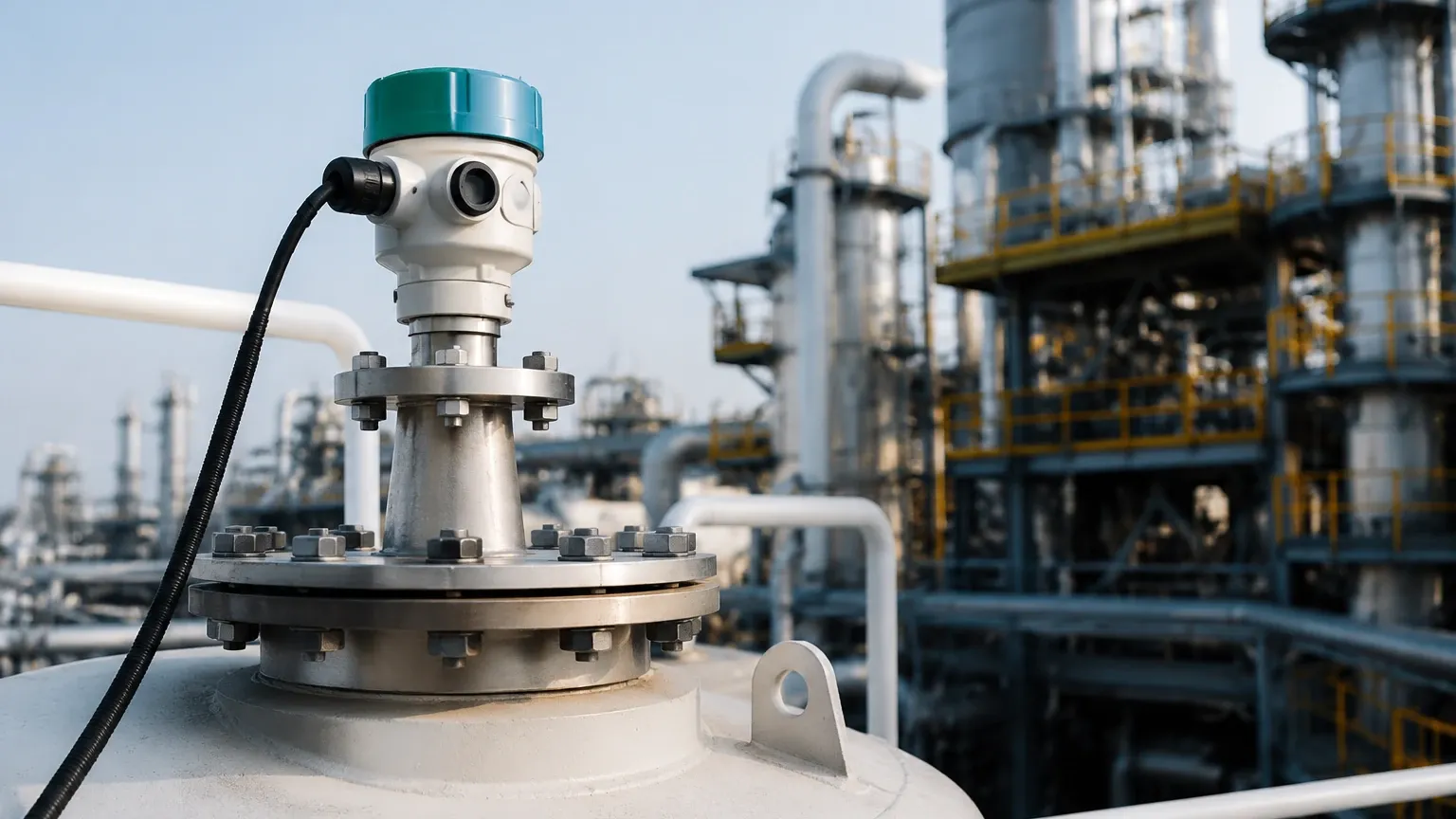
While the sitrans lr110 radar level transmitter is a robust instrument, certain process conditions present risks to measurement stability.
1. Foam Accumulation: Heavy, dense foam can absorb radar signals rather than reflecting them. While 80 GHz radar is better at penetrating light foam than ultrasonic sensors, extremely thick foam (like that found in some wastewater aeration tanks) may require a guided wave radar or a different frequency.
2. Condensation and Buildup: The LR110 features a PVDF face designed to shed droplets. However, in applications with heavy steam or crystallizing vapors, significant buildup on the sensor face can attenuate the signal. Regular inspection or the use of a purging connection may be necessary in these specific cases.
3. Turbulence and Agitation: Rapidly swirling surfaces or heavy agitation can scatter the radar signal. The LR110 uses advanced algorithms to filter this "noise," but in extreme cases, a stilling well may be required to provide a calm surface for measurement.
5. Digital Integration and Commissioning
A significant feature of the modern sitrans lr110 radar level transmitter is its integration with mobile technology. Traditionally, commissioning required a specialized handheld communicator or a laptop with a HART modem.
Bluetooth and Mobile IQ
The LR110 supports commissioning via Bluetooth using applications like SITRANS mobile IQ. This allows technicians to configure the device from a distance of up to 10-15 meters, which is a major safety advantage when the transmitter is mounted on top of a tall silo or in a hazardous area. Through the app, users can view echo profiles, set the measurement range, and perform troubleshooting without physical contact with the unit.
Communication Protocols
For integration into a Distributed Control System (DCS) or PLC, the LR110 offers several paths:
* HART: The standard for 4-20 mA loops, providing diagnostic data over the analog wire.
* Modbus RTU: Ideal for daisy-chaining multiple sensors over long distances in remote monitoring applications, such as wellhead level monitoring.
6. International Procurement: Buyer’s Checklist
When sourcing Radar Level Meters for international projects, buyers must confirm specific technical details to ensure the equipment meets local regulations and site requirements.
* Certification Requirements: Does the site require ATEX, IECEx, or FM approvals for hazardous zones? The LR110 is available in various versions; the correct one must be specified at the time of order.
* Thread Standards: Ensure the process connection (G-thread vs. NPT-thread) matches the existing tank flanges or sockets.
* Cable Length: Many compact radar units come with pre-potted cables. Confirm if the standard cable length (often 10m or 20m) is sufficient or if a junction box is required.
* Material Compatibility: Verify that the PVDF housing is chemically compatible with the stored medium, especially in concentrated acids or solvents.
7. Frequently Asked Questions (FAQ)
Q: Can the LR110 measure solids like grain or plastic pellets?
A: Yes, the LR110 is capable of measuring small-grained solids. However, for large silos with significant dust or steep angles of repose, a higher-power model with a larger range may be more appropriate. The LR110 is optimized for ranges up to 15 meters.
Q: How does the LR110 compare to ultrasonic sensors?
A: Unlike ultrasonic sensors, radar is unaffected by air temperature, pressure, vacuum, or heavy dust. While ultrasonic sensors are often cheaper, the sitrans lr110 radar level transmitter provides much higher reliability in outdoor applications where wind or sun-induced temperature gradients can cause ultrasonic errors.
Q: Is a special license required for 80 GHz radar?
A: In most jurisdictions, these devices are classified as LPR (Level Probing Radar) and are pre-approved for use in closed tanks and, in many cases, open-air applications, provided they meet specific emission standards (like ETSI or FCC).
Q: What happens if the power fails?
A: The LR110 is a loop-powered device (in the HART version). Upon power restoration, the device typically completes a self-diagnostic boot sequence and resumes measurement within a few seconds. Configuration settings are stored in non-volatile memory and are not lost during power cycles.
8. Conclusion
The sitrans lr110 radar level transmitter represents the democratization of high-frequency radar technology. By providing the precision of 80 GHz FMCW in a compact, chemically resistant package, it offers a versatile solution for standard liquid and solid level monitoring. For engineers, the key to success lies in respecting the installation geometry and ensuring that the electrical integration aligns with the facility's control architecture. When applied correctly, these Radar Level Meters significantly reduce maintenance overhead and improve the accuracy of industrial inventory management.