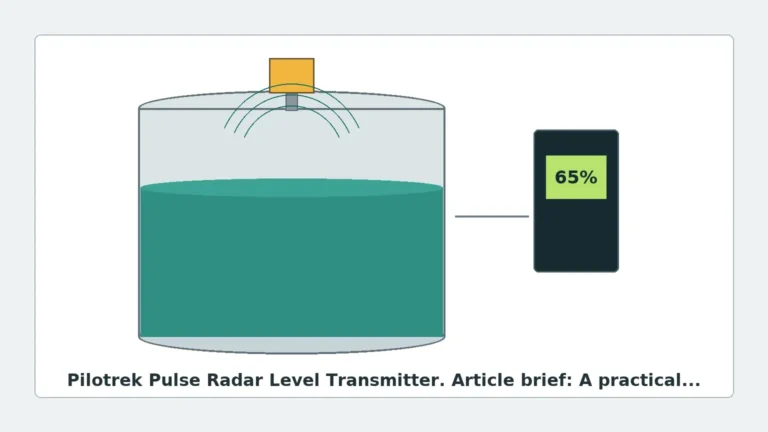
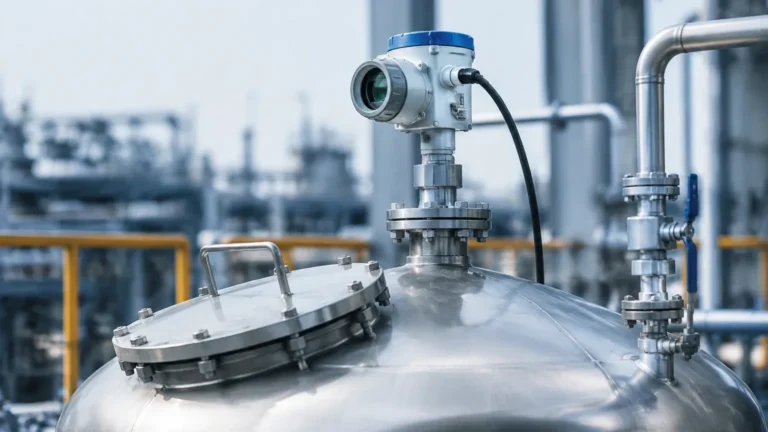
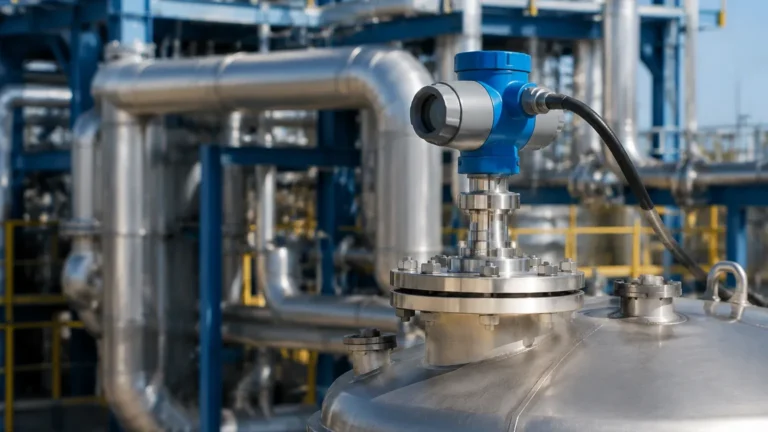
Sitrans Lr150 Radar Level Transmitter
Sitrans LR150 Radar Level Transmitter: A Technical Engineering Guide
In the field of industrial process automation, the transition from contact-based level measurement to non-contacting radar technology has significantly improved reliability and reduced maintenance overhead. Among the diverse array of Radar Level Meters, the SITRANS LR150 radar level transmitter represents a significant advancement in 80 GHz W-band technology. This article provides a comprehensive technical analysis of the measurement principles, selection criteria, and installation requirements for the LR150, serving as a practical reference for instrumentation engineers and procurement specialists.
Understanding the 80 GHz FMCW Measurement Principle
Before evaluating the specific features of the sitrans lr150 radar level transmitter, it is essential to understand the underlying technology: Frequency Modulated Continuous Wave (FMCW) radar. Unlike traditional pulsed radar, which measures the time-of-flight of a single microwave pulse, FMCW radar emits a continuous signal with a constantly changing frequency.
The FMCW Process
1. Signal Emission: The transmitter sends out a continuous microwave signal that sweeps across a specific bandwidth (around 80 GHz).
2. Reflection: The signal reflects off the surface of the medium (liquid or solid) and returns to the sensor.
3. Frequency Difference: Because the frequency of the emitted signal is constantly changing, there is a measurable difference between the frequency of the transmitted signal and the received signal at any given moment.
4. Distance Calculation: This frequency shift ($Δf$) is directly proportional to the time delay, allowing the internal processor to calculate the distance with extremely high precision.
The Advantage of 80 GHz (W-Band)
Older radar transmitters often operated at lower frequencies, such as 6 GHz (C-band) or 26 GHz (K-band). The shift to 80 GHz allows for a much narrower beam angle—typically around 4 degrees for a standard antenna. This narrow focus is critical in industrial environments where internal obstructions like agitators, heating coils, or ladders would otherwise cause "false echoes" and signal interference.
Features of the SITRANS LR150 Radar Level Transmitter
The SITRANS LR150 is designed as a compact, 2-wire loop-powered radar transmitter. It is specifically engineered for continuous level measurement of liquids and slurries in storage and process vessels. Its design emphasizes ease of use, particularly through the integration of Bluetooth technology for wireless commissioning.
Key Technical Specifications
* Measurement Range: Up to 15 meters (49.2 ft).
* Accuracy: ±2 mm.
* Frequency: 80 GHz W-band FMCW.
* Housing Material: PVDF (Polyvinylidene fluoride) for high chemical resistance.
* Communication: 4-20 mA with optional HART 7.0 or Bluetooth 5.0 via the SITRANS mobile IQ app.
* Process Temperature: -40 to +70 °C.
* Process Pressure: -1 to 3 bar (up to 43.5 psi).
Selection Criteria and Technical Comparison
When selecting a radar level meter, engineers must match the instrument's capabilities to the specific process conditions. The table below compares the LR150 with typical requirements found in industrial water treatment and chemical processing.
Table 1: Selection Matrix for Radar Level Meters
| Feature | SITRANS LR150 | Standard 26 GHz Radar | Ultrasonic Sensors |
| :— | :— | :— | :— |
| Beam Angle | ~4° (Narrow) | 10° – 20° (Wide) | 10° – 15° |
| Accuracy | ±2 mm | ±5 mm to ±10 mm | ±0 mm to ±20 mm |
| Vapor/Steam Resistance | Excellent | Good | Poor |
| Minimum Dielectric (εr) | 1.6 | 2.0 | N/A (Acoustic) |
| Internal Obstructions | High Immunity | Moderate Sensitivity | High Sensitivity |
| Setup Method | Bluetooth/HART | Local Display/HART | Pushbuttons/PC |
Installation Considerations and Constraints
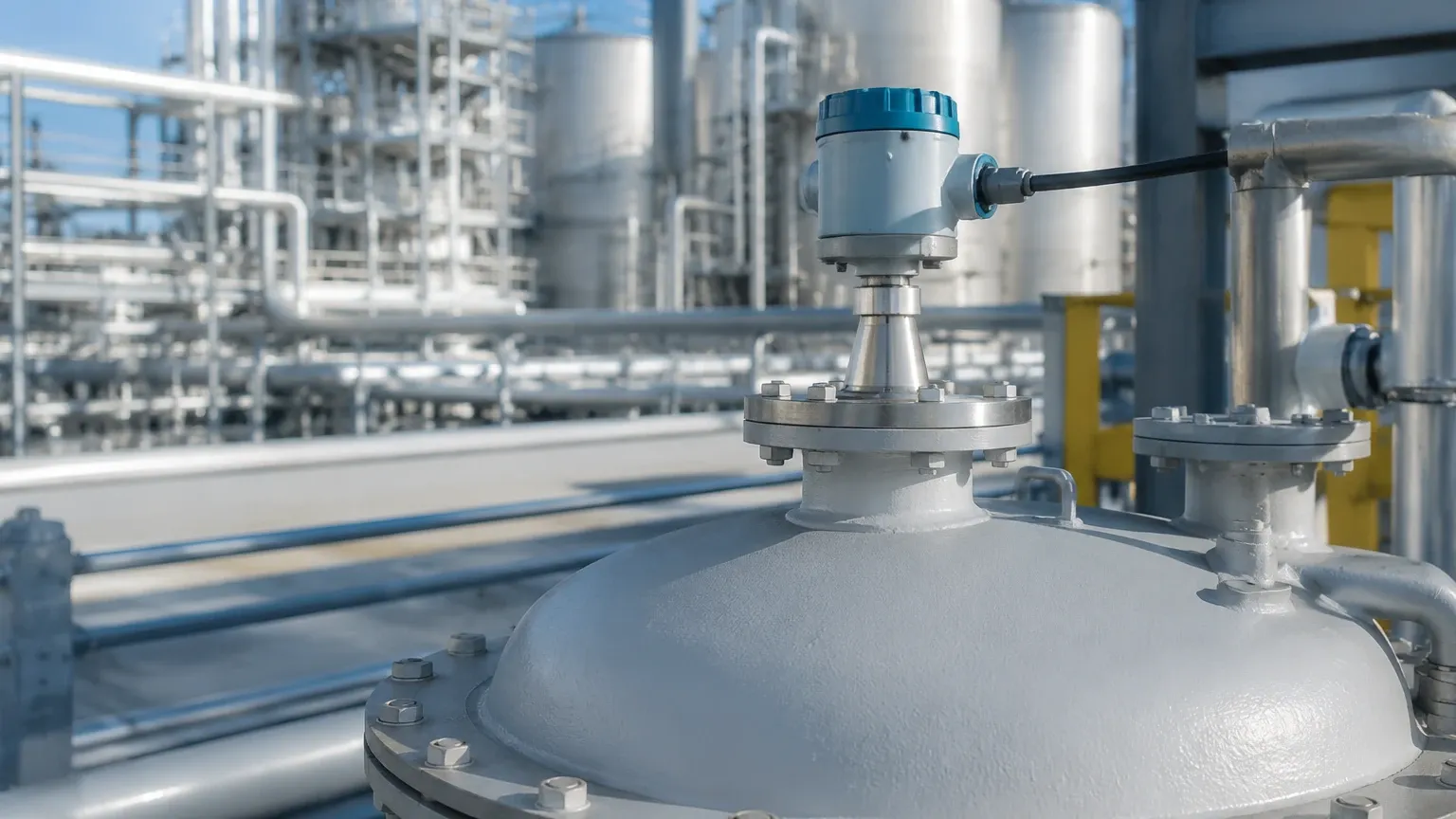
Proper installation is the most critical factor in ensuring the long-term accuracy of the sitrans lr150 radar level transmitter. Despite its narrow beam, certain physical laws of microwave propagation must be respected.
1. Nozzle Geometry
The LR150 features an integrated horn antenna. If the unit is mounted on a nozzle, the nozzle height should be kept as short as possible. While 80 GHz technology is more forgiving than lower frequencies, a nozzle that is too long or narrow can still create "ringing" effects at the top of the measurement range, creating a larger "dead zone" or near-blanking distance.
2. Positioning Relative to Tank Walls
The transmitter should be mounted at least 200 mm from the tank wall. If the transmitter is placed too close to the wall, the radar signal can interact with the wall surface, leading to signal attenuation or false reflections, especially if there is significant buildup on the walls.
3. Avoiding Obstructions
Even with a 4-degree beam angle, the "footprint" of the radar signal expands as the distance increases. Engineers should calculate the beam diameter at the bottom of the tank using the formula:
D = 2 × L × tan(α/2)
*Where D is the beam diameter, L is the distance, and α is the beam angle.*
Ensure that no agitators, pipes, or stay-bolts enter this calculated cone of measurement.
4. Mounting Angle
The sensor must be mounted perpendicular to the liquid surface. A tilt of even a few degrees can cause the reflected signal to bounce away from the receiver, significantly reducing the signal-to-noise ratio, particularly in liquids with low dielectric constants.
Application Risks and Limitations
While the sitrans lr150 radar level transmitter is a robust solution, it is not a "one-size-fits-all" instrument. Engineers must be aware of the following limitations:
* Heavy Foam: While radar can penetrate light foam, extremely dense, thick foam (such as that found in certain detergent manufacturing or wastewater aeration tanks) can absorb the microwave signal entirely, leading to a "loss of echo" error.
* Extreme Pressure/Temperature: The LR150 is designed for atmospheric or low-pressure applications (up to 3 bar). For high-pressure boilers or high-temperature molten metals, specialized Radar Level Meters with stainless steel antennas and cooling fins are required.
* Dielectric Constant (εr): The reflectively of a medium depends on its dielectric constant. Pure hydrocarbons (like oils or solvents) have low εr values (1.9 to 2.5) and reflect less energy than water (εr ≈ 80). If the εr is below 1.6, a guided wave radar (GWR) may be a more reliable choice.
International Procurement: Information for Buyers
When sourcing level measurement instrumentation for global projects, international buyers should confirm several technical details with the manufacturer or supplier to avoid compatibility issues at the job site.
Confirmation Checklist
1. Process Connection Threads: Ensure the thread type (NPT, BSPP, or BSPT) matches the local piping standards. The LR150 typically offers G 1½” or 1½” NPT options.
2. Hazardous Area Approvals: Depending on the region, confirm if ATEX, IECEx, or FM/CSA certifications are required for explosive atmospheres.
3. Cable Entry: Confirm the size of the cable glands (M20x1.5 or ½” NPT) to ensure compatibility with the site's electrical conduit.
4. Configuration Tools: Verify if the end-user has access to a Bluetooth-enabled device with the necessary app permissions or a HART modem for PLC integration.
Frequently Asked Questions (FAQ)
Q: Can the SITRANS LR150 measure solids?
A: The LR150 is primarily optimized for liquids. For bulk solids or powders, which have sloping surfaces and different reflective properties, a dedicated solids radar like the SITRANS LR190 or similar high-power 80 GHz meters is recommended.
Q: Does condensation on the sensor face affect the reading?
A: The 80 GHz signal and the PVDF encapsulated antenna are highly resistant to condensation. Small droplets typically do not interfere with the signal; however, if the medium is prone to heavy crystallization or thick coating, periodic cleaning may be necessary.
Q: How does the LR150 handle agitators?
A: Due to its narrow beam and advanced signal processing (Auto False Echo Suppression), the LR150 can usually be programmed to "ignore" fixed obstructions. If the agitator is moving, the narrow beam allows the sensor to be positioned in a clear space between the blades and the tank wall.
Q: Is a license required for the 80 GHz frequency?
A: In most jurisdictions, these devices are classified as LPR (Level Probing Radar) and are pre-approved for use within closed tanks or, in some cases, open-air applications, provided they meet local radio frequency regulations (such as FCC or ETSI).
Conclusion
The sitrans lr150 radar level transmitter represents a significant step forward in making high-frequency FMCW radar accessible for standard industrial applications. By offering 80 GHz precision in a chemically resistant, compact package, it addresses many of the historical challenges associated with ultrasonic or lower-frequency radar sensors. For engineers and facility managers, the key to success lies in careful attention to the dielectric properties of the media and strict adherence to mechanical installation constraints. When these factors are managed, the LR150 provides a virtually maintenance-free solution for critical level monitoring.