6 Ultrasonic Water Meter
6 Ultrasonic Water Meter: A Comprehensive Engineering Guide to DN150 Measurement
In industrial water management and municipal distribution, the 6-inch (DN150) pipeline represents a critical threshold for bulk fluid transport. Selecting a 6 ultrasonic water meter for these applications requires a deep understanding of acoustic physics, piping hydraulics, and data integration. Unlike traditional mechanical meters, ultrasonic technology offers a maintenance-free, high-precision solution that aligns with modern industrial automation requirements.
This guide explores the technical foundations of ultrasonic measurement, selection criteria for 6-inch installations, and how these flow instruments complement Ultrasonic Level Meters in integrated liquid management systems.
1. Measurement Principles: Transit-Time Technology
To understand the performance of a 6 ultrasonic water meter, one must first grasp the underlying principle of transit-time ultrasonic flow measurement. This method differs significantly from the pulse-echo principle used in level measurement, though both rely on high-frequency sound waves.
The Transit-Time Method
In a DN150 (6-inch) pipe, a pair of ultrasonic transducers is mounted either on the exterior (clamp-on) or integrated into a flow tube (inline). These transducers act as both transmitters and receivers. The meter sends acoustic signals diagonally across the pipe, both upstream and downstream.
* Downstream Travel: The sound wave traveling with the flow moves faster.
* Upstream Travel: The sound wave traveling against the flow is slowed by the water's velocity.
The meter calculates the time difference ($Δt$) between these two signals. This difference is directly proportional to the flow velocity. When combined with the known cross-sectional area of the 150 mm pipe, the device calculates the volumetric flow rate with high precision.
Comparison with Ultrasonic Level Measurement
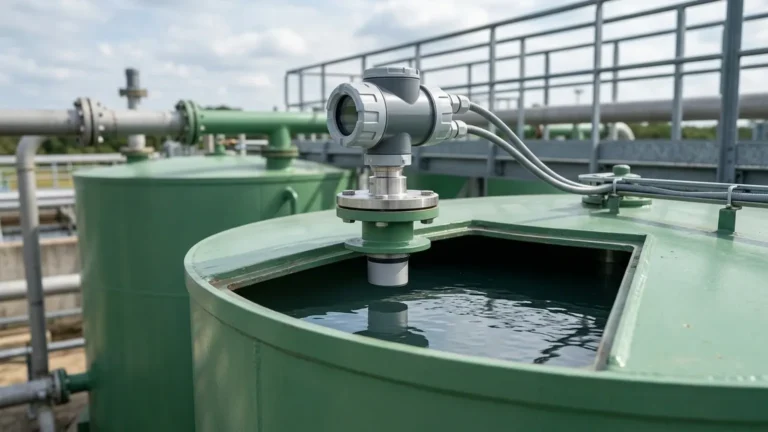
While flow meters measure the velocity *within* the pipe using transit-time, Ultrasonic Level Meters measure the distance to a liquid surface using the Time-of-Flight (ToF) of a reflected pulse. In many industrial B2B applications, such as reservoir management or wastewater influent monitoring, these two technologies are used in tandem to provide a complete mass balance of the system.
2. Technical Specifications for DN150 (6-Inch) Meters
A 6-inch ultrasonic water meter is designed for high-volume throughput. Engineers must evaluate several technical parameters to ensure the meter fits the hydraulic profile of the project.
| Parameter | Typical Specification (DN150 / 6") |
| :— | :— |
| Nominal Diameter | 150 mm (6 inches) |
| Standard Flow Rate (Q3) | 160 m³/h to 250 m³/h |
| Turndown Ratio (R) | R250, R400, or higher |
| Maximum Working Pressure | 1.6 MPa (16 bar) or 2.5 MPa (25 bar) |
| Temperature Class | T30, T50, or T90 (up to 90°C) |
| Accuracy Class | ISO 4064 Class 2 (Class 1 optional) |
| Protection Rating | IP68 (Fully submersible) |
| Battery Life | 10 to 15 years (Lithium-thionyl chloride) |
3. Key Selection Criteria for Industrial Applications
When specifying a 6 ultrasonic water meter, the following factors determine the long-term reliability and ROI of the installation:
Pipe Material and Condition
For inline meters, the flange standard (ANSI B16.5 or DIN EN 1092-1) must match existing infrastructure. For clamp-on variants, the pipe material (Ductile iron, PVC, Stainless steel) and wall thickness must be known, as the ultrasonic signal must penetrate the pipe wall to reach the fluid.
Turndown Ratio and Low-Flow Sensitivity
One of the primary advantages of a 6-inch ultrasonic meter over a mechanical Woltman meter is the ability to detect leaks and low-flow conditions. A high turndown ratio (e.g., R400) ensures that the meter remains accurate even during periods of minimal water usage, which is common in night-time municipal cycles.
Communication Protocols
In the B2B sector, data is as valuable as the water itself. Modern 6-inch meters should support multiple output options for integration into SCADA or Building Management Systems (BMS):
* Wired: RS485 (Modbus RTU), M-Bus, Pulse output.
* Wireless: NB-IoT, LoRaWAN, wM-Bus (868 MHz or 915 MHz).
4. Installation Guidelines for 6-Inch Pipelines
Proper installation is paramount to achieving the rated accuracy of an ultrasonic instrument. Because a 6 ultrasonic water meter relies on a stable flow profile, turbulence must be minimized.
Straight Pipe Requirements
Standard engineering practice requires a specific length of straight pipe before and after the meter to eliminate swirls and eddies caused by valves, pumps, or elbows.
* Upstream: Minimum 10D (1,500 mm for a 6-inch pipe).
* Downstream: Minimum 5D (750 mm for a 6-inch pipe).
If space is constrained, some advanced meters with multi-path ultrasonic sensors can operate with reduced straight-run requirements (e.g., 3D/0D).
Orientation and Air Pockets
* Horizontal Installation: The transducers should be positioned at the 3 o'clock and 9 o'clock positions to avoid sediment at the bottom and air bubbles at the top.
* Vertical Installation: Flow should always be in the upward direction to ensure the pipe remains completely full (flooded) at all times.
Environmental Considerations
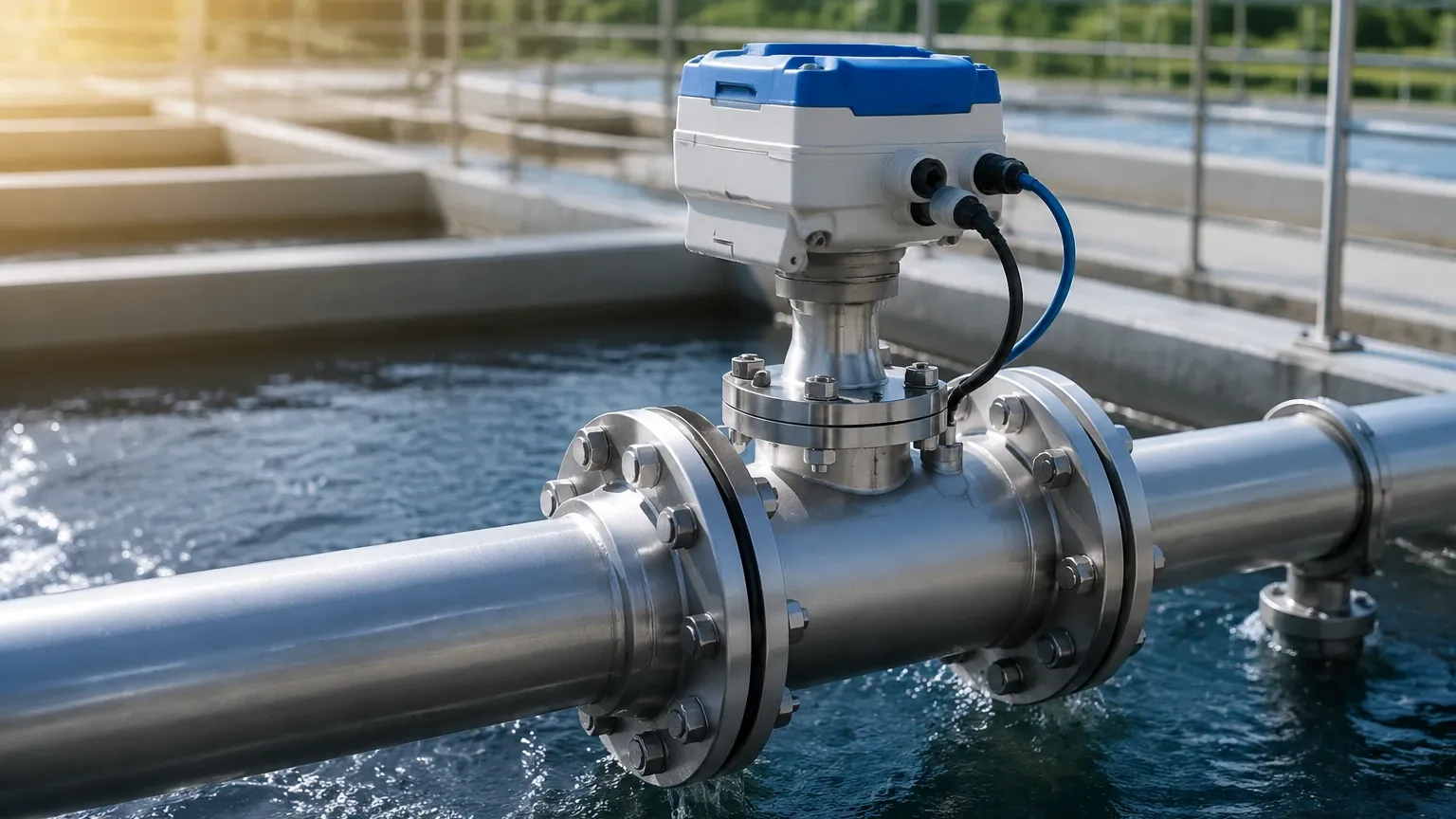
Since 6-inch pipes are often located in underground pits or outdoor facilities, an IP68 rating is non-negotiable. This ensures the electronics remain functional even if the meter vault is flooded.
5. Limitations and Operational Risks
While ultrasonic technology is robust, it is not universal. Engineers should be aware of the following limitations:
1. Entrained Air and Bubbles: Ultrasonic signals are scattered by air pockets. If the water contains more than 2% air by volume, the meter may lose signal or report inaccurate data.
2. High Turbidity/Solids: While transit-time meters can handle some suspended solids, extremely high concentrations can attenuate the signal. For heavy sludge, electromagnetic meters or specialized Ultrasonic Level Meters in flumes may be more appropriate.
3. Scaling and Biofilm: While there are no moving parts to wear out, significant scale buildup on the internal pipe wall can change the effective diameter and affect the path of the ultrasonic beam.
6. Case Study Context: Integrated Water Management
In a typical industrial cooling tower application, a 6 ultrasonic water meter is used to measure the make-up water entering the system. Simultaneously, an ultrasonic level transmitter is used to monitor the basin level. By integrating these two data points, the facility manager can calculate the evaporation rate and detect underground pipe leaks that would otherwise go unnoticed. This synergy between flow and level measurement is the cornerstone of modern water auditing.
7. Frequently Asked Questions (FAQ)
Q: Does a 6-inch ultrasonic water meter require periodic calibration?
A: Unlike mechanical meters, ultrasonic meters have no moving parts and do not suffer from mechanical wear. However, most regulatory bodies and ISO standards recommend a verification check every 3 to 5 years to ensure electronic drift has not occurred.
Q: Can a 6 ultrasonic water meter measure flow in both directions?
A: Yes, transit-time technology inherently supports bi-directional flow measurement. The meter will report positive flow, negative flow, and net totals, making it ideal for distribution networks with complex hydraulic loops.
Q: What is the difference between a single-path and multi-path ultrasonic meter?
A: A single-path meter uses one pair of transducers. A multi-path meter (2-path or 4-path) uses multiple pairs to sample different areas of the flow profile. For a 6-inch pipe, a dual-path meter is often preferred as it provides better accuracy in non-ideal piping conditions.
Q: How does water temperature affect the accuracy?
A: The speed of sound in water changes with temperature. High-quality 6-inch ultrasonic meters include integrated temperature sensors to automatically compensate for these changes in real-time.
Conclusion
The 6 ultrasonic water meter is a sophisticated tool for industrial and municipal water oversight. By eliminating the pressure drop and maintenance overhead associated with mechanical meters, it provides a future-proof solution for DN150 pipelines. When selecting a meter, prioritize high turndown ratios, robust communication protocols, and adherence to strict installation geometries. For comprehensive fluid control, ensure your flow monitoring strategy is complemented by reliable Ultrasonic Level Meters to maintain total visibility over your liquid assets.