Ultrasonic Level Sensor Honeywell
Understanding Ultrasonic Level Sensor Honeywell: A Technical Guide for Industrial Applications
In the landscape of industrial automation and process control, the demand for precise, non-contact level measurement has never been higher. Among the various technologies available, ultrasonic measurement stands out for its versatility and reliability in liquid and solid applications. For many procurement managers and process engineers, the search for an ultrasonic level sensor Honeywell often serves as a starting point for integrating high-quality sensing technology into broader Distributed Control Systems (DCS) or PLC architectures.
However, selecting the right instrument requires a deep understanding of the underlying physics, application constraints, and the specific technical differences between various market offerings. This guide explores the principles of ultrasonic technology, provides a framework for evaluating sensors, and offers practical advice for successful installation and maintenance.
The Principle of Ultrasonic Level Measurement
Before selecting a specific brand or model, it is essential to understand how Ultrasonic Level Meters operate. These devices function on the "Time-of-Flight" (ToF) principle.
How the Signal Travels
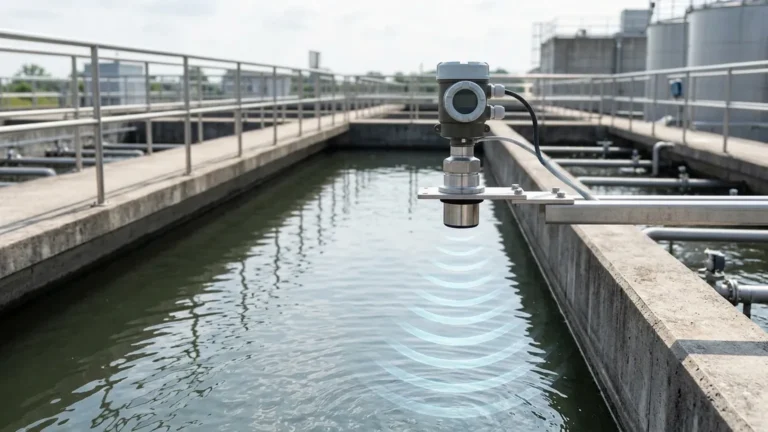
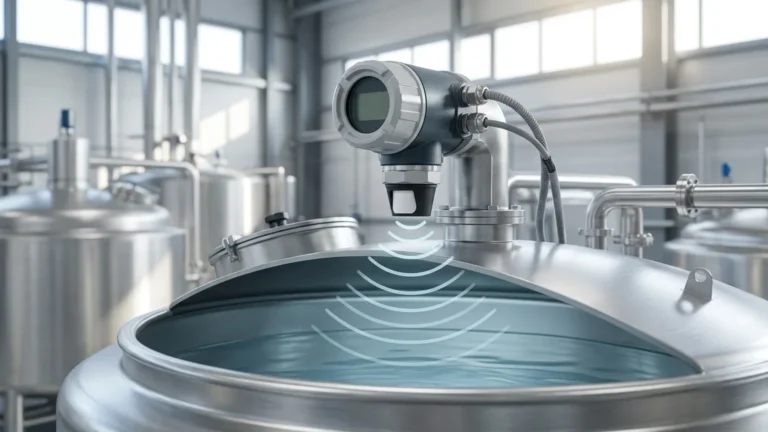
The sensor’s transducer contains a piezoelectric crystal that converts electrical energy into mechanical vibrations. This creates a high-frequency sound wave—typically between 20 kHz and 200 kHz—that is emitted in a cone-shaped beam toward the material being measured.
Once the sound wave hits the surface of the medium (liquid or solid), it is reflected back toward the transducer. The sensor then switches to "receiving mode" to detect the returning echo.
Calculating the Distance
The internal electronics measure the time interval between the pulse emission and the echo reception. Since the speed of sound in air is relatively constant (approximately 340 m/s at 20°C), the distance can be calculated using the following formula:
Distance = (Speed of Sound × Time Delay) / 2
By subtracting this distance from the total height of the tank (the "empty" distance), the sensor determines the actual level of the material. This non-contact method is highly advantageous because it prevents sensor degradation from corrosive chemicals or viscous fluids.
Evaluating Ultrasonic Level Sensor Honeywell and Industrial Alternatives
Honeywell is a global leader in automation, and their sensors are often prized for their seamless integration into Honeywell Experion PKS or other industrial IoT frameworks. When engineers look for an ultrasonic level sensor Honeywell, they are typically looking for high-end reliability and digital communication protocols like HART or Foundation Fieldbus.
However, in many B2B scenarios—such as water treatment, chemical dosing, and standard industrial tank monitoring—it is also beneficial to consider specialized manufacturers who focus exclusively on level measurement. Professional manufacturers like Welk provide robust alternatives that offer high accuracy and cost-effectiveness, particularly for OEM and ODM requirements where customization is necessary.
Key Evaluation Criteria
When comparing an ultrasonic level sensor Honeywell with other industrial-grade meters, consider the following technical specifications:
1. Measuring Range: Standard sensors typically cover ranges from 0.3 meters to 15 meters, though high-power units can reach up to 30 meters or more.
2. Beam Angle: A narrower beam angle (e.g., 5° to 10°) is preferable as it reduces the risk of the signal hitting tank walls or internal obstructions.
3. Material Compatibility: The transducer face must be compatible with the process environment. Common materials include PVDF for corrosive chemicals and Polypropylene (PP) for general water applications.
4. Output Options: Ensure the sensor supports your control system requirements, whether that is a 4-20mA analog signal, RS485 Modbus, or wireless protocols.
Practical Selection Table for Ultrasonic Sensors
To assist in the decision-making process, the following table outlines typical specifications for industrial ultrasonic level meters used in common B2B applications.
| Feature | Standard Industrial Grade | High-Precision / Advanced Grade |
| :— | :— | :— |
| Measurement Range | 0.4m – 10m | 0.2m – 30m |
| Accuracy | ±0.5% of Full Scale | ±0.2% of Full Scale |
| Resolution | 1mm – 3mm | < 1mm |
| Operating Temp | -20°C to +60°C | -40°C to +95°C |
| Pressure Limit | Atmospheric | Up to 0.3 MPa |
| Protection Rating | IP65 / IP66 | IP68 / Explosion-proof |
| Housing Material | ABS / Nylon | Cast Aluminum / Stainless Steel |
Installation Considerations and Best Practices
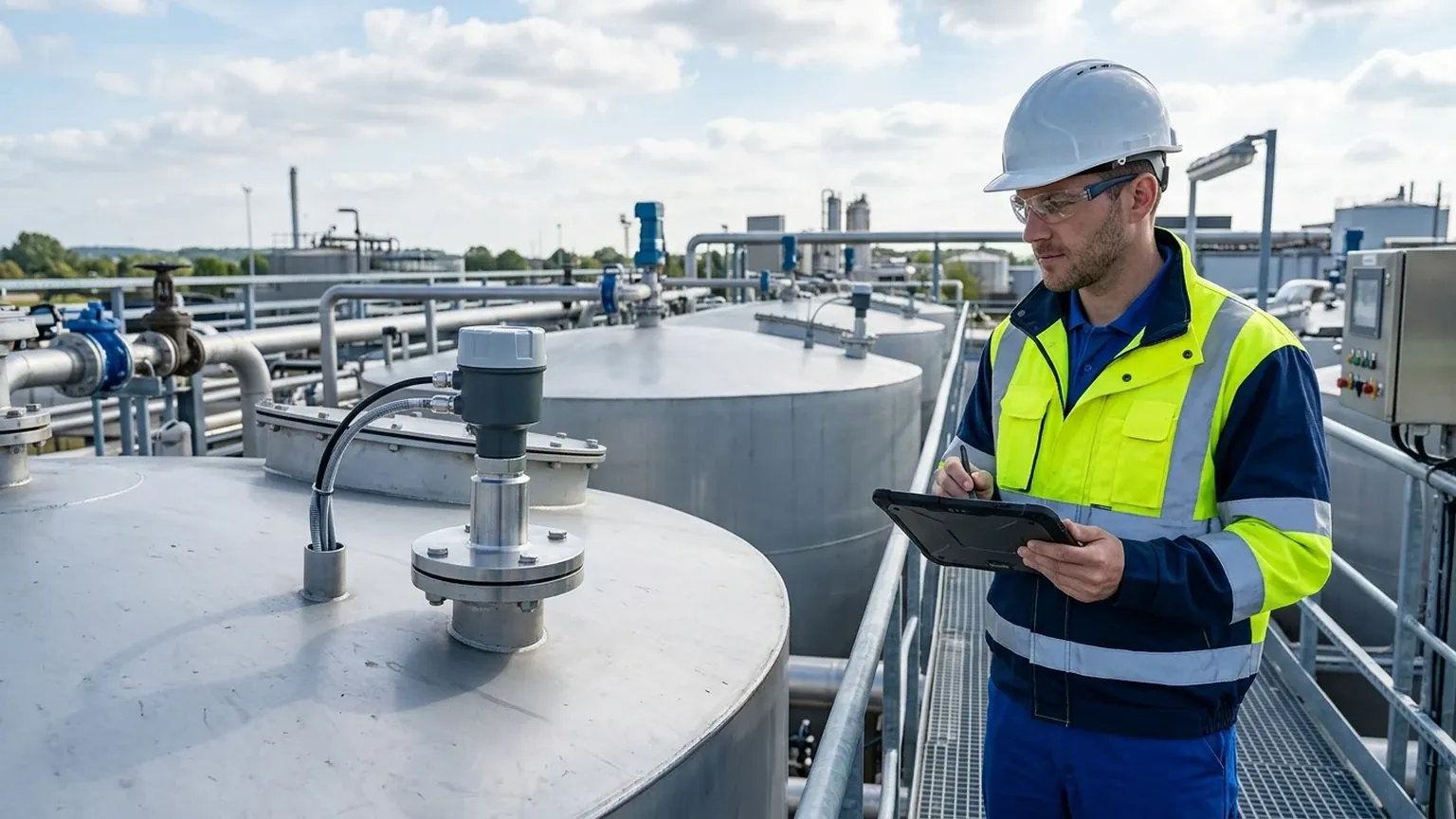
Even the highest quality ultrasonic level sensor Honeywell or equivalent industrial meter will fail to provide accurate data if installed incorrectly. Ultrasonic technology is sensitive to the environment between the transducer and the target surface.
1. The Dead Zone (Blocking Distance)
Every ultrasonic sensor has a "dead zone" directly beneath the transducer face where it cannot measure. This is caused by the time required for the transducer to stop vibrating after sending a pulse. If the liquid level enters this zone, the sensor will provide erratic or maximum-level readings. Always mount the sensor high enough to ensure the maximum liquid level never enters the dead zone (typically 0.2m to 0.5m depending on the model).
2. Avoiding Obstructions
The ultrasonic beam spreads as it travels. Any internal structures—such as ladders, pipes, or agitators—that enter the path of the beam will create a "false echo." Modern sensors often include software for "False Echo Suppression," allowing the user to map out these obstructions, but it is always better to install the sensor in a clear path.
3. Orientation and Positioning
* Perpendicularity: The sensor must be mounted perfectly perpendicular to the liquid surface. A tilt of even a few degrees can cause the signal to reflect away from the transducer, resulting in a "Loss of Echo" error.
* Wall Distance: Do not mount the sensor too close to the tank wall. A general rule is to maintain a distance from the wall equal to at least 1/10th of the tank height.
* Inlet Flow: Avoid mounting the sensor directly above the tank inlet. The turbulence and bubbles from the falling liquid will scatter the ultrasonic signal.
Limitations of Ultrasonic Technology
While highly effective, ultrasonic level meters are not universal solutions. Engineers must be aware of the following physical limitations:
* Vacuum Conditions: Sound waves require a medium (air or gas) to travel. Therefore, ultrasonic sensors cannot function in a vacuum.
* Heavy Foam: Thick, dense foam on the surface of a liquid can absorb the ultrasonic pulse rather than reflecting it, leading to signal loss.
* Vapor and Dust: High concentrations of heavy vapors or significant dust (in solid silos) can alter the speed of sound or attenuate the signal. In these environments, Radar level meters are often a more reliable choice.
* High Temperature: Since the speed of sound changes with temperature, integrated temperature compensation is required. However, extreme temperatures (above 100°C) can exceed the limits of the piezoelectric crystals used in the transducer.
Maintenance and Troubleshooting
One of the primary benefits of using a non-contact Ultrasonic Level Meter is the low maintenance requirement. Since there are no moving parts and no contact with the medium, mechanical wear is non-existent.
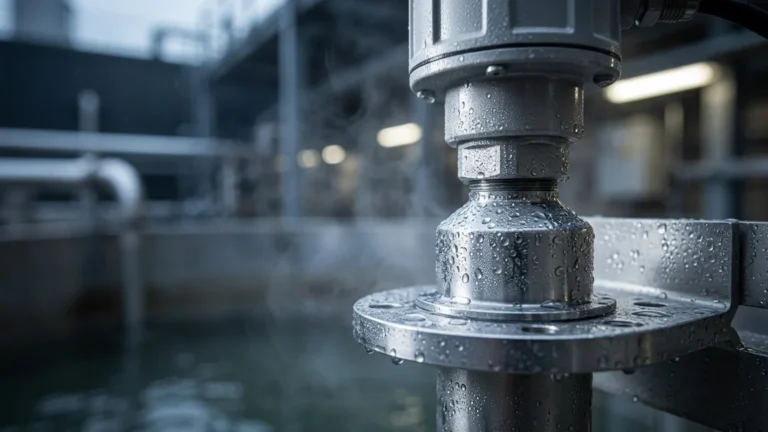
However, in humid or outdoor environments, condensation can form on the transducer face. While many modern sensors are designed to shed droplets, a heavy buildup can block the signal. Periodic inspection and cleaning with a soft cloth and mild detergent (if necessary) are recommended.
If you experience erratic readings, check for:
1. Acoustic Noise: High-frequency noise from nearby machinery can occasionally interfere with the sensor.
2. Power Supply Fluctuations: Ensure the sensor is receiving a stable 24V DC (or specified) voltage, as ripples in the power line can affect the sensitive timing electronics.
3. Temperature Gradients: In very tall tanks, the temperature at the top may differ significantly from the bottom, affecting the speed of sound calculation. Advanced sensors with external temperature probes can mitigate this.
Frequently Asked Questions (FAQ)
Q: Can an ultrasonic level sensor Honeywell be used for solids like grain or sand?
A: Yes, but with caveats. Solids do not reflect sound as uniformly as liquids. The angle of repose of the solid material can reflect the signal away from the sensor. It is usually necessary to use a higher-power sensor and a swiveling mounting flange to aim the sensor correctly.
Q: How does wind affect the measurement?
A: In outdoor applications, such as open-channel flow measurement in flumes, strong winds can "blow" the ultrasonic pulse away or create turbulence that affects the time-of-flight. Using a protective sunshade or a stilling well can help.
Q: What is the difference between an ultrasonic transmitter and an ultrasonic switch?
A: A transmitter (or meter) provides a continuous measurement of the level (e.g., 0-100%), whereas a switch only provides a point-level alert (e.g., "Tank Full" or "Tank Empty") via a relay output.
Q: Is it possible to shorten the dead zone?
A: The dead zone is a physical property of the transducer's frequency. Higher frequency sensors (which have a shorter range) generally have smaller dead zones, while lower frequency sensors (long range) have larger dead zones.
Conclusion
Whether you are integrating an ultrasonic level sensor Honeywell into a complex factory automation network or seeking a specialized solution from a manufacturer like Welk, the success of your level measurement project depends on matching the sensor's technical capabilities to the specific demands of the environment. By prioritizing correct installation, understanding the impact of the dead zone, and accounting for environmental factors like foam and temperature, B2B operators can ensure long-term accuracy and operational efficiency. For those looking to explore specific hardware options and technical support, reviewing Ultrasonic Level Meters from dedicated industrial suppliers is a recommended next step in the procurement process.