Ultrasonic Fuel Level Sensor Diesel
Ultrasonic Fuel Level Sensor Diesel: A Technical Guide for Industrial Applications
In industrial environments, the precise monitoring of diesel fuel levels is critical for operational continuity, cost management, and safety. Whether managing backup power generators, fleet refueling stations, or industrial heating systems, engineers require reliable data to prevent run-dry scenarios and detect potential leaks or theft. Among the various technologies available, the ultrasonic fuel level sensor diesel has emerged as a preferred solution due to its non-contact nature and ease of integration.
This guide explores the engineering principles, selection criteria, and installation best practices for Ultrasonic Level Meters in diesel applications, providing a technical foundation for process automation professionals.
Measurement Principles of Ultrasonic Technology
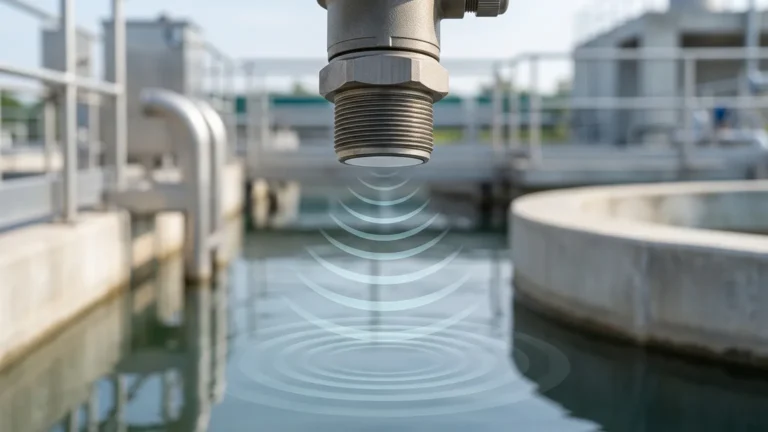
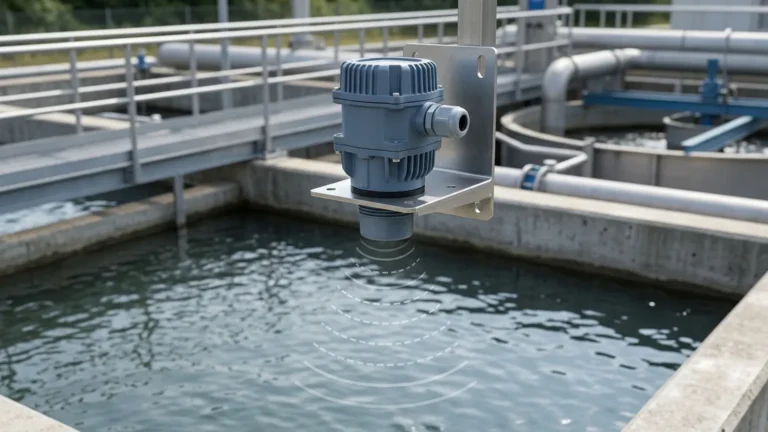
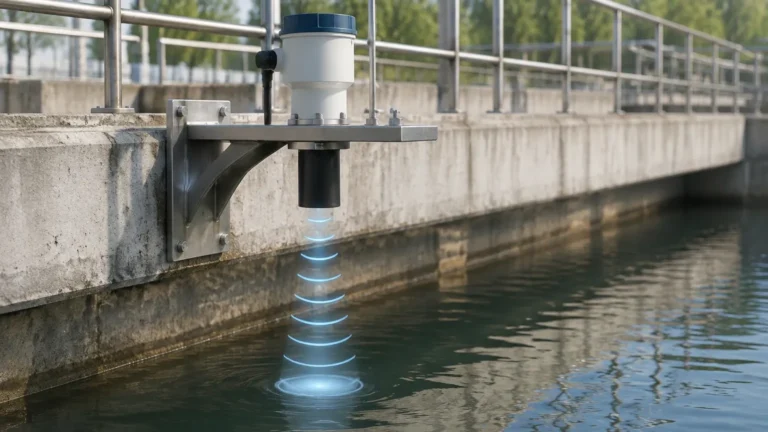
Ultrasonic level measurement is based on the "Time-of-Flight" (ToF) principle. The sensor, typically mounted at the top of the diesel tank, contains a piezoelectric crystal that converts electrical energy into high-frequency sound waves. These pulses travel through the air gap between the sensor face and the fuel surface.
The Time-of-Flight Calculation
When the sound wave hits the surface of the diesel, it is reflected back to the sensor. The device measures the time elapsed between the emission of the pulse and the reception of the echo. The distance is calculated using the following formula:
Distance = (Speed of Sound × Time) / 2
The level of the diesel is then determined by subtracting the measured distance from the total tank height (the distance from the sensor face to the tank bottom).
Compensation for Environmental Variables
The speed of sound in air is approximately 343 m/s (1,125 ft/s) at 20°C (68°F), but it varies significantly with temperature. Because diesel storage tanks are often located outdoors or in unconditioned industrial spaces, professional-grade ultrasonic fuel level sensors include integrated temperature probes. These probes allow the internal microprocessor to compensate for sound-speed fluctuations in real-time, maintaining accuracy across varying seasonal conditions.
Advantages of Using Ultrasonic Sensors for Diesel
Diesel fuel presents specific challenges for level measurement, including its viscosity and the potential for paraffin wax buildup in cold temperatures. Ultrasonic sensors offer several advantages over traditional mechanical or contact-based methods:
1. Non-Contact Measurement: Because the sensor never touches the fuel, there is no risk of corrosion, fouling, or mechanical wear. This significantly reduces maintenance requirements compared to float-type sensors.
2. High Compatibility: Diesel is chemically compatible with the standard housing materials used in ultrasonic transducers, such as PVDF or reinforced polypropylene.
3. Versatility in Tank Geometry: Modern ultrasonic meters can be programmed to calculate volume in horizontal cylindrical tanks, spherical tanks, and rectangular reservoirs by applying linearization tables.
4. Solid-State Reliability: With no moving parts, these sensors are resistant to the vibrations often found near industrial diesel generators.
Technical Selection Criteria for Diesel Applications
Selecting the correct ultrasonic fuel level sensor for diesel requires an evaluation of the tank environment and the required precision. The following table provides a reference for common selection parameters:
Table 1: Selection Guidelines for Ultrasonic Diesel Sensors
| Parameter | Requirement for Diesel | Engineering Consideration |
| :— | :— | :— |
| Measurement Range | 0.2m to 15m (0.6ft to 49ft) | Ensure the "Dead Zone" is accounted for at the top of the tank. |
| Accuracy | ±0.25% to ±0.5% of span | Critical for high-value fuel inventory management. |
| Output Signal | 4-20mA, Modbus RTU, or RS485 | Compatibility with PLC or remote monitoring systems. |
| Operating Temperature | -40°C to +70°C (-40°F to 158°F) | Essential for outdoor tanks in extreme climates. |
| Enclosure Rating | IP66, IP67, or IP68 | Protection against rain, dust, and wash-down procedures. |
| Hazardous Area Rating | ATEX/Ex-proof (Optional) | Required if the diesel tank is located in a zone with explosive vapors. |
| Beam Angle | 5° to 12° | Narrower beams are better for tanks with internal obstructions. |
Installation and Calibration Best Practices
Proper installation is the most significant factor in the performance of an ultrasonic fuel level sensor diesel. Even the most advanced sensor will fail to provide accurate data if the acoustic path is compromised.
1. Avoiding the Dead Zone (Blocking Distance)
Every ultrasonic sensor has a "dead zone" or "blocking distance" directly beneath the transducer face where it cannot accurately process echoes. For a sensor with a 5-meter range, the dead zone is typically 0.2m to 0.3m (0.6ft to 1ft). The sensor must be mounted high enough so that the maximum fuel level never enters this zone.
2. Positioning and Alignment
* Perpendicularity: The sensor must be mounted perfectly perpendicular to the fuel surface. A tilt of even a few degrees can cause the reflected signal to bounce away from the transducer, resulting in a "lost echo" error.
* Wall Clearance: Avoid mounting the sensor too close to the tank wall. The acoustic beam spreads as it travels; if it hits the wall, it can create false echoes. A general rule is to keep the sensor at least 20cm (8in) away from the wall for every meter of depth.
* Obstructions: Ensure the path is clear of internal pipes, ladders, or baffles. If obstructions are unavoidable, many Ultrasonic Level Meters feature "false echo suppression" software to ignore these static reflections.
3. Stilling Wells for Turbulent Tanks
In tanks where diesel is frequently pumped in or out, surface turbulence can scatter the ultrasonic signal. In these cases, installing the sensor inside a stilling well (a vertical pipe with vent holes) can provide a calm surface for the measurement, ensuring a stable and accurate reading.
Limitations and Environmental Challenges
While ultrasonic technology is robust, engineers must be aware of its physical limitations in the context of diesel storage:
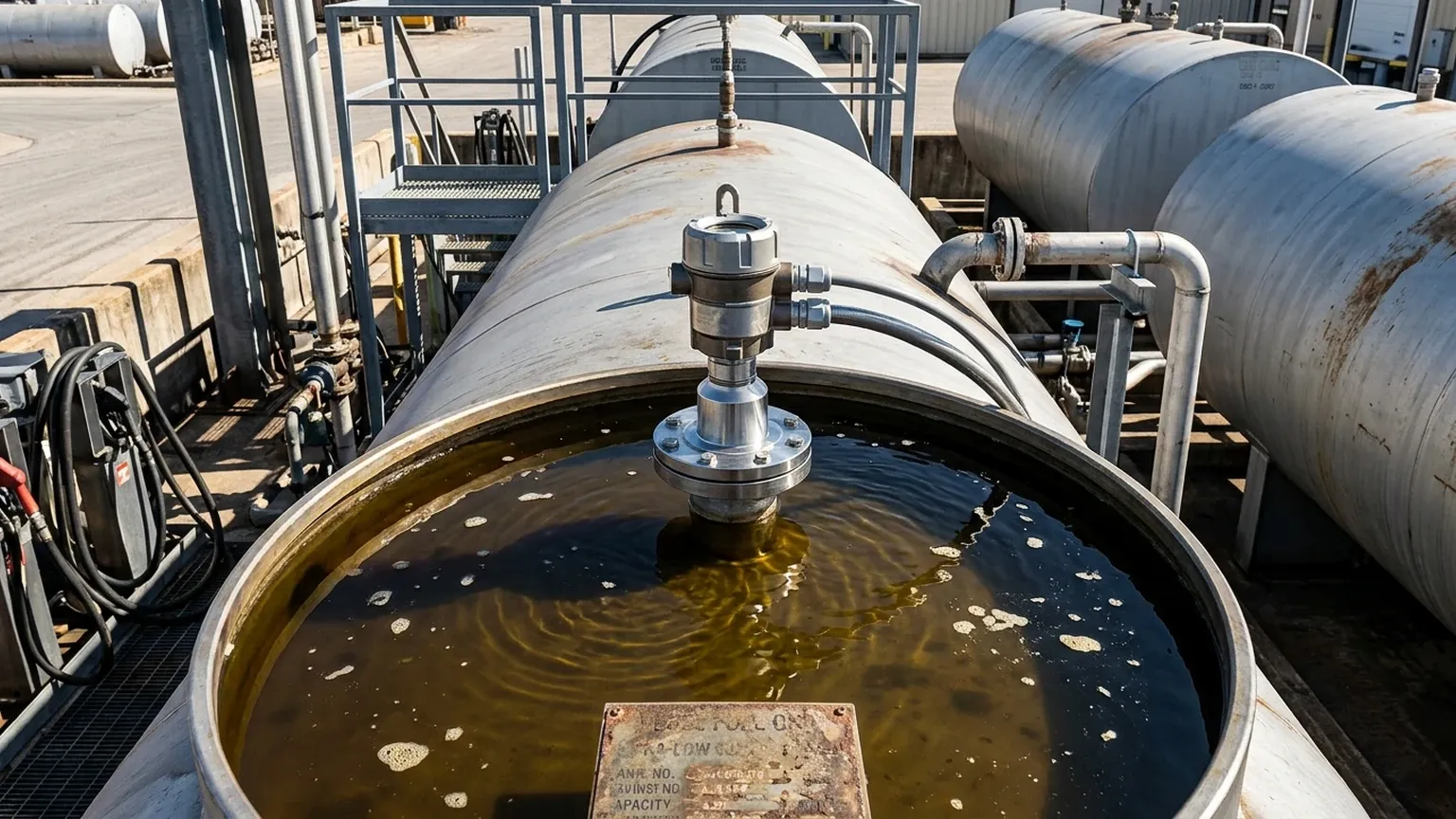
* Heavy Foam: Diesel can occasionally foam during high-speed filling. Foam absorbs ultrasonic waves rather than reflecting them, which can lead to temporary signal loss. If heavy foaming is expected, a radar-based sensor may be a more appropriate alternative.
* High Pressure: Ultrasonic sensors are generally designed for atmospheric or low-pressure tanks. In high-pressure vessels, the change in air density alters the speed of sound beyond what standard temperature compensation can handle.
* Vapor Concentration: While diesel vapor is less dense than gasoline vapor, extreme temperature fluctuations in a sealed tank can create varying vapor concentrations that slightly affect the speed of sound.
Comparison: Ultrasonic vs. Other Technologies
To provide context for project specification, the following table compares ultrasonic sensors with other common diesel level measurement technologies.
Table 2: Technology Comparison for Diesel Level Sensing
| Feature | Ultrasonic | Hydrostatic (Submersible) | Guided Wave Radar (GWR) |
| :— | :— | :— | :— |
| Contact Type | Non-contact | Contact (Submerged) | Contact (Probe) |
| Installation | Top-mounted | Bottom-mounted or dropped in | Top-mounted |
| Maintenance | Low | Medium (Sensor cleaning) | Low |
| Cost | Moderate | Low to Moderate | High |
| Vapor Sensitivity | Moderate | None | None |
| Foam Sensitivity | High | None | Low |
| Best Use Case | Standard vented tanks | Deep underground tanks | High-pressure/High-temp |
Frequently Asked Questions (FAQs)
Can an ultrasonic sensor detect water at the bottom of a diesel tank?
No. Ultrasonic sensors mounted at the top of the tank measure the top surface of the liquid. Since water is denser than diesel and settles at the bottom, an ultrasonic sensor will only report the total liquid level. To detect water interface, a specialized probe or bottom-mounted sensor is required.
Does the color of the diesel affect the measurement?
No. Unlike optical or laser sensors, ultrasonic waves are unaffected by the color, opacity, or transparency of the liquid. Whether the diesel is clear, dyed red for off-road use, or dark from age, the acoustic reflection remains the same.
How do I handle a tank with internal baffles?
If your diesel tank has internal baffles (common in mobile fuel bowsers), you should use a sensor with a narrow beam angle (e.g., 5-8 degrees) and position it in the center of the largest compartment. Additionally, utilize the "false echo masking" feature in the sensor's software to program the device to ignore reflections from the baffles.
Is calibration required after installation?
Yes. While the sensor is factory-calibrated for the speed of sound, you must perform a "field calibration" to define the tank's specific dimensions. This involves setting the 4mA point (empty tank) and the 20mA point (full tank) within the sensor's configuration menu.
Conclusion
The ultrasonic fuel level sensor diesel provides a balanced combination of accuracy, reliability, and cost-effectiveness for modern industrial applications. By understanding the acoustic principles and adhering to strict installation guidelines—specifically regarding dead zones and beam paths—operators can achieve precise inventory control and operational efficiency. For complex tank geometries or environments prone to heavy foaming, consulting with a technical specialist to review Ultrasonic Level Meters options is recommended to ensure the selected instrument meets the specific demands of the site.