Ultrasonic Level Sensor Baumer
Ultrasonic Level Sensor Baumer: Engineering Selection and Application Guide
In the landscape of industrial automation and process control, non-contact level measurement has become the standard for reliability and hygiene. Among the leading technologies, ultrasonic sensors offer a versatile solution for monitoring liquids, pastes, and bulk solids. When engineers evaluate high-precision options, the ultrasonic level sensor Baumer often emerges as a benchmark for compact design and advanced digital integration.
This guide explores the underlying principles of ultrasonic technology, compares the technical specifications of premium sensors like those from Baumer with broader industrial Ultrasonic Level Meters, and provides practical engineering insights for selection and installation.
Understanding the Ultrasonic Measurement Principle
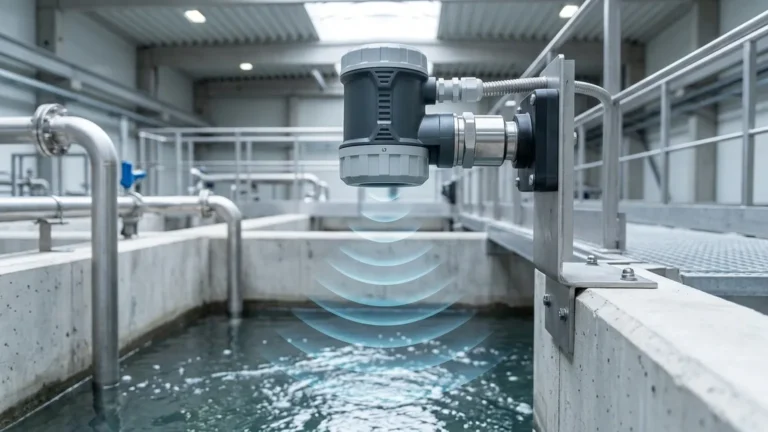
Ultrasonic level measurement is based on the "Time-of-Flight" (ToF) principle. The sensor's transducer acts as both a transmitter and a receiver. It emits a high-frequency acoustic pulse—typically between 40 kHz and 200 kHz—which travels through the air, reflects off the surface of the medium, and returns to the sensor.
The Calculation
The distance from the sensor to the material surface is calculated using the formula:
D = (v × t) / 2
* D: Distance to the surface.
* v: Velocity of sound in the medium (air).
* t: Total time elapsed between transmission and reception.
Because the speed of sound is affected by air temperature, professional-grade instruments, including the ultrasonic level sensor Baumer series and Welk industrial meters, incorporate integrated temperature sensors to compensate for these variations automatically. This ensures accuracy remains consistent even as ambient conditions fluctuate.
The Role of Baumer in Ultrasonic Sensing
Baumer is recognized in the B2B sector for its focus on miniaturization and "Smart Sensor" capabilities. Their ultrasonic portfolio, particularly the U500 and UR18 series, is designed for tight spaces and integration into Industry 4.0 environments via IO-Link.
Key characteristics of the ultrasonic level sensor Baumer line include:
1. Narrow Sonic Cones: Designed to minimize interference from tank walls or internal obstructions.
2. Short Blind Zones: Allowing for measurement very close to the sensor head, which is critical in small vessels.
3. Robust Housing: Often available in stainless steel (V4A) or high-grade plastics for chemically aggressive environments.
While Baumer excels in factory automation and small-scale machinery, industrial process applications involving large storage tanks or outdoor water treatment often utilize larger-scale Ultrasonic Level Meters that provide higher power output and longer measuring ranges.
Technical Comparison and Selection Criteria
When selecting between a specialized sensor like a Baumer unit and a standard industrial ultrasonic transmitter, engineers must evaluate the specific requirements of the application.
Selection Table: Technical Specifications
| Feature | Baumer U500 Series (Typical) | Welk Industrial Ultrasonic Meter | Application Consideration |
| :— | :— | :— | :— |
| Measuring Range | 100 mm to 2,000 mm | 0.4 m to 15 m (or more) | Choose based on tank height. |
| Blind Zone | ~20 mm to 100 mm | 250 mm to 500 mm | Critical for full-tank detection. |
| Output Options | IO-Link, 4-20 mA, Push-pull | 4-20 mA, RS485 (Modbus), Hart | Match to PLC/Control system. |
| Beam Angle | 5° to 7° | 5° to 12° | Narrower beams avoid obstructions. |
| Housing Material | Plastic or Stainless Steel | Aluminum or Reinforced Plastic | Chemical compatibility is key. |
| Ingress Protection| IP67 / IP69K | IP66 / IP67 | IP69K is required for wash-down. |
Installation Best Practices
Correct installation is the most significant factor in the performance of any ultrasonic level sensor. Even a high-end ultrasonic level sensor Baumer can fail if acoustic principles are ignored.
1. Managing the Blind Zone (Dead Band)
Every ultrasonic sensor has a "blind zone" directly in front of the transducer where it cannot accurately process the returning echo. If the liquid level enters this zone, the sensor will report an error or a fixed maximum value.
* Guideline: Ensure the maximum fill level of the tank remains at least 10% (or the specific manufacturer's minimum) below the sensor face.
2. Positioning and Alignment
* Perpendicularity: The sensor must be mounted perfectly perpendicular to the liquid surface. A tilt of even 2-3 degrees can cause the sound wave to reflect away from the transducer, resulting in signal loss.
* Wall Interference: Avoid mounting the sensor too close to the tank wall. The sonic cone expands as it travels; if it hits the wall, it creates "ghost echoes."
* Inflow Avoidance: Never mount the sensor directly above the tank's filling inlet. The turbulence and the falling stream will disrupt the acoustic signal.
3. Obstructions
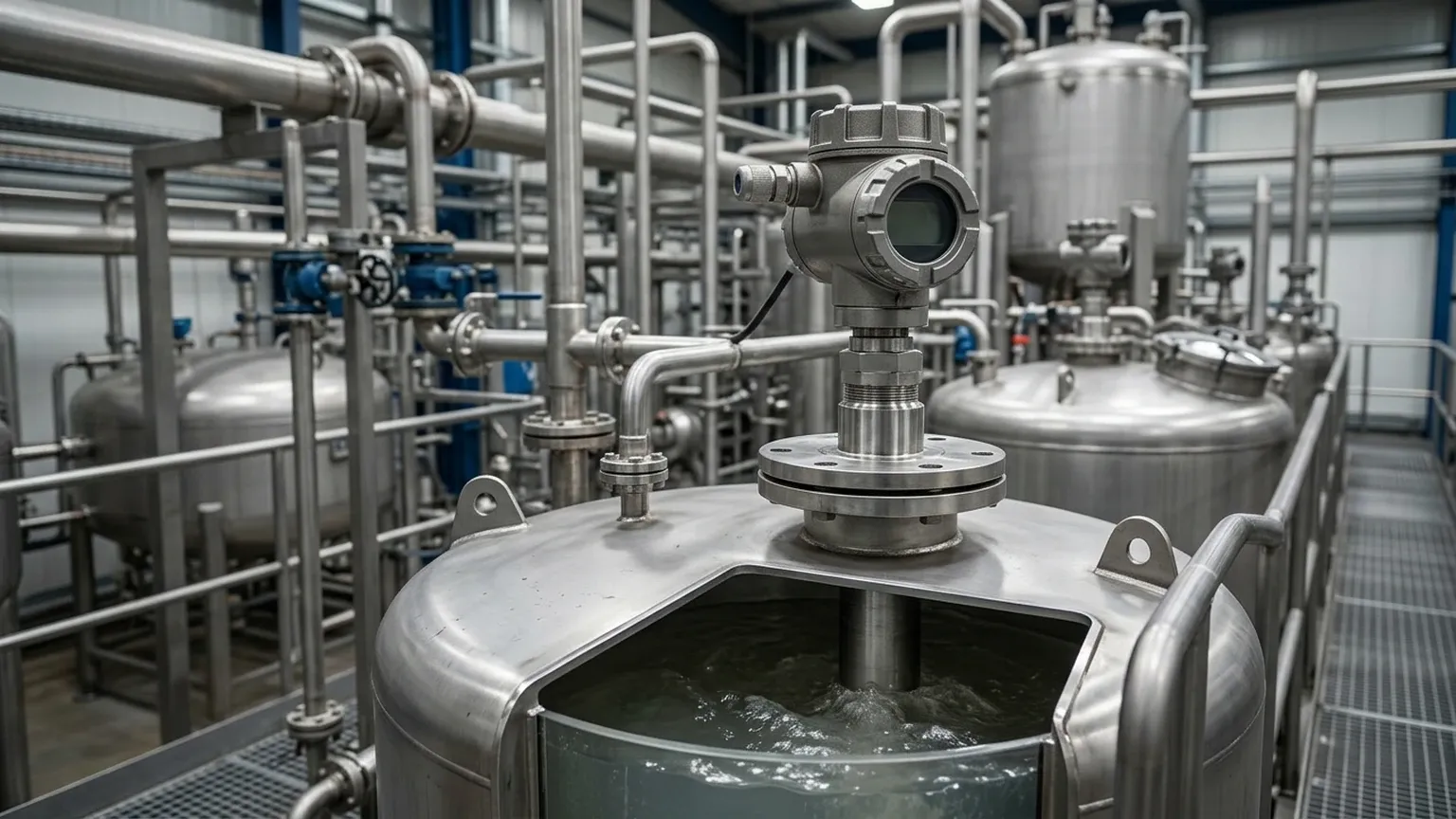
Internal structures like ladders, heating coils, or agitators can reflect the signal. While modern Ultrasonic Level Meters feature "false echo suppression" software to ignore these fixed objects, it is best practice to provide a clear "line of sight" for the acoustic pulse.
Environmental Limitations and Solutions
Ultrasonic technology is highly effective but has physical limitations that engineers must account for during the design phase.
* Vapor and Dust: Heavy steam or significant dust concentration can attenuate (weaken) the sound waves. In these environments, higher-power industrial meters are preferred over compact automation sensors.
* Foam: Surface foam acts as an acoustic absorber. If the foam is thick and dense, the ultrasonic pulse may not return at all. In such cases, a radar level meter or a contact-based solution like a magnetic level gauge may be required.
* Pressure Extremes: Ultrasonic sensors rely on air as a medium. In high-pressure or vacuum environments, the speed of sound changes drastically, or the medium becomes too thin to carry sound. Most ultrasonic level sensor Baumer models are rated for atmospheric or near-atmospheric pressure.
* Temperature Gradients: Rapid temperature changes can create layers in the air with different densities, causing the sound wave to refract. Integrated temperature compensation helps, but extreme gradients may require secondary verification.
Maintenance and Troubleshooting
One of the primary advantages of the ultrasonic level sensor Baumer and similar non-contact devices is the low maintenance requirement. Since no parts touch the medium, there is no mechanical wear or buildup from corrosive fluids.
Common Troubleshooting Steps:
1. Transducer Cleaning: In high-humidity environments, condensation or crystallization can form on the transducer face. Periodic cleaning with a soft cloth and mild solvent is recommended.
2. Signal Loss (E04/Error): Check for surface turbulence or foam. If the surface is agitated, increasing the "damping" or averaging time in the sensor settings can stabilize the output.
3. Inaccurate Readings: Verify the "Empty Tank" and "Full Tank" calibration points. Ensure the temperature compensation is active and that the sensor is not exposed to direct sunlight, which can overheat the internal temperature probe.
Why Choose Ultrasonic Technology?
Despite the rise of radar technology, ultrasonic sensors remain a preferred choice for many B2B applications due to their cost-effectiveness and reliability in specific conditions. For water treatment, chemical storage in plastic tanks, and food-grade applications where hygiene is paramount, the ultrasonic level sensor Baumer provides a high-precision, easy-to-integrate solution.
For larger industrial projects requiring robust housing and long-distance capabilities, Welk's range of Ultrasonic Level Meters offers the power and flexibility needed for demanding process environments.
Frequently Asked Questions (FAQ)
Q: Can ultrasonic sensors measure solids?
A: Yes, but the range is typically reduced by 50% compared to liquids. Solids like grain or plastic pellets have an irregular surface that scatters the sound waves rather than reflecting them directly back.
Q: Is the ultrasonic level sensor Baumer suitable for hazardous areas?
A: Many Baumer sensors are designed for general industrial use. If your application involves explosive atmospheres (ATEX/IECEx zones), you must select a model specifically certified for those zones, which often involves specialized housing and intrinsic safety barriers.
Q: How does IO-Link benefit ultrasonic sensing?
A: IO-Link allows for remote parameterization, meaning you can adjust the sensor's range and sensitivity from the PLC without physical access to the sensor. It also provides diagnostic data, such as signal quality and operating hours, which supports predictive maintenance.
Q: What is the difference between a 2-wire and 4-wire ultrasonic meter?
A: A 2-wire meter is loop-powered (the same two wires provide power and the 4-20mA signal), making it easier to wire but offering less power for the acoustic pulse. A 4-wire meter has separate power and signal lines, allowing for higher power output and longer measuring ranges.
By understanding the technical boundaries of the ultrasonic level sensor Baumer and the broader category of Ultrasonic Level Meters, engineering teams can specify the most reliable and cost-effective solution for their specific process requirements.