Ultrasonic Level Sensor for Water
Ultrasonic Level Sensor for Water: A Comprehensive Engineering Guide
In industrial water management and wastewater treatment, precise level monitoring is fundamental to operational efficiency, safety, and regulatory compliance. Among the various technologies available, Ultrasonic Level Meters have emerged as a preferred non-contact solution due to their versatility and cost-effectiveness. This guide explores the technical principles, application criteria, and installation best practices for selecting an ultrasonic level sensor for water applications.
Understanding the Measurement Principle
Before selecting an instrument, it is essential to understand the physics governing its operation. An ultrasonic level sensor operates on the "Time of Flight" (ToF) principle.
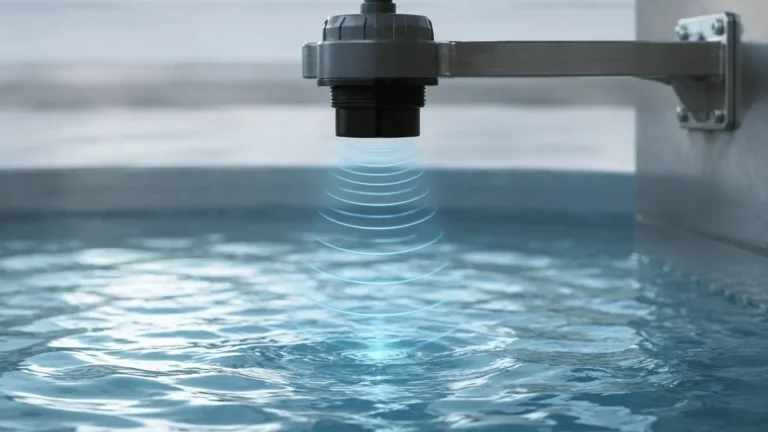
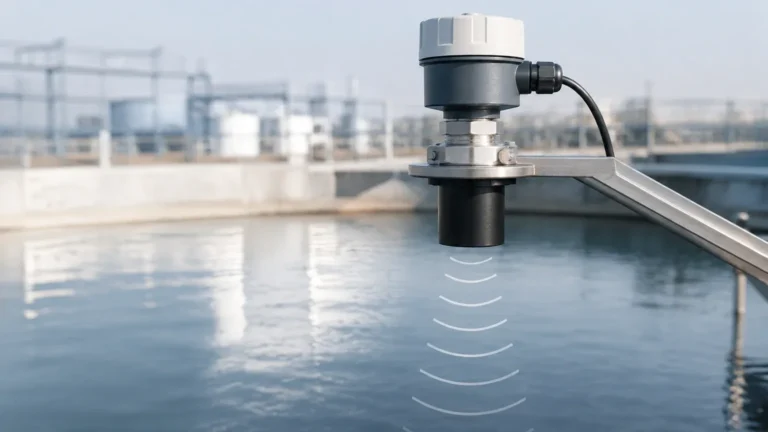
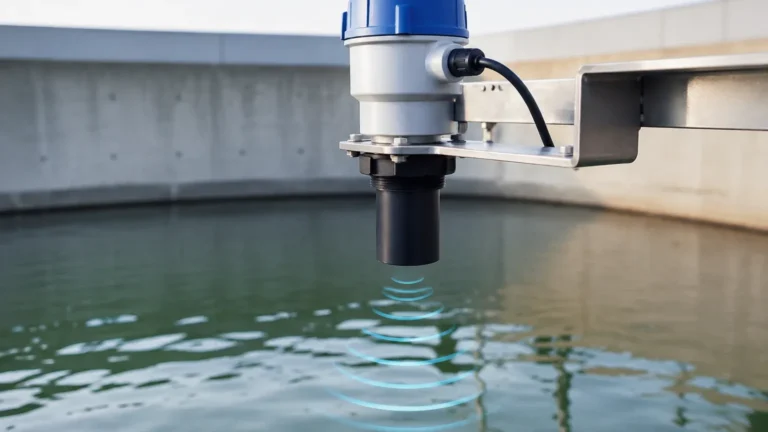
The device contains a transducer, typically housing a piezoelectric crystal. When energized, this crystal vibrates at a specific frequency, emitting a burst of ultrasonic sound waves toward the surface of the water. These waves travel through the air, strike the water surface, and reflect back toward the sensor as an echo.
The sensor’s integrated electronics measure the time interval between the pulse emission and the receipt of the echo. Since the speed of sound in air is a known constant (approximately 343 meters per second at 20°C), the distance to the water surface can be calculated using the following formula:
Distance = (Speed of Sound × Time) / 2
By subtracting this distance from the total height of the tank or the zero-point of a channel, the controller determines the actual water level. Because the speed of sound is influenced by air temperature, professional-grade Ultrasonic Level Meters include built-in temperature compensation to maintain accuracy across varying environmental conditions.
Why Choose an Ultrasonic Level Sensor for Water?
Water applications—ranging from municipal reservoir monitoring to industrial cooling towers—benefit from the non-contact nature of ultrasonic technology. Unlike hydrostatic transmitters or float switches, an ultrasonic level sensor for water does not come into physical contact with the medium. This offers several distinct advantages:
1. Reduced Maintenance: No moving parts or submerged components mean there is no risk of fouling, corrosion, or mechanical wear from the water or its contaminants.
2. Versatility: These sensors can measure both liquids and solids, though they are most commonly optimized for the uniform reflective surface of water.
3. Ease of Retrofitting: Since the sensor is mounted above the maximum liquid level, installation does not require emptying the tank or drilling holes in the bottom of the vessel.
Technical Selection Criteria
Selecting the right sensor requires matching the instrument's specifications to the specific demands of the water environment. The following table provides a reference for common selection scenarios:
Table 1: Selection Matrix for Water Level Applications
| Application Scenario | Recommended Feature | Reasoning |
| :— | :— | :— |
| Open Channel Flow | High-resolution output (4-20mA/HART) | Small changes in level equate to large changes in flow volume. |
| Wastewater Sump | IP68 Rating & Chemical Resistance | Presence of hydrogen sulfide (H2S) and potential flooding. |
| Outdoor Reservoir | Sunshield & Integrated Temp Compensation | Rapid temperature shifts and solar heating of the sensor body. |
| Small Process Tank | Narrow Beam Angle (< 10°) | Prevents false echoes from internal ladders or agitators. |
| Chemical Dosing | PVDF or PTFE Transducer Face | Resistance to corrosive water treatment chemicals like chlorine. |
Key Performance Parameters
1. Measurement Range
Ultrasonic sensors are available in various ranges, typically from 0.25 meters up to 30 meters. It is vital to select a sensor where the maximum range exceeds the tank depth by at least 10-20% to ensure reliable signal return at low levels.
2. The Dead Band (Blanking Distance)
Every ultrasonic sensor has a "dead band" or "blind zone" directly beneath the transducer face. In this zone (usually 0.2m to 0.6m depending on the frequency), the sensor cannot process an echo because the crystal is still vibrating from the pulse emission. The sensor must be mounted high enough so that the water never enters this dead band.
3. Beam Angle
The ultrasonic pulse is not a laser; it spreads out in a cone. A typical beam angle is between 8° and 12°. Engineers must ensure that the "footprint" of the beam at the lowest water level does not hit the side walls of the tank or any internal obstructions, which would cause false readings.
Installation Considerations
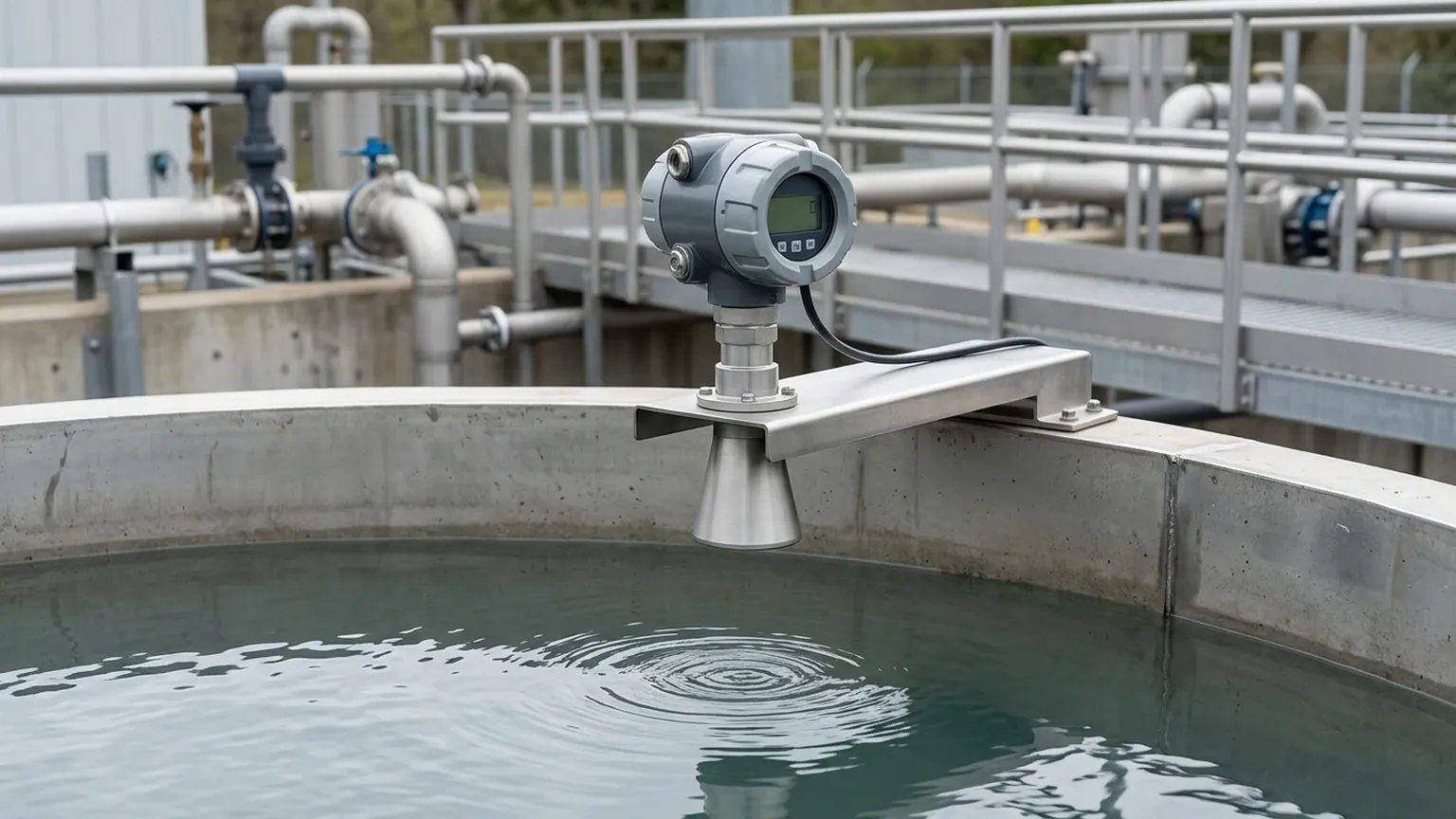
Proper installation is the single most important factor in the performance of an ultrasonic level sensor for water. Even the highest quality Welk instrument will fail if the signal path is compromised.
* Perpendicular Alignment: The sensor face must be perfectly parallel to the water surface. A tilt of even a few degrees can cause the echo to bounce away from the transducer rather than back to it.
* Wall Distance: As a general rule of thumb, the sensor should be mounted at a distance from the wall equal to at least 1/6th of the total measurement height. This prevents interference from wall-induced echoes.
* Avoid Turbulence: If the water surface is highly turbulent (e.g., near an inlet pipe), the ultrasonic signal may be scattered. In such cases, a stilling well (a vertical pipe) can be used to provide a calm surface for measurement.
* Nozzle Geometry: If mounting on a nozzle or standpipe, the pipe must be smooth and the sensor must be positioned so the pulse clears the bottom of the nozzle to avoid ringing interference.
Limitations and Environmental Challenges
While highly effective, ultrasonic technology has physical limitations that engineers must account for during the design phase:
Foam and Surface Conditions
Heavy, thick foam acts as an acoustic absorber. If the water surface is covered in dense foam, the ultrasonic pulse may be absorbed rather than reflected, leading to a "loss of echo" error. For applications with persistent foam, radar level meters are often a better alternative.
Vapor and Steam
Significant steam or heavy vapors can change the density of the air through which the sound travels. This alters the speed of sound and can introduce measurement errors. While water at ambient temperature is rarely an issue, hot process water (above 60°C) may require specialized consideration.
Pressure Constraints
Ultrasonic sensors rely on the transmission of sound through a gas (usually air). They are generally designed for atmospheric pressure. In high-pressure vessels, the increased density of the gas significantly changes the acoustic impedance, often making standard ultrasonic sensors unsuitable.
Practical Maintenance and Troubleshooting
One of the primary benefits of an ultrasonic level sensor for water is the low maintenance requirement. However, periodic checks are recommended:
* Transducer Cleaning: In humid environments, condensation can form on the transducer face. While most modern sensors are designed to handle some moisture, a buildup of salt or biological material in wastewater applications should be wiped away with a soft cloth.
* Signal Strength Monitoring: Most digital ultrasonic meters provide a "signal-to-noise" ratio or echo strength indicator. Monitoring this via a PLC can provide early warning of environmental changes (like increasing foam) before they cause a system failure.
* Verification: Periodically verify the sensor reading against a physical dip-tape measurement to ensure the temperature compensation is functioning correctly.
Frequently Asked Questions (FAQ)
Q: Can I use an ultrasonic sensor if there is an agitator in the tank?
A: Yes, but it requires careful positioning. The sensor should be mounted where the beam path avoids the agitator blades. Additionally, many Ultrasonic Level Meters feature "false echo suppression" software that allows the user to map out and ignore static obstructions.
Q: How does wind affect outdoor water level measurement?
A: Strong wind can "blow" the ultrasonic pulse away or create surface ripples. For outdoor reservoirs, using a sensor with a higher power output and a stilling well can mitigate these effects.
Q: Is ultrasonic technology suitable for drinking water?
A: Absolutely. Because the measurement is non-contact, there is no risk of contaminating the water supply. Ensure the sensor housing materials (such as PP or PVDF) meet local food-grade or potable water certifications if required.
Q: What is the difference between a 2-wire and a 4-wire ultrasonic sensor?
A: A 2-wire sensor is loop-powered, meaning the power and the 4-20mA signal share the same pair of wires. These are easier to install but have less power for signal processing. A 4-wire sensor has separate power and signal wires, providing more energy for long-range measurements or penetrating difficult environments.
Conclusion
The ultrasonic level sensor for water remains a cornerstone of modern industrial instrumentation. By understanding the acoustic principles and respecting the installation boundaries—such as the dead band and beam angle—engineers can implement highly reliable, maintenance-free level control systems. For complex applications involving extreme temperatures or heavy foam, consulting with a specialized manufacturer like Welk can help determine if ultrasonic technology or an alternative, such as radar or hydrostatic pressure, is the most technically sound choice for the project.