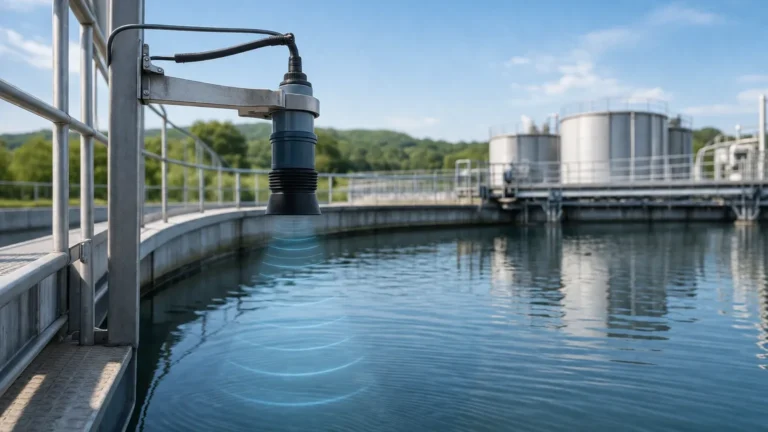
Ultrasonic Water Level Sensor Robu
Ultrasonic Water Level Sensor Robu: From Prototyping to Industrial Implementation
In the landscape of modern fluid management, non-contact measurement has become the gold standard for accuracy and maintenance efficiency. Among the various technologies available, ultrasonic measurement stands out for its versatility and cost-effectiveness. Engineers and system integrators often begin their search with accessible components, such as the ultrasonic water level sensor robu types found in prototyping kits, before scaling up to robust industrial Ultrasonic Level Meters.
This guide explores the transition from entry-level sensing to professional-grade industrial automation, providing a technical foundation for selecting, installing, and maintaining ultrasonic level measurement systems in B2B environments.
Understanding the Measurement Principle
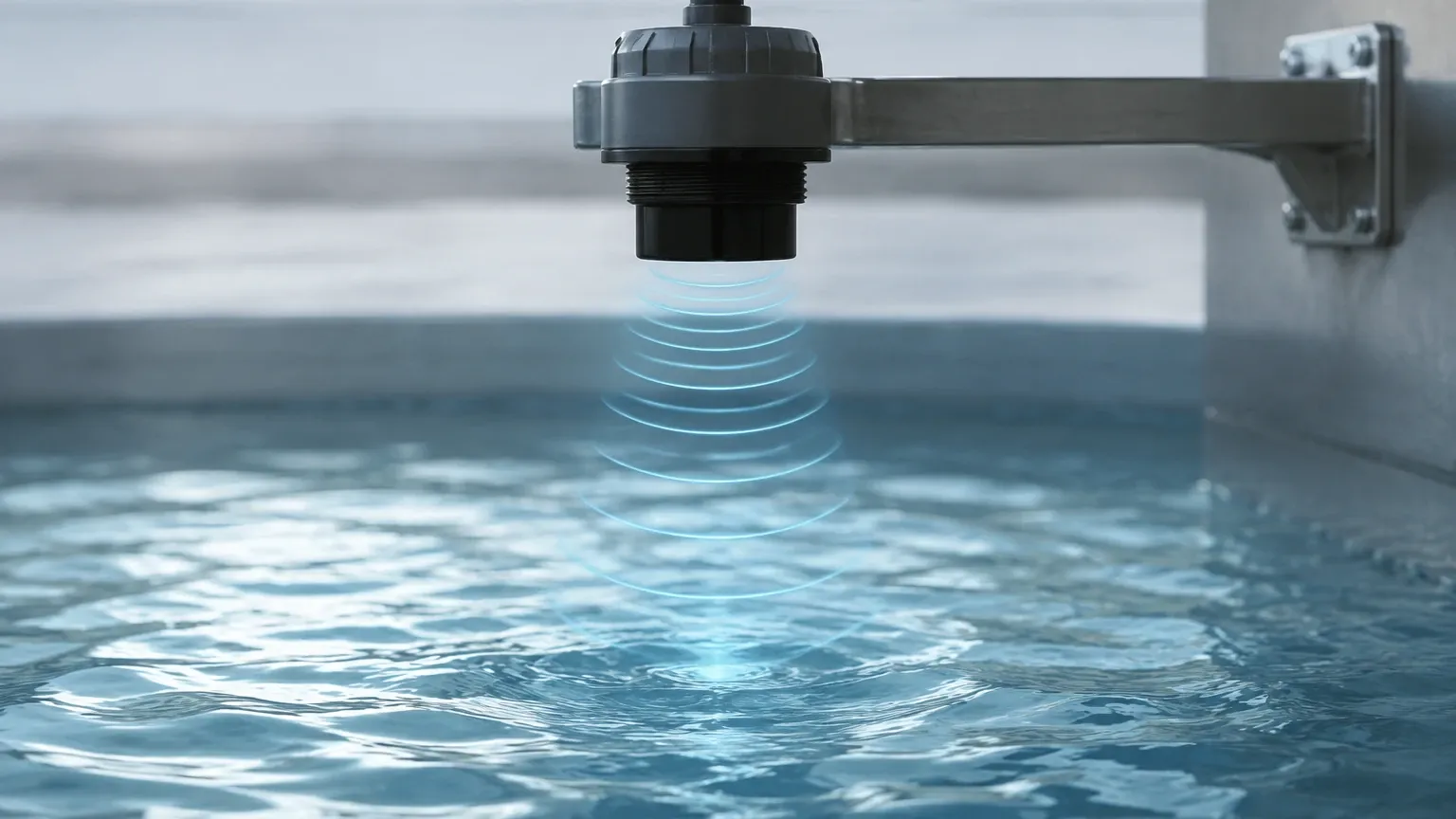
Before selecting a specific sensor, it is essential to understand the physics governing ultrasonic technology. Ultrasonic sensors operate on the "Time of Flight" (ToF) principle. The device consists of a transducer that acts as both a transmitter and a receiver.
The Time of Flight (ToF) Mechanism
1. Emission: The sensor emits a high-frequency acoustic pulse (usually between 20 kHz and 200 kHz).
2. Propagation: The sound wave travels through the air toward the surface of the liquid.
3. Reflection: Upon hitting the liquid surface, the sound wave bounces back toward the sensor.
4. Detection: The transducer detects the returning echo.
The distance ($D$) from the sensor to the liquid surface is calculated using the formula:
$$D = \frac{c \times t}{2}$$
Where:
* $c$ is the speed of sound in the medium (approximately 343 m/s in air at 20°C).
* $t$ is the total time elapsed between emission and reception.
Because the speed of sound is affected by air temperature, industrial-grade Ultrasonic Level Meters typically include an integrated temperature sensor to compensate for these fluctuations, ensuring accuracy across varying environmental conditions.
Evaluating Ultrasonic Water Level Sensor Robu for Industrial Use
The term ultrasonic water level sensor robu often refers to sensors like the HC-SR04 or the waterproof JSN-SR04T, which are popular in the maker community and for initial proof-of-concept (PoC) designs. While these sensors are excellent for learning and low-stakes prototyping, industrial B2B applications require a shift toward more durable, certified, and integrated solutions.
Prototyping vs. Industrial Grade
| Feature | Prototyping Sensors (e.g., Robu-style) | Industrial Ultrasonic Level Meters |
| :— | :— | :— |
| Housing | Often open PCB or basic plastic | IP66/IP67/IP68, PVDF or Stainless Steel |
| Signal Output | TTL Pulse, PWM | 4-20mA, RS485 (Modbus), HART |
| Accuracy | ±1cm to ±3cm | ±0.25% to ±0.5% of range |
| Range | Typically 0.02m to 4m | Up to 15m, 30m, or 40m |
| Certifications | None | CE, RoHS, ATEX (Explosion-proof) |
| Power Supply | 5V DC | 12-24V DC or 220V AC |
For industrial water treatment, chemical processing, or oil and gas applications, the reliability of Welk’s industrial solutions ensures that the data fed into a PLC (Programmable Logic Controller) or SCADA system is consistent and immune to the electrical noise common in factory environments.
Key Selection Criteria for Industrial Level Meters
When moving beyond a basic ultrasonic water level sensor robu and selecting a professional instrument, engineers must evaluate several technical parameters to ensure long-term performance.
1. Measuring Range and Dead Zone
Every ultrasonic sensor has a "dead zone" (also known as the blocking distance) directly in front of the transducer face. In this zone, the sensor cannot accurately process the return signal because the transducer is still vibrating from the emission.
* Small sensors: Dead zones of 10cm to 20cm.
* Long-range meters: Dead zones of 30cm to 80cm.
Selection must ensure the maximum liquid level never enters this dead zone.
2. Beam Angle and Obstructions
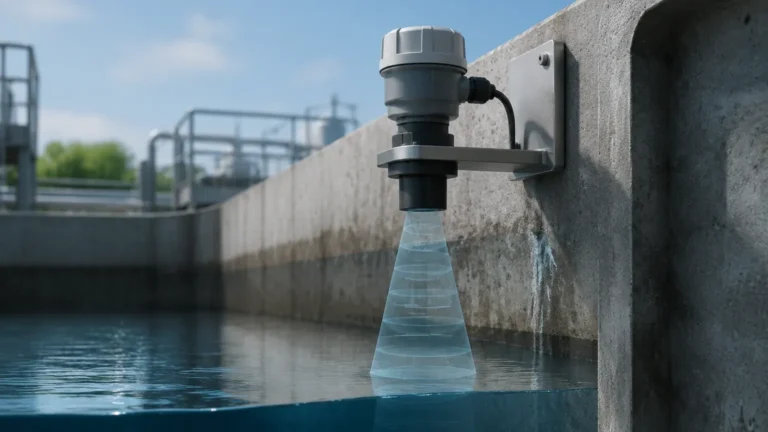
The ultrasonic pulse spreads out in a cone shape. If the beam angle is too wide, it may hit the walls of a tank or internal structures like ladders and agitators, creating false echoes. Industrial meters often feature narrow beam angles (e.g., 5° to 12°) and advanced software for "false echo suppression," allowing the meter to ignore stationary internal obstructions.
3. Material Compatibility
For water applications, standard ABS or PVC housings suffice. However, if the sensor is used in chemical tanks, PVDF (Polyvinylidene fluoride) or PTFE (Polytetrafluoroethylene) transducers are required to resist corrosion.
Installation Best Practices
Proper installation is the most critical factor in the success of an Ultrasonic Level Meter. Even the most advanced sensor will fail if positioned incorrectly.
Mounting Position
* Perpendicularity: The sensor face must be perfectly parallel to the liquid surface. A tilt of even a few degrees can cause the reflected signal to bounce away from the receiver, leading to signal loss.
* Avoid the Center: In cylindrical tanks, do not mount the sensor in the exact center, as this can create multiple reflections that confuse the processing algorithm.
* Avoid the Wall: Keep the sensor at a distance from the tank wall (typically at least 1/6th of the tank diameter) to prevent interference from wall echoes.
Pipe and Nozzle Considerations
If mounting the sensor on a standpipe or nozzle:
* The inner surface of the pipe must be smooth.
* The pipe diameter must be large enough to prevent the beam from hitting the pipe walls before reaching the tank volume.
* The sensor face should ideally extend slightly beyond the bottom of the nozzle.
Environmental Limitations and Mitigation
While ultrasonic technology is robust, it is not a "one-size-fits-all" solution. Certain environmental factors can attenuate the signal or distort the measurement.
1. Foam and Turbulence
Heavy foam on the surface of a liquid acts as an acoustic absorber, soaking up the ultrasonic pulse and preventing an echo. If foam is present, a radar level meter or a hydrostatic pressure transmitter may be more appropriate. For light turbulence, software damping and averaging can stabilize the reading.
2. Vapor and Vacuum
Ultrasonic waves require a medium (air or gas) to travel. They cannot function in a vacuum. Furthermore, heavy vapors (like those from concentrated acids or fuels) can change the density of the air, altering the speed of sound and causing measurement errors unless specific compensation is applied.
3. Temperature Gradients
In outdoor tanks exposed to direct sunlight, the air temperature near the top of the tank may be significantly higher than near the liquid. High-quality industrial meters use multi-point temperature compensation or external temperature probes to maintain accuracy in these conditions.
Industrial Applications for Ultrasonic Systems
Transitioning from a basic ultrasonic water level sensor robu to a professional system enables automation in diverse sectors:
* Water and Wastewater: Monitoring levels in wet wells, lift stations, and open channels (using flumes or weirs).
* Chemical Processing: Non-contact measurement of corrosive acids and bases in plastic storage tanks.
* Agriculture: Monitoring irrigation reservoirs and liquid fertilizer tanks.
* Food and Beverage: Level control in storage silos for bulk liquids where hygiene is paramount (non-contact prevents contamination).
Summary Selection Table
To assist in the procurement process, use the following table to align project requirements with technology features.
| Requirement | Recommended Feature | Why? |
| :— | :— | :— |
| Outdoor/Exposed Area | Integrated Temp Compensation | Prevents drift caused by solar heating. |
| Narrow/Tall Tank | Narrow Beam Angle (<8°) | Avoids interference from tank walls. |
| Corrosive Liquids | PVDF/PTFE Transducer | Ensures longevity against chemical vapors. |
| Remote Monitoring | RS485/Modbus Output | Allows digital integration with SCADA/IoT. |
| Hazardous Zone | ATEX/Ex-proof Rating | Essential for safety in fuel or solvent storage. |
Frequently Asked Questions (FAQ)
Q: Can I use an ultrasonic sensor to measure solids like grain or sand?
A: Yes, but with caveats. Solids often have an uneven surface and do not reflect sound as efficiently as liquids. You should choose a sensor with a higher power output and a wider range than the actual distance to account for signal attenuation.
Q: How do I handle a "Lost Echo" alarm?
A: Check for foam on the liquid surface, ensure the sensor is perpendicular to the liquid, and verify that no steam or heavy dust is blocking the path. In some cases, increasing the "gain" or sensitivity settings on the industrial meter can resolve the issue.
Q: Is it possible to use these sensors in pressurized tanks?
A: Ultrasonic sensors are generally limited to atmospheric pressure or very low pressure (typically <3 bar). High pressure changes the air density significantly, which affects the speed of sound beyond the limits of standard compensation.
Q: What is the maintenance schedule for an ultrasonic level meter?
A: Because they are non-contact, maintenance is minimal. We recommend a visual inspection every 6–12 months to ensure no condensation or debris has built up on the transducer face. For wastewater applications, more frequent cleaning may be needed if grease or vapors are present.
Conclusion
Whether you are starting with an ultrasonic water level sensor robu for a university project or a small-scale prototype, the journey to industrial-grade automation requires a focus on reliability, environmental resilience, and standardized communication protocols. By understanding the underlying physics and following rigorous installation standards, engineers can deploy Ultrasonic Level Meters that provide accurate data for years with minimal intervention. For professional applications where failure is not an option, investing in industrial-grade hardware from a specialized manufacturer like Welk ensures your process remains efficient and safe.