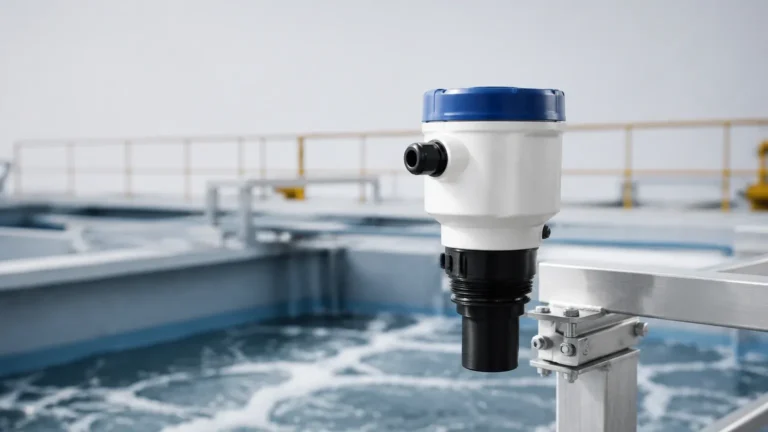
Ultrasonic Level Sensor IoT
Ultrasonic Level Sensor IoT
In the landscape of modern industrial automation, the demand for real-time data and remote monitoring has transformed traditional measurement hardware into intelligent nodes. The integration of the ultrasonic level sensor iot (Internet of Things) framework allows facility managers and engineers to move beyond localized readings toward centralized, data-driven decision-making. By combining non-contact ultrasonic technology with wireless connectivity, these systems provide a scalable solution for monitoring liquid and solid levels across vast or difficult-to-access sites.
Understanding the Measurement Principle
Before exploring the connectivity aspects of an ultrasonic level sensor iot system, it is essential to understand the underlying physics of ultrasonic measurement. These instruments operate on the "Time-of-Flight" (ToF) principle.
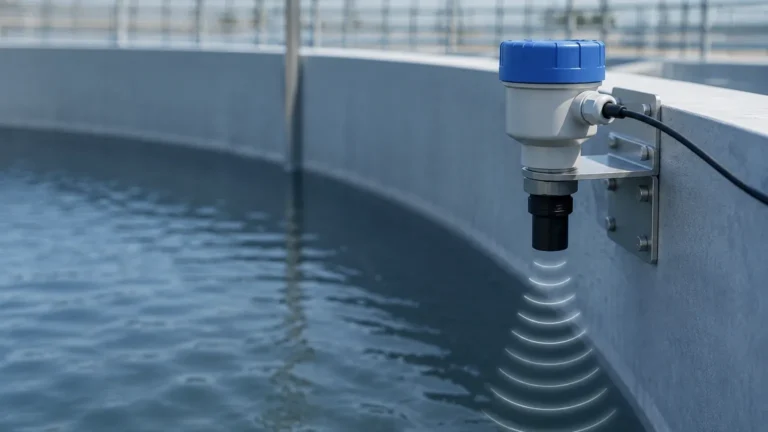
An ultrasonic transducer, typically containing a piezoelectric crystal, emits a high-frequency sound pulse. This pulse travels through the air at the speed of sound until it encounters the surface of the medium being measured. Upon impact, the sound wave is reflected back to the sensor. The sensor’s internal electronics measure the total time elapsed from the moment of emission to the moment of reception.
The distance ($D$) between the sensor and the material surface is calculated using the formula:
$$D = \frac{v \times t}{2}$$
Where:
- $v$ is the speed of sound in air (approximately 340 m/s at 20°C).
- $t$ is the total travel time of the pulse.
Since the height of the vessel ($H$) is a known constant, the actual level ($L$) of the material is determined by subtracting the measured distance from the total height ($L = H – D$). In an IoT-enabled configuration, this calculated value is then digitized and transmitted via wireless protocols to a cloud server or local gateway.
The Role of IoT in Level Measurement
Traditional Ultrasonic Level Meters typically output data via 4-20mA analog loops or RS485 Modbus wired connections. While reliable, these methods require extensive cabling, which can be cost-prohibitive in remote water treatment plants, decentralized chemical storage, or agricultural irrigation systems.
An ultrasonic level sensor iot solution removes the cabling barrier by integrating low-power wireless communication modules directly into the sensor housing. Common protocols used in these applications include:
1. LoRaWAN (Long Range Wide Area Network): Ideal for long-distance transmission (up to 10-15 km) with very low power consumption, making it suitable for battery-powered sensors in rural areas.
2. NB-IoT (Narrowband IoT): A cellular-based protocol that offers excellent penetration through walls and underground structures, utilizing existing mobile network infrastructure.
3. 4G/LTE-M: Used for applications requiring higher data throughput or more frequent updates, though it consumes more power than LoRaWAN.
4. Wi-Fi/Bluetooth: Generally reserved for short-range industrial environments where a local network is already established.
Technical Selection Criteria
Choosing the right ultrasonic level sensor iot device requires a balance between the physical properties of the medium and the requirements of the network. Engineers should evaluate the following parameters:
Practical Selection Table
| Feature | Standard Industrial Ultrasonic | IoT-Enabled Ultrasonic Sensor |
| :— | :— | :— |
| Power Source | 24V DC Loop Powered | Internal Battery or Solar |
| Data Output | 4-20mA, HART, RS485 | LoRaWAN, NB-IoT, Sigfox, 4G |
| Installation Cost | High (Cabling/Conduit required) | Low (Plug-and-play) |
| Update Frequency | Continuous (Real-time) | Periodic (Interval-based to save battery) |
| Typical Range | 0.3m – 30m | 0.2m – 15m |
| Best Use Case | Process Control Loops | Remote Tank Monitoring / Smart City |
Installation Considerations and Best Practices
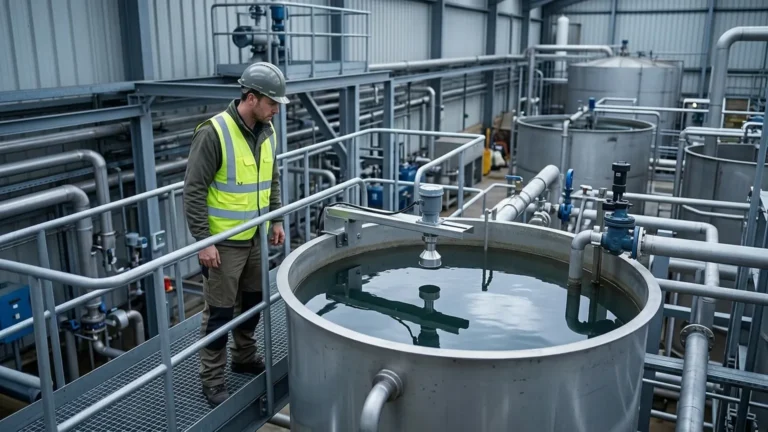
To ensure the accuracy of an ultrasonic level sensor iot deployment, specific installation guidelines must be followed. Because ultrasonic waves are mechanical sound waves, they are susceptible to interference from physical obstructions and environmental conditions.
1. The Blocking Distance (Dead Zone)
Every ultrasonic sensor has a "blocking distance" or "dead zone" immediately below the transducer face (typically 0.2m to 0.5m). Within this zone, the sensor cannot accurately process the returning signal because the transducer is still vibrating from the emission. The sensor must be mounted high enough so that the maximum liquid level never enters this dead zone.
2. Beam Angle and Obstructions
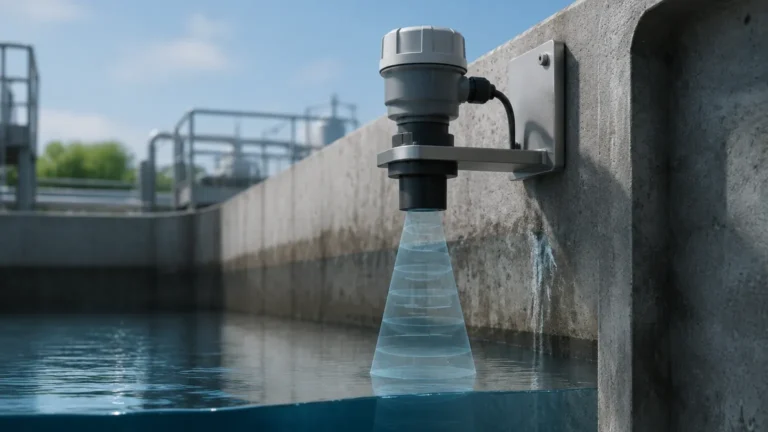
Ultrasonic pulses spread out in a cone shape, known as the beam angle (usually between 5° and 12°). Any internal tank structures—such as ladders, pipes, or agitators—that fall within this cone will create "false echoes." When installing an ultrasonic level sensor iot device, ensure the path to the liquid surface is clear. Most modern sensors from Welk include software-based "False Echo Suppression" to ignore these static reflections, but physical clearance remains the gold standard for reliability.
3. Orientation
The sensor face must be installed perfectly perpendicular to the surface of the liquid. If the sensor is tilted, the sound wave may reflect off the surface at an angle and never return to the transducer, resulting in a "Loss of Echo" error.

Limitations of Ultrasonic Technology
While highly versatile, ultrasonic level meters are not universal solutions. Certain environments will degrade the signal or provide inaccurate readings:
* Vacuum Conditions: Sound requires a medium (air/gas) to travel. Ultrasonic sensors cannot function in a vacuum.
* High Pressure/Temperature: Changes in air density significantly affect the speed of sound. While many sensors include temperature compensation, extreme fluctuations can introduce errors exceeding 1-2% of the span.
* Heavy Foam: Foam acts as an acoustic absorber. If the liquid surface is covered in thick, dense foam, the ultrasonic pulse may be absorbed rather than reflected, leading to signal loss.
* Dust and Vapor: Heavy dust in silos or thick steam in boiling tanks can scatter the ultrasonic signal. In these specific cases, radar level meters are often a more robust alternative.
IoT Application Scenarios
Remote Water & Wastewater Management
In municipal water systems, manholes and lift stations are often located in areas without easy access to power. An ultrasonic level sensor iot unit with a built-in battery can monitor water levels and transmit data once every hour via NB-IoT. This allows for overflow prevention and flood monitoring without the need for expensive infrastructure upgrades.
Chemical Distribution and Inventory
Chemical suppliers can install IoT sensors on IBC (Intermediate Bulk Container) tanks at client sites. The data is transmitted to a central dashboard, allowing the supplier to optimize delivery routes based on actual consumption levels rather than estimated schedules.
Smart City Waste Management
By installing ultrasonic sensors in the lids of waste bins, cities can monitor fill levels in real-time. This "Smart Waste" approach ensures that collection trucks only visit bins that are nearly full, reducing carbon emissions and operational costs.
Frequently Asked Questions (FAQ)
Q: How long does the battery last in an ultrasonic level sensor iot device?
A: Battery life depends on the transmission frequency. If the sensor sends data once every 4 hours via LoRaWAN, the battery can last 3 to 5 years. If it transmits every few minutes via 4G, the battery may need recharging or replacement within months.
Q: Can these sensors measure solids like grain or sand?
A: Yes, but with caveats. Solid surfaces are often uneven and may tilt, causing the sound to reflect away from the sensor. For solids, it is recommended to use a sensor with a higher power output and a narrower beam angle, and to expect a reduced effective range compared to liquid measurements.
Q: Is the data transmitted by IoT sensors secure?
A: Most IoT protocols like LoRaWAN and NB-IoT include end-to-end encryption (AES-128). When integrated with a secure cloud platform, the data is as protected as standard cellular or banking communications.
Q: How does temperature affect the accuracy?
A: The speed of sound changes by approximately 0.17% per degree Celsius. Professional-grade ultrasonic level meters include an integrated temperature sensor to automatically compensate for these changes, maintaining accuracy across typical ambient ranges (-40°C to +80°C).
Conclusion
The transition to ultrasonic level sensor iot technology represents a significant leap forward for industrial efficiency. By understanding the acoustic principles and the specific requirements of wireless networking, engineers can deploy robust systems that provide visibility into processes that were previously "blind." Whether managing a single chemical tank or a city-wide water network, these sensors offer a cost-effective, non-contact method for precise level monitoring.
For more detailed specifications on sensing ranges and frequency options, professionals should Review product options and application support to match the hardware to their specific environmental constraints.