Ultrasonic Sound Level Meter
Ultrasonic Sound Level Meter: A Guide to Industrial Level Measurement
In the field of industrial process control, the term "ultrasonic sound level meter" often bridges two distinct technical areas: the measurement of acoustic noise and the measurement of liquid or solid levels using ultrasonic waves. For process engineers and plant managers, the primary focus is typically on the latter—using high-frequency sound waves to determine the volume or height of materials in a vessel.
Welk provides advanced Ultrasonic Level Meters designed for accuracy and reliability in challenging environments. This article explores the engineering principles, selection criteria, and installation requirements for utilizing ultrasonic technology in industrial level monitoring.
Understanding Ultrasonic Sound Level Measurement Principles
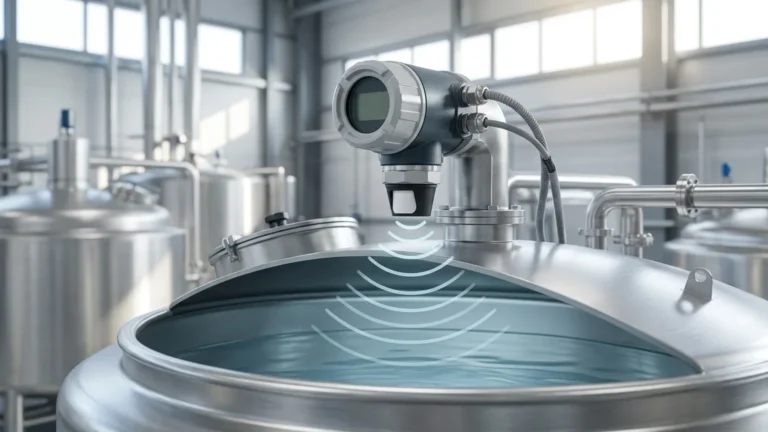
Ultrasonic level measurement is a non-contact technology that utilizes the properties of sound waves to determine distance. Unlike mechanical or contact-based sensors, these instruments do not touch the medium, which reduces maintenance and prevents contamination.
The Time-of-Flight (ToF) Principle
At the core of an ultrasonic sound level meter is the Time-of-Flight principle. The sensor’s transducer emits a burst of ultrasonic pulses (typically in the range of 20 kHz to 70 kHz). These waves travel through the air or gas space above the medium, hit the surface, and reflect back to the transducer.
The distance ($D$) between the sensor and the material surface is calculated using the formula:
$$D = \frac{v \times t}{2}$$
Where:
* $v$ is the speed of sound in the medium (usually air).
* $t$ is the time elapsed between emission and reception.
Because the speed of sound is influenced by the temperature of the air, modern industrial meters include integrated temperature sensors to compensate for these variations, ensuring consistent accuracy.
Frequency and Range
The frequency of the ultrasonic pulse determines the effective range and sensitivity. Lower frequencies (e.g., 20-30 kHz) have longer wavelengths and can travel further, making them suitable for deep tanks or silos. Higher frequencies (e.g., 50-70 kHz) offer better resolution for shorter distances but are more easily attenuated by dust or vapors.
Key Components of an Industrial Ultrasonic Level Meter
An integrated ultrasonic sound level meter consists of three primary functional blocks:
1. The Transducer: Often made from piezoelectric crystals, this component converts electrical energy into mechanical vibrations (sound) and vice versa. Welk utilizes high-grade materials to ensure the transducer can withstand corrosive vapors.
2. The Processing Electronics: This unit filters out noise, manages temperature compensation, and calculates the level based on the returned echo. Advanced algorithms are used to distinguish the true surface echo from false reflections caused by tank internal structures.
3. The Housing and Interface: Industrial units are typically housed in IP66/IP67 or NEMA 4X rated enclosures. They provide outputs such as 4-20mA, HART, or RS485 Modbus for integration into PLC or SCADA systems.
Selection Criteria for Engineering Applications
Choosing the right ultrasonic sound level meter requires a thorough understanding of the process environment. Engineers must evaluate the physical properties of the medium and the geometry of the storage vessel.
Selection Table: Ultrasonic Level Meter Comparison
| Feature | Standard Liquid Sensor | Long-Range Solids Sensor | Chemical-Resistant Model |
| :— | :— | :— | :— |
| Typical Range | 0.25m – 10m | 0.5m – 30m | 0.25m – 15m |
| Frequency | 50 kHz | 20-30 kHz | 40 kHz |
| Beam Angle | 8° – 12° | 5° – 8° | 10° |
| Wetted Material | PVDF / ABS | Aluminum / PU | PTFE / PVDF |
| Primary Use | Water tanks, sumps | Silos, grain bins | Acid storage, plating baths |
Material Compatibility
For chemical applications, the transducer face must be compatible with the vapors present. While standard sensors use ABS or PVC, aggressive chemicals like sulfuric acid or chlorine require PTFE (Teflon) or PVDF coatings to prevent degradation of the sensor face.
Installation Best Practices and Considerations
The performance of an ultrasonic sound level meter is heavily dependent on its physical placement. Poor installation is the leading cause of signal loss and inaccurate readings in industrial settings.
The Dead Zone (Blocking Distance)
Every ultrasonic sensor has a "dead zone" immediately below the transducer face where it cannot receive an echo. This occurs because the transducer cannot switch from "transmit" to "receive" mode instantaneously.
* Standard Dead Zone: Typically 0.2m to 0.5m (approx. 8 to 20 inches).
* Requirement: The maximum expected level of the liquid must always remain below the dead zone to avoid "lock-up" or false high-level readings.
Beam Angle and Obstructions
The ultrasonic pulse spreads out in a cone shape. Any internal structures within this cone—such as ladders, pipes, or agitators—will create false echoes.
* Rule of Thumb: Install the sensor at least 0.5m away from the tank wall for every 3m of depth to avoid wall interference.
* Vertical Alignment: The sensor must be mounted perfectly perpendicular to the liquid surface. A tilt of even a few degrees can cause the reflected signal to miss the transducer entirely.
Mounting Location
Avoid mounting the sensor directly above the fill inlet. The turbulence and falling material will scatter the sound waves and lead to erratic readings. Ideally, the sensor should be placed in a quiet area of the tank where the surface is relatively calm.
Overcoming Environmental and Process Limitations
While ultrasonic sound level meter technology is versatile, it is not a universal solution. Certain process conditions can interfere with the acoustic signal.
1. Foam and Turbulence: Heavy foam acts as an acoustic absorber, soaking up the ultrasonic pulse and preventing an echo. For light foam, a higher-power sensor may work, but for thick protein-based foams, a radar level meter or hydrostatic transmitter is often preferred.
2. Vacuum and High Pressure: Sound requires a medium to travel. In a vacuum, ultrasonic sensors cannot function. Similarly, very high pressure can change the density of the air, significantly altering the speed of sound beyond the capabilities of standard compensation.
3. Temperature Gradients: If there is a significant temperature difference between the liquid surface and the sensor (e.g., in a heated tank), the speed of sound will vary throughout the travel path. This can lead to measurement errors unless a remote temperature probe is used to provide an average temperature profile.
4. Dust and Vapors: Heavy dust in grain silos or dense steam in boiling tanks can attenuate the signal. In these cases, low-frequency transducers with high-gain electronics are necessary to penetrate the atmosphere.
Maintenance and Troubleshooting
Ultrasonic sensors are generally low-maintenance due to their non-contact nature. However, periodic checks are recommended:
* Transducer Cleaning: In applications with condensation or splashing, material may buildup on the sensor face. A gentle wipe with a soft cloth and mild detergent is usually sufficient.
* Echo Profile Analysis: Most modern Welk ultrasonic meters allow users to view an echo curve. If the device is providing false readings, the echo curve can help identify whether the sensor is locking onto an internal obstruction rather than the material surface.
Frequently Asked Questions (FAQ)
Q: Can an ultrasonic sound level meter be used for solids?
A: Yes, but with caveats. Solids like grain or plastic pellets do not reflect sound as efficiently as liquids. They also tend to form "cones" or "funnels" during filling and emptying, which can deflect the signal. A sensor with a narrower beam angle and higher power is required for solid applications.
Q: What is the maximum temperature for these sensors?
A: Most standard industrial ultrasonic sensors are rated for temperatures between -40°C and +70°C (-40°F to 158°F). For higher temperatures, specialized transducers or radar technology should be considered.
Q: How does wind affect the measurement in outdoor tanks?
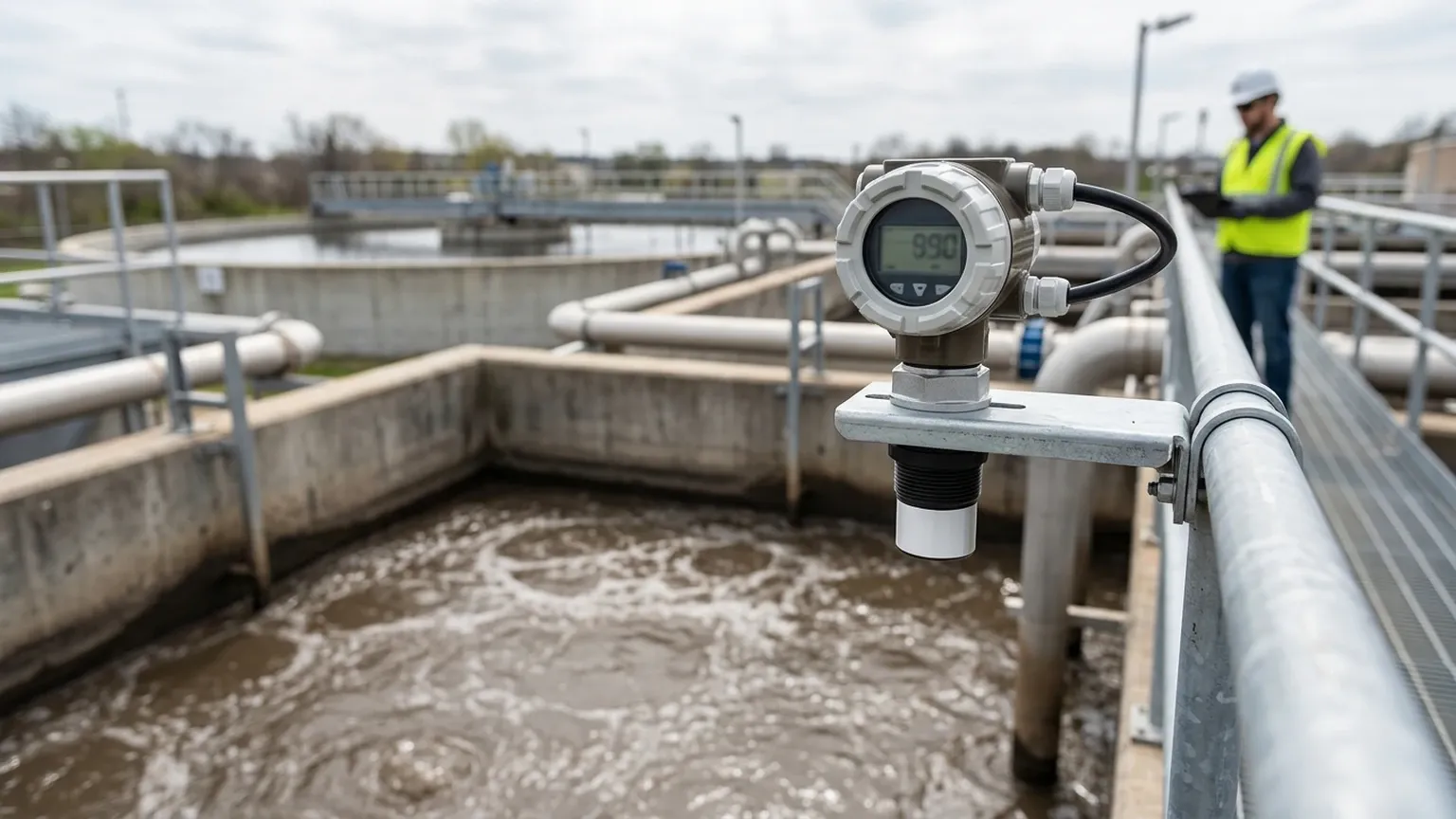
A: Strong crosswinds can "blow" the ultrasonic pulse away from its path, leading to signal loss. In outdoor sumps or open channels, using a stilling well or a protective shroud can help stabilize the measurement.
Q: Is it possible to measure through a plastic tank wall?
A: Generally, no. Ultrasonic waves are reflected by the boundary between the air and the tank wall. To measure the level inside a tank, the sensor must be mounted through a hole or nozzle so the transducer has a clear path to the medium.
For engineers seeking to optimize their process efficiency, selecting the correct Ultrasonic Level Meters involves balancing the need for accuracy with the realities of the operating environment. By understanding the acoustic principles and adhering to strict installation guidelines, these instruments provide a cost-effective and reliable solution for a wide array of industrial level monitoring tasks.