What Is the Minimum Thickness for Ultrasonic Testing
Understanding Measurement Limits: What Is the Minimum Thickness for Ultrasonic Testing?
In industrial automation and process control, ultrasonic technology serves two primary functions: Non-Destructive Testing (NDT) for material integrity and non-contact level measurement for liquids and solids. For engineers and plant managers, understanding the physical limitations of these systems—specifically the minimum measurable thresholds—is critical for ensuring safety and operational accuracy.
Welk, a professional manufacturer of industrial level measurement instruments, provides high-precision solutions across various sectors, including water treatment and chemical processing. This guide examines the technical constraints regarding minimum thickness and distance in ultrasonic applications, helping professionals select the right Ultrasonic Level Meters and testing equipment for their specific needs.
Fundamental Principles of Ultrasonic Measurement
Before addressing specific thickness limits, it is essential to understand how ultrasonic waves interact with materials. Ultrasonic instruments function based on the Piezoelectric Effect. A transducer contains a piezoelectric crystal that converts electrical energy into mechanical vibrations, creating high-frequency sound waves.
The Pulse-Echo Method
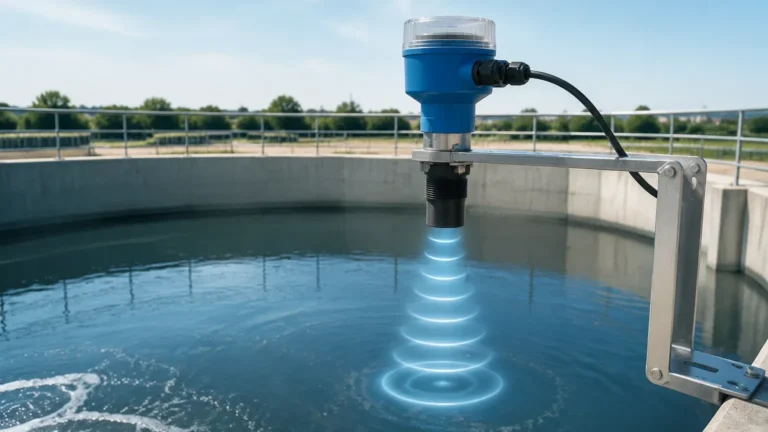
In both thickness gauging and level measurement, the device operates on the "pulse-echo" principle. The transducer emits a pulse of sound that travels through a medium (such as a metal wall or the air in a tank), hits a boundary or surface, and reflects back to the transducer. The instrument measures the "Time of Flight" (ToF)—the time elapsed between the emission and the reception of the echo.
The Challenge of the "Initial Pulse"
When a transducer is excited, it vibrates (or "rings") for a short duration. During this ringing period, the transducer is physically unable to receive an incoming echo. This period creates a "blind zone" or "dead band." If a material is too thin or a liquid surface is too close, the reflected echo returns while the transducer is still vibrating from the initial pulse, making the signal impossible to distinguish.
What is the Minimum Thickness for Ultrasonic Testing (NDT)?
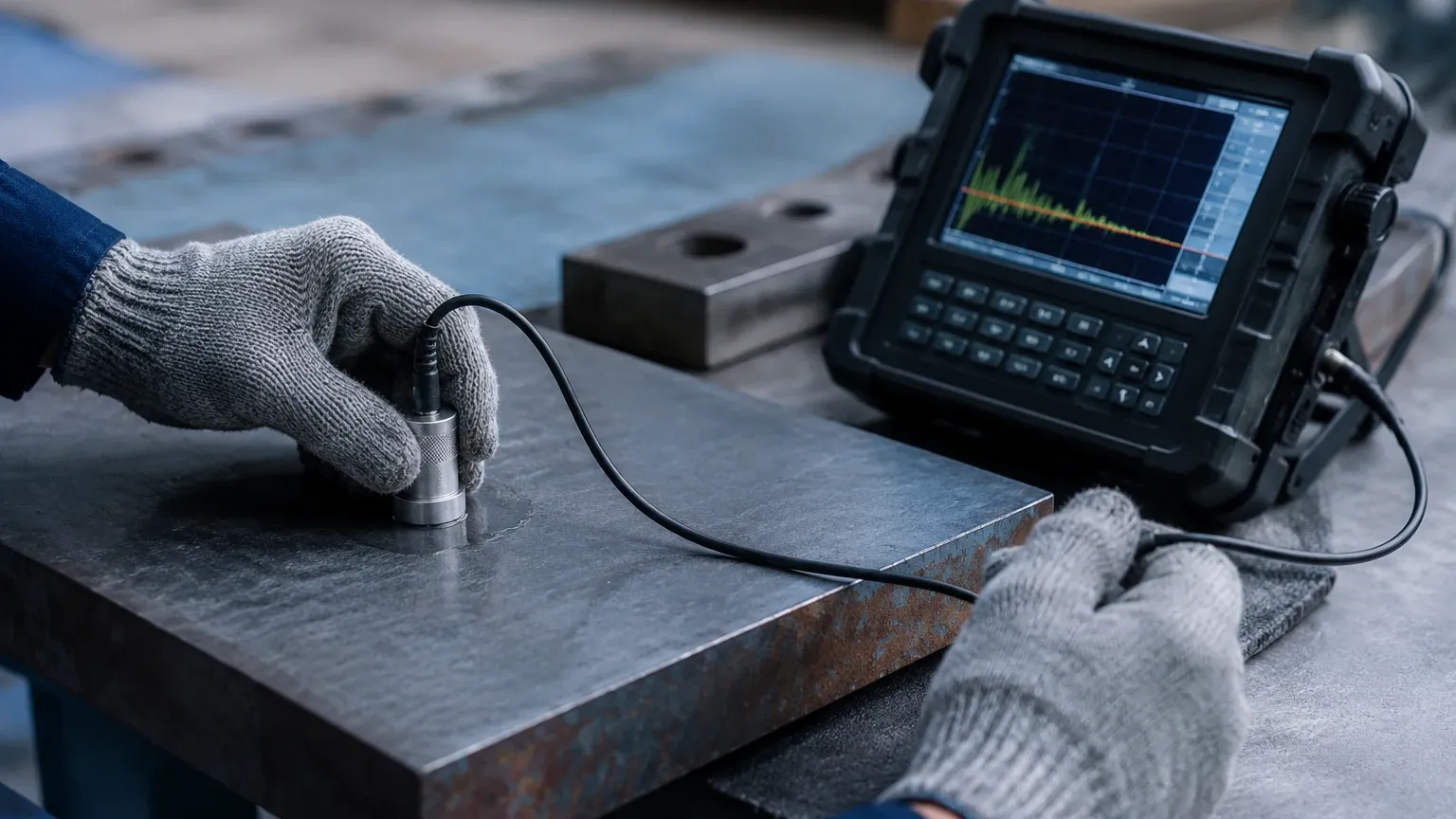
In the context of material testing (NDT), "minimum thickness" refers to the thinnest section of a material (usually metal, plastic, or glass) that an ultrasonic gauge can accurately measure. This is a vital parameter for monitoring corrosion in pipes and pressure vessels.
Standard Limits
For most industrial ultrasonic thickness gauges, the minimum measurable thickness typically ranges from 0.1 mm to 1.0 mm (0.004" to 0.040"). The exact limit is determined by several factors:
1. Transducer Frequency: Higher frequencies have shorter wavelengths and shorter pulse durations. A 10 MHz or 20 MHz transducer can measure significantly thinner materials than a 2.25 MHz transducer. For example, a high-frequency delay line transducer may reach limits as low as 0.08 mm (0.003") in steel.
2. Material Velocity: Sound travels at different speeds through different materials. The minimum thickness is physically tied to the distance sound travels during the pulse duration. In materials with high acoustic velocity (like aluminum), the minimum thickness limit is generally higher than in materials with lower velocity (like lead).
3. Transducer Type: Dual-element transducers are often used for thin materials because they isolate the transmitter from the receiver, reducing the impact of the initial pulse ringing.
Minimum Distance in Level Measurement: The Dead Band
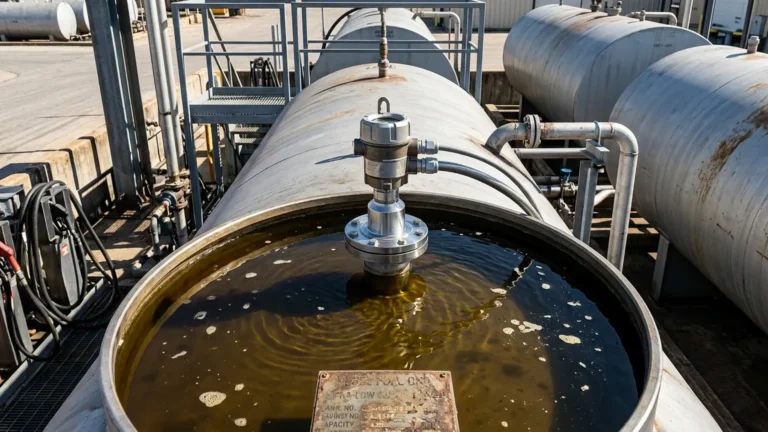
While NDT focuses on the thickness of a solid wall, industrial Ultrasonic Level Meters focus on the distance between the sensor and the surface of a substance. In this context, the "minimum thickness" of the air gap required is known as the Dead Band (or Blanking Zone).
If the liquid level rises into the dead band, the sensor will either report an error or provide a fixed, incorrect reading (often the value of the dead band itself). For Welk ultrasonic sensors, managing this zone is a key part of the installation process.
Why the Dead Band Matters
In a tank application, if a sensor has a dead band of 0.25 meters (approx. 10 inches), the tank cannot be filled to the very top. If the liquid reaches 0.10 meters from the sensor, the device loses its ability to track the level accurately. This is the functional equivalent of the minimum thickness limit in material testing.
Technical Selection Table: Frequency vs. Minimum Limits
The following table illustrates the relationship between frequency, maximum range, and the minimum measurement limit (dead band) for standard industrial ultrasonic level instruments.
| Transducer Frequency (kHz) | Typical Max Range (m) | Typical Dead Band / Min Distance (m) | Application Suitability |
| :— | :— | :— | :— |
| 80 kHz | 5m | 0.20m – 0.25m | Small tanks, chemical dosing, high precision |
| 60 kHz | 8m – 10m | 0.25m – 0.30m | Standard process tanks, water sumps |
| 40 kHz | 12m – 15m | 0.35m – 0.50m | Large storage tanks, open channels |
| 20 kHz | 30m – 40m | 0.80m – 1.20m | Silos, deep wells, wastewater basins |
*Note: Values are approximate and vary based on environmental conditions and specific sensor calibration.*
Factors Influencing Minimum Measurement Limits
Whether measuring the thickness of a pipe wall or the level of a chemical tank, several physical variables can shift the minimum threshold:
1. Temperature Fluctuations
The speed of sound is highly dependent on temperature. In air, sound travels faster as temperature increases. Most professional Ultrasonic Level Meters include integrated temperature compensation. However, extreme temperatures can affect the transducer's damping characteristics, potentially expanding the dead band.
2. Surface Turbulence and Foam
In level measurement, if the surface of the liquid is turbulent or covered in foam, the echo becomes diffused. A weak echo requires higher gain (amplification), which can increase the noise floor near the transducer, effectively increasing the minimum distance required for a stable reading.
3. Material Grain Structure (NDT)
In material thickness testing, coarse-grained materials (like cast iron or certain composites) scatter ultrasonic waves. This scattering creates "clutter" in the signal, which can mask the backwall echo in thin sections, raising the minimum measurable thickness compared to fine-grained materials like rolled steel.
Installation Considerations to Overcome Minimum Limits
When the application requires measuring very close to the sensor or through very thin walls, specific engineering strategies must be employed.
Using Standpipes (Nozzles)
If a tank must be filled to the absolute top, a standpipe can be installed. By mounting the ultrasonic sensor on top of a pipe that extends above the tank roof, the dead band is contained within the standpipe. This allows the liquid to reach the top of the tank without entering the sensor's blind zone.
Installation Checklist for Standpipes:
* Internal Smoothness: The pipe must be smooth to prevent false echoes from welds or joints.
* Diameter: The pipe diameter must be large enough to accommodate the beam angle of the sensor (typically 5° to 10°).
* Venting: Ensure the pipe is properly vented so that the air pressure inside matches the tank pressure.
Perpendicular Alignment
For both thickness testing and level measurement, the transducer must be perpendicular to the target surface. Even a slight angle can cause the reflected pulse to miss the receiver, which is particularly problematic when working at the limits of the instrument's range or minimum thickness.
Limitations and Practical Constraints
While ultrasonic technology is versatile, it is not universal. Users should be aware of the following limitations:
* Vacuum Conditions: Ultrasonic waves require a medium (gas, liquid, or solid) to travel. They cannot function in a vacuum. For level measurement in vacuum tanks, radar technology is preferred.
* High Pressure: High-pressure environments increase the density of the gas phase, which can alter the sound absorption characteristics and affect the minimum distance accuracy.
* Heavy Vapor: Concentrated vapors (such as those from solvents) change the composition of the air, altering the speed of sound and potentially causing significant measurement errors if not calibrated correctly.
Frequently Asked Questions (FAQ)
Q: Can I use an ultrasonic level meter to measure through a plastic tank wall?
A: Generally, no. While the sound can pass through the wall, the reflection from the wall-liquid interface is often too weak compared to the reflection from the wall itself. Ultrasonic level meters are designed for non-contact measurement where the sensor has a clear "view" of the surface.
Q: What is the minimum thickness for ultrasonic testing in steel pipes?
A: For standard NDT gauges, the limit is typically 1.0 mm. However, with high-frequency transducers (15-20 MHz) and proper couplant, measurements down to 0.15 mm are possible in controlled conditions.
Q: Why does my sensor show a full tank when it is actually empty?
A: This is often caused by "ringing" or a false echo within the dead band. If the sensor is mounted too close to a wall or a nozzle, the signal may reflect off the internal structure and be interpreted as a high level. Adjusting the "blanking distance" in the software can often resolve this.
Q: How does frequency affect the dead band?
A: Higher frequency sensors have shorter damping times, resulting in a smaller dead band. However, higher frequencies attenuate faster in air, meaning they have a shorter overall measuring range.
Conclusion
Determining the minimum thickness or distance for ultrasonic testing requires a balance between physics and application requirements. In material testing, frequency and material velocity dictate the floor of measurement, typically reaching down to 0.1 mm. In industrial level measurement, the "dead band" serves as the functional minimum, requiring careful sensor selection and installation to ensure the process remains within the device's accurate range.
Welk continues to lead the industry by providing robust, high-accuracy Ultrasonic Level Meters designed to handle the complexities of modern industrial environments. By understanding these technical boundaries, engineers can implement more reliable automation systems and maintain the highest standards of safety and efficiency.
Download What Is the Minimum Thickness for Ultrasonic Testing as a PDF