How Is Hydrogen Manufactured
How Is Hydrogen Manufactured
Hydrogen is the most abundant element in the universe, yet it does not exist in its pure gaseous form naturally on Earth. To utilize hydrogen as a clean energy carrier, a chemical feedstock, or a coolant in industrial processes, it must be extracted from compound molecules such as water (H₂O) or methane (CH₄). Understanding how is hydrogen manufactured is essential for process engineers and plant managers who must oversee the complex instrumentation required to manage these high-pressure, often volatile production environments.
In the industrial sector, hydrogen production is categorized by the source material and the energy used for extraction. As global industries shift toward decarbonization, the methods of manufacturing hydrogen are evolving from traditional fossil-fuel-based processes to electrolysis powered by renewable energy. Regardless of the method, precise level measurement remains a cornerstone of operational safety and efficiency.
Primary Methods of Hydrogen Production
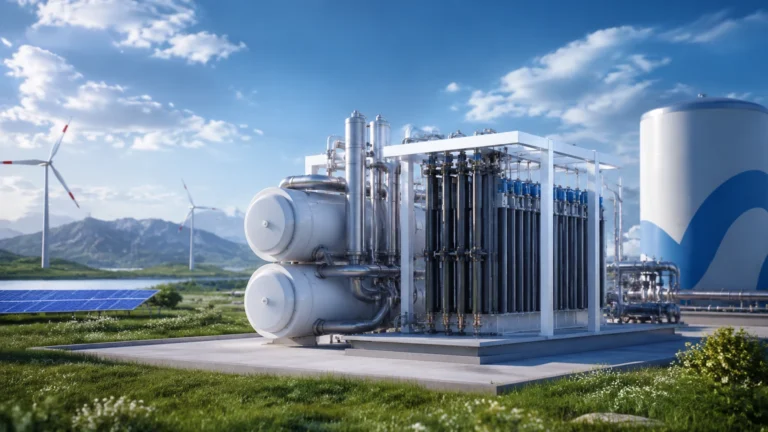
To answer the question of how is hydrogen manufactured, one must look at the three dominant industrial pathways: thermal processes, electrolytic processes, and photolytic processes. Currently, thermal processes dominate the global supply, though electrolysis is seeing rapid growth.
1. Steam Methane Reforming (SMR)
Steam Methane Reforming is the most common method for industrial hydrogen production. In this process, methane (natural gas) reacts with high-temperature steam (700°C–1,100°C) under pressure (3–25 bar) in the presence of a catalyst.
The reaction produces hydrogen, carbon monoxide, and a small amount of carbon dioxide. A subsequent "water-gas shift reaction" reacts the carbon monoxide with steam to produce even more hydrogen and carbon dioxide. Finally, the hydrogen is purified through Pressure Swing Adsorption (PSA). This method is often referred to as "Gray Hydrogen" if the CO₂ is released, or "Blue Hydrogen" if Carbon Capture and Storage (CCS) technologies are employed.
2. Electrolysis
Electrolysis involves using electricity to split water into hydrogen and oxygen. This occurs in a unit called an electrolyzer. There are two main types of industrial electrolyzers:
* Alkaline Electrolyzers: These use a liquid electrolyte solution, typically 20% to 30% potassium hydroxide (KOH) in water. The level of this electrolyte must be strictly maintained to prevent gas crossover.
* Proton Exchange Membrane (PEM) Electrolyzers: These use a solid polymer electrolyte. They are more compact and responsive to fluctuating power inputs, making them ideal for pairing with wind or solar energy (yielding "Green Hydrogen").
3. Partial Oxidation and Coal Gasification
Partial oxidation involves reacting methane or other hydrocarbons with a limited amount of oxygen, which is not enough to completely oxidize the fuel to carbon dioxide and water. Coal gasification is a similar process where coal is reacted with oxygen and steam under high pressure and temperature to form a synthesis gas (syngas) composed of hydrogen and carbon monoxide.
The Role of Level Measurement in Hydrogen Manufacturing
In every stage of hydrogen manufacturing, level measurement is critical for both process control and safety. Whether managing the water supply for an electrolyzer or monitoring the separators in an SMR plant, inaccurate readings can lead to equipment damage or hazardous gas leaks.
In SMR plants, level sensors are required for steam drums and condensate separators. In electrolysis, the management of the gas-liquid separator is paramount. If the liquid level in the separator drops too low, hydrogen gas could mix with oxygen, creating an explosive atmosphere. Conversely, if the level is too high, liquid electrolyte could be carried over into the gas processing equipment, causing corrosion and downstream failures.
For engineers seeking reliable instrumentation for these demanding environments, reviewing professional-grade hardware is a necessary step. You can Review product options and application support at the Welk Main Page to see how modern sensors integrate into hydrogen production skids.
Measurement Principles for Hydrogen Processes
Before selecting a specific instrument, it is important to understand the measurement principles that govern level detection in hydrogen manufacturing environments.
Radar Level Measurement (ToF)
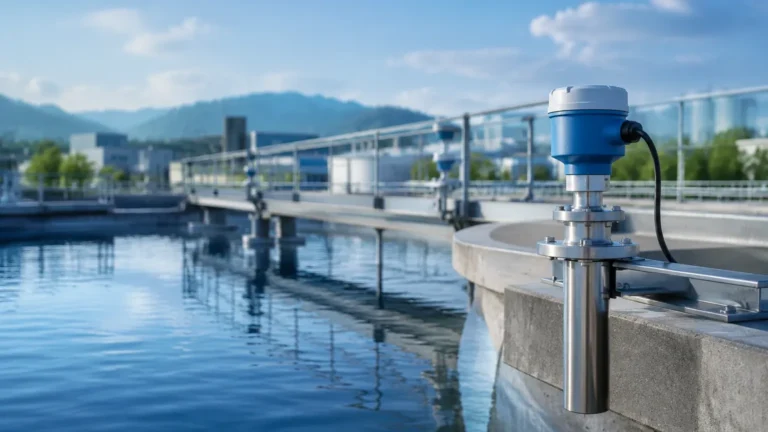
Radar level meters operate on the Time-of-Flight (ToF) principle. The device emits high-frequency microwave pulses that travel to the surface of the medium, reflect, and return to the sensor. The distance is calculated based on the time interval.
* Non-contact Radar: Ideal for corrosive electrolytes or high-pressure tanks where physical contact with the media is discouraged.
* Guided Wave Radar (GWR): Uses a probe to guide the signal. GWR is particularly effective in hydrogen separators where steam or turbulence might interfere with a non-contact signal.
Magnetic Level Gauges (Buoyancy)
Magnetic level gauges utilize a float containing a high-intensity magnet. As the liquid level rises or falls, the float moves accordingly within a bypass chamber. This movement is coupled with an external indicator or a transmitter. This principle is highly valued in hydrogen service because it provides a clear visual indication without requiring power, and the pressure-retaining chamber provides a secondary layer of containment.
Hydrostatic Pressure Measurement
This principle relies on the relationship between the height of a liquid column and the pressure it exerts at the base (P = ρgh). In atmospheric feed tanks for deionized water or chemical storage, hydrostatic transmitters provide a cost-effective and reliable measurement solution.
Selection Criteria for Hydrogen Level Instrumentation
Choosing the right technology depends on the specific manufacturing stage and the physical properties of the media. The following table provides a general guideline for selection based on typical hydrogen production requirements.
| Application | Recommended Technology | Key Benefit |
| :— | :— | :— |
| Electrolyzer Separator | Guided Wave Radar (GWR) | High accuracy in turbulent conditions; handles high pressure. |
| KOH Storage Tanks | Ultrasonic or Non-contact Radar | Non-contact prevents corrosion of the sensor head. |
| High-Pressure Buffers | Magnetic Level Gauge | Robust mechanical containment with visual redundancy. |
| Condensate Collection | Hydrostatic Transmitter | Simple installation and high reliability for water-based media. |
| Cryogenic LH2 Storage | Specialized Radar / Capacitance | Capable of operating at -253°C with low dielectric constants. |
Installation and Safety Considerations
Hydrogen is the smallest molecule and is highly flammable, with a wide flammability range (4% to 75% in air). Therefore, the installation of level measurement instruments in hydrogen manufacturing must adhere to strict safety protocols.
1. Explosion-Proof Ratings: All electronic instruments must carry appropriate certifications, such as ATEX or IECEx, for Zone 0 or Zone 1 environments.
2. Material Compatibility: Hydrogen can cause "hydrogen embrittlement" in certain metals. For high-pressure hydrogen service, wetted parts should typically be made of 316L stainless steel or specific alloys that resist embrittlement.
3. Sealing and Leak Prevention: Use of high-quality gaskets and NPT or flanged connections that are rated for gas service is mandatory. In many hydrogen applications, dual-seal designs are preferred to provide an extra layer of protection between the process and the electronics.
4. Dielectric Constant (Dk): Liquid hydrogen has a very low dielectric constant (approximately 1.23). This makes it a poor reflector for standard radar. When measuring liquid hydrogen, high-sensitivity radar or GWR with specialized algorithms is required.
Limitations and Maintenance
While modern level meters are highly advanced, they are not without limitations in hydrogen manufacturing:
* Pressure Fluctuations: Rapid pressure changes in SMR reactors can affect the vapor space density, which may impact the accuracy of ultrasonic sensors. In such cases, radar or magnetic gauges are preferred as they are less affected by gas density.
* Build-up: In alkaline electrolysis, KOH can crystallize around sensor probes. Periodic inspection and cleaning of GWR probes or the use of non-contact radar can mitigate this issue.
* Calibration: Hydrostatic sensors require recalibration if the density of the electrolyte changes significantly due to temperature shifts or concentration adjustments.
Regular maintenance schedules should include checking the integrity of seals and verifying the calibration of transmitters against manual gauges or sight glasses.
Frequently Asked Questions
Q: Why is level control so important in green hydrogen production?
A: In green hydrogen production (electrolysis), maintaining the correct liquid level in the separators ensures that the hydrogen and oxygen gases remain separated. If levels are not controlled, there is a risk of gas mixing, which can lead to fire or explosion.
Q: Can I use ultrasonic sensors for high-pressure hydrogen tanks?
A: Generally, no. Ultrasonic waves require a medium (gas) to travel. At very high pressures, the speed of sound changes significantly, and the high density of the gas can attenuate the signal. Radar or magnetic level gauges are much more reliable for high-pressure hydrogen applications.
Q: What materials are best for level sensors in contact with KOH?
A: For potassium hydroxide (KOH) used in alkaline electrolyzers, 316L stainless steel is usually sufficient for the housing, but for long-term durability, PTFE-coated probes or non-contact sensors are often recommended to prevent chemical attack.
Q: How does temperature affect hydrogen level measurement?
A: Temperature affects the density of the liquid. If you are using hydrostatic pressure sensors, you must compensate for temperature-induced density changes to maintain accuracy. Radar and magnetic gauges are largely unaffected by temperature variations within their rated operating ranges.
For more detailed technical specifications and to explore the full range of industrial level measurement tools, visit the Main Page for expert guidance and product selection.