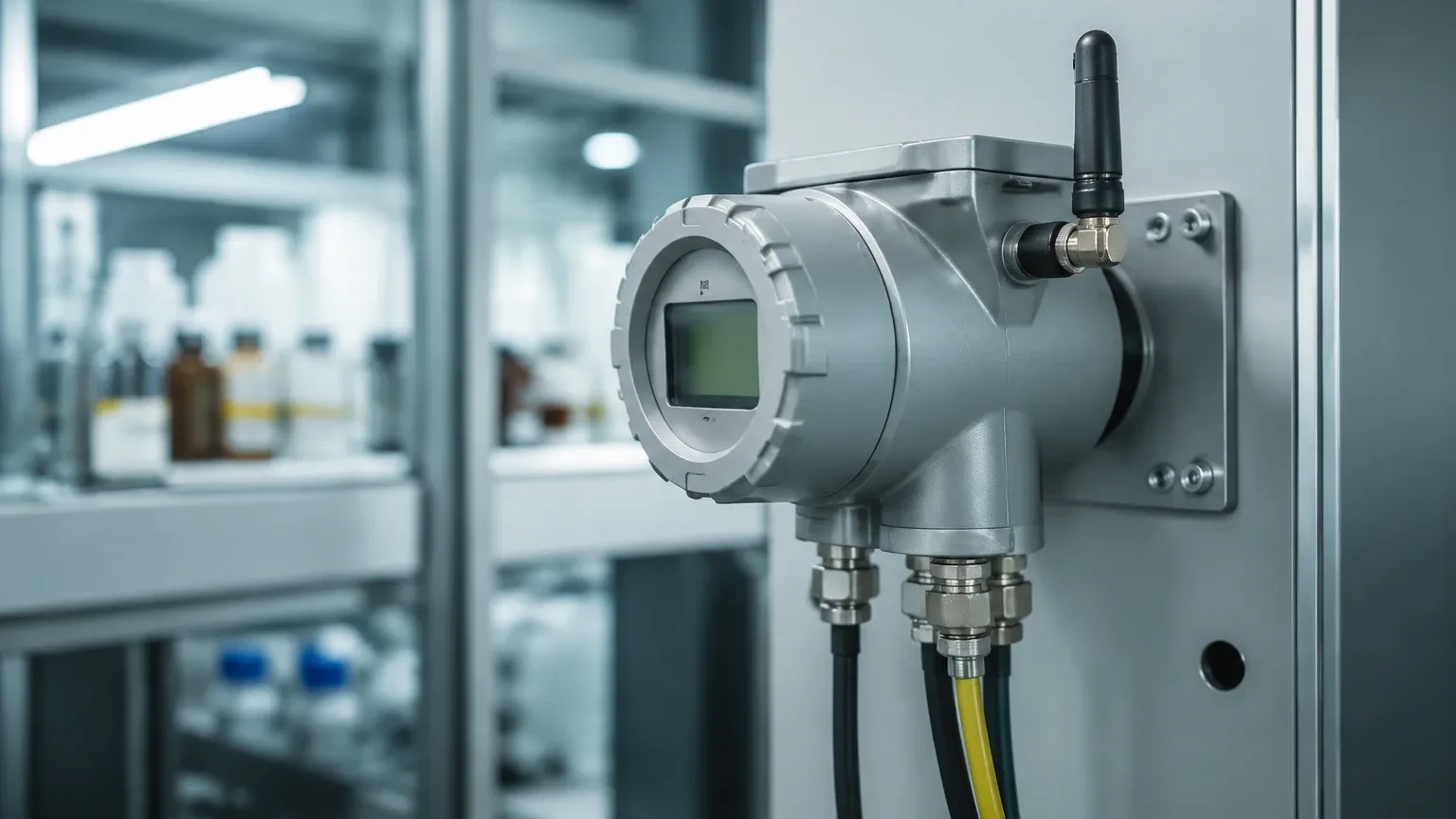
Analytical Transmitter
Analytical Transmitter
In the landscape of industrial process control, the analytical transmitter serves as the critical intelligence layer between raw electrochemical sensors and the centralized control system. While primary instruments like radar or ultrasonic level meters provide essential spatial data regarding tank volumes, analytical transmitters provide qualitative data regarding the chemical composition, purity, and reactivity of the liquid being measured. For engineers and plant managers, understanding the integration of these transmitters is vital for maintaining process efficiency, ensuring regulatory compliance, and protecting downstream equipment.
An analytical transmitter is an electronic device that receives a low-level signal from a primary sensor—such as a pH probe, conductivity cell, or dissolved oxygen sensor—and converts it into a standardized, robust output signal. This signal, typically 4-20 mA, HART, or a digital fieldbus protocol, can be transmitted over long distances to a Programmable Logic Controller (PLC) or Distributed Control System (DCS) without the interference or degradation that would plague raw sensor signals.
Measurement Principles and Signal Conversion
To select the correct analytical transmitter, one must first understand the specific electrochemical principles it must interpret. Unlike physical measurements like level or pressure, analytical measurements often involve high-impedance signals or extremely low voltages that are highly susceptible to environmental noise.
Potentiometric Measurement (pH and ORP)
For pH and Oxidation-Reduction Potential (ORP) measurements, the sensor generates a voltage (mV) proportional to the hydrogen ion activity or the electron-donating/accepting capacity of the solution. A pH sensor typically produces approximately 59.16 mV per pH unit at 25°C. The analytical transmitter must have an extremely high input impedance (often >10¹² ohms) to prevent "loading" the sensor, which would result in inaccurate readings. The transmitter also performs temperature compensation, as the Nernstian slope of the pH electrode changes with the temperature of the process liquid.
Amperometric Measurement (Dissolved Oxygen and Chlorine)
In amperometric systems, the transmitter maintains a constant polarization voltage across two electrodes. As the target gas (like oxygen) diffuses through a membrane, it is reduced or oxidized, creating a current in the nano-ampere range. The transmitter’s role is to convert this minute current into a linear scale of concentration (mg/L or ppm), accounting for membrane permeability changes caused by temperature fluctuations.
Conductive and Inductive Measurement (Conductivity)
Conductivity transmitters measure the ability of a solution to carry an electrical current. There are two primary methods:
1. Contacting Conductivity: The transmitter applies an AC voltage to electrodes in contact with the fluid. It measures the resulting current and calculates the solution's conductance. This is ideal for pure water applications.
2. Inductive (Toroidal) Conductivity: The transmitter drives an alternating current through a primary coil, which induces a current in the process liquid. This liquid current then induces a signal in a secondary coil. Since there are no electrodes to foul, the transmitter is used for high-concentration acids, bases, and slurries.
Integration with Level Measurement Systems
In practical industrial applications, analytical transmitters are rarely used in isolation. They are frequently paired with level measurement technologies to provide a complete picture of a storage vessel or process tank. For instance, in a water treatment facility, a technician might refer to the Main Page of a primary instrument provider to select a radar level meter for a chemical storage tank, while simultaneously specifying an analytical transmitter to monitor the concentration of the chemical within that same tank.
This dual-monitoring approach prevents "empty tank" scenarios while ensuring that the chemical being dosed remains within the required specification. Modern transmitters often feature multi-channel capabilities, allowing a single unit to process signals from both a level sensor (via 4-20 mA input) and an analytical probe, consolidating data for easier field interpretation.
Practical Selection Criteria
When evaluating an analytical transmitter for a specific project, engineers should use the following criteria to ensure long-term reliability and accuracy.
1. Input Configuration
Transmitters are available in single-channel, dual-channel, or multi-parameter configurations. Multi-parameter units are increasingly popular because they allow the user to swap sensor types (e.g., switching from pH to conductivity) by simply changing the sensor and updating the software configuration, reducing the need for extensive spare parts inventory.
2. Communication Protocols
While the 4-20 mA analog signal remains the industry standard, digital protocols offer enhanced diagnostics. HART (Highway Addressable Remote Transducer) allows the transmitter to send diagnostic data (such as sensor glass impedance or calibration history) over the existing analog wires. For highly automated facilities, Modbus RS485 or Profibus DP may be required for seamless integration into the plant network.
3. Enclosure and Environmental Rating
Analytical transmitters are often installed in harsh environments near the point of measurement. An IP66 or IP67 rating is standard for outdoor or wash-down areas. In chemical processing, NEMA 4X enclosures made of corrosion-resistant materials like polycarbonate or stainless steel are necessary to withstand corrosive vapors.
Selection Table: Analytical Transmitter Applications
| Parameter | Sensor Technology | Typical Range | Industry Application |
| :— | :— | :— | :— |
| pH | Glass Electrode | 0 to 14 pH | Wastewater neutralization, chemical synthesis |
| ORP | Platinum/Gold Electrode | -1500 to +1500 mV | Cyanide destruction, chrome reduction, bleaching |
| Conductivity | Contacting (2/4-pole) | 0.055 µS/cm to 10 mS/cm | RO water, boiler feed water, condensate |
| Conductivity | Inductive (Toroidal) | 100 µS/cm to 2,000 mS/cm | Acid/Base concentration, CIP (Clean-in-Place) |
| Dissolved Oxygen | Optical (Fluorescence) | 0 to 20 mg/L | Aeration basin control, aquaculture |
| Turbidity | Scattered Light (90°) | 0 to 4000 NTU | Filter breakthrough monitoring, effluent quality |
Installation Considerations and Best Practices
Proper installation of the analytical transmitter and its associated sensors is the most significant factor in reducing maintenance costs. Unlike a radar level meter, which can be mounted at the top of a tank and left for years, analytical sensors require periodic contact with the process and regular calibration.
* Cable Length and Routing: For potentiometric sensors (pH/ORP), the distance between the sensor and the transmitter should be kept as short as possible—typically under 15 meters (50 feet). If longer distances are required, a pre-amplifier must be used at the sensor head to convert the high-impedance signal to a low-impedance signal. Always route analytical cables away from high-voltage power lines to prevent electromagnetic interference.
* Temperature Compensation: Always ensure the transmitter is connected to the sensor's internal temperature element (RTD). Chemical properties change significantly with temperature; for example, the conductivity of water increases by approximately 2% per degree Celsius.
* Mounting Accessibility: The transmitter should be mounted at eye level in a location that is easily accessible for technicians. Since analytical systems require routine calibration using buffer solutions, the transmitter's display and keypad must be reachable without specialized climbing equipment.
* Grounding: Ensure the process liquid is properly grounded. "Stray currents" in a plastic pipe or tank can cause significant offsets in pH and ORP readings. Most modern transmitters include a solution ground input to negate these effects.
Limitations and Common Risks
While analytical transmitters are highly advanced, they are subject to physical and chemical limitations that can lead to measurement errors.
1. Sensor Fouling: The transmitter can only interpret the signal it receives. If the sensor is coated in oil, scale, or biological growth, the transmitter will report an inaccurate value. Many high-end transmitters now include "sensor health" diagnostics that monitor the impedance of the glass membrane to alert operators when cleaning is required.
2. Calibration Drift: All analytical sensors drift over time due to aging and process exposure. A transmitter is only as accurate as its last calibration. Implementing a strict calibration schedule using certified standards (pH buffers or conductivity standards) is mandatory.
3. Chemical Compatibility: While the transmitter housing is protected, the sensor and its mounting hardware must be compatible with the process fluid. Using a 316 stainless steel sensor holder in a high-chloride environment will lead to pitting and eventual failure.
Frequently Asked Questions (FAQs)
Q: Can I use a single transmitter for both pH and Conductivity?
A: Yes, many modern multi-parameter transmitters feature dual-channel inputs that can be configured for different parameters simultaneously. This reduces the footprint and the total cost of ownership.
Q: What is the difference between a 2-wire and a 4-wire transmitter?
A: A 2-wire transmitter is loop-powered, meaning it receives power and sends the 4-20 mA signal over the same pair of wires. These are ideal for hazardous areas. A 4-wire transmitter has separate power supply wires (usually 110/220V AC or 24V DC) and separate signal wires. 4-wire units typically offer more powerful displays and additional relay outputs.
Q: How often does an analytical transmitter need to be calibrated?
A: The transmitter electronics themselves rarely drift. However, the *system* (transmitter + sensor) should be calibrated based on the process conditions. In stable water applications, monthly calibration may suffice. In harsh chemical processes, weekly or even daily checks may be necessary.
Q: Does the transmitter work with sensors from other manufacturers?
A: Most analytical transmitters are designed to work with standard analog sensors (NTC/PT100/PT1000 temperature elements and standard mV/nA signals). However, some manufacturers use proprietary digital sensors that only communicate with their specific transmitters. Always verify compatibility before purchasing.
Conclusion
The analytical transmitter is a cornerstone of modern industrial automation, providing the necessary data to manage chemical processes with precision. By converting complex electrochemical signals into actionable data, these devices enable industries to optimize their chemical usage, protect the environment, and maintain high product standards. When selecting a system, engineers must look beyond the transmitter itself and consider the entire measurement loop—including sensor chemistry, cable integrity, and integration with other process variables like level and flow. For those looking to build a comprehensive monitoring solution, starting with a reliable foundation in level measurement and expanding into analytical instrumentation is the most effective path toward total process control.