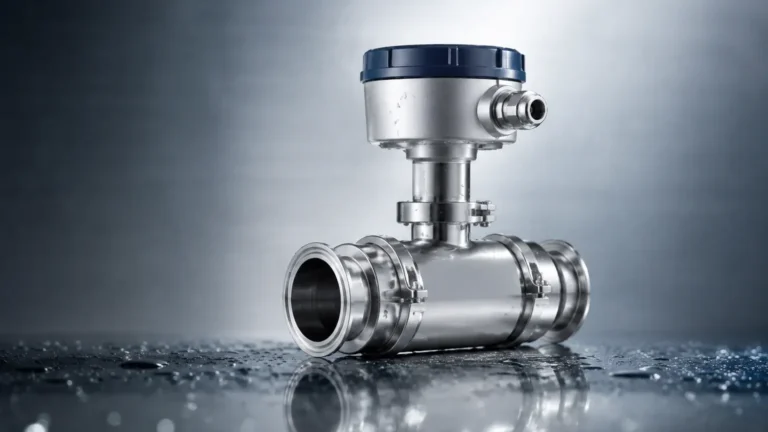
Brix Measurement Inline
Brix Measurement Inline
In modern industrial processing, the transition from manual laboratory sampling to real-time process control is a critical step toward operational efficiency. Brix measurement inline refers to the continuous monitoring of the dissolved solids content in a liquid directly within the production pipe or vessel. This measurement is most commonly expressed in degrees Brix (°Bx), where one degree Brix represents 1 gram of sucrose in 100 grams of solution.
For industries ranging from food and beverage to chemical manufacturing, maintaining a consistent Brix level is essential for product quality, regulatory compliance, and waste reduction. By integrating automated sensors into the process line, engineers can achieve tighter control over evaporation, dilution, and blending processes without the time delays and potential for human error associated with offline refractometers.
Measurement Principles
Before selecting a sensor for brix measurement inline, it is essential to understand the physical principles utilized to derive concentration data. While Brix is a measure of mass ratio, inline instruments typically measure a physical property that correlates to the concentration of dissolved solids.
Optical Refractometry (Refractive Index)
Refractometry is the most widely adopted method for inline Brix analysis. It relies on the principle of refraction: when light passes from one medium (the sensor prism) into another (the process liquid), it changes speed and direction. The angle at which the light bends is determined by the Refractive Index (RI) of the liquid.
Inline refractometers use the "Critical Angle" method. An internal LED shines light onto the interface between the high-index prism and the process fluid. Depending on the concentration of the fluid, a portion of the light is reflected back onto a linear CCD (Charge-Coupled Device) sensor, while the rest is refracted into the liquid. The position of the shadow line on the CCD sensor determines the critical angle, which is then converted into a Brix value via pre-defined algorithms. This method is highly resistant to turbidity, bubbles, and color changes because it only measures the light at the interface.
Density-Based Measurement (Coriolis and Hydrostatic)
Density is directly proportional to the concentration of dissolved solids in many solutions. Two primary methods are used:
1. Coriolis Mass Flow: As fluid passes through vibrating tubes, the frequency of vibration changes based on the mass of the fluid. This allows the instrument to calculate density with high precision. If the relationship between density and Brix is known (often via a Plato or Brix table), the meter can provide a continuous output.
2. Hydrostatic Pressure: By measuring the pressure differential between two fixed points at different heights in a tank, the system can calculate the density of the liquid. While less common for high-precision Brix measurement in pipes, it remains a viable solution for large mixing vessels.
Ultrasonic Velocity
The speed of sound through a liquid varies depending on its density and elasticity, both of which change with concentration. Ultrasonic sensors measure the "time-of-flight" of a sound pulse between a transmitter and receiver. While sensitive to temperature and pressure, modern ultrasonic Brix sensors use advanced compensation to provide a non-intrusive measurement option for specific applications.
Selection Criteria for Inline Brix Sensors
Choosing the correct technology depends on the specific characteristics of the process fluid and the physical constraints of the installation. The following table provides a comparison of the primary technologies used for brix measurement inline.
| Feature | Optical Refractometer | Coriolis Density Meter | Ultrasonic Sensor |
| :— | :— | :— | :— |
| Accuracy | High (±0.1 °Bx) | Very High (±0.05 °Bx) | Moderate (±0.2 °Bx) |
| Turbidity Influence | None | None | High |
| Presence of Bubbles | Minimal Impact | Significant Impact | High Impact |
| Viscosity Limit | Very High | Moderate | Moderate |
| Installation | Flange, Varivent, or Bypass | Inline (Full Flow) | Clamp-on or Inline |
| Maintenance | Low (Prism cleaning) | Low (No moving parts) | Low |
When evaluating options, engineers should prioritize the Main Page of technical documentation to confirm chemical compatibility with the wetted materials, such as Sapphire prisms or Stainless Steel 316L housings.
Installation Considerations
Proper installation is paramount to ensuring the accuracy and longevity of an inline Brix system. Because these sensors are often placed in critical control loops, the following engineering best practices should be followed:
1. Flow Velocity and Turbulence
To prevent the buildup of solids (scaling) on the sensor face, the process fluid should maintain a minimum velocity. For optical refractometers, a velocity of 1.5 to 3.0 m/s is typically recommended to facilitate a "self-cleaning" effect on the prism. If the flow is too slow, a bypass loop with a pump may be necessary.
2. Temperature Compensation
Brix is highly temperature-dependent. As temperature increases, the density and refractive index of a liquid typically decrease. Most professional inline sensors include an integrated Pt100 or Pt1000 RTD (Resistance Temperature Detector) to measure the fluid temperature at the exact point of Brix measurement. The software then applies a compensation algorithm (typically based on the ICUMSA temperature correction table) to provide a "Corrected Brix" value normalized to 20°C.
3. Orientation and Air Pockets
Sensors should be installed in a position where the pipe is always full. In horizontal pipelines, the sensor should be mounted on the side (3 o'clock or 9 o'clock position) rather than the top or bottom. Mounting on the top risks measuring air pockets, while mounting on the bottom risks measuring sediment or debris that may settle.
4. Sanitary Requirements
In food, beverage, and pharmaceutical applications, the sensor must meet sanitary design standards such as 3-A or EHEDG. This ensures the device can withstand Clean-in-Place (CIP) and Steam-in-Place (SIP) cycles, which often involve temperatures up to 140°C and aggressive caustic or acidic cleaning agents.
Limitations and Potential Risks
While brix measurement inline is a robust technology, certain process conditions can introduce errors:
* Coating and Fouling: In highly viscous or sticky applications (like tomato paste or heavy syrups), a film can develop over the sensor interface. While many refractometers feature "prism wash" systems (using steam or water jets), persistent coating will result in a drifted reading.
* Multi-Component Solutions: Brix measurement assumes that the change in refractive index or density is caused solely by sucrose. If the solution contains varying amounts of alcohols, acids, or salts, the sensor will measure the "Total Soluble Solids" (TSS), which may not align perfectly with a pure sucrose Brix scale. In these cases, a custom calibration or "Offset" is required to correlate the sensor reading to laboratory results.
* Extreme Pressure Spikes: Sensors must be rated for the maximum process pressure, including potential water hammer effects. Standard industrial units are typically rated for 10 to 25 bar, though high-pressure versions are available for specific chemical processes.

Integration with Industrial Automation
For a brix measurement inline system to be effective, it must communicate seamlessly with the plant's PLC (Programmable Logic Controller) or DCS (Distributed Control System). Common output options include:
* 4-20 mA Analog: A standard signal where 4mA represents the bottom of the Brix range (e.g., 0 °Bx) and 20mA represents the top (e.g., 80 °Bx).
* Digital Protocols: Modbus RTU, Profibus DP, and EtherNet/IP are increasingly common, allowing for the transmission of diagnostic data (sensor health, temperature, and RI) alongside the primary Brix value.
* Relay Outputs: Used for simple alarm functions, such as triggering a valve to divert product if the concentration falls below a set threshold.
Frequently Asked Questions (FAQ)
Q: How often does an inline Brix refractometer need calibration?
A: Most modern solid-state refractometers do not "drift" in the traditional sense. However, it is standard practice to verify the reading against a calibrated handheld refractometer or laboratory analysis once per shift or once per week. A full factory re-calibration is typically only needed if the prism is replaced or mechanically damaged.
Q: Can inline Brix sensors measure liquids with pulp or seeds?
A: Yes, optical refractometers are particularly well-suited for this. Because they measure the refractive index at the interface of the prism, suspended solids like fruit pulp or seeds do not interfere with the measurement, provided they do not completely block the prism face.
Q: What is the difference between Brix and Plato?
A: Both scales measure the concentration of dissolved solids. Brix is generally used in the sugar and general food industry, while the Plato scale is used almost exclusively in the brewing industry to measure the concentration of wort. The two scales are very similar, and most inline instruments can toggle between them via software settings.
Q: Is it possible to measure Brix in hazardous areas?
A: Yes, for chemical applications involving flammable solvents, sensors can be supplied with ATEX, IECEx, or FM certifications for use in Zone 0, 1, or 2 environments.
Conclusion
Implementing brix measurement inline is a foundational step for any processing facility looking to optimize yield and ensure product consistency. By understanding the underlying principles of refractometry and density, and by adhering to strict installation guidelines, engineers can significantly reduce the need for manual sampling and minimize the risk of off-specification batches. For those looking to explore specific hardware options for level and concentration monitoring, visiting the Main Page of an established manufacturer like Welk provides access to technical specifications and application-specific support.