Flow Measurement Services
Flow Measurement Services
In industrial process control, the accuracy of fluid dynamics data is a cornerstone of operational efficiency, safety, and regulatory compliance. Flow measurement services encompass the engineering, selection, installation, and verification of instruments designed to quantify the movement of liquids, gases, and steam through closed conduits or open channels. For B2B stakeholders in water treatment, chemical processing, and oil and gas, these services bridge the gap between raw hardware procurement and actionable process intelligence.
Effective flow measurement is rarely a "plug-and-play" scenario. It requires a deep understanding of fluid mechanics, piping geometry, and the specific physical properties of the medium being measured. This guide examines the technical principles, selection criteria, and service frameworks necessary for implementing robust flow measurement solutions.
Fundamental Principles of Flow Measurement
Before engaging in flow measurement services, it is essential to understand the physical principles that govern how different technologies interpret fluid movement. Most industrial flow meters do not measure volume directly; instead, they measure a secondary property—such as velocity, pressure differential, or frequency—and calculate the flow rate based on known constants.
Differential Pressure (DP) Measurement
Differential pressure remains one of the most common methods for flow calculation. Based on Bernoulli’s principle, a restriction is placed in the pipe (such as an orifice plate or Venturi tube) to create a pressure drop. The square root of the pressure difference between the upstream and downstream sides is proportional to the flow rate. While reliable, these systems introduce a permanent pressure loss and require precise impulse line installations.
Velocity-Based Measurement
Velocity meters calculate flow by determining the speed of the fluid ($v$) and multiplying it by the cross-sectional area ($A$) of the pipe ($Q = A \times v$).
* Electromagnetic Flow Meters: These operate based on Faraday’s Law of Induction. As a conductive liquid moves through a magnetic field, it generates a voltage proportional to its velocity. These are ideal for wastewater and chemical slurries as they have no moving parts and offer no flow restriction.
* Ultrasonic Flow Meters: These use sound waves to determine velocity. Transit-time ultrasonic meters measure the time difference between pulses sent upstream and downstream. Doppler meters, conversely, reflect sound off particles or bubbles in the fluid. These are often used in flow measurement services for non-invasive auditing.
* Vortex Meters: These utilize the Von Kármán effect, where sensors detect the frequency of vortices shed by a bluff body placed in the flow stream. The frequency is directly proportional to the flow velocity.
Open Channel Flow (Level-to-Flow Conversion)
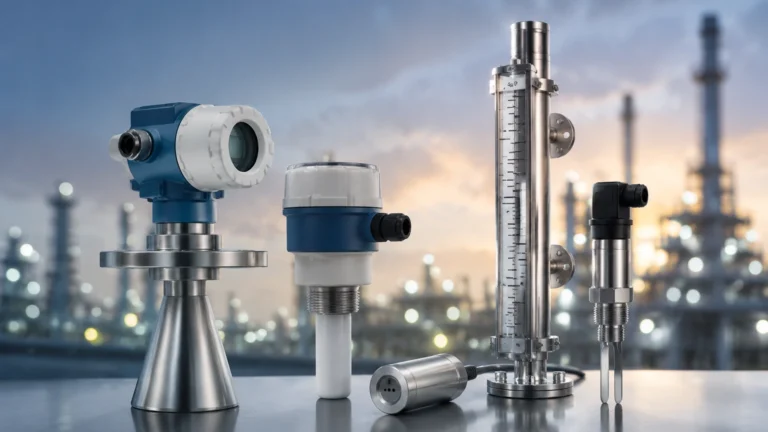
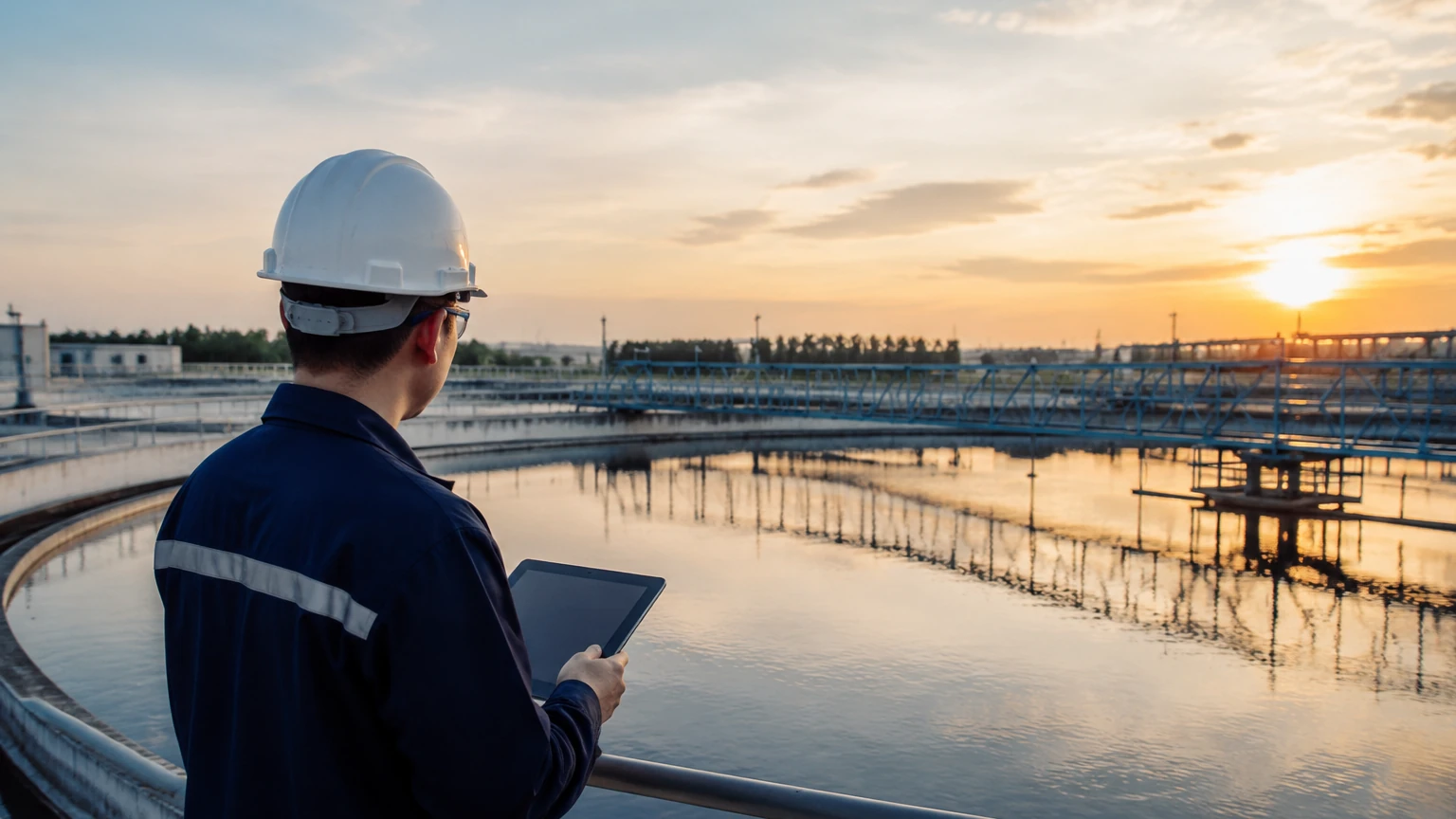
In many industrial and municipal applications, such as irrigation or wastewater discharge, fluid flows in open channels rather than pressurized pipes. Here, flow measurement services often utilize level measurement technology. By measuring the head (height) of the liquid behind a primary device like a flume or weir, the flow rate can be calculated using standardized formulas. This is where advanced radar and ultrasonic level sensors become critical components of a flow measurement strategy.
Scope of Professional Flow Measurement Services
Industrial flow measurement services extend beyond the simple sale of a meter. Professional service providers, such as those associated with the Welk brand, offer a comprehensive lifecycle approach to fluid monitoring.
1. Site Audit and Feasibility Studies
Service engineers evaluate existing piping layouts to identify potential issues such as insufficient straight-run distances, presence of entrained air, or vibration. A feasibility study ensures that the selected technology—whether radar, ultrasonic, or hydrostatic—is compatible with the chemical properties and temperature ranges of the process.
2. Meter Sizing and Specification
Selecting a meter based solely on pipe size is a common error. Flow measurement services include calculating the minimum, maximum, and nominal flow rates to ensure the meter operates within its optimal "turndown ratio." This phase also involves selecting materials for wetted parts to prevent corrosion or erosion.
3. Installation and Commissioning
Correct installation is the single most important factor in measurement accuracy. Services include the physical mounting of sensors, wiring of transmitters, and the configuration of signal outputs (e.g., 4-20mA, HART, or Modbus). For complex systems, commissioning includes zero-point calibration and verification against a reference standard.
4. Verification and Calibration Services
Over time, sensors can drift due to coating, wear, or electronic degradation. Periodic verification services use external clamp-on meters or master meters to validate the accuracy of installed units without interrupting the process. This is vital for billing applications or environmental reporting.
Technical Selection Table
The following table provides a comparison of common technologies encountered during flow measurement services to assist in the initial selection process.
| Technology | Suitable Media | Typical Accuracy | Advantages | Limitations |
| :— | :— | :— | :— | :— |
| Electromagnetic | Conductive liquids | ±0.5% | No pressure drop; handles solids | Requires minimum conductivity |
| Ultrasonic (Transit-time) | Clean liquids/gases | ±1.0% | Non-invasive; no moving parts | Sensitive to bubbles/solids |
| Vortex | Steam, gas, low-viscosity liquids | ±1.0% | High temperature/pressure capability | Requires high Reynolds number |
| Differential Pressure | Liquids, gases, steam | ±1.0% to 2.0% | Well-understood; low cost | High pressure drop; maintenance-heavy |
| Open Channel (Radar/Level) | Wastewater, canal water | ±2.0% to 5.0% | Non-contact; ignores debris | Requires primary device (flume/weir) |
Installation Considerations and Best Practices
To ensure that flow measurement services yield accurate data, several engineering constraints must be addressed during the installation phase.
Straight Pipe Requirements
Most flow meters require a fully developed flow profile to measure accurately. Turbulence caused by elbows, valves, or pumps can lead to significant errors. As a general rule, a minimum of 10 diameters ($10D$) of straight pipe upstream and 5 diameters ($5D$) downstream is required. If space is limited, flow conditioners or specific technologies like dual-sensor ultrasonic meters may be recommended.
Fluid Profile and Reynolds Number
The Reynolds number ($Re$) is a dimensionless value that determines whether a flow is laminar, transitional, or turbulent. Most industrial meters are calibrated for turbulent flow ($Re > 4000$). Service providers must calculate this value, especially when dealing with high-viscosity fluids or low flow velocities, to ensure the meter is operating in its linear range.
Orientation and Entrained Air
For liquid applications, the pipe must always be full. Meters should be installed in vertical rising pipes or the lowest point of a horizontal run. Installing a meter at the high point of a system can lead to air pockets, which cause erratic readings or complete signal loss in ultrasonic and electromagnetic systems.
Limitations and Risk Mitigation
While modern instrumentation is highly advanced, certain environmental and process conditions can compromise flow measurement services.
* Cavitation: If the pressure in the pipe drops below the vapor pressure of the liquid, bubbles form and collapse. This can damage meter internals and cause massive measurement errors. Service engineers mitigate this by ensuring back-pressure is maintained.
* Signal Interference: In electromagnetic flow measurement, stray electrical currents in the piping can interfere with the small voltage signals generated by the meter. Proper grounding to the fluid is essential.
* Coating and Scaling: In chemical or wastewater applications, material can build up on the electrodes or sensors. Choosing non-contact methods, such as radar level measurement for open channels or clamp-on ultrasonic meters for pipes, can reduce maintenance requirements.
For those seeking specific hardware solutions and technical support for these applications, it is advisable to Review product options and application support on the Welk Main Page to align instrument capabilities with site-specific needs.
Frequently Asked Questions (FAQ)
Q: Can I use an ultrasonic meter on a pipe with a liner?
A: Yes, but the service provider must know the liner material and thickness. The sound wave must pass through the pipe wall, the liner, and the fluid. If there is an air gap between the liner and the pipe, the signal will be lost.
Q: How often should flow meters be calibrated?
A: This depends on the criticality of the data. For internal process monitoring, an annual verification is standard. For custody transfer or regulatory environmental reporting, semi-annual or quarterly calibration may be required.
Q: What is the difference between accuracy and repeatability?
A: Accuracy is how close the reading is to the true value. Repeatability is the ability of the meter to provide the same reading under identical conditions. In many control loops, repeatability is more important than absolute accuracy.
Q: Why choose radar over ultrasonic for open channel flow?
A: Radar is unaffected by air temperature fluctuations, wind, or steam, which can change the speed of sound and affect ultrasonic readings. Radar provides a more robust solution for outdoor or high-temperature environments.
Conclusion
Flow measurement services are an essential component of modern industrial infrastructure. By combining the correct measurement principle with rigorous installation standards and periodic verification, facilities can achieve high levels of process transparency. Whether managing water resources or optimizing chemical reactors, the integration of reliable level and flow instrumentation ensures that every liter or cubic meter is accounted for accurately. For more information on selecting the right instrumentation for your project, visit the Main Page for detailed technical specifications and engineering guidance.