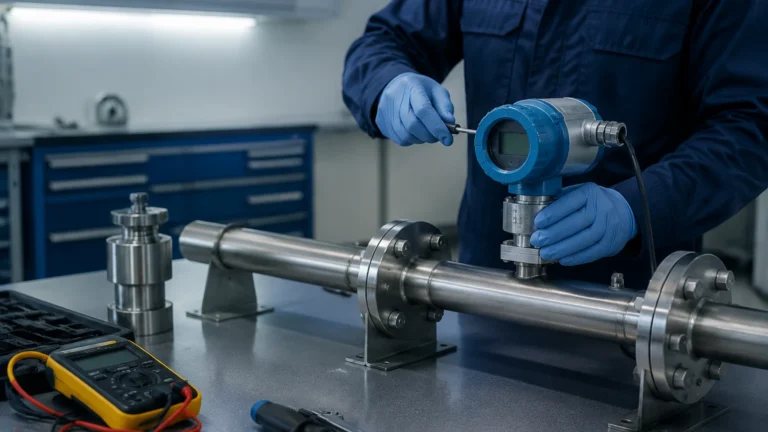
Flow Meter for Foamy Liquids
Flow Meter for Foamy Liquids
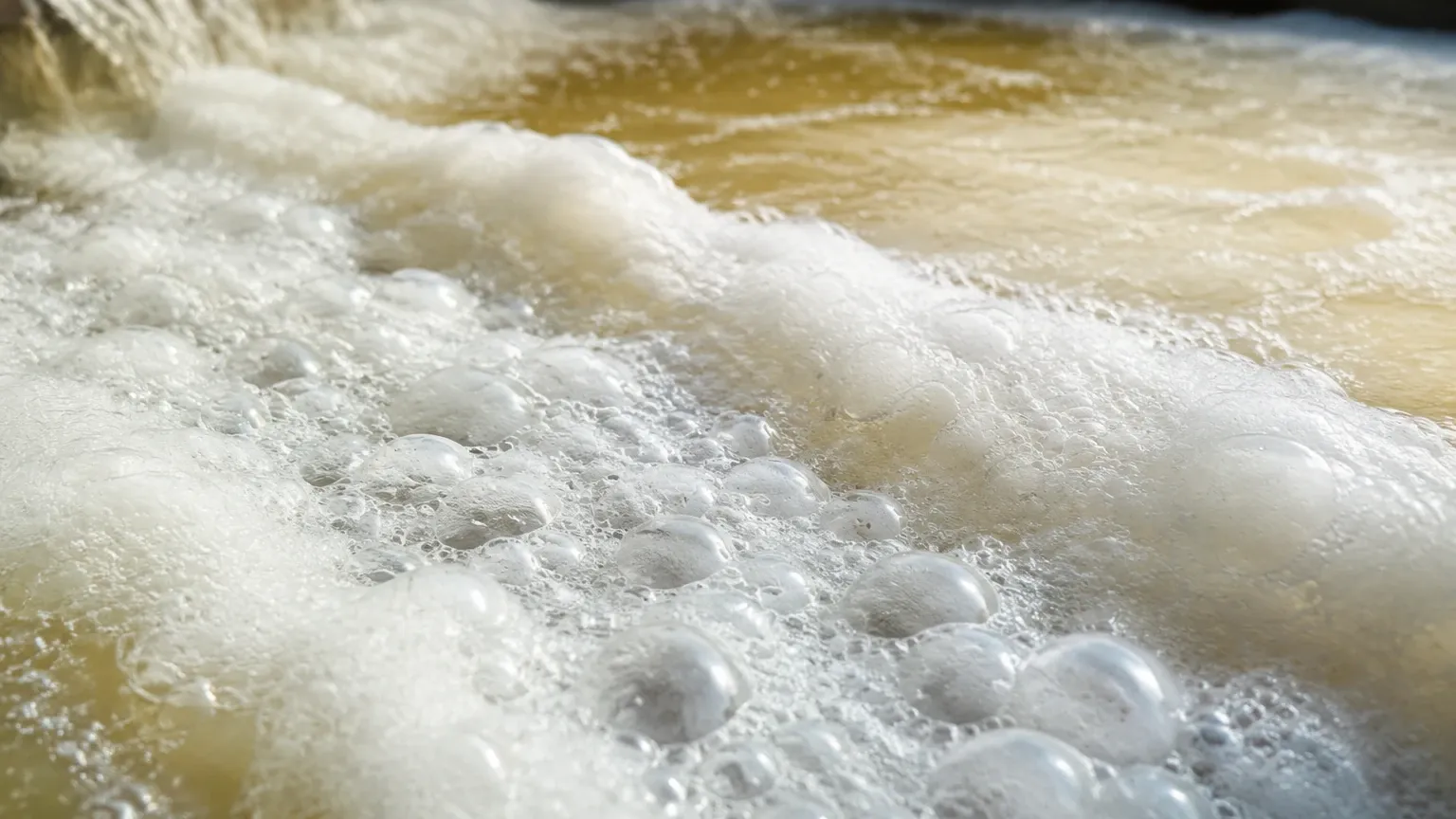
In industrial process control, measuring the flow of liquids that contain foam or entrained gas is one of the most significant challenges for instrumentation engineers. Foam is a two-phase substance consisting of gas bubbles dispersed within a liquid. Whether it is the result of chemical reactions, mechanical agitation, or the inherent properties of surfactants in detergents and food products, foam disrupts the physical properties that standard flow meters rely on for accuracy.
Selecting a flow meter for foamy liquids requires an understanding of how gas void fractions (GVF) affect different measurement technologies. Unlike clear, single-phase liquids, foamy fluids exhibit non-Newtonian behavior, variable density, and inconsistent conductivity. This article provides a technical overview of the principles, selection criteria, and installation best practices for measuring flow in foaming applications.
Measurement Principles for Foamy Applications
To select the correct instrument, it is essential to understand how different measurement principles interact with a two-phase (liquid-gas) medium.
Coriolis Mass Flow Meters
Coriolis meters are often considered the primary solution for complex fluids. They operate on the principle of the Coriolis effect: a vibrating tube experiences a phase shift proportional to the mass flow rate of the fluid passing through it. Because mass remains constant regardless of volume changes caused by pressure or aeration, Coriolis meters are theoretically ideal for foam.
However, they face a challenge known as "decoupling." In a vibrating tube, gas bubbles do not move at the same velocity as the surrounding liquid. This differential movement absorbs the vibration energy, which can cause the meter to stall or produce a "drive gain" error. Modern Coriolis meters utilize high-frequency digital signal processing to compensate for entrained gas, allowing for accurate mass flow and density measurement even with moderate foam content.
Electromagnetic Flow Meters (Magmeters)
Electromagnetic meters operate based on Faraday’s Law of Induction, which states that a conductor moving through a magnetic field generates a voltage proportional to its velocity. For a magmeter to work, the liquid must be conductive (typically >5 μS/cm).
In foamy liquids, the gas bubbles are non-conductive. If the foam is "wet" (low gas content), the meter measures the velocity of the liquid phase accurately. However, if the foam becomes "dry" (high gas content), the gas bubbles can insulate the electrodes, leading to signal noise or a complete loss of measurement. Magmeters measure the total volume of the mixture; therefore, if the foam expands the volume, the volumetric flow rate will reflect the mixture, not just the liquid portion.
Ultrasonic Flow Meters
Ultrasonic meters use either transit-time or Doppler technology. Transit-time meters rely on a clear signal path between transducers. Foam is an excellent acoustic absorber; the gas-liquid interfaces scatter and attenuate ultrasonic waves, often making transit-time measurement impossible in heavily aerated liquids.
Doppler meters, which rely on reflections from particles or bubbles, might seem suitable, but they require a consistent distribution of bubbles. In many foamy applications, the bubble size and concentration are too erratic for reliable Doppler tracking. Consequently, ultrasonic technology is generally restricted to liquids with very low entrained gas levels.
Differential Pressure (DP) Meters
DP meters, such as orifice plates or Venturi tubes, measure the pressure drop across a restriction. The calculation of flow rate depends heavily on the square root of the fluid density. Since foam density is inconsistent and significantly lower than the base liquid, DP meters often provide highly inaccurate readings unless the density is measured in real-time and used as a compensation factor.
Practical Selection Table
The following table compares the most common technologies used for measuring foamy liquids based on engineering performance metrics.
| Technology | Foam Tolerance | Accuracy (Mass/Vol) | Conductivity Required? | Typical Applications |
| :— | :— | :— | :— | :— |
| Coriolis | High | High (Mass) | No | Food, Chemicals, Oil/Gas |
| Electromagnetic | Medium | Medium (Vol) | Yes | Wastewater, Detergents |
| Differential Pressure| Low | Low | No | Steam, High-velocity gas |
| Ultrasonic | Very Low | Low | No | Clean water, Chemicals |
| Vortex | Low | Low | No | Saturated steam |
Key Evaluation Criteria for Engineers
When evaluating a flow meter for foamy liquids, several factors must be confirmed during the project design phase:
1. Foam Consistency and Type
Is the foam "entrained" (micro-bubbles suspended in the liquid) or "surface foam" (a layer on top of the liquid)? Entrained air is the primary concern for flow meters located in closed piping. If the foam is unstable and collapses easily under pressure, increasing the process pressure can sometimes turn a foamy liquid back into a measurable single-phase liquid.
2. Fluid Conductivity
If the liquid is a conductive chemical or wastewater, an electromagnetic flow meter is a cost-effective choice, provided the gas void fraction remains below 10-15%. For non-conductive fluids like oils or pure hydrocarbons, Coriolis meters are the only reliable high-accuracy option.
3. Required Accuracy vs. Budget
Coriolis meters provide the highest accuracy by measuring mass, which is unaffected by the volume of gas. However, they are significantly more expensive than magmeters. Engineers must determine if they need to know the mass of the product (e.g., for custody transfer) or simply the velocity of the flow for process stability.
4. Process Pressure and Temperature
Foam is highly compressible. A flow meter calibrated for a specific pressure may fail if the pressure drops, causing the gas bubbles to expand. Selection must account for the maximum and minimum operating pressures to ensure the meter's sensor can handle the resulting change in fluid dynamics.
Installation Considerations and Mitigation
Proper installation can significantly improve the performance of a flow meter in foamy conditions.
* Orientation: For foamy liquids, the flow meter should always be installed in a vertical pipe section with the flow moving upward. This ensures that the pipe remains completely full and prevents gas pockets from accumulating at the top of the sensor, which would occur in a horizontal installation.
* Back Pressure: Maintaining sufficient back pressure on the discharge side of the meter can help keep gas bubbles small and evenly distributed, or even force them back into solution. A common rule of thumb is to maintain a pressure of at least 0.2 bar (3 psi) above the vapor pressure of the liquid.
* Straight Pipe Runs: To ensure a stable flow profile, adhere to the manufacturer's recommendations for straight pipe runs (typically 5 to 10 diameters upstream and 3 to 5 diameters downstream). Turbulence caused by elbows or valves can exacerbate foaming.
* De-aerators: In extreme cases, a mechanical air eliminator or de-aerator should be installed upstream of the flow meter to remove as much gas as possible before measurement.
Limitations and Common Risks
Even with the best technology, there are inherent risks when dealing with foam:
1. Signal Damping: Excessive foam can lead to "flat-lining" of the output signal, where the meter holds the last known good value because it cannot find a valid signal through the foam.
2. Zero-Point Drift: In Coriolis meters, the presence of gas can cause the zero-point to shift, leading to significant errors at low flow rates.
3. Electrode Coating: In foaming detergents or food products, the liquid phase may leave a film or coating on the electrodes of a magmeter, requiring frequent cleaning or the use of capacitive (non-contact) electrodes.
Integration with Level Measurement
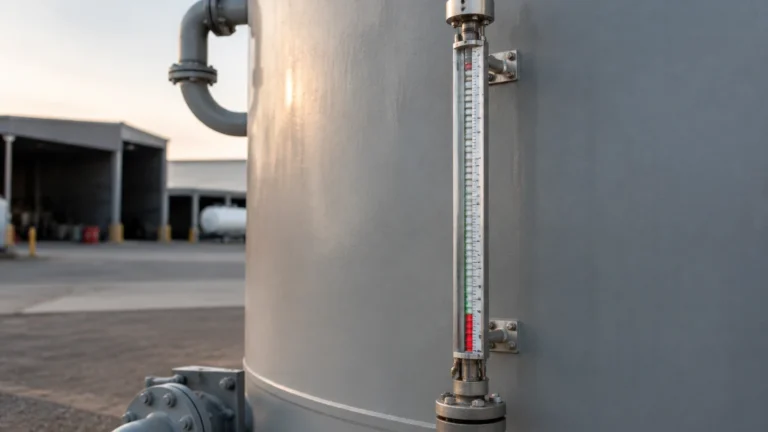
While flow meters track the movement of foamy liquids through pipes, managing foam within tanks and vessels requires a different set of tools. In many industrial applications, flow and level measurement must be integrated to prevent tank overflows or pump cavitation.
For example, in a fermentation tank, a Coriolis meter might measure the output flow, but a radar level meter is required to monitor the foam height inside the vessel. Specialized instruments, such as those found on the Main Page of industrial level specialists like Welk, utilize high-frequency radar or ultrasonic technology specifically tuned to detect either the top of a foam layer or the true liquid level beneath it. Combining accurate flow data with reliable level monitoring ensures comprehensive process control in foaming environments.
Frequently Asked Questions (FAQ)
Q: Can I use a standard water meter for foamy liquids?
No. Standard mechanical or volumetric water meters will over-read significantly because they count the volume of the gas bubbles as if they were liquid. This can lead to errors of 20% to 50% or more.
Q: What is the maximum Gas Void Fraction (GVF) a Coriolis meter can handle?
While it varies by manufacturer, many high-end Coriolis meters can now handle up to 15-20% GVF without stalling, though accuracy will decrease as the gas content increases.
Q: Does temperature affect foam measurement?
Yes. Higher temperatures generally decrease liquid viscosity, which can either help bubbles escape or, in some chemical processes, increase the rate of foam production. Temperature compensation is vital for maintaining accuracy in volumetric measurements.
Q: Are there maintenance-free flow meters for foam?
No meter is entirely maintenance-free in difficult applications. However, magmeters with no moving parts and Coriolis meters are generally more reliable than mechanical meters, which can be damaged by the high-velocity gas slugs often found in foamy flows.
Conclusion
Measuring foamy liquids requires a move away from traditional volumetric thinking toward mass-based or compensated measurement strategies. While Coriolis mass flow meters offer the most robust performance, electromagnetic meters remain a viable option for conductive liquids with low-to-moderate aeration. By prioritizing vertical installation, maintaining back pressure, and selecting the appropriate technology based on fluid properties, engineers can achieve reliable flow control even in the most challenging foaming applications.