Digital Ph Sensor
Digital Ph Sensor
In the landscape of industrial process control, the transition from analog to digital instrumentation has significantly enhanced the reliability and accuracy of liquid analysis. A digital ph sensor represents a critical evolution in this field, moving signal processing from a remote transmitter directly into the sensor head. This shift addresses long-standing challenges in chemical processing, water treatment, and industrial automation, where signal integrity and maintenance efficiency are paramount. For engineers managing complex systems, understanding the underlying principles and selection criteria for these sensors is essential for maintaining process stability.
Industrial environments often require the simultaneous monitoring of multiple parameters. While level measurement instruments, such as those found on the Main Page of instrumentation providers, handle volume and containment, the digital ph sensor ensures the chemical composition of the medium remains within specified limits. This guide explores the technical foundations, application engineering, and practical considerations for implementing digital pH technology.
Measurement Principles: From Analog mV to Digital Data
The fundamental principle of pH measurement remains rooted in the Nernst equation, which describes the relationship between the electrical potential of an electrode and the hydrogen ion activity in a solution. However, the method by which this potential is transmitted and interpreted differs vastly between analog and digital systems.
The Electrochemical Foundation
Traditional pH measurement involves a sensing electrode (usually a pH-sensitive glass membrane) and a reference electrode. When immersed in a liquid, a millivolt (mV) potential develops across the glass membrane. At a pH of 7.0 (neutral), this potential is ideally 0 mV. As the solution becomes more acidic or alkaline, the voltage changes by approximately 59.16 mV per pH unit at 25°C.
Signal Conversion at the Source
In a conventional analog setup, this high-impedance mV signal is sent over a cable to a transmitter. Because the signal is extremely weak, it is highly susceptible to electromagnetic interference (EMI), humidity, and cable resistance.
A digital ph sensor integrates a microprocessor and an analog-to-digital (A/D) converter directly within the sensor body. The raw electrochemical voltage is converted into a digital signal (typically RS485 Modbus RTU or a proprietary digital protocol) immediately. This process offers several technical advantages:
1. Noise Immunity: Digital signals are far more robust against electrical noise from motors, pumps, and high-voltage lines.
2. Cable Distance: While analog cables are typically limited to less than 15 meters without significant degradation, digital sensors can transmit data over hundreds of meters.
3. On-board Intelligence: Digital sensors store calibration data, serial numbers, and operating hours within the sensor itself, enabling "plug-and-play" functionality.
Key Advantages of Digital Technology in Process Analysis
Transitioning to digital pH sensing technology provides measurable improvements in operational efficiency and data integrity. These benefits are particularly evident in large-scale industrial plants where maintenance resources are distributed across numerous measurement points.
Enhanced Calibration Management
One of the most significant advantages of a digital ph sensor is the ability to perform "offline calibration." Since the calibration constants (slope and offset) are stored on the sensor's internal memory, technicians can calibrate the sensor in a controlled laboratory environment rather than at the process site. Once calibrated, the sensor can be swapped into the process line, and the transmitter or PLC will automatically recognize the new calibration data.
Advanced Diagnostics and Predictive Maintenance
Digital sensors provide real-time feedback on the health of the electrode. Parameters such as glass impedance and reference impedance are monitored continuously. An increase in glass impedance may indicate a cracked membrane or aging, while a change in reference impedance often suggests junction fouling or electrolyte depletion. This allows for predictive maintenance, reducing the risk of unexpected process downtime.
Simplified Integration
Because digital sensors often use standard protocols like Modbus RTU, they can be integrated directly into a PLC (Programmable Logic Controller) or SCADA system without the need for a dedicated pH transmitter. This reduces the total cost of ownership and simplifies the system architecture.
Selection Criteria for Industrial Digital pH Sensors
Selecting the correct digital ph sensor requires a detailed analysis of the process conditions. No single sensor is suitable for every application; the choice depends on the chemical compatibility, physical constraints, and required precision.
Process Temperature and Pressure
Temperature affects both the pH value of the solution and the lifespan of the sensor's internal components. Most industrial digital sensors include an integrated temperature element (such as a Pt1000) for automatic temperature compensation (ATC). Pressure is equally important, as high-pressure environments can force process liquid into the reference junction, leading to poisoning of the electrode.
Reference System Design
For contaminated or high-viscosity liquids, a specialized reference junction is required. Solid electrolytes or PTFE ring junctions are often used to prevent clogging. In pure water applications, a low-impedance glass or a refillable liquid electrolyte system may be necessary to ensure a stable potential.
Selection Table: Digital pH Sensor Types
| Sensor Type | Application Environment | Temperature Range | Pressure Limit | Features |
| :— | :— | :— | :— | :— |
| General Purpose | Water treatment, cooling towers | -5°C to 60°C | 0.6 MPa | Cost-effective, robust plastic body |
| High-Temperature | CIP processes, chemical synthesis | 0°C to 110°C | 1.0 MPa | Specialized glass, steam sterilizable |
| Chemical Resistant | Strong acids/bases, electroplating | -10°C to 80°C | 0.4 MPa | HF-resistant glass, PVDF body |
| Low Conductivity | Boiler feed water, DI water | 0°C to 50°C | Atmospheric | Large surface area reference junction |
Installation and Integration Guidelines
Proper installation is critical to the longevity and accuracy of a digital ph sensor. Even the most advanced digital technology cannot compensate for poor mechanical placement.
Physical Orientation
Most pH sensors must be installed at an angle of at least 15° above the horizontal. This ensures that the internal electrolyte stays in contact with the pH glass and that any air bubbles inside the electrode move away from the sensing tip. Sensors should never be installed upside down.
Flow and Immersion Considerations
* Submersion Installation: Used in open tanks or pits. The sensor is typically mounted on a long pipe or bracket. It is essential to ensure the cable entry is sealed to prevent moisture ingress.
* In-line (Flow-through) Installation: Used in pressurized pipes. A bypass line or a specialized flow cell is often used to allow for sensor maintenance without shutting down the main process line.
* Velocity: High flow velocities can cause "streaming potentials" or physical erosion of the glass. Conversely, very low flow can lead to stagnant pockets that do not represent the bulk process.
Integration with Level Measurement Systems
In many industrial vessels, pH sensors are used in conjunction with level measurement devices. For instance, in a neutralization tank, a radar level meter monitors the volume while the digital ph sensor controls the dosing of neutralizing agents. When integrating these systems, ensure that the digital communication lines (RS485) are properly shielded and grounded to prevent ground loops, which can affect the stability of the readings.
Maintenance, Calibration, and Troubleshooting
While digital sensors are more robust than analog ones, they are still electrochemical devices that require regular attention. The sensing glass is a delicate membrane that must remain hydrated and clean.
Cleaning Procedures
Fouling is the most common cause of sensor failure. The cleaning agent must be chosen based on the type of contaminant:
* General Scale/Minerals: 5% Hydrochloric acid (HCl).
* Oils and Greases: Mild detergent or isopropyl alcohol.
* Proteins: Pepsin in HCl solution.
* Biofilms: Dilute bleach (sodium hypochlorite).
After cleaning, the sensor should be rinsed with deionized water and allowed to stabilize in a pH 4 or 7 buffer solution before recalibration.
Calibration Best Practices
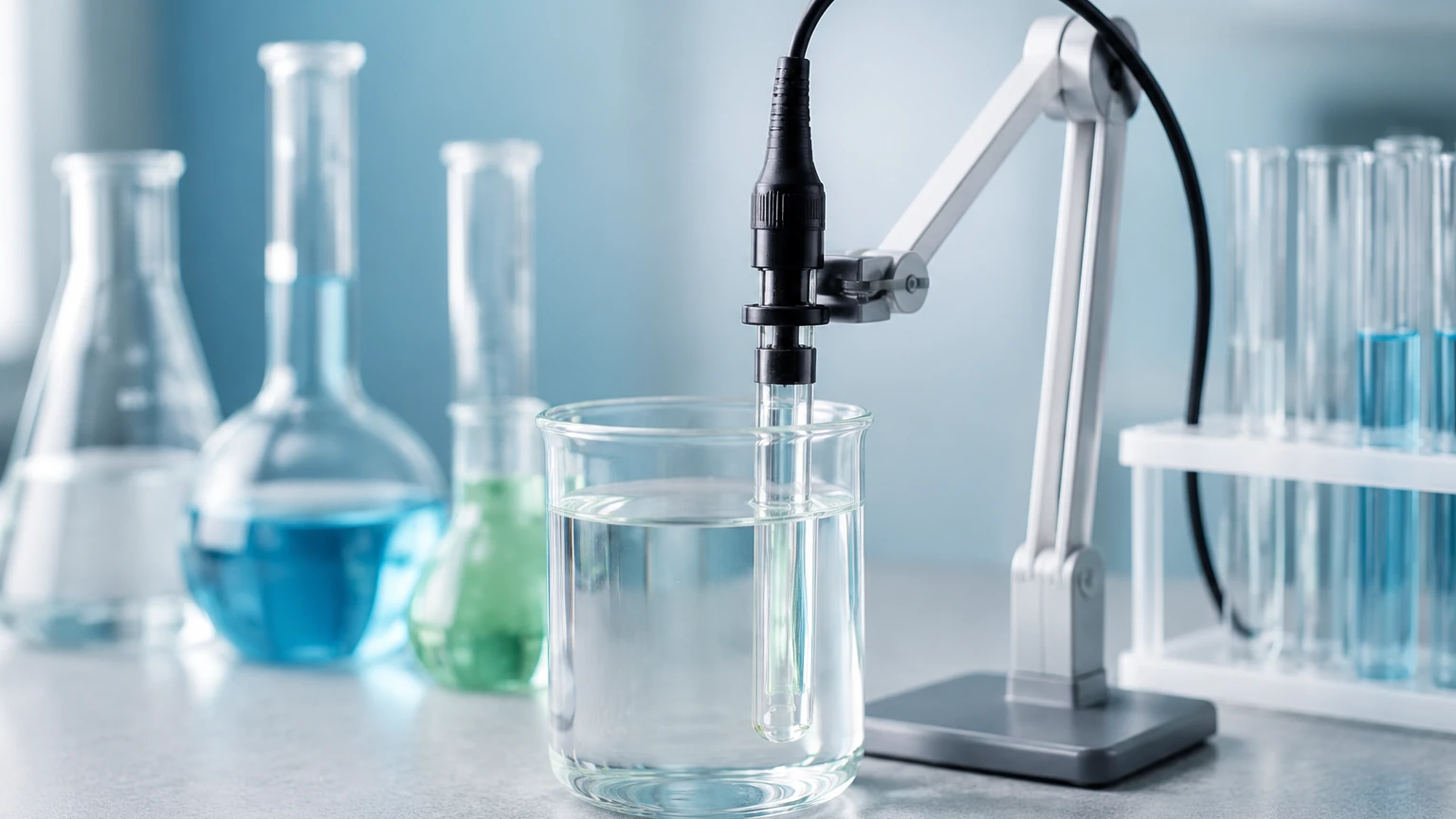
Calibration should always be performed using at least two buffer solutions (usually pH 7.0 and either pH 4.0 or 10.0) that bracket the expected process range.
1. Buffer Freshness: Never reuse buffer solutions. Contamination from the previous sensor can shift the pH value.
2. Temperature Equilibrium: Ensure the sensor and the buffer are at the same temperature before starting the calibration.
3. Slope and Offset: A new sensor should have a slope between 95% and 102% and an offset within ±30 mV. If the slope falls below 85%, the sensor should be replaced.
Limitations and Practical Constraints
Despite their advantages, digital pH sensors have inherent limitations:
* Dehydration: If the sensing tip dries out, the glass membrane may be permanently damaged. Sensors should always be stored in a storage solution (usually 3M KCl).
* Chemical Poisoning: Certain chemicals, such as sulfides or heavy metals, can react with the reference silver/silver-chloride system, causing permanent drift.
* Glass Fragility: While industrial housings are rugged, the sensing bulb is still glass. It can be broken by large solids in the process stream or by improper handling during cleaning.
Frequently Asked Questions
Q: How long does a digital ph sensor typically last?
A: In clean water applications, a sensor may last 1 to 2 years. In harsh chemical environments or high-temperature processes, the lifespan may be reduced to 3 to 6 months.
Q: Can I use a digital ph sensor with my existing analog transmitter?
A: No. Digital sensors require a compatible digital controller or a direct connection to a PLC/PC that supports the sensor's communication protocol.
Q: Does the digital signal eliminate the need for shielded cable?
A: While digital signals are much more resistant to noise, shielded twisted-pair cable is still recommended for RS485 communication to ensure data integrity over long distances and in high-EMI environments.
Q: How often should I calibrate the sensor?
A: The frequency depends on the required accuracy and the stability of the process. Some applications require weekly calibration, while others may only need it once a month. The diagnostic data from the digital sensor can help determine the optimal interval.
Q: What is the maximum pressure a digital ph sensor can withstand?
A: Most standard industrial sensors are rated for up to 0.6 MPa (6 bar). Specialized high-pressure versions can handle up to 1.0 MPa (10 bar) or more, depending on the housing and reference system design.
By selecting the appropriate digital ph sensor and following rigorous installation and maintenance protocols, industrial operators can achieve high-precision liquid analysis that integrates seamlessly with broader automation and level measurement strategies.