Nir Process Sensor
Nir Process Sensor
In the landscape of modern industrial automation, the ability to monitor process variables in real-time is the cornerstone of efficiency and quality control. While physical parameters such as pressure, temperature, and level are fundamental, the chemical composition of a substance often dictates the success of a production batch. The NIR process sensor (Near-Infrared process sensor) has emerged as a critical tool for non-destructive, real-time molecular analysis. By integrating these sensors into process lines alongside traditional instrumentation like those found on the Main Page of industrial measurement catalogs, operators can achieve a holistic view of their production environment.
This article examines the technical principles of NIR spectroscopy, its practical applications in process industries, and the engineering considerations required for successful integration into automated systems.
Measurement Principles of NIR Spectroscopy
Near-Infrared spectroscopy operates in the electromagnetic spectrum between the visible light and mid-infrared regions, typically ranging from 780 nm to 2500 nm. The fundamental principle of an NIR process sensor relies on the interaction between infrared light and the molecular bonds within a sample.
Molecular Vibrations and Overtones
When NIR light hits a substance, specific wavelengths are absorbed by molecules containing hydrogen atoms bonded to carbon (C-H), oxygen (O-H), or nitrogen (N-H). These absorptions are not the fundamental vibrations seen in mid-infrared spectroscopy but are rather "overtones" and "combination bands."
Because these overtones are weaker than fundamental vibrations, NIR light can penetrate deeper into a sample (from a few millimeters to several centimeters). This characteristic makes the NIR process sensor uniquely suited for analyzing bulk materials, slurries, and liquids without the need for extensive sample preparation.
Detection Modes
Depending on the physical state of the material being measured, an NIR process sensor utilizes different optical configurations:
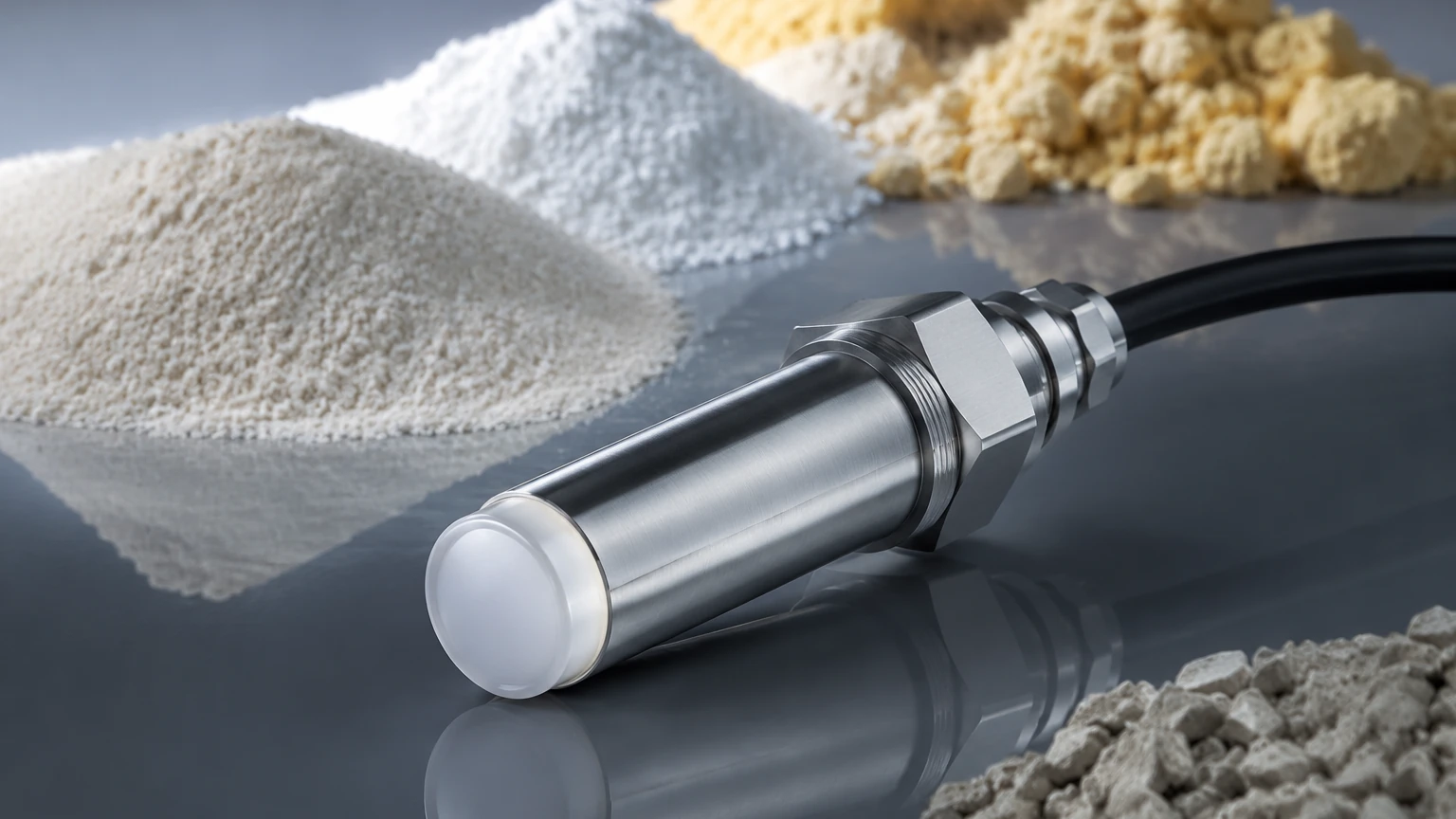
* Diffuse Reflectance: Used for solids, powders, and granules. The sensor measures the light that bounces off the surface and internal structures of the particles.
* Transmittance: Used for clear liquids and gases. The light passes through a defined pathlength of the sample to a detector on the opposite side.
* Transflectance: Often used for opaque liquids or emulsions. Light passes through the sample, reflects off a mirror (reflector), and passes through the sample again to the detector.
The Role of NIR Sensors in Process Control
In a typical industrial setup, such as a chemical reactor or a food processing vat, an NIR process sensor works in tandem with other instruments. While a radar or ultrasonic transmitter—technologies detailed on the Main Page of professional instrumentation providers—monitors the volume and level of the material, the NIR sensor monitors the quality.
Moisture Analysis
One of the most common applications for an NIR process sensor is the measurement of moisture content. In industries ranging from pharmaceuticals to pulp and paper, maintaining specific moisture levels is critical for product stability and weight accuracy. NIR sensors can detect water molecules (O-H bonds) with high precision, allowing for automated dryer control.
Chemical Concentration and Reaction Monitoring
In chemical manufacturing, NIR sensors monitor the disappearance of reactants or the appearance of products in real-time. This allows for "end-point detection," where a reaction is stopped exactly when the desired concentration is reached, rather than relying on a fixed timer. This reduces waste and improves batch-to-batch consistency.
Food and Beverage Standardization
NIR technology is widely used to measure fat, protein, and sugar content in dairy, meat, and grain processing. By installing an NIR process sensor directly into a pipe or over a conveyor belt, producers can ensure that every liter of milk or kilogram of flour meets strict nutritional specifications.
Technical Selection Criteria for NIR Process Sensors
Selecting the correct NIR process sensor requires an understanding of both the optical requirements and the physical environment of the installation. Engineers should evaluate the following criteria before procurement.
| Feature | Consideration | Impact on Performance |
| :— | :— | :— |
| Wavelength Range | 780–2500 nm | Determines which chemical bonds can be detected (e.g., moisture vs. complex hydrocarbons). |
| Spectrometer Type | Diode Array vs. FT-NIR | Diode arrays are faster and vibration-resistant; FT-NIR offers higher resolution for complex mixtures. |
| Optical Interface | Probe vs. Non-contact | Probes are better for liquids; non-contact (over-belt) is better for solids and corrosive materials. |
| Pathlength | 1 mm to 20 mm | Must be optimized based on the absorbance of the liquid to prevent signal saturation. |
| Environmental Rating | IP67 / ATEX | Necessary for wash-down environments or hazardous chemical zones. |
Integration and Installation Considerations
Successful deployment of an NIR process sensor involves more than just mounting the hardware. Because NIR spectroscopy is an indirect measurement method, it requires a robust calibration model.
Chemometrics and Calibration
Unlike a hydrostatic level transmitter that can be calibrated with simple pressure points, an NIR sensor requires a chemometric model. This involves collecting sample spectra and comparing them to primary laboratory reference data (e.g., Karl Fischer titration for moisture). Mathematical algorithms, such as Partial Least Squares (PLS), are then used to create a correlation between the spectral data and the chemical concentration.
Mounting and Sampling
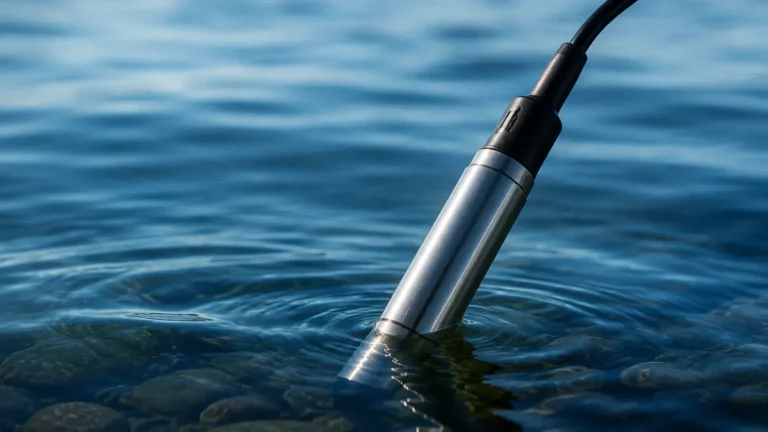
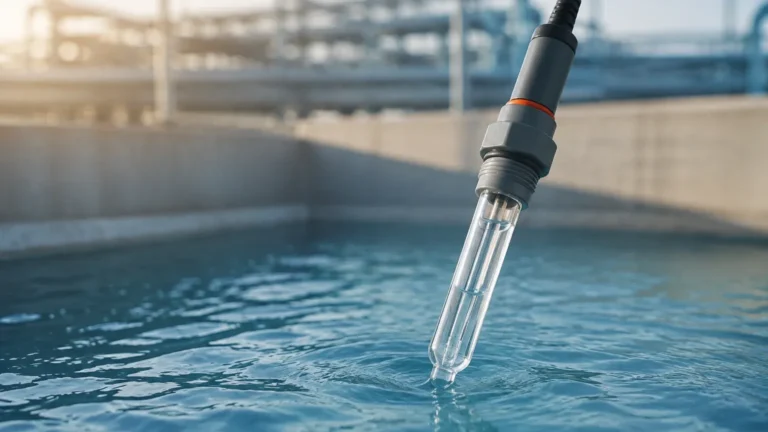
For liquid applications, the sensor probe is typically inserted into a bypass loop or directly into the main process line via a flange. It is essential to ensure that the probe tip is always submerged and that the flow is sufficient to prevent the buildup of coatings on the optical window. In solid applications, the distance between the sensor head and the material on a conveyor must be kept constant, as variations in distance can introduce noise into the reflectance signal.
Temperature Compensation
NIR spectra are sensitive to temperature changes, which can cause shifts in the absorption bands. High-quality NIR process sensors include internal temperature compensation or allow for the integration of an external RTD (Resistance Temperature Detector) signal to adjust the chemometric model in real-time.
Limitations and Risks
While highly versatile, the NIR process sensor is not a universal solution for every measurement challenge. Engineers must be aware of the following limitations:
1. Matrix Effects: Changes in the physical structure of the sample (e.g., particle size changes in a powder) can affect light scattering, potentially skewing the chemical readings.
2. Optical Fouling: If the material being measured is prone to scaling or coating, the optical window of the sensor will become obscured. Automated cleaning systems (such as air knives or water jets) may be required.
3. Complex Calibration: The initial setup of an NIR sensor can be time-consuming, requiring dozens or even hundreds of laboratory-validated samples to build a reliable model.
4. Sensitivity to Light: Ambient light interference can affect non-contact sensors. Proper shielding is necessary for over-conveyor installations.
Maintenance and Long-term Reliability
To maintain the accuracy of an NIR process sensor, a routine maintenance schedule is required. This typically includes:
* Reference Standardization: Periodically running a "white reference" or "dark current" check to account for lamp aging and detector drift.
* Model Validation: Occasionally comparing the sensor’s real-time output against laboratory samples to ensure the chemometric model has not "drifted" due to changes in raw material sources.
* Lamp Replacement: Most NIR sensors use tungsten-halogen lamps, which have a finite lifespan (typically 5,000 to 20,000 hours). Modern sensors often include dual-lamp systems for redundancy.
Comparison: NIR vs. Alternative Sensing Technologies
In many process environments, NIR competes with or complements other sensing technologies. For example, while an NIR sensor can measure the concentration of a chemical in a tank, a radar level meter (available through the Main Page of industrial suppliers) is still required to manage inventory and prevent overfills.
| Technology | Primary Measurement | Strength | Weakness |
| :— | :— | :— | :— |
| NIR Process Sensor | Chemical Composition | Real-time, non-destructive | Requires complex calibration |
| Refractometry | Refractive Index (Brix) | Simple, robust | Non-specific (measures total solids) |
| Coriolis Flowmeter | Mass Flow / Density | Highly accurate for density | No chemical specificity |
| Gas Chromatography | Detailed Composition | Extremely precise | Slow, requires sampling systems |
Frequently Asked Questions (FAQ)
Q: Can an NIR process sensor measure level?
A: Generally, no. NIR sensors are designed for composition analysis. For reliable level measurement, technologies such as radar, ultrasonic, or hydrostatic transmitters are the industry standard. You can find detailed specifications for these on the Main Page of specialized instrument manufacturers.
Q: How often does an NIR sensor need to be recalibrated?
A: The hardware itself is very stable. However, the *model* should be validated whenever there is a significant change in the process, such as a new raw material supplier or a change in the production formula.
Q: Is NIR suitable for hazardous environments?
A: Yes, many NIR process sensors are available with ATEX or IECEx certifications. Additionally, fiber-optic coupled sensors allow the sensitive electronics to be located in a safe zone while only the passive optical probe is placed in the hazardous area.
Q: What is the typical accuracy of an NIR moisture sensor?
A: In most industrial applications, NIR sensors can achieve an accuracy of ±0.1% to ±0.5% moisture, depending on the material and the quality of the initial calibration.
Conclusion
The NIR process sensor represents a significant leap forward in process analytical technology (PAT). By providing instantaneous data on chemical composition, these sensors enable tighter process control, reduced energy consumption, and superior product quality. When integrated into a comprehensive instrumentation strategy—alongside reliable level, pressure, and flow sensors—NIR technology allows manufacturers to move from reactive sampling to proactive, real-time optimization. For those looking to build a complete measurement suite, exploring the foundational level measurement options on the Main Page is the first step toward a fully automated and transparent production process.