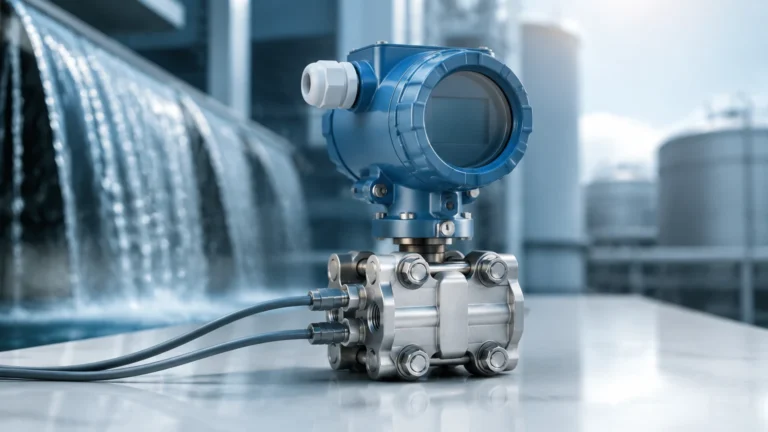
Heat Monitoring System
Heat Monitoring System
In industrial process control, the integration of a heat monitoring system with level measurement instrumentation is not merely a supplementary feature but a technical necessity for accuracy and safety. Temperature fluctuations directly impact the physical properties of stored media, such as density and dielectric constants, and can alter the propagation speed of measurement signals. For engineers managing water treatment, chemical processing, or oil and gas storage, understanding how thermal dynamics interact with level sensors is critical for maintaining operational integrity.
A comprehensive heat monitoring system provides the real-time data required to compensate for these physical shifts. Whether utilizing non-contact radar or contact-based hydrostatic transmitters, temperature data ensures that the converted level reading reflects the true volume within a vessel. This article explores the principles of thermal compensation in level measurement, selection criteria for high-temperature environments, and practical installation strategies for industrial applications.
Measurement Principles and Thermal Compensation
To select the appropriate instrumentation, one must first understand how different measurement technologies interact with heat. Temperature does not just affect the medium; it affects the environment through which the measurement signal travels.
Ultrasonic Level Measurement
Ultrasonic sensors operate by emitting high-frequency sound waves that reflect off the liquid surface. The time-of-flight is used to calculate distance. However, the speed of sound in air is highly dependent on temperature. At 0°C, sound travels at approximately 331.5 m/s, increasing by about 0.6 m/s for every degree Celsius rise. Without an integrated heat monitoring system or a built-in temperature sensor to provide compensation, a 10°C shift can result in a measurement error of nearly 2%. Professional-grade ultrasonic transmitters typically include an internal thermistor to adjust the calculation automatically.
Radar (Microwave) Level Measurement
Radar level meters, particularly high-frequency FMCW (Frequency Modulated Continuous Wave) units, are significantly more resilient to temperature changes than ultrasonic sensors. Microwaves travel at the speed of light, which is virtually unaffected by air temperature, pressure, or vapor composition. However, the electronics within the radar head still require protection from extreme heat conducted through the tank nozzle. In these scenarios, the "monitoring" aspect focuses on the internal temperature of the sensor to prevent component failure.
Hydrostatic Pressure Measurement
Hydrostatic level transmitters calculate level based on the formula: $P = \rho × g × h$ (where $P$ is pressure, $\rho$ is density, $g$ is gravity, and $h$ is height). Liquid density ($\rho$) is temperature-dependent. As a liquid heats up, it expands and its density decreases. A pressure sensor measuring a hot liquid will report a lower pressure than the same volume of cold liquid, leading to an underestimation of the actual level. A heat monitoring system allows the control logic to apply a density correction factor based on the current temperature of the medium.
Key Components of an Industrial Heat Monitoring System
In the context of level measurement, a heat monitoring system usually consists of three primary layers: the primary sensing element, the signal transmitter, and the processing unit.
1. Sensing Elements: These include RTDs (Resistance Temperature Detectors), typically Pt100 or Pt1000, and thermocouples. In level measurement, these are often integrated into the probe of a magnetic level gauge or the housing of a submersible hydrostatic sensor.
2. Transmitters: The transmitter converts the raw resistance or voltage from the sensor into a standardized industrial signal, such as 4-20mA HART, Modbus RS485, or Profibus. This allows the temperature data to be transmitted alongside level data over the same cable.
3. Data Integration (PLC/DCS): The "brain" of the system where the Main Page of the control interface displays both level and temperature. Here, algorithms use the heat data to calculate compensated volume, mass, and thermal expansion rates.
Selection Criteria for High-Temperature Level Applications
When specifying equipment for environments where heat monitoring is critical, engineers should use the following table to evaluate technology suitability based on process temperature ranges.
| Technology | Temperature Range (Standard) | Temperature Range (High-Temp Version) | Sensitivity to Heat | Compensation Required? |
| :— | :— | :— | :— | :— |
| Ultrasonic | -40°C to 80°C | N/A | High | Yes (Automatic) |
| Radar | -40°C to 150°C | Up to 450°C+ | Low | No (for signal speed) |
| Hydrostatic | -20°C to 85°C | Up to 200°C (with capillary) | Moderate | Yes (for density) |
| Magnetic Gauge | -50°C to 200°C | Up to 400°C | Low | No (Mechanical) |
Media Considerations
* Corrosive Liquids: High temperatures often accelerate chemical corrosion. Ensure that both the level probe and the temperature thermowell are constructed from compatible materials like 316L Stainless Steel, PTFE, or Hastelloy.
* Steam and Vapor: In high-heat water applications, steam can attenuate ultrasonic signals. Radar is the preferred choice here, as it penetrates steam layers without signal loss.

Installation Considerations for Thermal Stability
The physical installation of a heat monitoring system and its associated level meters determines the longevity of the hardware. Excessive heat is the leading cause of premature electronic failure in industrial sensors.
Use of Standoffs and Heat Sinks
For radar and ultrasonic transmitters mounted on tanks containing hot liquids (above 80°C), a neck extension or standoff pipe should be used. This moves the electronic housing further away from the heat source, allowing ambient air to cool the neck. Some high-temperature radar units include integrated cooling fins (heat sinks) to dissipate thermal energy conducted through the process connection.
Remote Electronics
In cases of extreme ambient heat or high-vibration environments, sensors with remote electronics are recommended. The sensing element (e.g., the radar antenna or pressure diaphragm) remains on the tank, while the transmitter and display are mounted several meters away in a cooler, accessible location. This is a standard practice in molten metal processing and high-pressure steam power plants.
Insulation and Trace Heating
While we often focus on cooling, some heat monitoring systems are designed to ensure the medium stays *warm enough* to remain liquid. For viscous fluids like bitumen or heavy fuel oil, level meters (especially magnetic gauges) are often equipped with steam jackets or electric trace heating. The monitoring system ensures the temperature stays within a specific window to prevent the medium from solidifying and jamming the float or sensor.
Operational Risks and Limitations
Despite advancements in technology, heat monitoring systems face specific industrial challenges:
* Thermal Stratification: In large storage tanks, the temperature at the bottom may differ significantly from the temperature at the top. A single point temperature measurement may lead to incorrect density compensation. In these cases, multi-point temperature probes are required to calculate an average temperature profile.
* Thermal Shock: Rapid changes in temperature (e.g., cleaning a cold tank with hot pressurized steam, known as CIP processes) can cause mechanical stress on ceramic diaphragms or glass seals. Sensors must be rated for the rate of temperature change, not just the absolute maximum temperature.
* Sensor Drift: Prolonged exposure to high temperatures can cause the calibration of RTDs and pressure transducers to drift over time. Regular verification against a reference standard is necessary to maintain system accuracy.
Frequently Asked Questions (FAQ)
Q: Can I use an ultrasonic sensor for boiling liquids?
A: Generally, no. Boiling creates heavy steam and surface turbulence, both of which interfere with ultrasonic waves. Furthermore, the rapid temperature fluctuations near the surface make accurate sound-speed compensation nearly impossible. Radar is a much more reliable alternative for boiling processes.
Q: How does a heat monitoring system improve safety in chemical tanks?
A: Many chemical reactions are exothermic. A heat monitoring system integrated with level measurement can detect an unexpected rise in temperature accompanying a rise in level (due to gas evolution or expansion), triggering an emergency shutdown or cooling sequence before a runaway reaction occurs.
Q: What is the difference between a thermowell and a direct-immersion sensor?
A: A thermowell is a pressure-tight socket that protects the temperature sensor from the process media. It allows the sensor to be replaced without draining the tank. Direct-immersion sensors provide faster response times but are exposed to the fluid's corrosive and abrasive effects.
Q: Is density compensation necessary for water level measurement?
A: For standard water storage at ambient temperatures, the error is negligible. However, in boiler feed-water applications where water temperatures may reach 100°C or higher under pressure, the density of water drops from 1000 kg/m³ to approximately 958 kg/m³. This 4% difference is significant enough to require compensation in industrial billing and process control.
By carefully integrating heat monitoring with robust level measurement technologies, industrial operators can achieve higher precision, reduce waste, and ensure a safer working environment. For more information on selecting the right instrumentation for your specific thermal and level requirements, Review product options and application support to find the optimal solution for your facility.