Mess Flow
Mess Flow
In the landscape of industrial process control, the term "mess flow"—frequently used interchangeably with mass flow in various global markets—represents one of the most critical parameters for ensuring product quality, safety, and economic efficiency. Unlike volumetric flow measurement, which tracks the space a fluid occupies, mass flow measurement quantifies the actual amount of matter passing through a system. This distinction is vital because fluids, particularly gases and high-pressure liquids, change density with fluctuations in temperature and pressure.
For engineers and procurement specialists, understanding the nuances of mess flow is essential when selecting instrumentation for water treatment, chemical processing, and oil and gas applications. This guide explores the fundamental principles of mass measurement, the technologies used to capture these data points, and how level measurement instruments from manufacturers like Welk integrate into a comprehensive flow management strategy.
Core Principles of Mess Flow Measurement
Before selecting a device, it is important to understand the physics behind how mass is calculated. Industrial instruments typically use one of three primary methods to determine the mess flow of a medium.
1. Coriolis Principle
Coriolis meters are considered the gold standard for direct mass measurement. The device consists of one or more vibrating tubes. When a fluid flows through these tubes, the inertia of the mass causes the tubes to twist or shift in phase. This displacement is directly proportional to the mass flow rate. Because it measures mass directly, it is unaffected by changes in viscosity, density, or temperature, making it ideal for the "messy" or complex fluids often found in chemical plants.
2. Thermal Dispersion Principle
Primarily used for gases, thermal mass flow meters operate on the principle of heat transfer. The sensor consists of two pins: one is heated, and the other measures the ambient temperature of the fluid. As the gas flows past the heated sensor, it carries away heat. The amount of energy required to maintain a specific temperature difference between the two pins is proportional to the mass flow rate. This method is highly effective for low-pressure gas monitoring and leak detection.
3. Differential Pressure (DP) with Compensation
DP flow meters measure the pressure drop across an obstruction (like an orifice plate or Venturi tube). While DP meters inherently measure volumetric flow, they can calculate mess flow if integrated with pressure and temperature sensors. By applying the ideal gas law or real gas compressibility factors, the system compensates for density changes to provide a mass-based output.
The Role of Level Instrumentation in Mass Calculation
While flow meters track moving fluids, level measurement instruments play a parallel role in mass balance, particularly in stationary or batch processes. In many industrial scenarios, the most accurate way to determine the mass of a substance is through hydrostatic or non-contact level measurement within a storage vessel.
Hydrostatic Mass Measurement
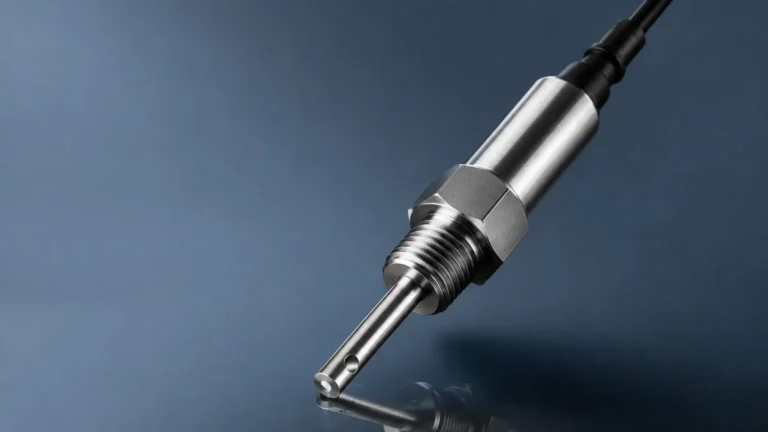
Hydrostatic level transmitters, such as those provided by Welk, measure the pressure exerted by a liquid column. The formula $P = \rho gh$ (where $P$ is pressure, $\rho$ is density, $g$ is gravity, and $h$ is height) allows for the calculation of mass. If the tank's cross-sectional area is known, the total mass of the liquid can be determined by the pressure at the bottom of the tank, regardless of the liquid's volume changes due to temperature. This is a common method for inventory control in the oil and gas sector.
Radar and Ultrasonic Integration
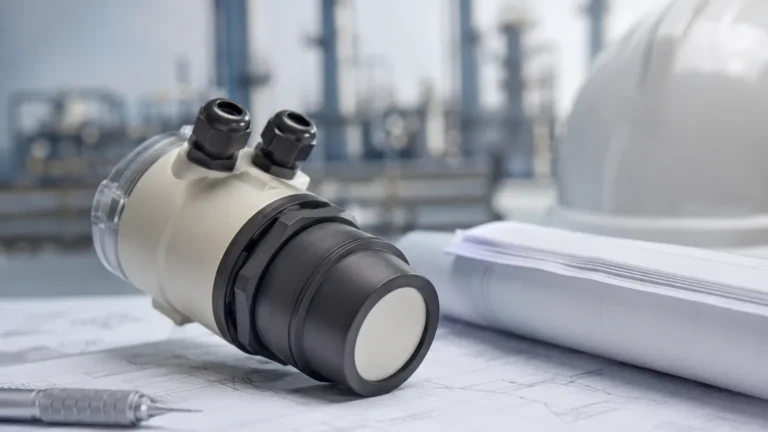
In applications involving "messy" flows—such as slurries or foaming liquids—non-contact radar level meters are preferred. These devices use microwave pulses to measure the distance to the product surface. When combined with a known density value in the control system (PLC/DCS), the radar's level data is converted into mass. This is particularly useful in reactors where the mess flow of raw materials must be strictly accounted for to ensure chemical reaction stoichiometry.
For a detailed look at how these technologies are applied in various industries, you can visit the Main Page of our technical resource center.
Technical Challenges with Complex (Messy) Fluids
In practical engineering, "mess flow" often refers to the difficulty of measuring fluids that do not behave predictably. These "messy" applications include:
* Multi-phase Flows: Mixtures of liquids, gases, and solids (e.g., aerated oil or sand-bearing water). Standard meters often fail here because the density is inconsistent.
* High Viscosity: Thick fluids like resins or heavy crude oil create significant drag and can clog traditional mechanical flow meters.
* Non-Newtonian Fluids: Fluids whose viscosity changes under stress (like sludge or polymers) require specialized Coriolis or electromagnetic meters that can handle shear-sensitive materials.
* Entrained Air: Small bubbles in a liquid line can cause ultrasonic meters to lose signal or Coriolis meters to "stall." Advanced digital signal processing is required to filter out this noise and maintain an accurate mess flow reading.
Selection Matrix for Industrial Flow and Level Systems
Choosing the right instrument requires balancing accuracy requirements against the physical properties of the medium. The following table provides a general guideline for technology selection based on common industrial criteria.
| Technology | Fluid Type | Accuracy (Mass) | Maintenance Needs | Typical Application |
| :— | :— | :— | :— | :— |
| Coriolis Meter | Liquids/Gases | Very High (0.1%) | Low | Chemical dosing, Custody transfer |
| Thermal Mass | Gases | Medium (1.0%) | Low | Compressed air, Nitrogen blanketing |
| Hydrostatic Transmitter | Liquids | High (0.25%) | Moderate | Tank inventory, Water towers |
| Radar (Non-contact) | Liquids/Solids | High (2-3mm) | Very Low | Corrosive chemicals, Slurries |
| Ultrasonic (Level) | Clean Liquids | Medium (0.5%) | Low | Open channel flow, Water tanks |
Installation and Maintenance Best Practices
To ensure the longevity and accuracy of mess flow instrumentation, several installation factors must be considered. Failure to adhere to these guidelines often results in erratic readings or premature sensor failure.
Piping Requirements
For flow-based mass measurement, straight pipe runs are essential. Most DP and thermal meters require at least 10 to 20 diameters of straight pipe upstream and 5 diameters downstream to eliminate turbulence. Coriolis meters are generally more forgiving but still require proper support to prevent pipe vibrations from interfering with the sensor's internal frequency.
Orientation and Mounting
* Liquid Service: Sensors should be mounted in a low point of the piping or in a vertical upward-flow position to ensure the pipe is always full. Air pockets in a liquid line will cause significant errors in mess flow calculation.
* Gas Service: Sensors should be mounted at a high point to prevent moisture or condensate from pooling on the sensor head.
* Level Sensors: Radar and ultrasonic units must be mounted perpendicular to the liquid surface and away from tank walls or internal obstructions (like agitators) to avoid false echoes.
Environmental Protection
In outdoor or hazardous areas, instruments must be rated for the specific environment (e.g., IP67/IP68 for water ingress or ATEX/IECEx for explosive atmospheres). Welk instruments are designed with robust housings to withstand the rigors of industrial automation, but shielding from direct sunlight and extreme temperature swings is always recommended to reduce thermal drift in electronics.
Frequently Asked Questions (FAQ)
Q: Can I use a volumetric flow meter to measure mess flow?
A: Yes, but you must also measure the fluid's temperature and pressure in real-time. By using a flow computer, you can calculate the density and convert the volume to mass. However, for high-precision applications, a direct mass meter (like Coriolis) is usually more reliable.
Q: What is the difference between mass flow and mass flow rate?
A: Mass flow rate is the amount of mass passing a point per unit of time (e.g., kg/h or g/s). Total mass flow (or mass totalization) is the cumulative amount of mass that has passed through the system over a specific period.
Q: Why is hydrostatic pressure used for mass measurement in tanks?
A: Hydrostatic pressure is directly related to the weight of the liquid above the sensor. Since weight is mass times gravity, the pressure reading at the bottom of a tank provides a direct indication of the total mass of the liquid, regardless of whether the liquid expands or contracts due to temperature changes.
Q: How do I handle mess flow in pipes with high solid content?
A: For slurries and fluids with high solids, non-intrusive methods are best. Electromagnetic flow meters (if the fluid is conductive) or specialized Coriolis meters with large-bore tubes are recommended to prevent clogging and erosion.
Conclusion
Accurate mess flow measurement is the backbone of modern industrial automation. Whether you are managing the precise injection of chemicals or monitoring the totalized inventory of a water treatment facility, selecting the right technology is paramount. By understanding the principles of mass measurement and the specific challenges of your process environment, you can implement a solution that maximizes both accuracy and reliability. For further technical specifications and product selection support, please refer to the resources available on our Main Page.