Co2 Cannabis Extraction Machine
Co2 Cannabis Extraction Machine
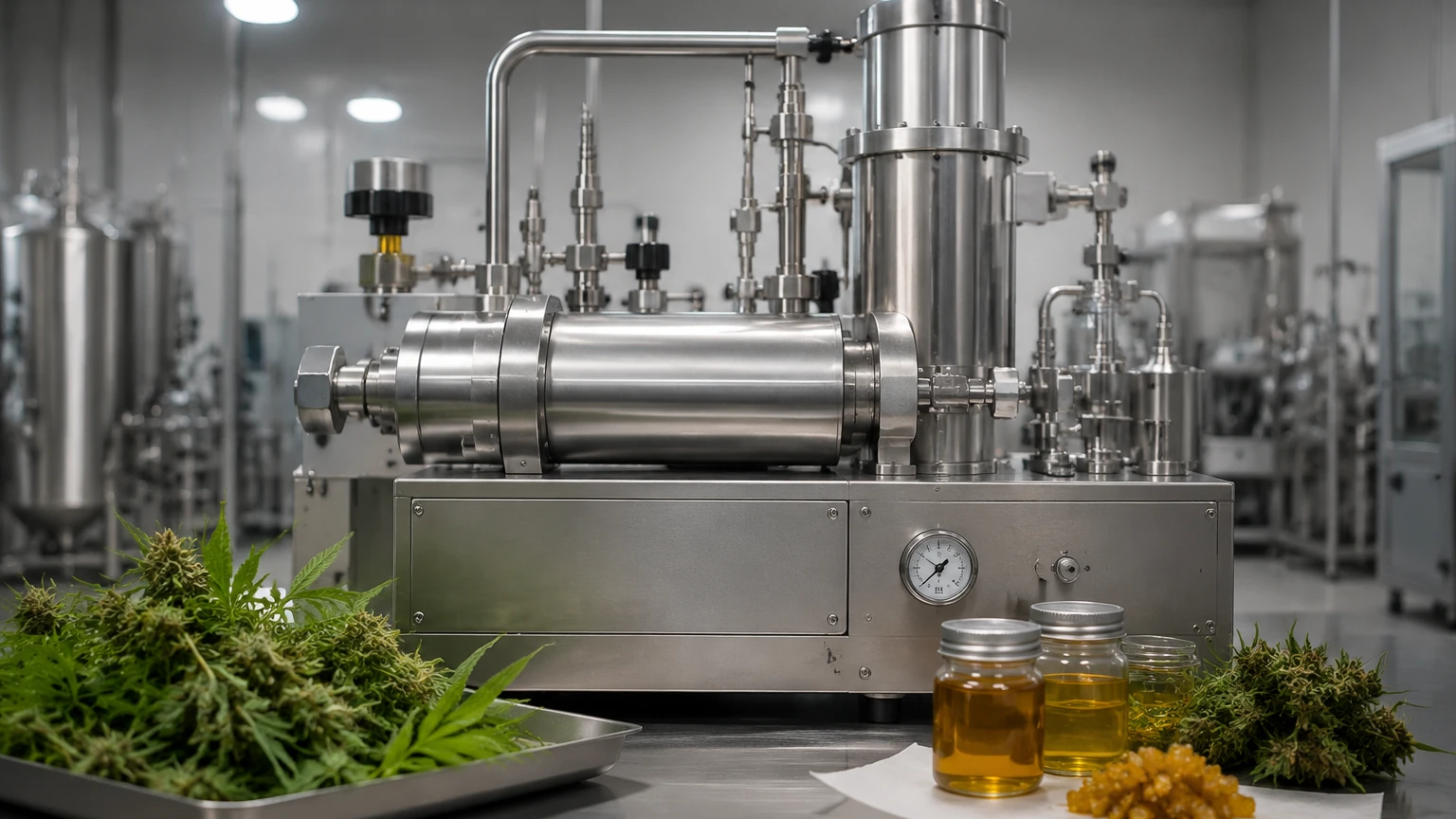
In the rapidly evolving botanical processing industry, the CO2 cannabis extraction machine has become the gold standard for producing high-purity oils, resins, and isolates. Unlike solvent-based methods that utilize butane or ethanol, CO2 extraction offers a tunable, non-toxic, and non-flammable alternative. However, the efficiency and safety of these systems depend heavily on precise process control, particularly the accurate measurement of fluid levels within high-pressure vessels. For engineers and facility managers, understanding the interplay between supercritical fluid dynamics and instrumentation is essential for optimizing yield and ensuring operational safety.
Measurement Principles in CO2 Extraction Systems
To effectively monitor a co2 cannabis extraction machine, one must first understand the physical states of Carbon Dioxide during the process. CO2 extraction typically operates in two modes: subcritical and supercritical.
Subcritical vs. Supercritical Phases
In subcritical extraction, CO2 is maintained in a liquid state at lower temperatures and pressures (typically below 31.1°C and 73.8 bar). In supercritical extraction, the CO2 is heated and pressurized beyond its critical point, where it adopts the properties of both a gas and a liquid. This "supercritical fluid" has the gas-like ability to penetrate deep into plant material and the liquid-like ability to dissolve lipophilic compounds.
The Challenge of Level Measurement
Measuring the level of CO2 in storage tanks and separator vessels is complicated by high operating pressures and the changing density of the fluid. Traditional float-based systems often struggle with the rapid pressure shifts, while ultrasonic sensors may face signal attenuation in the dense, pressurized gas phase. Consequently, industrial-grade level measurement solutions must be selected based on their ability to withstand high pressures and provide accurate readings regardless of the fluid's dielectric constant or vapor space density.
Core Components of a CO2 Cannabis Extraction Machine
A professional-grade extraction system consists of several interconnected pressure vessels, each requiring specific monitoring:
1. CO2 Storage Cylinder: Holds the bulk liquid CO2 before it enters the pump system.
2. High-Pressure Pump: Compresses the CO2 to the required extraction pressure.
3. Extraction Vessel: Where the biomass is loaded and the CO2 solvent interacts with the plant material.
4. Separators (Collection Vessels): Where pressure is reduced, causing the CO2 to turn back into a gas and drop the extracted oils into the bottom of the tank.
5. Recycling System: Condenses the gaseous CO2 back into a liquid for reuse.
Precise level control in the separators is particularly vital. If the oil level rises too high, it can be carried over into the recycling lines, fouling the compressors and causing expensive downtime. To explore various instrumentation options for these components, engineers can Review product options and application support to find the most compatible hardware.
Level Measurement Technologies for Extraction Systems
When specifying instrumentation for a co2 cannabis extraction machine, several technologies from the Welk portfolio are commonly utilized. Each has specific advantages depending on the vessel's role in the process.
1. Radar Level Meters (80GHz High-Frequency)
Non-contact radar is often the preferred choice for supercritical CO2 applications. High-frequency 80GHz radar provides a narrow beam angle, which is essential for avoiding internal vessel obstructions like agitators or baffles.
* Principle: The sensor emits a microwave signal that reflects off the surface of the liquid or supercritical fluid. The time-of-flight is used to calculate the distance.
* Advantage: It is unaffected by pressure, temperature, or the density of the gas phase.
2. Magnetic Level Gauges
For storage tanks and separators where visual confirmation is required alongside an electronic signal, magnetic level gauges are a robust solution.
* Principle: A float containing a permanent magnet moves with the liquid level inside a bypass chamber. This magnet flips external flags or rollers and can be paired with a reed-chain transmitter for a 4-20mA output.
* Advantage: Provides a clear visual indicator that does not require power, serving as a critical safety backup.
3. Hydrostatic Level Transmitters
Hydrostatic sensors measure the pressure exerted by the column of liquid. In a pressurized co2 cannabis extraction machine, a differential pressure (DP) approach is required.
* Principle: One sensor measures the pressure at the bottom of the tank, while another measures the gas pressure at the top. The difference between the two indicates the liquid level.
* Advantage: Highly reliable for liquid CO2 storage at constant temperatures.
4. Level Switches (Vibrating Fork)
Used primarily for overfill protection or run-dry prevention in pumps.
* Principle: A tuning fork vibrates at its natural frequency. When immersed in liquid, the frequency shifts, triggering a relay.
* Advantage: Extremely reliable for point-level detection in turbulent separators.
Selection Table for Level Instruments
| Vessel Type | Recommended Technology | Primary Benefit | Pressure Rating Required |
| :— | :— | :— | :— |
| CO2 Bulk Storage | Magnetic Level Gauge | Visual & Remote Monitoring | 60 – 100 bar |
| Extraction Vessel | Guided Wave Radar | Accuracy in Supercritical Phase | Up to 700 bar |
| Primary Separator | 80GHz Non-contact Radar | Ignores foam and turbulence | 50 – 150 bar |
| Collection Flask | Capacitance or Vibrating Fork | Compact size, high sensitivity | 50 – 100 bar |
| Recycle Tank | Hydrostatic (DP) | Cost-effective for large volumes | 60 – 100 bar |
Installation Considerations for High-Pressure Systems
Installing level sensors in a co2 cannabis extraction machine requires strict adherence to high-pressure engineering standards.
Material Compatibility
All wetted parts must be compatible with both CO2 and the botanical oils being extracted. Stainless steel 316L is the industry standard due to its corrosion resistance and strength. Seals and O-rings must be carefully selected; many standard elastomers will suffer from "Explosive Decompression" (ED) when CO2 is rapidly vented. Specialized AED (Anti-Explosive Decompression) seals or PTFE-based materials are required.
Process Connections
Given that extraction pressures can exceed 5,000 psi (345 bar) in some high-performance systems, NPT threads are often replaced by flanged connections or high-pressure autoclave-style fittings to ensure a leak-proof seal. Proper torqueing and the use of pressure-rated bypass chambers for magnetic gauges are non-negotiable safety requirements.
Hazardous Location Ratings
While CO2 itself is not flammable, the extraction facility may handle flammable solvents like ethanol for post-processing (winterization). Therefore, level instruments should ideally carry ATEX or IECEx certifications for explosive atmospheres to ensure facility-wide safety compliance.
Limitations and Operational Challenges
Despite the advanced technology available, there are inherent limitations to consider:
* Dielectric Constant: Liquid CO2 has a relatively low dielectric constant (εr ≈ 1.6). This requires radar sensors with high sensitivity to ensure a strong return signal.
* Phase Transitions: Near the critical point, the boundary between liquid and gas becomes indistinct. In these specific conditions, radar is more reliable than float-based or hydrostatic systems which rely on a distinct density interface.
* Temperature Fluctuations: Rapid cooling (Joule-Thomson effect) during CO2 expansion can cause ice buildup on the exterior of vessels. Level sensors must be insulated or designed to operate in wide temperature ranges, typically from -40°C to +100°C (-40°F to 212°F).
Frequently Asked Questions (FAQ)
Q: Can I use an ultrasonic sensor for CO2 level measurement?
A: It is generally not recommended for high-pressure CO2. The high density of the gas phase can significantly alter the speed of sound, leading to large measurement errors. Additionally, the transducer face may not withstand the high pressures.
Q: How often should level sensors be calibrated in an extraction machine?
A: For commercial production, a bi-annual calibration check is recommended. However, if the system undergoes frequent pressure cycling, more regular zero-point checks for hydrostatic transmitters are advisable.
Q: Is it better to measure the level of the CO2 or the weight of the vessel?
A: While load cells (weighing) are common for bulk storage, they cannot distinguish between the oil and the CO2 in a separator. For process control within the machine, internal level measurement is superior for monitoring the accumulation of extract.
Q: Does the presence of terpenes affect the radar reading?
A: No. Radar measurement is based on the dielectric constant of the surface. While terpenes and oils have different dielectric properties than CO2, the radar will accurately detect the top surface of the liquid mixture.
Conclusion
Optimizing a co2 cannabis extraction machine requires more than just high-pressure pumps and vessels; it demands a sophisticated approach to instrumentation. By selecting the appropriate level measurement technology—whether it be high-frequency radar for supercritical phases or magnetic gauges for storage—operators can improve the consistency of their extracts and protect their equipment from damage. As the industry moves toward greater automation, the integration of reliable, industrial-grade sensors from manufacturers like Welk will remain a cornerstone of successful botanical processing operations.