Liquid Flow Meter Calibration Services
Liquid Flow Meter Calibration Services
In industrial process control, the accuracy of liquid flow measurement is a cornerstone of operational efficiency, safety, and regulatory compliance. Whether managing water treatment facilities, chemical processing plants, or oil and gas refineries, the data provided by flow meters dictates chemical dosing, custody transfer accuracy, and system pressure management. However, every measurement instrument is subject to drift, wear, and environmental influences over time. This necessitates professional liquid flow meter calibration services to ensure that the hardware performs within its specified tolerance levels.
For engineers and facility managers, understanding the mechanics of calibration—and how it relates to the broader field of level and flow instrumentation—is vital for maintaining a reliable infrastructure. This guide explores the technical principles, selection criteria, and practical considerations for sourcing and managing calibration services for liquid flow systems.
The Relationship Between Flow and Level Measurement
While flow and level measurement are often treated as distinct categories, they are fundamentally linked in many industrial applications. For instance, in open-channel flow measurement, an ultrasonic level sensor is used to measure the head height of a liquid passing through a flume or weir. The flow rate is then calculated based on the level reading.
Manufacturers like Welk provide advanced instrumentation, including radar level meters and hydrostatic level transmitters, which often work in tandem with flow systems to provide a comprehensive view of fluid dynamics within a plant. When seeking liquid flow meter calibration services, it is important to recognize that the accuracy of the entire loop—including the level sensors used for flow calculation—must be verified to ensure total system integrity.
Principles of Liquid Flow Measurement
Before selecting a calibration service, it is essential to understand the measurement principle of the device in question. Different technologies require different calibration approaches.
1. Electromagnetic Flow Meters
These operate on Faraday’s Law of Induction. As a conductive liquid flows through a magnetic field, it generates a voltage proportional to its velocity. Calibration for these units involves verifying the signal processing and ensuring the magnetic field strength remains consistent.
2. Ultrasonic Flow Meters
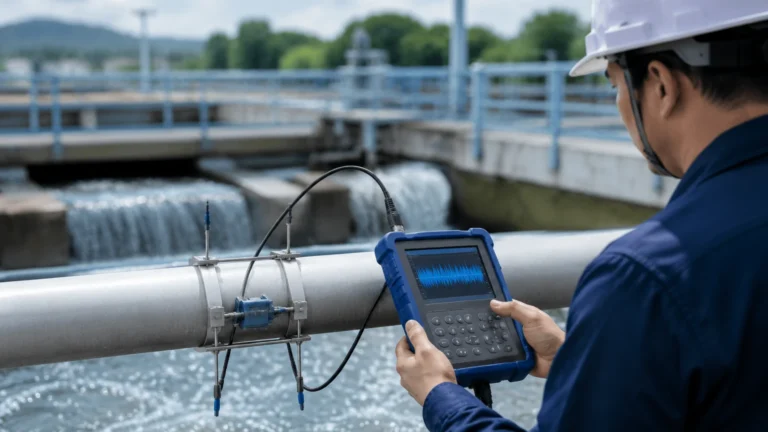
Utilizing either transit-time or Doppler shift principles, these meters measure the time difference between sound pulses traveling with and against the flow. Calibration ensures that the transducers are correctly aligned and that the internal timing circuits are accurate to the nanosecond.
3. Coriolis Flow Meters
These measure mass flow directly by detecting the inertia caused by fluid moving through oscillating tubes. Because they are highly sensitive and often used for high-value custody transfer, their calibration typically requires high-precision gravimetric stands.
4. Differential Pressure (DP) Meters
Using primary elements like orifice plates or Venturi tubes, these meters calculate flow based on the pressure drop across a restriction. Calibration involves both the physical inspection of the primary element and the electronic calibration of the pressure transmitter.
Why Professional Calibration is Necessary
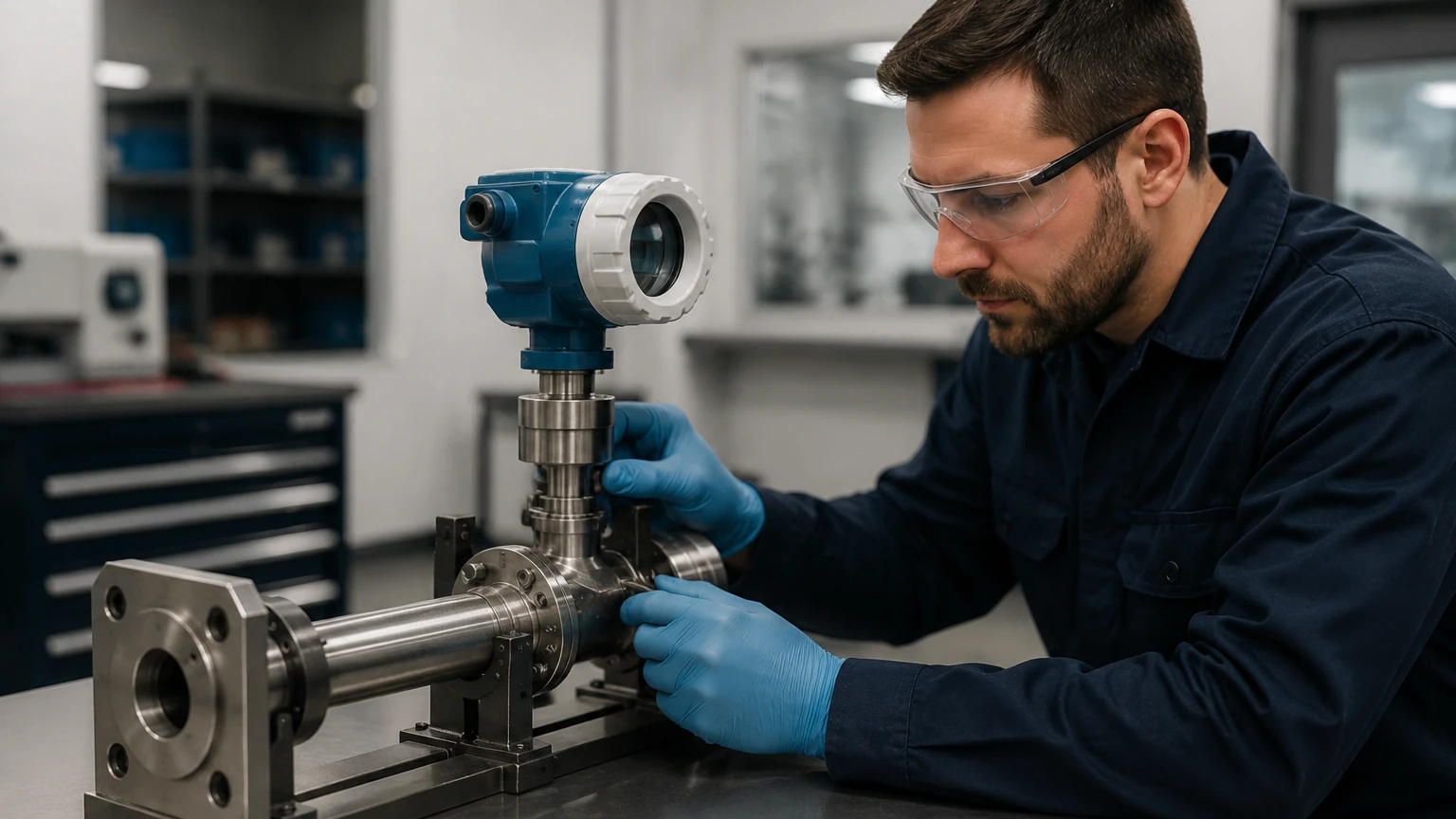
Calibration is the process of comparing the readings of a "device under test" (DUT) against a reference standard of known, higher accuracy. In the context of liquid flow meter calibration services, this process serves several critical functions:
* Drift Correction: Over time, electronic components age and mechanical parts wear, leading to "meter drift." Regular calibration identifies and corrects these deviations.
* Regulatory Compliance: Many industries, particularly those involving environmental discharge or food and beverage production, are legally required to provide proof of instrument accuracy through traceable calibration certificates.
* Cost Management: Inaccurate flow measurement can lead to the over-application of expensive chemicals or the loss of revenue in billing applications.
* Safety: In chemical processing, incorrect flow rates can lead to dangerous pressure buildups or improper exothermic reactions.
Technical Methods of Calibration
Professional calibration laboratories typically employ one of three primary methods to verify liquid flow meters. The choice of method depends on the required accuracy and the type of fluid being measured.
Gravimetric Calibration
This is widely considered the most accurate method. The liquid passing through the meter is collected in a vessel on a high-precision scale. By measuring the mass of the liquid over a specific time interval and knowing the liquid's density, the actual flow rate can be calculated with extreme precision. This method is often used for "master meters" that calibrate other instruments.
Volumetric Calibration
In this method, the liquid is discharged into a calibrated volumetric tank (a prover). The volume level in the tank is compared against the meter’s reading. This is a common method for water flow meters and is highly effective for large-diameter pipes where weighing the liquid might be impractical.
Master Meter Calibration
This involves placing the DUT in series with a "master meter"—a flow meter that has been calibrated to a very high standard of accuracy (typically 3 to 4 times more accurate than the DUT). While faster than gravimetric methods, it relies entirely on the stability of the master meter.
Selection Criteria for Calibration Services
Choosing the right partner for liquid flow meter calibration services requires a technical evaluation of the laboratory’s capabilities. Engineers should confirm the following before proceeding:
1. Traceability: Ensure the laboratory’s standards are traceable to national or international bodies, such as NIST (National Institute of Standards and Technology) or equivalent ISO standards.
2. Accreditation: Look for ISO/IEC 17025 accreditation, which specifically governs the competence of testing and calibration laboratories.
3. Flow Range and Pipe Size: Not all labs can handle high flow rates or large pipe diameters (e.g., above 300 mm). Verify that the facility can replicate your operational flow range.
4. Fluid Compatibility: If your meter measures oil, chemicals, or slurries, calibrate it with a fluid that mimics the process fluid's viscosity and density as closely as possible.
Practical Selection Table: Calibration Methods
| Method | Typical Accuracy | Best For | Limitations |
| :— | :— | :— | :— |
| Gravimetric | ±0.01% to 0.05% | Coriolis, High-precision Lab work | Time-consuming; expensive setup |
| Volumetric | ±0.1% to 0.2% | Turbine meters, Water utilities | Requires large, stable tanks |
| Master Meter | ±0.2% to 0.5% | Field calibration, Ultrasonic | Dependent on master meter stability |
| Transfer Standard | ±0.5% + | On-site verification | Lower accuracy than lab standards |
Installation Considerations for Calibrated Meters
A common mistake in industrial engineering is assuming a calibrated meter will perform perfectly regardless of how it is installed. Even the best liquid flow meter calibration services cannot compensate for poor piping geometry.
* Straight Pipe Runs: Most flow meters require a specific length of straight pipe upstream (typically 10 diameters) and downstream (5 diameters) to eliminate turbulence and swirl.
* Flow Conditioners: If straight runs are not possible, flow conditioners or straightening vanes must be used to ensure a laminar flow profile.
* Fluid State: Ensure the pipe is completely full of liquid. Air bubbles or partially filled pipes will cause significant errors in electromagnetic and ultrasonic meters.
* Vibration and EMI: For electronic meters, ensure the installation site is free from excessive mechanical vibration and electromagnetic interference, which can distort the signal after calibration.
For those seeking high-precision instruments to integrate into these calibrated systems, reviewing the Main Page of specialized manufacturers like Welk provides insights into the latest radar and ultrasonic technologies that are designed for ease of installation and long-term stability.
Limitations and Risks
While calibration is essential, it has its limitations. One major risk is the "Field-to-Lab Gap." A meter may perform perfectly in a controlled laboratory environment with clean water at 20°C but behave differently when installed in a field application with 50°C corrosive chemicals.
Furthermore, calibration only provides a snapshot in time. It does not guarantee that the meter will remain accurate if the process conditions change significantly. Therefore, a robust maintenance schedule should include both periodic professional calibration and routine field checks using portable ultrasonic flow meters or secondary level sensors to verify consistency.
Frequently Asked Questions (FAQs)
Q: How often should I calibrate my liquid flow meter?
A: This depends on the application. For custody transfer or high-stakes chemical dosing, annual calibration is standard. For general process monitoring, every 2 to 3 years may suffice, provided that internal diagnostics do not indicate errors.
Q: Can I calibrate a flow meter on-site?
A: Yes, using a portable master meter or a mobile calibration rig. While convenient because it reduces downtime, on-site calibration usually offers slightly lower accuracy than a controlled laboratory environment.
Q: What is the difference between calibration and validation?
A: Calibration involves adjusting the instrument to match a standard. Validation (or verification) is simply checking the instrument against a standard to see if it is still within tolerance without necessarily making adjustments.
Q: Does pipe material affect calibration?
A: For certain technologies like clamp-on ultrasonic meters, the pipe material and wall thickness are critical parameters that must be correctly programmed during the calibration and installation process.
Conclusion
Precision in liquid flow measurement is not a "set and forget" parameter. It requires a disciplined approach to maintenance and the strategic use of liquid flow meter calibration services. By selecting accredited laboratories, understanding the underlying measurement principles, and ensuring proper field installation, process engineers can safeguard their operations against the risks of inaccurate data.
As the industry moves toward more integrated automation, the synergy between flow measurement and level sensing—supported by reliable hardware from manufacturers like Welk—will continue to be the foundation of industrial process excellence. For more information on selecting the right level and flow measurement instruments for your specific application, visit the Main Page to explore technical specifications and engineering support.