Coriolis Gas Flow Meter
Coriolis Gas Flow Meter
In the landscape of industrial process control, the accurate measurement of gas flow remains one of the most challenging tasks for engineers. While volumetric flow meters have traditionally dominated the market, the shift toward mass-based measurement has highlighted the importance of the Coriolis gas flow meter. Unlike technologies that require compensation for temperature and pressure, Coriolis meters provide a direct mass flow reading, offering unparalleled precision in applications ranging from chemical processing to custody transfer of high-value gases.
This guide explores the technical principles, selection criteria, and installation requirements for Coriolis gas flow meters, providing a practical reference for engineering professionals looking to optimize their process monitoring systems.
Understanding Coriolis Mass Flow Principles for Gases
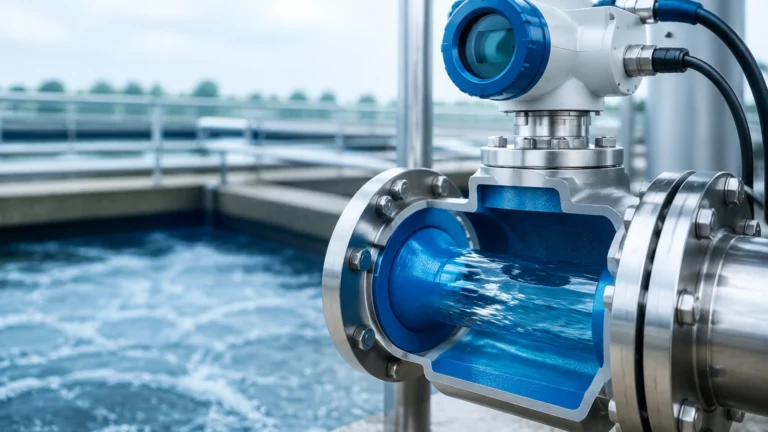
The fundamental operating principle of a Coriolis gas flow meter is based on the Coriolis effect—an inertial force described by the physicist Gaspard-Gustave de Coriolis. In an industrial meter, this principle is applied by inducing a controlled vibration in one or more flow tubes through which the gas passes.
The Oscillation and Phase Shift
When the meter is powered, an electromagnetic drive coil causes the flow tubes to oscillate at their resonant frequency, much like a tuning fork. When there is no flow, the tubes vibrate in a uniform, symmetrical pattern. However, as gas enters the vibrating tubes, the mass of the moving gas creates an inertial force that resists the upward and downward motion of the tubes.
This resistance causes the tubes to twist. On the inlet side, the gas flow resists the tube's vibration, while on the outlet side, the gas assists it. This resulting twist creates a phase shift (a time delay) between the sensors located at the inlet and outlet of the tube. This phase shift is directly proportional to the mass flow rate of the gas. Because mass is measured directly, the meter is inherently immune to changes in gas density, pressure, or temperature that would otherwise skew volumetric readings.
Density and Temperature Integration
In addition to mass flow, Coriolis meters typically measure the resonant frequency of the tubes. Since the resonant frequency changes based on the total mass of the tube (tube mass + fluid mass), the meter can calculate the density of the gas in real-time. Furthermore, an internal Resistance Temperature Detector (RTD) monitors the tube temperature to compensate for changes in tube elasticity, providing a third process variable: temperature.
Key Advantages of Coriolis Technology in Gas Measurement
For many B2B industrial applications, the transition to Coriolis technology is driven by the need for higher reliability and lower maintenance. When compared to orifice plates, thermal mass meters, or vortex meters, the Coriolis gas flow meter offers several distinct advantages:
1. Direct Mass Measurement: Eliminates the need for external pressure and temperature transmitters and the complex flow computers required to calculate mass from volume.
2. High Accuracy: Typically offers accuracy levels of ±0.25% to ±0.5% for gas applications, which is significantly better than most volumetric or thermal technologies.
3. No Moving Parts: Unlike turbines, there are no bearings to wear out or rotors to clog, reducing the total cost of ownership over the instrument's lifecycle.
4. Bi-directional Flow: Coriolis meters can measure flow in both directions, making them ideal for loading and unloading operations.
5. Multi-variable Output: A single device provides mass flow, density, and temperature, simplifying the instrumentation architecture.
Technical Selection Criteria for Coriolis Gas Flow Meters
Selecting the correct Coriolis meter for gas service requires a deeper analysis than liquid applications due to the low density and high compressibility of gases. Engineers must evaluate several critical factors to ensure the meter performs within its calibrated specifications.
Gas Density and Pressure
Coriolis meters rely on the mass of the fluid to generate the phase shift. Because gases have much lower densities than liquids, the signal-to-noise ratio is often lower. To achieve high accuracy, the gas should ideally be at a higher pressure (typically above 10 bar or 1 MPa), which increases the mass per unit volume. For low-pressure gas applications, specialized high-sensitivity Coriolis meters with thinner tube walls or larger tube diameters may be required.
Pressure Drop (Delta P)
Because gas flow velocities in Coriolis meters are often high, the pressure drop across the meter can be significant. It is essential to calculate the allowable pressure drop for the process. If the pressure drop is too high, it may lead to sonic flow (choking) or require larger, more expensive piping. Standard practice is to limit pressure drop to less than 1 bar (100 kPa) for most industrial gas processes.
Flow Range and Turndown
Coriolis meters offer excellent turndown ratios (often 100:1 or better), but for gas, the effective turndown is usually limited by the "zero stability" of the meter. The zero stability is the small amount of signal the meter reports even when there is no flow. In gas applications, where the total mass flow signal is small, the zero stability error becomes more significant at low flow rates.
Practical Selection Table for Industrial Gases
The following table provides a general reference for evaluating Coriolis meter suitability across common industrial gases. Note that these values are representative and should be verified against specific manufacturer data available on the Main Page.
| Gas Type | Typical Pressure Range | Accuracy (Mass) | Suitability Level | Key Consideration |
| :— | :— | :— | :— | :— |
| Natural Gas | 10 – 100 bar | ±0.35% | High | Ideal for custody transfer and fiscal metering. |
| Compressed Air | 5 – 10 bar | ±0.50% | Medium | Cost-effective for leak detection and efficiency audits. |
| Hydrogen (H2) | 30 – 700 bar | ±0.50% | High | Requires high-pressure rated housings; low density is a challenge. |
| Carbon Dioxide (CO2) | 20 – 60 bar | ±0.25% | High | Common in food/beverage and carbon capture applications. |
| Nitrogen (N2) | 5 – 40 bar | ±0.50% | Medium | Used in blanketing; requires careful sizing for low flow. |
Installation Guidelines and Best Practices
Proper installation is critical to maintaining the accuracy of a Coriolis gas flow meter. Because the meter operates on vibration, external environmental factors can influence the readings if not properly mitigated.
Orientation
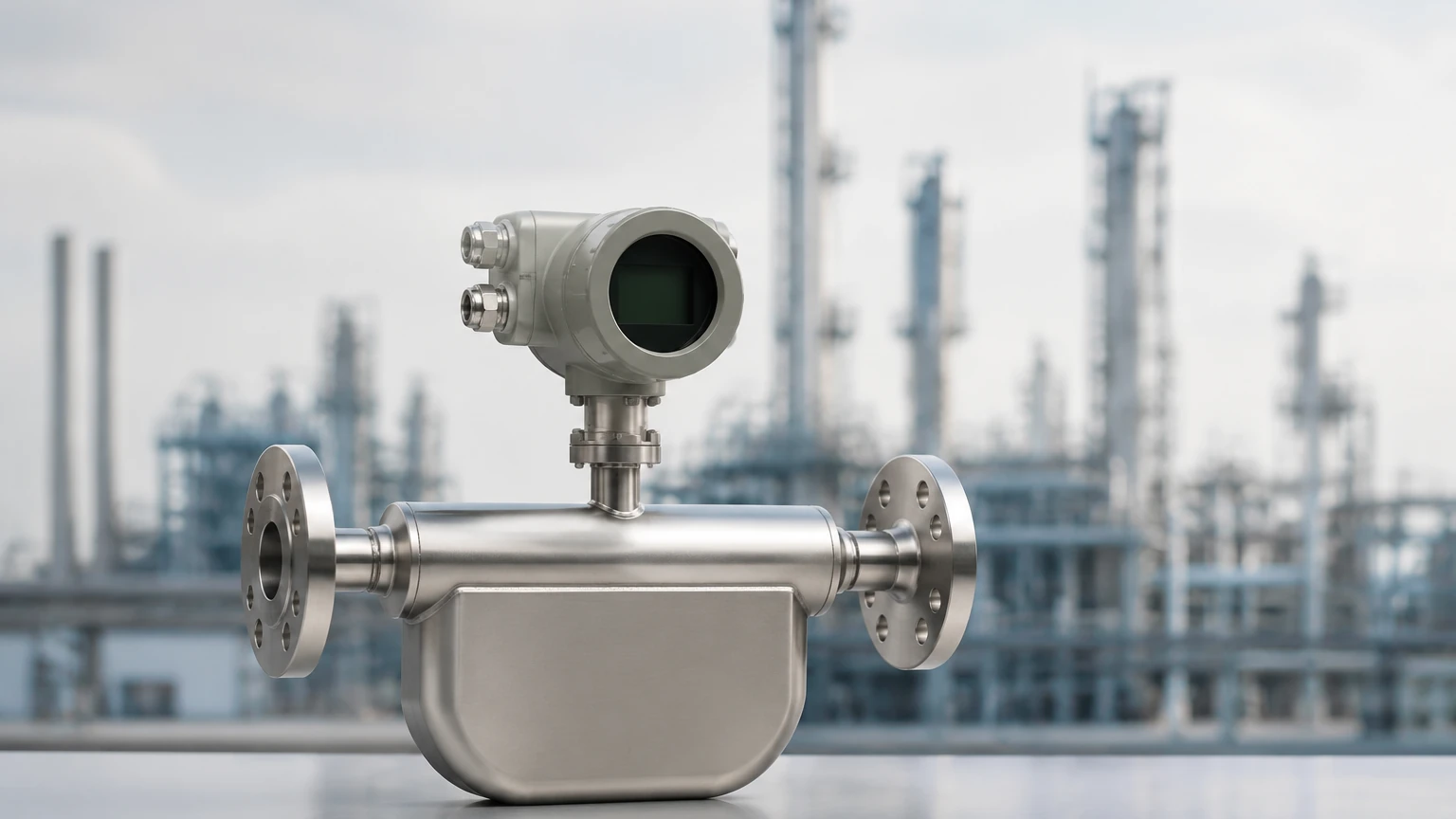
For gas applications, the preferred orientation is the "Flag" or "Tubes Up" position. This allows any moisture or condensate that might form in the gas stream to drain out of the tubes rather than pooling at the bottom. If the tubes are oriented downward (as is common for liquids), liquid droplets can settle in the tubes, causing measurement errors or "slugging" signals.
Vibration Isolation
Industrial environments are full of mechanical noise from pumps, compressors, and vibrating pipes. Coriolis meters should be installed using robust piping supports on both the inlet and outlet sides. Flexible couplings are generally discouraged as they can introduce unpredictable harmonic frequencies that interfere with the meter's drive frequency.
Straight Run Requirements
One of the significant advantages of Coriolis technology is that it is relatively insensitive to flow profile disturbances. Unlike vortex or turbine meters, which require long straight pipe runs (e.g., 10D upstream, 5D downstream), Coriolis meters can often be installed with minimal straight runs. However, to ensure the highest accuracy and prevent mechanical stress on the meter body, a short straight run of 3D to 5D is still recommended.
Limitations and Challenges in Gas Applications
While highly versatile, the Coriolis gas flow meter is not a universal solution for every gas measurement task. Understanding its limitations prevents costly misapplications.
* Initial Capital Cost: Coriolis meters are generally more expensive than thermal mass or vortex meters. The investment is usually justified by accuracy and low maintenance, but for non-critical utilities, other technologies may be more cost-effective.
* Size and Weight: High-capacity Coriolis meters can be heavy and bulky, requiring significant structural support in the piping system.
* Low-Pressure Limits: At atmospheric pressure, the density of most gases is so low that the Coriolis force generated is difficult to distinguish from background electronic noise. Applications involving gas at or near 1 bar absolute often require alternative technologies like ultrasonic or thermal mass meters.
Integration with Level Measurement Systems
In many industrial sectors, such as chemical manufacturing and oil and gas, flow measurement is used in conjunction with level measurement to provide a complete picture of material balance. While a Coriolis gas flow meter tracks the mass of gas entering or leaving a vessel, level measurement instruments—such as radar level meters or ultrasonic sensors—monitor the inventory within the tank.
For example, in a pressurized storage tank for Liquefied Petroleum Gas (LPG), a radar level meter provides the primary volume measurement of the liquid phase. Simultaneously, a Coriolis meter on the vapor recovery line ensures that the mass of gas being displaced during filling is accurately accounted for. This dual-instrumentation approach allows for "mass balance" verification, which is essential for detecting leaks and ensuring process safety. For more information on how level measurement integrates with flow systems, users can review product options and application support on the Main Page.
Frequently Asked Questions (FAQs)
Q: Can a Coriolis gas flow meter measure "wet gas"?
A: Coriolis meters can handle small amounts of entrained liquid, but accuracy will degrade. The meter will typically report a "drive gain" alert if the liquid content becomes too high, indicating that the tubes are struggling to vibrate consistently. For wet gas, the meter should be installed in a vertical orientation to allow liquids to pass through without pooling.
Q: Does the meter need to be recalibrated if the gas composition changes?
A: No. One of the primary benefits of Coriolis technology is that it measures mass directly. Since mass is a fundamental property, the calibration remains valid even if the gas mixture changes (e.g., switching from 100% Methane to a Methane/Ethane mix), provided the density remains within the meter's operating range.
Q: What is the typical lifespan of a Coriolis gas flow meter?
A: With no moving parts and high-quality materials like Stainless Steel or Hastelloy, these meters often last 10 to 20 years in non-corrosive service. Regular verification of the "zero point" and checking for tube coating or erosion are the primary maintenance tasks.
Q: How does pressure drop affect gas measurement?
A: High pressure drop can lead to a decrease in downstream pressure, which may affect process efficiency. In extreme cases, if the gas reaches sonic velocity within the meter tubes, the flow becomes "choked," and the meter will no longer be able to measure increases in flow rate. Proper sizing is essential to keep the velocity within the recommended range (typically below 0.3 Mach).
Conclusion
The Coriolis gas flow meter represents the pinnacle of mass flow measurement technology for industrial gases. By providing direct mass readings, density, and temperature in a single device, it simplifies complex processes and enhances measurement certainty. While the initial investment is higher than traditional volumetric methods, the reduction in maintenance and the elimination of external compensation components make it a superior choice for critical process control and high-accuracy applications. When paired with reliable level measurement solutions, as seen on the Main Page, Coriolis meters provide the foundational data necessary for modern industrial automation and efficient resource management.