50 Ta
50 Ta
In the field of industrial process automation, technical specifications on equipment nameplates are critical for ensuring operational longevity and measurement accuracy. One such specification frequently encountered on level transmitters and sensors is "50 Ta." In engineering terms, "Ta" stands for Ambient Temperature (Temperature, Ambient), and the prefix "50" designates the maximum Celsius limit for the environment surrounding the instrument's housing.
Understanding the implications of a 50 Ta rating is essential for plant engineers and system integrators. Operating an instrument in an environment that exceeds its rated ambient temperature can lead to electronic drift, component fatigue, and eventual total system failure. This article explores the relationship between ambient temperature and various level measurement technologies, providing a practical guide for selection and installation.
Measurement Principles and Temperature Sensitivity
Before selecting a level meter based on its thermal ratings, it is vital to understand how temperature interacts with the underlying physics of the measurement. Different technologies react uniquely to the thermal environment.
Radar Level Measurement (Non-Contact)
Radar level meters utilize high-frequency electromagnetic waves (typically in the 26GHz or 80GHz range). The sensor emits a pulse that reflects off the surface of the medium and returns to the receiver. Because electromagnetic waves do not require a medium for travel, the temperature of the air or gas in the tank headspace has a negligible effect on the speed of the signal.
However, the electronics within the transmitter head are sensitive to heat. A 50 Ta rating on a radar unit indicates that while the antenna might be capable of withstanding high process temperatures (sometimes up to 200°C or more with cooling fins), the circuitry inside the housing must remain in an environment below 50°C to prevent signal processing errors or hardware damage.
Ultrasonic Level Measurement
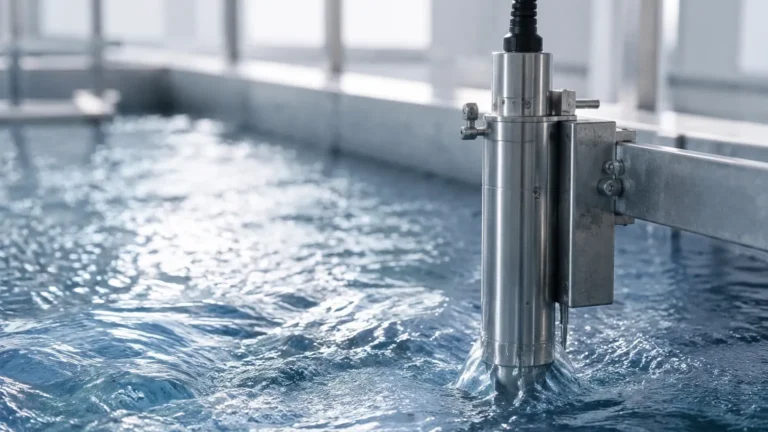
Ultrasonic sensors function by emitting sound waves that bounce off the material surface. Unlike radar, the speed of sound is highly dependent on the temperature of the medium through which it travels. In air, sound travels faster as temperature increases.
Most high-quality ultrasonic transmitters include an internal temperature sensor to compensate for these changes. However, if the ambient temperature (Ta) fluctuates significantly or exceeds the 50 Ta threshold, the compensation algorithms may reach their limit, or the piezoelectric transducer may lose efficiency. For ultrasonic devices, the 50 Ta limit often applies to both the electronics and the transducer face itself.
Hydrostatic Level Measurement
Hydrostatic transmitters measure the pressure exerted by a liquid column. The principle follows the formula $P = \rho gh$, where $\rho$ is the density of the liquid. Temperature affects the density of the liquid being measured, but the "50 Ta" specification specifically refers to the temperature at the sensor's electronics or the atmospheric vent of a submersible cable. If the ambient air at the transmitter head exceeds 50°C, the internal pressure diaphragm or the signal conditioning circuit may experience thermal drift, leading to inaccurate "zero" readings.
Why 50°C (50 Ta) is a Critical Benchmark
A 50°C (122°F) ambient temperature rating is a standard industrial benchmark for several reasons:
1. Electronic Component Longevity: Most industrial-grade integrated circuits and electrolytic capacitors are rated for 85°C. However, the internal temperature of a sealed metal housing can be 15°C to 20°C higher than the outside ambient air due to solar gain and internal heat dissipation. A 50 Ta limit ensures the internal components stay well below their absolute maximum ratings.
2. LCD Performance: Many level meters feature local liquid crystal displays. Standard LCDs begin to lose contrast or turn completely black (temporary transition to a liquid phase) when ambient temperatures exceed 50°C to 60°C.
3. Battery and Power Management: For wireless level sensors, battery chemistry is highly sensitive to heat. Operating at the edge of a 50 Ta limit can significantly reduce the service life of lithium-based batteries.
Selection Criteria and Technology Comparison
When designing a system where the ambient environment may approach or exceed 50°C, engineers must compare how different technologies handle thermal stress. The following table provides a general comparison for instruments typically rated at 50 Ta or higher.
| Technology | Typical Max Ta (Standard) | Sensitivity to Ta | Best Use Case |
| :— | :— | :— | :— |
| Radar (80GHz) | 60°C – 80°C | Low | High-precision chemical/oil storage |
| Ultrasonic | 50°C – 60°C | High | Water treatment and open channels |
| Hydrostatic | 50°C – 85°C | Moderate | Deep wells and vented tanks |
| Magnetic Gauge | 80°C+ (Visual) | Very Low | High-temperature boiler levels |
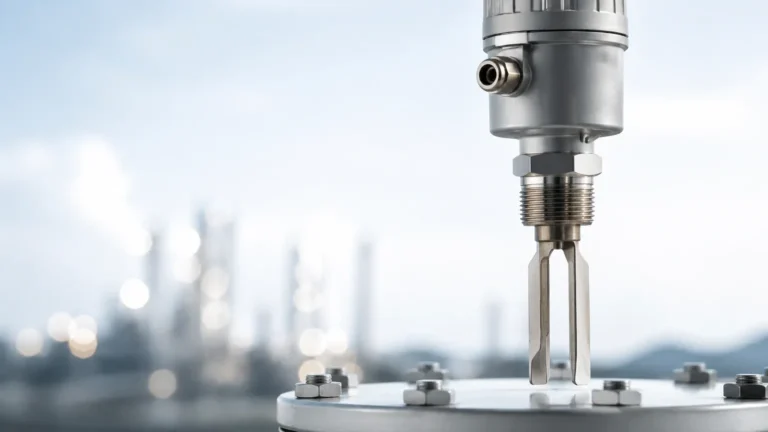
| Level Switch | 70°C | Low | Overfill protection and pump control |
For engineers reviewing specific hardware options for challenging thermal environments, it is recommended to Review product options and application support to ensure the selected model aligns with the site's environmental profile.
Installation Strategies for 50 Ta Environments
If a site survey indicates that the ambient temperature will frequently reach or exceed 50°C, several installation strategies can be employed to protect the instrumentation.
1. Sunshades and Heat Shields
Direct solar radiation can raise the temperature of a metal instrument housing by 20°C above the actual air temperature. Installing a simple stainless steel or UV-resistant plastic sunshade can keep a 50 Ta rated instrument within its safe operating zone even in tropical climates.
2. Remote Electronics
For technologies like radar or ultrasonic sensors, it is often possible to use a "remote" configuration. The sensor head (transducer or antenna) is mounted on the tank, while the transmitter electronics and display are mounted several meters away in a cooler, shaded, or climate-controlled area. This is the most effective way to handle high-temperature processes where the ambient air near the tank top is excessively hot.
3. Standoff Pipes and Cooling Fins
In hydrostatic or contact radar applications, the heat from the process can conduct through the mounting flange to the electronics. Using a standoff pipe or an extension neck with cooling fins allows the heat to dissipate into the air before it reaches the 50 Ta rated housing.
4. Compressed Air Cooling
In extreme industrial environments, such as near furnaces or in glass manufacturing, instruments may be placed inside a jacketed enclosure cooled by a continuous flow of compressed air (Vortex coolers). This allows instruments with a standard 50 Ta rating to operate in ambient zones reaching 100°C or more.

Common Risks and Failure Modes
Ignoring the 50 Ta limit can lead to several specific failure modes that may not be immediately apparent during commissioning:
* Calibration Drift: The most common symptom of exceeding ambient limits is a shifting zero point. The instrument may report a 5% level when the tank is empty because the thermal expansion of internal components has changed the signal's reference voltage.
* Seal Failure: High ambient heat can cause O-rings and gaskets to become brittle over time. Once the seal integrity is lost, moisture can enter the housing, leading to short circuits.
* Processor Resets: Microprocessors used in modern level meters have thermal protection. If the internal temperature becomes too high, the device may enter a continuous reboot cycle, leading to gaps in data logging and loss of control signals.
Limitations of the 50 Ta Rating
It is important to distinguish between Ambient Temperature (Ta) and Process Temperature (Tp). A radar level meter might be rated for a Process Temperature of 150°C but an Ambient Temperature of 50 Ta. This means the antenna can be inside a 150°C tank, but the housing where the wires connect must be kept at 50°C or lower. Engineers often mistake one for the other, leading to premature equipment failure. Always verify both specifications in the manufacturer's data sheet.
Furthermore, 50 Ta is often a "safe" rating for standard operation. Some manufacturers provide derating curves, showing that an instrument can operate at 60°C, but with reduced accuracy or a shorter expected lifespan. In critical safety applications (SIL-rated systems), the 50 Ta limit must be strictly observed to maintain the certified failure rate (PFD) of the device.
Frequently Asked Questions (FAQ)
Q: Can I use a 50 Ta rated sensor in an environment that occasionally hits 55°C?
A: While the sensor may not fail immediately, it is operating outside its tested parameters. Accuracy may degrade, and the long-term reliability of the electronics will be compromised. Using a sunshade or moving the electronics is highly recommended.
Q: Does the 50 Ta rating change if the instrument is explosion-proof?
A: Yes. Explosion-proof (Ex d) housings are often thicker and retain more heat. In some cases, the Ta rating for an explosion-proof version of a sensor might actually be lower than the standard version because the housing cannot dissipate internal heat as effectively.
Q: How does humidity affect the 50 Ta rating?
A: The 50 Ta rating usually assumes non-condensing humidity. High heat combined with high humidity (tropical environments) is more stressful for electronics than dry heat. In these cases, ensuring the cable glands are perfectly sealed is as important as managing the temperature.
Q: Is 50 Ta the same as 50°C storage temperature?
A: No. Storage temperature ratings are usually much wider (e.g., -40°C to +85°C) because the electronics are not powered and generating their own internal heat. The Ta rating specifically refers to the device while it is operational.
Conclusion
The 50 Ta specification is a fundamental boundary in industrial level measurement. Whether utilizing radar, ultrasonic, or hydrostatic technology, maintaining the ambient environment within the manufacturer's specified limits is the only way to ensure the accuracy and reliability of the data provided to the control system. By implementing proper installation techniques such as sunshades, remote mounting, and thermal standoffs, engineers can successfully deploy 50 Ta rated instruments even in challenging industrial climates. For detailed specifications on various level measurement technologies and their environmental tolerances, professionals should consult authoritative engineering resources and manufacturer documentation at the Main Page of the equipment provider.