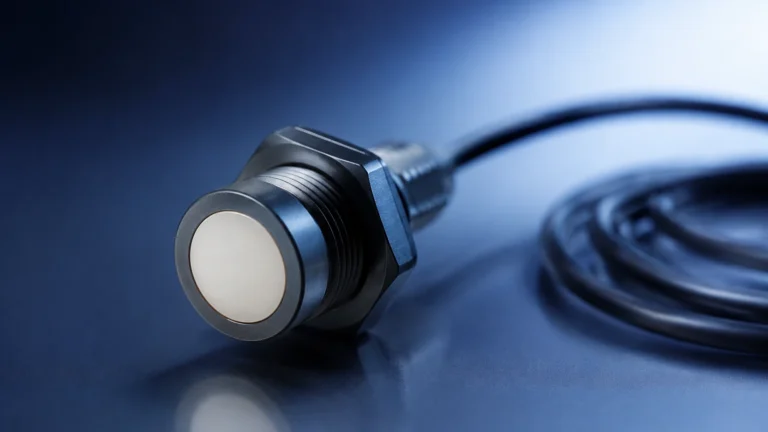
Terminal Management Software for Fertilizer Industry
Terminal Management Software for Fertilizer Industry
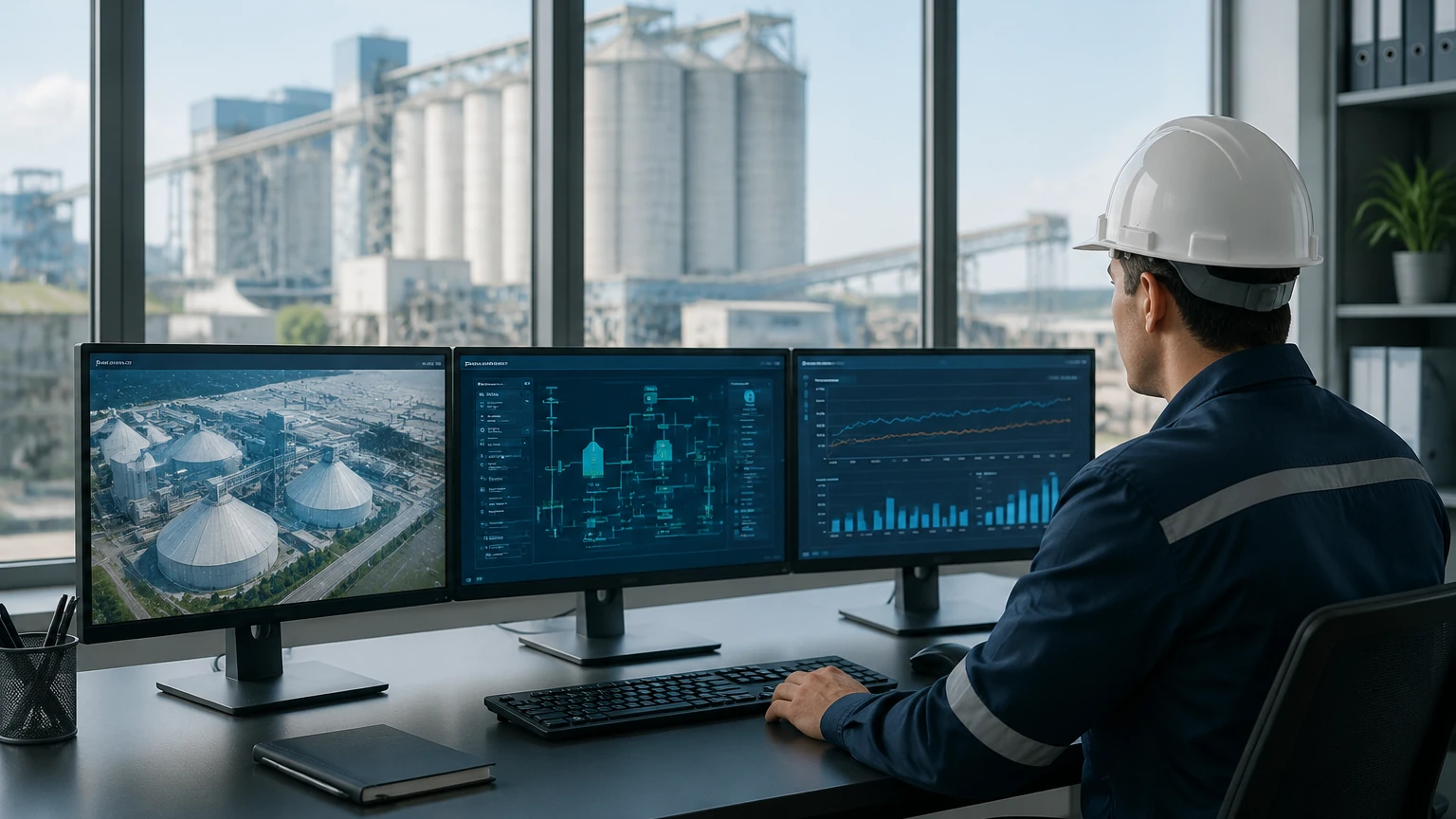
In the global supply chain, the fertilizer industry represents one of the most complex logistical challenges. From the production of anhydrous ammonia and urea to the distribution of bulk solids like MAP (Monoammonium Phosphate) and DAP (Diammonium Phosphate), terminal operations require precise coordination. Terminal management software for fertilizer industry acts as the central nervous system for these facilities, integrating inventory control, loading automation, and safety protocols into a single digital ecosystem.
However, the effectiveness of any software solution is fundamentally limited by the quality of the data it receives. In a fertilizer terminal, this data primarily originates from field instrumentation. To achieve true automation and accuracy, terminal operators must understand the synergy between high-level management software and the physical measurement technologies that monitor storage silos and tanks.
The Role of Terminal Management Software in Fertilizer Logistics
Terminal Management Software (TMS) is designed to streamline the movement of products in and out of storage facilities. In the fertilizer sector, this involves managing a diverse range of materials, including corrosive liquids, hazardous gases, and high-dust bulk solids.
A robust TMS provides several critical functions:
1. Inventory Visibility: Real-time tracking of stock levels across multiple silos and tanks to prevent stockouts or overfills.
2. Loading and Unloading Automation: Controlling pumps, valves, and conveyor systems to ensure the correct volume of product is transferred to trucks, railcars, or vessels.
3. Regulatory Compliance: Generating automated reports for environmental agencies and safety regulators, particularly concerning the storage of hazardous materials like ammonium nitrate.
4. Transaction Management: Integrating with ERP systems to automate billing and custody transfer based on accurate weight or volume measurements.
For these functions to operate reliably, the software must be integrated with accurate level measurement instruments. Without precise field data, the software cannot calculate mass balance or trigger automated safety shut-offs.
Measurement Principles for Fertilizer Storage
Before selecting a management software or hardware suite, it is essential to understand the physical principles used to measure fertilizer levels. Fertilizer products present unique challenges, such as high corrosivity, dust generation, and varying bulk densities. To explore specific instrument specifications, engineers can Review product options and application support on the Welk Main Page.
Radar Level Measurement (Time-of-Flight)
Radar is the most prevalent technology for both liquid and solid fertilizers. It operates on the Time-of-Flight (ToF) principle. The sensor emits a high-frequency microwave signal (typically 26GHz or 80GHz) that travels to the product surface and reflects back to the sensor. The distance is calculated based on the time interval and the speed of light.
* Non-contact Radar: Ideal for corrosive liquids and bulk solids. 80GHz radar is particularly effective in fertilizer silos because its narrow beam angle avoids internal obstructions and can penetrate heavy dust during filling.
* Guided Wave Radar (GWR): Uses a physical probe to guide the signal. This is often used in smaller tanks or for liquids with low dielectric constants, though the probe must be constructed from materials resistant to chemical attack.
Ultrasonic Level Measurement
Ultrasonic sensors use sound waves rather than microwaves. The sensor emits an ultrasonic pulse that reflects off the material surface. While cost-effective, ultrasonic measurement is sensitive to air temperature fluctuations, heavy dust, and surface foam, which are common in fertilizer processing.
Hydrostatic Level Measurement
For liquid fertilizer storage, hydrostatic transmitters measure the pressure exerted by the liquid column. According to the principle $P = \rho gh$ (where $P$ is pressure, $\rho$ is density, $g$ is gravity, and $h$ is height), the software can calculate the level if the density is known. This is a reliable contact-based method but requires the sensor diaphragm to be compatible with the chemical nature of the fertilizer.
Key Evaluation Criteria for Software and Hardware Integration
When implementing terminal management software for fertilizer industry, the integration of hardware and software must meet specific industrial standards to ensure longevity and safety.
1. Chemical Compatibility
Fertilizers are often highly corrosive. Liquid nitrogen solutions (UAN) and phosphoric acid can quickly degrade standard stainless steel. Instruments must utilize specialized materials such as PTFE (Polytetrafluoroethylene), PVDF (Polyvinylidene fluoride), or high-grade Hastelloy. The TMS should be able to track the maintenance cycles of these wetted parts.
2. Dust and Vapor Handling
Bulk fertilizer storage creates significant dust, while liquid ammonia creates vapors that can attenuate measurement signals. The chosen measurement principle must be capable of "seeing through" these environments. Radar is generally preferred over ultrasonic for these conditions.
3. Data Integration Protocols
Modern TMS solutions rely on digital communication. Field instruments should support protocols like HART, Modbus RTU, or Profibus. This allows the software to receive not just the level measurement, but also diagnostic data regarding the health of the sensor.
Selection Table: Measurement Technologies for Fertilizer Applications
Choosing the right combination of technology depends on the physical state and chemical properties of the fertilizer.
| Fertilizer Type | Physical State | Recommended Technology | Primary Benefit |
| :— | :— | :— | :— |
| Urea / Granular NPK | Solid (Bulk) | 80GHz Radar | High dust penetration and narrow beam for silos. |
| Ammonia (Anhydrous) | Liquid (Pressurized) | Guided Wave Radar | Reliable in high-pressure, low-dielectric environments. |
| UAN Solutions | Liquid | Hydrostatic or Radar | Accurate volume tracking for custody transfer. |
| Phosphoric Acid | Liquid (Corrosive) | Non-contact Radar (PTFE) | No contact with the corrosive medium. |
| Potash | Solid | Ultrasonic or Radar | Cost-effective for open-air stockpile monitoring. |
Installation and Maintenance Considerations
Even the most advanced terminal management software for fertilizer industry will fail if the field instruments are installed incorrectly. In the fertilizer sector, specific environmental factors must be addressed during the engineering phase.
Mounting and Positioning
For silos containing solid fertilizers, the sensor should be positioned to avoid the angle of repose (the slope of the material pile). If the sensor is placed directly over the filling stream, the signal will be lost. For liquid tanks, sensors must be mounted away from agitators or inlet pipes to prevent signal interference.
Dealing with Build-up
Fertilizer dust often becomes sticky when exposed to humidity, leading to material build-up on sensor faces. Non-contact radar units with integrated air purging systems are highly recommended. The air purge keeps the antenna clean, ensuring the TMS receives a continuous, uninterrupted signal.
Calibration and Verification
While many modern sensors are "maintenance-free," the TMS should be configured to flag discrepancies between theoretical inventory and measured levels. Periodic manual soundings or reference measurements should be used to verify the accuracy of the automated system, especially in custody transfer applications.
Common Risks and Mitigation in Digital Terminal Management
Transitioning to an automated terminal management system involves risks that must be managed to ensure a return on investment.
* Data Silos: If the terminal software does not communicate with the company's main ERP, manual data entry is still required, increasing the risk of error. Ensure the software has open API or robust integration capabilities.
* Sensor Fouling: In the fertilizer industry, the harsh environment can lead to sensor drift. Using redundant measurement technologies (e.g., combining radar with a high-level switch) can mitigate the risk of overfills.
* Environmental Compliance: Fertilizer spills are environmentally catastrophic and legally expensive. The software must include automated alarms and emergency shutdown (ESD) logic that triggers when sensors detect a high-high level condition.
Frequently Asked Questions (FAQ)
Q: Can one software manage both liquid and dry fertilizer terminals?
A: Yes, modern terminal management software is designed to handle multi-modal operations. The key is ensuring the software can process different units of measure (e.g., metric tons for solids vs. cubic meters or liters for liquids) and integrate with the respective measurement hardware.
Q: Why is 80GHz radar preferred over 26GHz for fertilizer silos?
A: 80GHz radar has a much narrower beam (often as small as 3 degrees). This allows the signal to avoid hitting the walls of narrow silos or internal reinforcements, which are common in fertilizer storage. It also provides better reflection from the uneven surfaces of bulk solids.
Q: How does temperature affect level measurement in fertilizer tanks?
A: Temperature primarily affects liquid density and the speed of sound. For hydrostatic measurement, temperature-induced density changes must be compensated for in the software. For ultrasonic measurement, temperature changes in the air space can lead to significant errors. Radar is largely unaffected by temperature fluctuations in the tank headspace.
Q: Is it necessary to use explosion-proof sensors in fertilizer terminals?
A: It depends on the product. While many fertilizers are non-flammable, some processes involve hazardous vapors or combustible dust. Always consult the local hazardous area classifications (ATEX/IECEx) to determine if Ex-rated instrumentation is required for your specific terminal.
By prioritizing the integration of reliable level measurement hardware with sophisticated terminal management software for fertilizer industry, operators can ensure safer, more efficient, and more profitable terminal operations. For detailed technical specifications on the sensors required for these systems, visit the Main Page to consult with application experts.
Download Terminal Management Software for Fertilizer Industry as a PDF