Water Meter Data Logger
Water Meter Data Logger
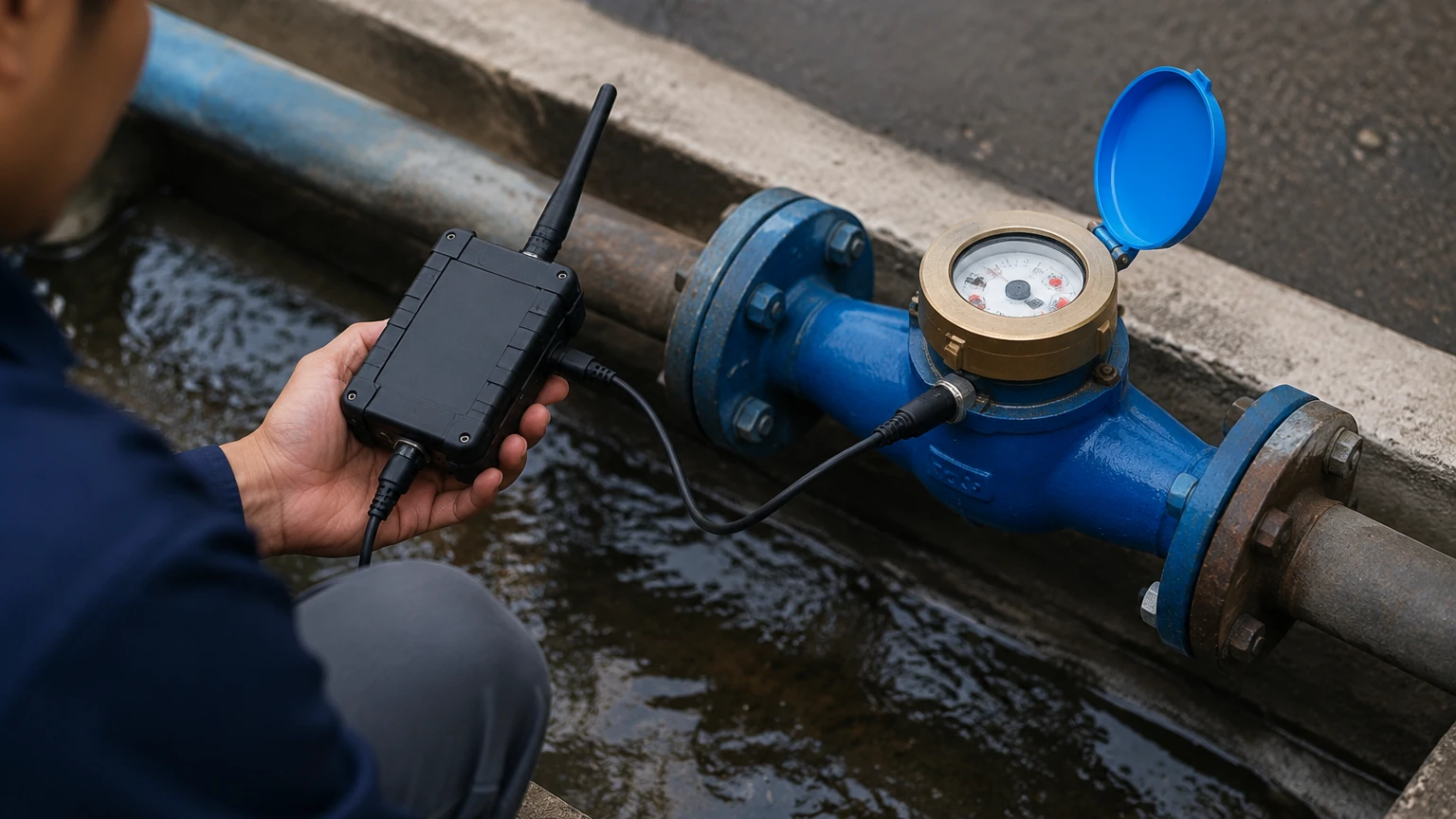
In modern industrial and municipal water management, the transition from manual meter reading to automated data acquisition is a critical step for operational efficiency. A water meter data logger serves as the bridge between mechanical or electronic flow measurement and digital analysis. By capturing, storing, and transmitting flow data at specific intervals, these devices allow engineers and facility managers to monitor consumption patterns, detect leaks, and optimize water distribution networks. This guide explores the technical principles, selection criteria, and installation requirements for integrating data loggers into water measurement systems.
Measurement Principles and Data Acquisition
To select the appropriate water meter data logger, it is essential to understand how data is extracted from the primary flow meter. Most industrial water meters do not have built-in long-distance communication; instead, they provide a raw signal that the logger must interpret.
Pulse Output (Dry Contact and Open Collector)
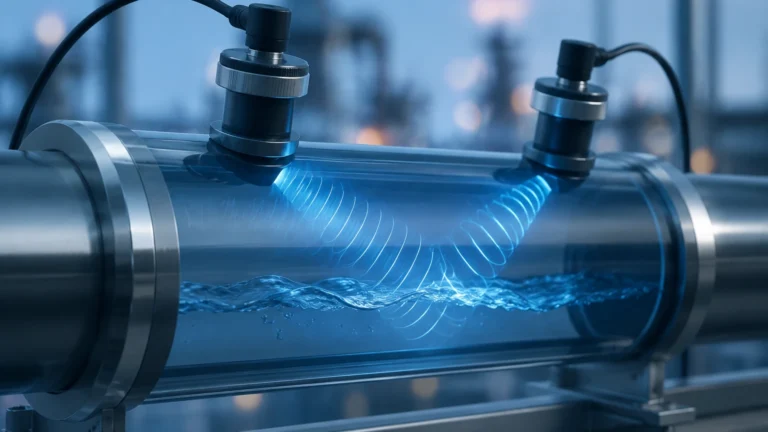
The most common method for logging water data is via pulse counting. Mechanical water meters often feature a magnet mounted on one of the internal dials. As the dial rotates, it triggers a reed switch or a Hall effect sensor, generating a pulse. Each pulse represents a specific volume of water (e.g., 1 pulse = 10 liters or 1 pulse = 1 m³). The data logger counts these pulses over a set period and calculates the flow rate and totalized volume.
Digital Communication (Modbus RTU/RS485)
For smart electronic meters or electromagnetic flow meters, data is often transmitted via digital protocols. Modbus RTU over RS485 is the industrial standard. Unlike pulse counting, which only provides volume, digital logging allows the retrieval of multiple parameters, including instantaneous flow, totalizer values, flow direction, and diagnostic alarms (such as empty pipe alerts).
Analog Signals (4-20mA)
In some legacy or high-precision industrial applications, flow meters output a continuous 4-20mA analog signal proportional to the flow rate. The data logger must perform an analog-to-digital conversion (ADC) and integrate the flow rate over time to determine the total volume consumed.
Types of Water Meter Data Loggers
Water meter data loggers are categorized based on their data storage capacity, power source, and transmission method. Choosing the right type depends on the accessibility of the installation site and the required frequency of data updates.
1. Standalone (Local) Loggers
These devices store data in internal memory (often via SD card or internal flash). Personnel must physically visit the site to download the data via USB or Bluetooth. These are cost-effective for periodic auditing but unsuitable for real-time leak detection.
2. IoT-Enabled Remote Loggers
Modern B2B applications favor remote loggers that use Low Power Wide Area Network (LPWAN) technologies. These devices log data locally and transmit it to a central server at scheduled intervals (e.g., once every 6 or 24 hours). Common protocols include:
* NB-IoT (Narrowband IoT): Excellent for deep indoor or underground penetration, making it ideal for meters located in pits.
* LoRaWAN: Best for private networks across large industrial campuses or agricultural sites where cellular coverage is weak.
* LTE-M / GPRS: Used for high-frequency data transmission where power consumption is less of a concern.
Technical Selection Criteria
When evaluating a water meter data logger for industrial use, engineers should refer to the following technical parameters to ensure compatibility with the existing infrastructure. For broader measurement solutions, including level and flow instrumentation, professionals often consult the Main Page of specialized manufacturers to ensure system-wide compatibility.
Selection Comparison Table
| Feature | Pulse-Based Logger | Modbus/RS485 Logger | IoT Integrated Logger |
| :— | :— | :— | :— |
| Primary Input | Reed Switch / NPN / PNP | RS485 (Digital) | Universal (Pulse/Analog/Digital) |
| Power Source | Internal Battery (5-10 yrs) | External 12-24V DC | Battery or Solar |
| Data Granularity | Volume Totalization | Full Diagnostics + Flow | Configurable (1 min to 24 hrs) |
| Environment | IP68 (Submersible) | IP65/67 (Weatherproof) | IP68 (Submersible) |
| Best Use Case | Billing & Basic Monitoring | Industrial Process Control | District Metered Areas (DMA) |
Installation and Commissioning Guidelines
Successful data logging depends heavily on the physical installation and environmental protection of the device. Because water meters are often located in harsh environments, the following steps are critical:
Environmental Protection (IP Rating)
Water meters are frequently installed in sub-surface pits or chambers that are prone to flooding. A water meter data logger must have an IP68 rating, meaning it is dust-tight and capable of continuous immersion in water. If the logger is not IP68 rated, it must be housed in a secondary NEMA 4X or IP68 enclosure.
Signal Integrity and Cable Lengths
For pulse-based loggers, the distance between the meter and the logger should be minimized. Long cable runs can introduce electrical noise, leading to "ghost pulses" or missed counts. If a long distance (over 50 meters) is unavoidable, shielded twisted-pair cabling should be used, and the logger’s debouncing filter must be correctly configured to ignore high-frequency noise.
Antenna Placement for Wireless Loggers
Wireless signal attenuation is a significant challenge for loggers installed in metal-covered pits or deep underground. In these scenarios, an external high-gain antenna should be mounted above ground or on a nearby wall to ensure reliable data transmission to the gateway or cellular tower.
Synchronization
During commissioning, the logger’s internal clock must be synchronized with the server time. Furthermore, the initial "start value" or "offset" on the logger must match the physical reading on the water meter's mechanical register to ensure data consistency in billing reports.
Common Risks and Operational Limitations
While data loggers provide invaluable insights, engineers must account for specific technical limitations:
1. Pulse Weighting Errors: If the pulse weight is incorrectly configured (e.g., setting 1 pulse = 1L when the meter outputs 1 pulse = 10L), the resulting data will be off by a factor of ten. Always verify the meter’s K-factor or pulse constant.
2. Battery Life Degradation: Frequent data transmission (e.g., every 15 minutes) significantly reduces battery life. For remote sites, a balance must be struck between data granularity and the maintenance interval (typically aiming for a 5-year battery life).
3. Data Gaps: Wireless interference or server downtime can lead to gaps in data. Professional-grade loggers should have "store-and-forward" capabilities, where data is cached locally and re-transmitted once the connection is restored.
4. Signal Bounce: Mechanical reed switches can suffer from "contact bounce," where a single closure is registered as multiple pulses. Loggers must have an adjustable debounce time (typically 10ms to 100ms) to filter these errors.
Integration with Industrial Automation
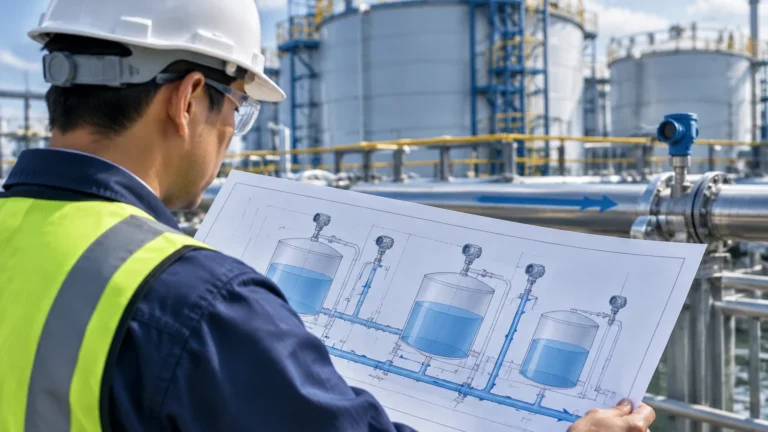
In many B2B environments, water consumption data is not viewed in isolation. It is integrated into Building Management Systems (BMS) or Supervisory Control and Data Acquisition (SCADA) systems. By combining water meter data with level measurement data from tanks and reservoirs, facilities can perform a complete mass balance. This allows for the identification of "Non-Revenue Water" (NRW)—water that is lost through leaks or theft before reaching the end-user.
For those designing comprehensive fluid management systems, exploring the Main Page of industrial instrument providers can provide insights into how flow data loggers interface with ultrasonic level sensors, radar transmitters, and pressure-based hydrostatic probes to create a holistic view of the water cycle.
Frequently Asked Questions (FAQ)
Q: Can a single data logger monitor multiple water meters?
A: Yes, many industrial loggers feature multi-channel inputs (e.g., 2 to 4 pulse inputs), allowing a single device to monitor both the main supply and sub-metered lines simultaneously.
Q: How do I handle data logging in areas with no cellular coverage?
A: In remote areas, LoRaWAN is the preferred choice if a gateway can be installed within several kilometers. Alternatively, satellite-based IoT loggers are available for extremely isolated locations, though they carry higher operational costs.
Q: What is the difference between a data logger and a flow meter with an integrated transmitter?
A: A flow meter with an integrated transmitter (like an electromagnetic meter) measures and sends data directly. A data logger is typically a separate device that retrofits onto existing mechanical meters to provide them with digital capabilities.
Q: How often should the battery in a water meter data logger be replaced?
A: Most industrial loggers are designed for a 5 to 10-year lifespan under standard operating conditions (e.g., one transmission per day). High-frequency logging or poor signal strength (which forces the modem to use more power) will shorten this duration.
Q: Is the data transmitted by these loggers secure?
A: Professional IoT loggers use encryption standards such as AES-128 for LoRaWAN or TLS/SSL for cellular transmissions to ensure that consumption data and system commands remain protected from unauthorized access.