Single-use Sensor
Single-use Sensor
In the modern landscape of biopharmaceutical manufacturing, fine chemical processing, and high-purity water treatment, the demand for agility and sterility has driven a significant shift toward disposable technologies. The single-use sensor has emerged as a critical component in this transition, allowing facilities to monitor level, pressure, and temperature without the extensive overhead associated with traditional stainless-steel infrastructure. Unlike permanent instrumentation, these sensors are designed for a single operational cycle or batch, after which they are disposed of, eliminating the need for complex cleaning and sterilization protocols.
For process engineers, selecting a single-use sensor involves balancing the requirements for measurement accuracy with the mechanical constraints of flexible containers. While traditional industrial level measurement—such as those offered by Main Page—often relies on robust, permanent installations of radar or ultrasonic meters, the single-use environment requires a different approach to material compatibility and signal transmission.
Measurement Principles for Single-use Level Sensors
To effectively implement a single-use sensor for level measurement, it is essential to understand the underlying physics that allow these devices to function through plastic films or within disposable housings. The most common principles include hydrostatic pressure, capacitance, and ultrasonic sensing.
Hydrostatic Pressure Measurement
In single-use applications, hydrostatic level measurement is typically achieved using a disposable pressure transducer. This sensor is integrated into the bottom of a flexible bag or a rigid plastic vessel. The principle relies on the relationship between the height of the liquid column and the pressure exerted at the base.
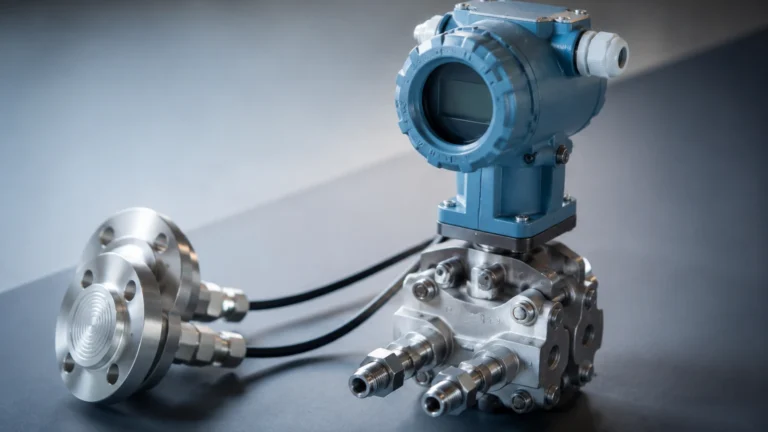
The formula used is $P = \rho \cdot g \cdot h$, where $P$ is the pressure, $\rho$ is the fluid density, $g$ is the gravitational constant, and $h$ is the height of the liquid. In a single-use setup, the sensor often features a thin, medical-grade diaphragm that transmits the fluid pressure to a dry-side transducer. This ensures the electronic components never contact the process fluid, maintaining sterility.
Capacitive Level Sensing
Capacitive sensors are frequently used for point-level detection or continuous level monitoring through the walls of non-metallic containers. The sensor acts as one plate of a capacitor, while the liquid inside the vessel acts as the second plate or the dielectric medium. As the liquid level rises, the capacitance changes in proportion to the surface area covered.
This technology is particularly effective for single-use systems because it can be non-invasive. Sensors can be adhered to the outside of a plastic bag or inserted into a pre-molded plastic sleeve. This allows for accurate measurement without the risk of a leak path or contamination.
Ultrasonic Sensing (Clamp-on)
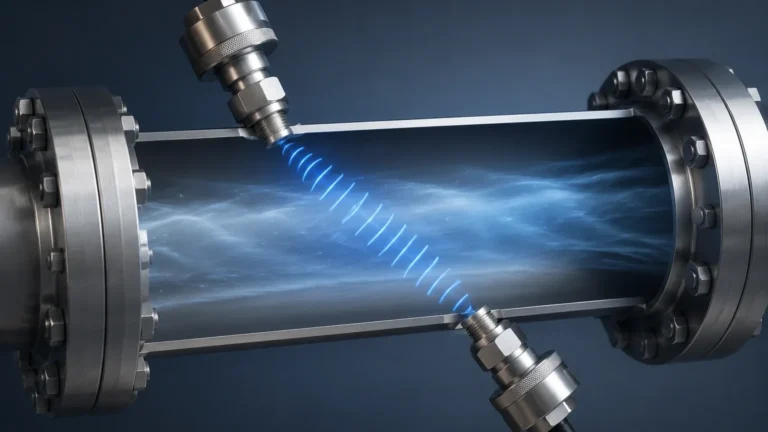
Ultrasonic sensors in the single-use space often utilize a "clamp-on" design. The sensor emits high-frequency sound waves that travel through the wall of the tubing or the vessel. By measuring the time-of-flight of the reflected signal (echo) from the liquid surface or by detecting the presence of liquid at a specific point (attenuation), the system determines the level. This method is highly valued in single-use applications because the sensor remains entirely external to the process, allowing the electronics to be reused while the fluid contact surface is disposed of.
Key Advantages in Industrial Processing
The adoption of the single-use sensor is primarily motivated by the need to reduce risk and operational costs in highly regulated environments.
1. Elimination of Cleaning Validation: In traditional manufacturing, every instrument must undergo Cleaning-in-Place (CIP) and Steam-in-Place (SIP) cycles. Validating these processes is time-consuming and expensive. A single-use sensor arrives pre-sterilized (typically via Gamma radiation) and is discarded after use, bypassing the need for validation.
2. Prevention of Cross-Contamination: For facilities producing multiple products or small batches of specialized biologics, the risk of cross-contamination is a primary concern. Disposable sensors provide a fresh, sterile interface for every batch.
3. Reduced Capital Expenditure (CAPEX): While the cost per unit of a single-use sensor is higher than a single measurement from a permanent meter, the initial investment in stainless steel piping, valves, and sterilization infrastructure is significantly lower.
4. Faster Turnaround Times: Between batches, the time required to swap out a single-use bag and its integrated sensors is measured in minutes or hours, rather than the days required for traditional system sterilization.
Technical Selection Criteria
When evaluating a single-use sensor for a specific application, engineers must consider several technical parameters to ensure reliability and data integrity.
Material Compatibility and Extractables/Leachables (E&L)
Since the sensor or its housing is in direct contact with the product, the materials must be USP Class VI compliant. Manufacturers must provide comprehensive E&L data to ensure that no harmful chemicals migrate from the sensor plastics into the process fluid, which is especially critical in pharmaceutical applications.
Gamma Stability
Most single-use components are sterilized using Gamma radiation (typically 25–45 kGy). It is vital to confirm that the sensor's materials and any integrated electronic components (such as EEPROMs for calibration data storage) can withstand this radiation without degrading or losing data.
Measurement Range and Accuracy
While single-use systems are often smaller than industrial tanks, accuracy remains paramount. For a vessel with a height of 2 meters (approximately 6.5 feet), a sensor should ideally provide an accuracy of ±0.5% of the full scale. Engineers should verify if the sensor requires a zero-point calibration after the bag is inflated but before it is filled.
Integration with Control Systems
Modern single-use sensors must output standard industrial signals, such as 4-20 mA, 0-10 V, or digital protocols like Modbus or HART. Many single-use systems now utilize "plug-and-play" connectors that allow the disposable sensor to interface with a reusable transmitter or a central PLC (Programmable Logic Controller).
Installation and Operational Guidelines
Proper installation is critical to the performance of a single-use sensor. Unlike rigid metal tanks, flexible single-use bags can shift or deform during filling, which may affect sensor alignment.
* Positioning: For hydrostatic sensors, the transducer must be located at the lowest point of the bag to ensure a full range of measurement. For capacitive sensors, the bag must be held taut against the sensor to prevent air gaps that could cause signal drift.
* Calibration: Many single-use sensors come pre-calibrated from the factory. The calibration data is often stored on a chip within the sensor connector. Upon connection, the transmitter automatically reads these parameters. However, a manual "tare" or zero-adjustment is often recommended once the bag is installed in its support housing.
* Handling: Because these sensors are often integrated into plastic films, care must be taken during the unfolding and installation of the bag to avoid mechanical stress on the sensor-to-film bond, which could lead to leaks.

Comparison of Single-use Sensor Technologies
| Technology | Typical Accuracy | Media Contact | Best For | Limitations |
| :— | :— | :— | :— | :— |
| Hydrostatic | ±0.1% to ±0.5% | Yes (Diaphragm) | Continuous level in bags | Sensitive to foam/density changes |
| Capacitive | ±1% to ±2% | No (Non-invasive) | Point level / plastic vessels | Affected by fluid conductivity |
| Ultrasonic | ±0.5% to ±1% | No (Clamp-on) | Tubing / rigid plastic | Requires acoustic coupling |
| Optical | High (Point) | Yes/No | Overfill protection | Sensitive to turbidity/bubbles |
Limitations and Challenges
Despite their advantages, single-use sensors are not a universal solution for every industrial application. There are specific boundaries where traditional instrumentation, like the radar level meters found on the Welk Main Page, remains superior.
* Scale Limitations: Single-use bags and sensors are generally limited to volumes of 2,000 liters (approx. 528 gallons) or less. For massive industrial storage tanks, the mechanical integrity of single-use systems is insufficient.
* Environmental Impact: The disposal of plastic components and integrated electronics raises sustainability concerns. Facilities must have robust waste management programs to handle biohazardous plastic waste.
* Cost per Run: For continuous processes that run for months without stopping, the cumulative cost of disposable sensors will eventually exceed the cost of a high-end permanent radar or ultrasonic meter.
* Material Constraints: Single-use sensors are typically limited to operating temperatures below 60°C (140°F) and low-pressure environments, making them unsuitable for high-temperature chemical synthesis.
Frequently Asked Questions
Q: Can a single-use sensor be reused if it is properly cleaned?
A: No. These sensors are designed and validated for a single use. The materials may degrade after one cycle, and the risk of cross-contamination or mechanical failure during a second run is high. Reusing a single-use sensor voids most manufacturer warranties and regulatory certifications.
Q: How do single-use sensors handle turbulent fluids or foam?
A: Hydrostatic sensors are relatively unaffected by surface foam but can be influenced by turbulence-induced pressure fluctuations. Ultrasonic sensors may struggle with heavy foam as it absorbs the acoustic signal. In such cases, specialized signal processing or mechanical stilling wells within the bag may be required.
Q: Are single-use sensors compatible with hazardous chemicals?
A: Compatibility depends on the polymer used for the sensor body or diaphragm (e.g., PEEK, Silicone, or Polyethylene). While they are excellent for many acids and bases, they may not be suitable for concentrated organic solvents that can dissolve or swell the plastic components.
Q: How is the signal transmitted from a disposable sensor to a PLC?
A: Most systems use a reusable "interconnect" cable. The disposable part of the sensor ends in a connector that plugs into this cable, which then carries the signal to a permanent transmitter or directly to the facility's control system. This keeps the expensive electronics as part of the permanent infrastructure.
By carefully considering the measurement principle and the specific requirements of the process, engineers can successfully integrate single-use sensor technology to create more flexible, efficient, and sterile manufacturing environments. For broader industrial level measurement needs involving permanent installations, consulting technical resources on the Main Page remains the standard practice for ensuring long-term operational reliability.