Mining Inventory Management
Mining Inventory Management
Effective mining inventory management is the backbone of operational efficiency in the extractive industries. Whether managing massive stockpiles of raw ore, monitoring chemical reagents in processing plants, or tracking fuel reserves for heavy machinery, accurate data is essential. In the harsh environments of a mine site—characterized by extreme dust, vibration, and varying material densities—traditional manual measurement methods are often insufficient and hazardous. Modern industrial level measurement technologies provide the real-time data necessary to optimize supply chains and ensure safety.
Core Measurement Principles for Mining Applications
Before selecting a specific instrument for mining inventory management, it is critical to understand the physics behind the most common measurement technologies. In mining, these are generally categorized into non-contact and contact methods.
Radar Level Measurement (FMCW and Pulse)
Radar level meters are the gold standard for bulk solids and aggressive liquids. They operate by emitting high-frequency electromagnetic waves (typically in the 26GHz or 80GHz range) toward the material surface.
* FMCW (Frequency Modulated Continuous Wave): The transmitter emits a continuous signal with a constantly changing frequency. The difference between the emitted frequency and the received frequency is proportional to the distance. This method offers superior accuracy (up to ±2mm) and is highly effective at filtering out noise from dust or internal tank structures.
* Pulse Radar: This method measures the "time of flight"—the time it takes for a short microwave pulse to travel to the surface and back. While effective, FMCW is generally preferred in mining for its higher signal-to-noise ratio in dusty silos.
Ultrasonic Level Measurement
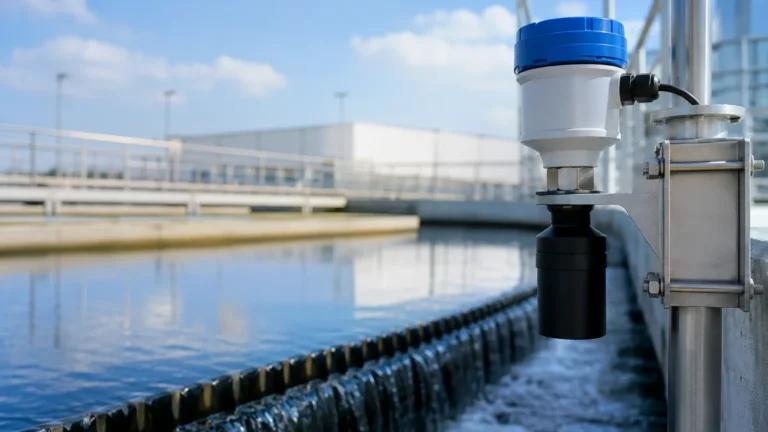
Ultrasonic sensors emit mechanical sound waves. The sensor measures the time interval between the emission of the ultrasonic pulse and the reception of the echo. While cost-effective for liquid storage and water management, ultrasonic waves are mechanical and can be absorbed or scattered by heavy dust clouds or foam, making them less ideal for primary ore crushers or fine powder silos compared to radar.
Hydrostatic Level Measurement
For liquid inventory, such as acids used in leaching or water in tailings ponds, hydrostatic transmitters measure the pressure exerted by the liquid column. The principle is based on the formula: *Pressure (P) = Density (ρ) × Gravity (g) × Height (h)*. As long as the density of the liquid remains constant, this provides a highly reliable and robust measurement of the level.
The Role of Level Measurement in Mining Inventory Management
Mining inventory management involves the tracking of three primary categories of materials: raw extracted ore, processed concentrates, and process consumables. Each presents unique challenges for instrumentation.
1. Ore Stockpiles and Silos: Raw ore is abrasive and creates significant dust during loading. Radar sensors with high-gain antennas are required here to penetrate the dust and provide an accurate average level despite the uneven surface (angle of repose) of the material.
2. Chemical and Reagent Storage: Flotation and leaching processes require various chemicals. Hydrostatic or ultrasonic sensors are often used in these smaller, controlled tanks to ensure that the processing plant never runs dry, which would lead to costly downtime.
3. Tailings and Wastewater: Monitoring the level of tailings dams is a critical safety requirement. Instruments must be able to withstand outdoor environmental conditions and provide long-range measurement (often up to 30 or 70 meters).
To explore the full range of instrumentation suited for these tasks, engineers can Review product options and application support at the Welk Main Page.
Technology Selection Table for Mining
Choosing the right tool depends on the material state and the environmental conditions. The following table provides a general guide for technology selection in mining inventory management.
| Application | Recommended Technology | Primary Benefit | Limitation |
| :— | :— | :— | :— |
| Crushed Ore Silos | 80GHz FMCW Radar | Penetrates heavy dust; narrow beam avoids walls. | Higher initial investment cost. |
| Slurry Tanks | Radar or Ultrasonic | Non-contact prevents sensor wear from abrasion. | Foam on slurry can dampen ultrasonic signals. |
| Fuel/Oil Storage | Hydrostatic or Radar | High accuracy for high-value liquid assets. | Hydrostatic requires contact with the fluid. |
| Water Reservoirs | Ultrasonic | Cost-effective for large surface areas. | Sensitive to extreme surface turbulence. |
| Acid/Leach Tanks | PTFE-coated Radar | Resists chemical corrosion; high accuracy. | Requires specific materials for sensor wetted parts. |
| Conveyor Transfer | Laser or Radar | High-speed tracking of material flow. | Laser can be blocked by thick dust. |
Installation Considerations and Best Practices
In mining inventory management, the physical installation of a sensor is just as important as the technology itself. Poor placement can result in "ghost echoes" or total signal loss.
* Angle of Repose: Bulk solids do not sit flat; they form a cone when filling and a funnel when emptying. Sensors should be positioned approximately 1/3 of the radius from the tank wall to get a representative average of the volume.
* Beam Angle: Modern 80GHz radar units have a very narrow beam angle (often as low as 3°). This is vital in mining silos with internal bracing or ladders, as it allows the signal to pass between obstructions without interference.
* Nozzle Height: The mounting nozzle should be as short as possible. If a nozzle is too long or narrow, the signal may reflect off the internal edges of the pipe before it even reaches the silo, creating a "dead zone" at the top of the measurement range.
* Purging Systems: In environments with extremely sticky dust (like bauxite or wet coal), sensors should be equipped with air purge connections. This allows a blast of compressed air to clean the sensor face periodically, ensuring uninterrupted measurement.
Limitations and Common Risks
While advanced instrumentation significantly improves mining inventory management, engineers must be aware of inherent limitations:
* Material Density Fluctuations: Hydrostatic sensors rely on a known density. If the concentration of a slurry changes, the level reading will shift even if the actual height remains the same. In such cases, non-contact radar is a safer choice.
* Signal Absorption: Very fine, dry powders can sometimes absorb radar waves rather than reflecting them. Selecting a sensor with a high dynamic range is necessary to capture the weak return signals from these materials.
* Extreme Temperatures: Mine sites in regions like the Pilbara or the Arctic face extreme ambient temperatures. Instruments must be rated for -40°C to +80°C, often requiring sunshades or specialized heating elements for the electronics.
Frequently Asked Questions (FAQ)
Q: Why is 80GHz radar preferred over 26GHz for mining silos?
A: The higher frequency (80GHz) allows for a much smaller antenna and a narrower beam. This makes it easier to install on existing nozzles and ensures the signal avoids internal silo structures, which are common in mining.
Q: How do I measure inventory in an open stockpile?
A: For open stockpiles, a combination of GPS-enabled drones and fixed long-range radar sensors is often used. Fixed radars can provide continuous level data at specific points, while drones provide periodic 3D volume mapping.
Q: Can ultrasonic sensors be used for ore measurement?
A: It is generally not recommended for primary ore storage due to the high levels of dust produced during loading. Dust attenuates sound waves, leading to frequent signal loss. Radar is the more reliable choice for these specific mining inventory management needs.
Q: What maintenance is required for mining level sensors?
A: Non-contact sensors require very little maintenance. The primary task is ensuring the sensor face remains free of significant buildup. Using a sensor with a self-cleaning flanged design or an air purge system can automate this process.
Confirming Project Requirements
Before finalizing an instrumentation strategy for mining inventory management, project managers should confirm several key data points:
1. Material Dielectric Constant (εr): This determines how well a material reflects radar waves.
2. Vessel Dimensions: Total height and diameter, including the height of any mounting nozzles.
3. Process Conditions: Maximum pressure, temperature, and the presence of any corrosive chemicals.
4. Integration Needs: Whether the data needs to be transmitted via 4-20mA, HART, Modbus, or wireless protocols to the central SCADA system.
By matching the measurement principle to the specific material characteristics and environmental constraints, mining operations can achieve a level of inventory transparency that reduces waste, improves safety, and optimizes the entire production cycle.