Flow Meter Calibration Services Near Me
Flow Meter Calibration Services Near Me
In industrial automation and process control, the accuracy of measurement instruments is the foundation of operational efficiency, safety, and regulatory compliance. Whether managing water treatment facilities, chemical processing plants, or oil and gas refineries, engineers frequently encounter the need for precise data. While level measurement is a core component of inventory management, flow measurement is equally critical for mass balance and custody transfer. When performance drifts, searching for "flow meter calibration services near me" becomes a priority to restore system integrity.
This guide provides a comprehensive overview of flow meter calibration principles, selection criteria for service providers, and the technical nuances of maintaining measurement accuracy in various industrial environments.
The Importance of Regular Calibration in Industrial Processes
Calibration is the process of comparing the readings of a measurement device against a known reference standard of higher accuracy. Over time, all sensors experience "drift" due to mechanical wear, electronic component aging, or coating buildup. In flow measurement, even a 1% error can result in significant financial losses or process instabilities.
For facilities utilizing advanced instrumentation, such as those found on the Main Page of leading industrial suppliers, maintaining the synergy between level and flow data is essential. For instance, in open channel flow applications, an ultrasonic level sensor measures the head of water over a weir or flume to calculate flow rates. If the level sensor or the underlying flow calculation is not calibrated, the entire data set becomes unreliable.
Key Drivers for Calibration:
* Regulatory Compliance: Many industries, particularly water treatment and pharmaceuticals, are legally required to provide documented proof of instrument accuracy.
* Quality Control: In chemical blending, precise flow rates ensure product consistency.
* Cost Management: Accurate measurement prevents the overfilling of tanks and ensures precise billing in custody transfer applications.
* Safety: Monitoring flow rates in cooling systems or volatile chemical lines is critical for preventing equipment failure.
Understanding Flow Meter Calibration Principles
Before selecting a service provider, it is vital to understand the physical principles used to verify a meter's performance. Calibration methods generally fall into three categories: gravimetric, volumetric, and master meter comparison.
1. Gravimetric Calibration (Weight-Based)
This is widely considered the most accurate method. It involves weighing the fluid that passes through the meter over a specific time interval. Since mass is a fundamental physical property independent of temperature and pressure, gravimetric systems offer the lowest uncertainty. The mass is converted to volume using the fluid's density, allowing for a highly precise comparison with the flow meter's output.
2. Volumetric Calibration
This method uses a calibrated volume (a "prover" or a tank) to measure the fluid passing through the device. The fluid is collected in a vessel with precisely known dimensions. This is common for liquid flow meters where the fluid is non-volatile and stable.
3. Master Meter Calibration
A "master meter" is a high-precision flow meter that has been recently calibrated against a primary standard. During the service, the master meter and the unit under test (UUT) are placed in series. The readings from both are compared across various flow rates. This method is often used for onsite "flow meter calibration services near me" because the equipment is more portable than large weighing scales or volumetric tanks.
When to Seek Flow Meter Calibration Services Near Me
The frequency of calibration depends on the technology used, the criticality of the process, and the nature of the fluid.
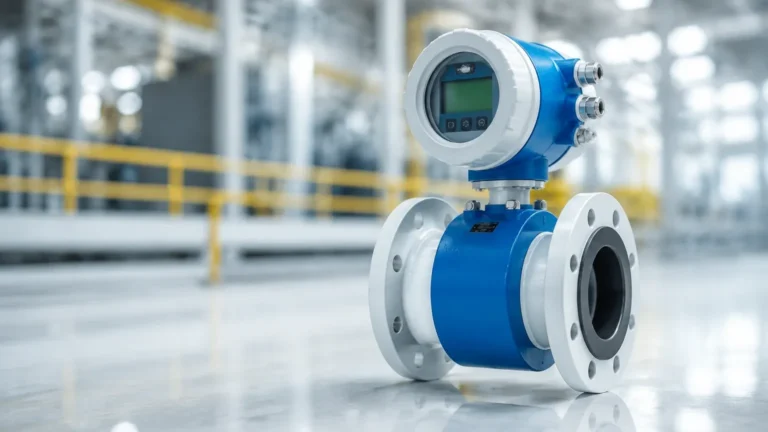
* Electromagnetic Flow Meters: These have no moving parts but can suffer from electrode coating or liner wear. Annual calibration is typical for wastewater applications.
* Ultrasonic Flow Meters: While non-intrusive, signal attenuation or changes in fluid properties can affect accuracy. Periodic verification ensures the transducers remain correctly aligned.
* Turbine and Positive Displacement Meters: These involve mechanical movement and are susceptible to friction and wear. They often require more frequent calibration cycles.
* Differential Pressure (DP) Meters: These rely on primary elements like orifice plates. Both the plate condition and the DP transmitter require regular checks.
If you notice erratic readings, a sudden shift in mass balance, or if the instrument has undergone significant repair, it is time to contact a local calibration specialist.
Evaluating Local vs. Factory Calibration Services
When searching for "flow meter calibration services near me," you will likely encounter two options: onsite field service and offsite laboratory calibration.
Onsite Field Calibration
Field calibration is performed at your facility. This minimizes downtime as the meter does not need to be removed from the piping. It also accounts for the "installation effect"—the specific piping geometry (elbows, valves) that can influence flow profiles. However, onsite calibration typically has higher uncertainty than a controlled laboratory environment.
Laboratory Calibration
Sending the meter to a specialized lab provides the highest level of precision. Labs use controlled temperatures, stabilized flow profiles, and primary standards. This is recommended for meters used in custody transfer or high-precision chemical dosing. The downside is the logistical requirement of removing the meter and the resulting process downtime.
Practical Selection Table: Meter Type vs. Calibration Method
Choosing the right service depends on the meter technology. The following table outlines the preferred calibration approaches for common industrial flow meters.
| Meter Type | Preferred Calibration Method | Typical Uncertainty | Key Consideration |
| :— | :— | :— | :— |
| Electromagnetic | Master Meter / Volumetric | 0.2% to 0.5% | Check for electrode coating |
| Ultrasonic (Clamp-on) | Master Meter | 1.0% to 3.0% | Pipe wall thickness accuracy |
| Coriolis | Gravimetric | 0.05% to 0.1% | Highly sensitive to vibration |
| Turbine | Volumetric / Master Meter | 0.25% to 0.5% | Fluid viscosity must match |
| Vortex | Master Meter (Air/Water) | 0.5% to 1.0% | Requires stable flow profile |
| Differential Pressure | Component Calibration | 0.5% to 2.0% | Inspect orifice plate edges |
Key Selection Criteria for Calibration Providers
Not all calibration services are equal. To ensure the reliability of your data, evaluate providers based on the following technical benchmarks:
1. ISO/IEC 17025 Accreditation: This is the global standard for the competence of testing and calibration laboratories. A provider with this accreditation has demonstrated technical proficiency and a robust quality management system.
2. Traceability: Ensure the provider's standards are traceable to national or international bodies, such as NIST (National Institute of Standards and Technology). This provides an unbroken chain of comparisons back to a primary standard.
3. Measurement Range and Fluid Capability: Ensure the lab can handle the flow rates (e.g., from 10 L/h to 1,000 m³/h) and the specific fluids used in your process. Calibrating a meter with water when it is used for high-viscosity oil may require viscosity correction factors.
4. Turnaround Time: For critical processes, the speed of service is paramount. Inquire about "near me" providers who offer expedited onsite services.
5. Documentation: A valid calibration certificate should include the "as-found" data, "as-left" data, uncertainty statements, and environmental conditions during the test.
Installation Considerations After Calibration
Even a perfectly calibrated meter will provide inaccurate data if installed incorrectly. When the meter returns from a "flow meter calibration services near me" provider, follow these engineering guidelines:
* Straight Pipe Runs: Most flow meters require a specific length of straight pipe upstream (typically 10 to 20 diameters) and downstream (3 to 5 diameters) to eliminate turbulence and swirl.
* Orientation: Ensure the meter is installed in the correct orientation (horizontal vs. vertical) as specified during calibration. For liquid applications, vertical upward flow is often preferred to ensure the pipe remains full.
* Gasket Alignment: Misaligned gaskets can protrude into the flow stream, creating vortices that disturb the measurement.
* Grounding: For electromagnetic flow meters, proper grounding to the fluid is essential to eliminate electrical noise.
Limitations and Uncertainties in Calibration
It is important to recognize that calibration does not "fix" a broken meter; it only quantifies its error. If a meter is fundamentally unsuitable for an application—such as using a turbine meter for a slurry—calibration will not provide long-term reliability.
Furthermore, "uncertainty" is an inherent part of every measurement. Even the best calibration lab has a margin of error. When reviewing service quotes, compare the "Best Measurement Capability" (BMC) of the labs to ensure their precision meets your process requirements.
Frequently Asked Questions (FAQs)
Q: How often should I search for flow meter calibration services near me?
A: Most industrial standards recommend annual calibration. However, if your process involves corrosive fluids or high-pressure cycles, semi-annual checks may be necessary.
Q: Can I calibrate my flow meter myself?
A: While some facilities have "master meters" for internal verification, formal calibration for regulatory or quality purposes usually requires a third-party accredited lab to ensure impartiality and traceability.
Q: What is the difference between calibration and validation?
A: Calibration is the comparison against a standard and the adjustment of the device. Validation (or verification) is a simpler check to ensure the device is still performing within a specified tolerance without necessarily making adjustments.
Q: Does temperature affect flow meter calibration?
A: Yes, significantly. Changes in temperature affect fluid density and viscosity, as well as the physical dimensions of the meter body. Professional calibration services will either control the temperature or use compensation algorithms to provide accurate results.
Conclusion
Maintaining the accuracy of flow and level measurement instruments is a continuous process that requires technical expertise and the right service partners. By understanding the principles of gravimetric and master meter calibration, and by selecting accredited providers, engineers can ensure their systems operate at peak performance.
Whether you are integrating new radar level meters or maintaining existing flow infrastructure, the goal remains the same: reliable data for better decision-making. For further technical specifications on industrial measurement solutions, you can explore the resources available on our Main Page. Selecting the right "flow meter calibration services near me" is the final, essential step in a robust instrumentation maintenance strategy.