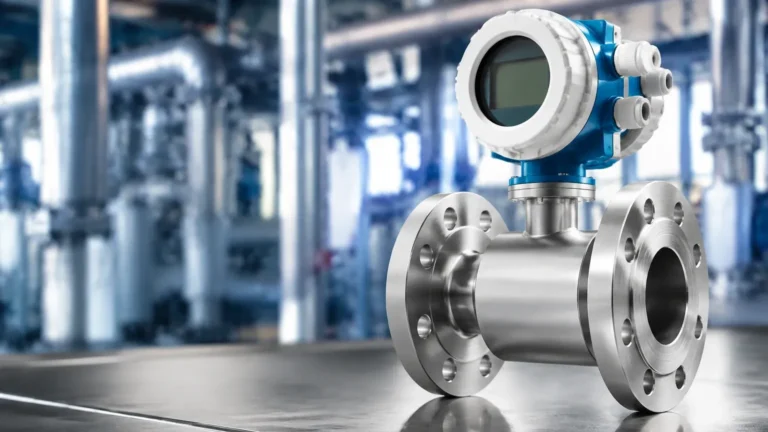
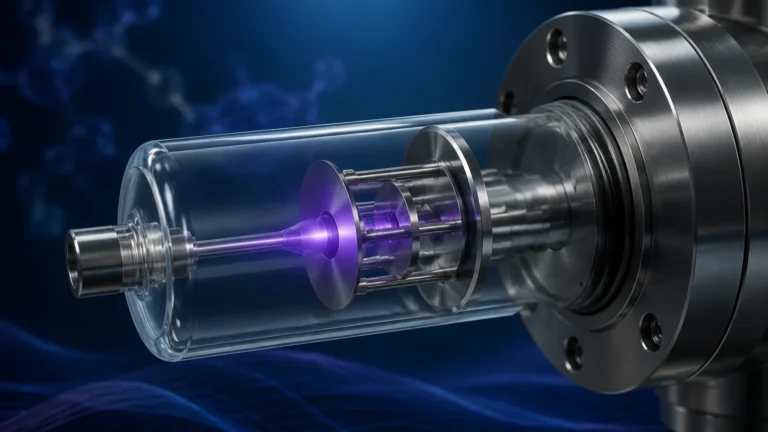
Low Pressure Differential Pressure Transducer
Low Pressure Differential Pressure Transducer
In the landscape of industrial automation and process control, the ability to measure minute differences in pressure is vital for maintaining safety, efficiency, and product quality. A low pressure differential pressure transducer is a precision instrument designed to detect and convert small pressure variances between two points into a standardized electrical signal. Unlike standard pressure sensors that measure against a vacuum or atmospheric reference, these transducers focus on the delta between two distinct pressure ports, often at ranges as low as 0 to 25 Pascals (Pa) or 0 to 2.5 mbar.
For engineers and facility managers, understanding the nuances of these instruments is essential when selecting equipment for HVAC systems, cleanroom monitoring, or liquid level measurement in shallow or pressurized tanks. This guide explores the fundamental principles, selection criteria, and practical application of low-pressure differential pressure (DP) technology.
Measurement Principles of Differential Pressure
Before selecting a low pressure differential pressure transducer, it is important to understand the physical mechanisms that enable such high sensitivity. Most DP transducers utilize a sensing element—typically a diaphragm—that sits between two pressure chambers (the High side and the Low side).
The Diaphragm Mechanism
When there is a difference in pressure between the two ports, the diaphragm deflects toward the side with lower pressure. The amount of deflection is proportional to the pressure difference. In low-pressure applications, this diaphragm must be extremely thin and flexible to respond to subtle changes, yet robust enough to withstand overpressure events.
Transduction Technologies
Several technologies are used to convert this physical displacement into an electrical signal:
1. Piezoresistive Sensors: These utilize strain gauges bonded to or diffused into a silicon diaphragm. As the diaphragm bends, the electrical resistance changes. This technology is highly sensitive and common in low-pressure industrial models.
2. Capacitive Sensors: These measure the change in electrical capacitance between a moving diaphragm and a fixed electrode. Capacitive sensors are known for their excellent stability and ability to measure very low pressures (down to fractions of an inch of water column) with high accuracy.
3. Inductive/LVDT: Used less frequently in modern compact transducers, these measure the movement of a core within a magnetic field. They are highly durable but often larger than silicon-based alternatives.
Defining "Low Pressure" in Industrial Contexts
In the context of differential pressure, "low pressure" generally refers to ranges that fall below 10 kPa (approximately 1.45 psi or 100 mbar). Many specialized applications require even lower ranges, such as 0–250 Pa (1 inH2O).
Standard industrial DP transmitters are often designed for high-line pressure environments (like steam pipes). However, a dedicated low pressure differential pressure transducer is optimized for resolution and thermal stability at the bottom end of the scale. This is critical because, at very low pressures, environmental factors like temperature fluctuations or vibration can introduce significant noise into the signal.
Applications in Level and Flow Measurement
While DP transducers are widely used for air duct monitoring, they are equally critical in liquid level applications, particularly within the scope of industrial level measurement instruments provided by manufacturers like Welk.
Hydrostatic Level Measurement
In an open tank, a DP transducer can measure the hydrostatic head pressure of a liquid. The "High" port is connected to the bottom of the tank, while the "Low" port is vented to the atmosphere. For a shallow tank (e.g., 500 mm or 20 inches of water), the total pressure exerted is very low, necessitating a transducer with a specialized low-pressure range to maintain accuracy.
Pressurized Tank Level
In closed vessels, the space above the liquid is often pressurized with a gas or steam. To measure the level accurately, the transducer must subtract the gas pressure from the total pressure at the bottom. The "Low" port is connected to the top of the tank (the vapor space). This ensures that the resulting signal represents only the liquid height, regardless of fluctuations in the tank's internal pressure.
Bubbler Systems
In applications involving corrosive or slurry-filled liquids where a sensor cannot be directly immersed, a bubbler system is used. A low pressure differential pressure transducer measures the pressure required to push air through a tube submerged in the liquid. The back-pressure is directly proportional to the liquid level.
Key Evaluation and Selection Criteria
Selecting the right low pressure differential pressure transducer requires a balance between sensitivity and durability. The following table provides a comparison of common sensor characteristics for low-pressure applications:
| Feature | Piezoresistive (Silicon) | Capacitive | Ceramic Thick Film |
| :— | :— | :— | :— |
| Sensitivity | High | Very High | Moderate |
| Long-term Stability | Good | Excellent | Good |
| Media Compatibility | Limited (requires oil fill) | High | Excellent (Dry cell) |
| Overpressure Limit | Moderate | High | Moderate |
| Typical Min Range | 0–500 Pa (5 mbar) | 0–25 Pa (0.25 mbar) | 0–1000 Pa (10 mbar) |
Accuracy and Total Error Band (TEB)
When dealing with low pressures, "Accuracy" (often cited as % of Full Scale) can be misleading. Engineers should look for the Total Error Band, which includes the effects of linearity, hysteresis, repeatability, and, most importantly, temperature coefficients. A sensor that drifts significantly with a 10°C change in ambient temperature is unsuitable for precise low-pressure control.
Wetted Materials
If the transducer is measuring liquid level or process gases, the wetted parts (diaphragm and housing) must be compatible with the media. Common materials include 316L Stainless Steel, Hastelloy C, or Tantalum for corrosive chemical applications.
Installation Considerations
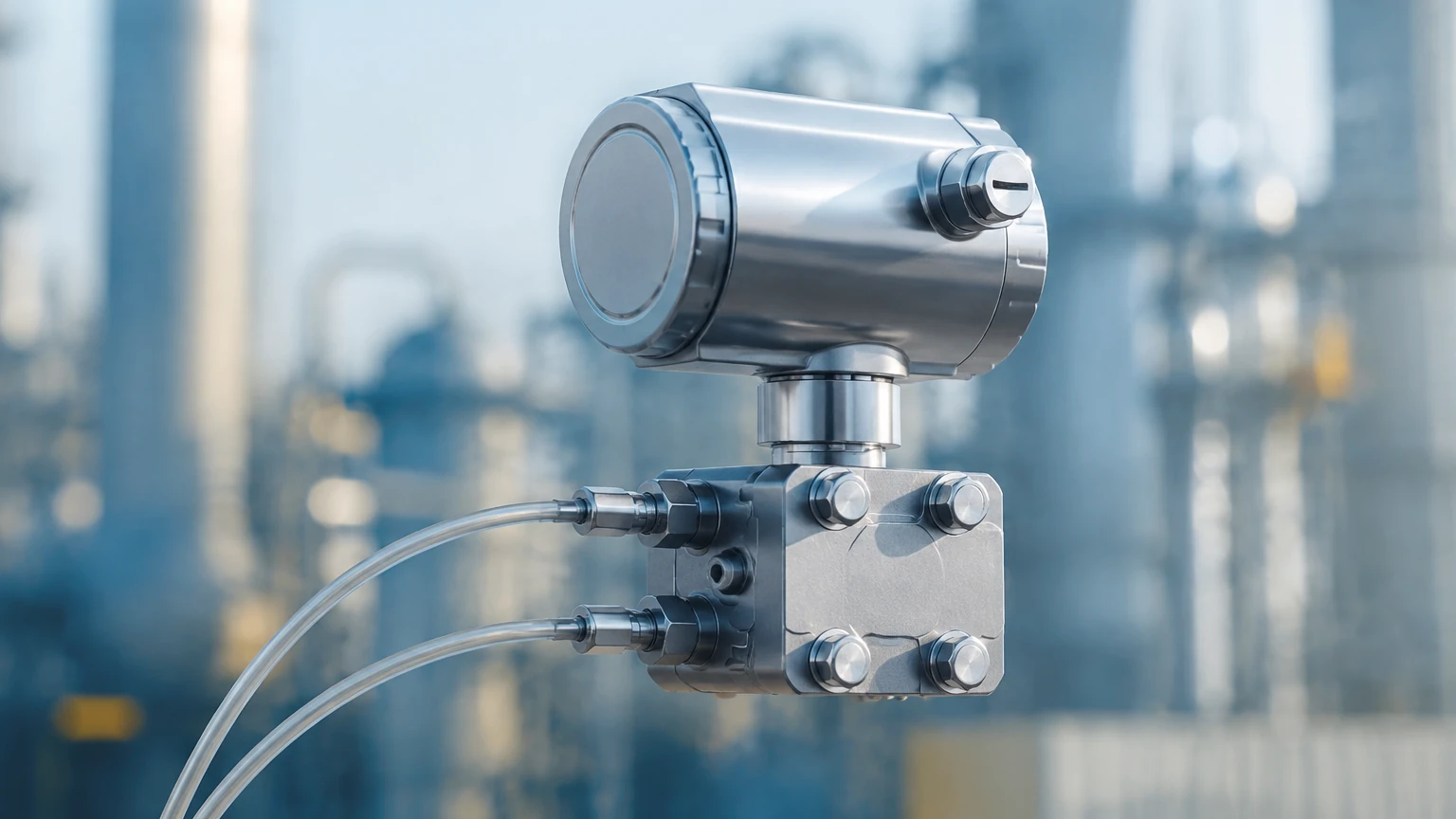
Proper installation is paramount to the performance of a low pressure differential pressure transducer. Small errors in mounting can lead to significant measurement offsets.
1. Orientation Sensitivity: Because the diaphragms in low-pressure sensors are extremely light, the weight of the diaphragm itself can affect the reading if the sensor is tilted. Always mount the transducer in the orientation specified by the manufacturer and perform a zero-point calibration after installation.
2. Impulse Piping: For liquid applications, ensure that the impulse lines (the tubes connecting the process to the sensor) are sloped to prevent gas bubbles from being trapped in the lines, which would cause erratic readings.
3. Condensation Management: In gas or air applications, if the process gas is warmer than the ambient air, condensation can form in the tubing. The transducer should be mounted above the pressure ports with the tubing sloped downward to allow moisture to drain away from the sensor.
4. Manifolds: Use a 3-way or 5-way manifold. This allows the operator to isolate the sensor from the process and equalize the High and Low sides to verify the zero-pressure signal without removing the instrument from the line.
Common Risks and Limitations
* Overpressure Events: Low-pressure diaphragms are delicate. A sudden spike in pressure (e.g., a water hammer or a valve opening too quickly) can permanently deform the sensing element. Ensure the transducer has an overpressure rating significantly higher than the maximum possible process surge.
* Signal Noise: In very low ranges, air turbulence or mechanical vibration can cause the output signal to fluctuate. Utilizing a transducer with adjustable damping (filtering) can help provide a stable 4-20mA or digital output.
* Zero Drift: All sensors drift over time. In low-pressure applications, a drift of even 1% can be significant. Regular calibration cycles are required to maintain system integrity.
Frequently Asked Questions (FAQ)
Q: Can I use a high-pressure DP transmitter for a low-pressure application by just re-ranging it?
A: Generally, no. While many smart transmitters allow for "turndown" (e.g., a 10:1 ratio), using a 100 kPa sensor to measure 1 kPa will result in poor accuracy and high levels of noise. It is always better to select a sensor whose native range is close to your operating point.
Q: What is the difference between a pressure transmitter and a transducer?
A: In industrial parlance, a *transducer* often refers to the sensing element that outputs a raw voltage (like 0-100mV), while a *transmitter* includes the electronics to condition that signal into a robust industrial standard like 4-20mA, HART, or Modbus. However, the terms are frequently used interchangeably.
Q: How do I handle measurement if the media is corrosive?
A: You can use a diaphragm seal (chemical seal) which uses a flexible membrane and a fill fluid to transmit pressure to the sensor, keeping the corrosive media away from the internal electronics. Note that this may slightly reduce sensitivity in ultra-low pressure ranges.
Conclusion
The low pressure differential pressure transducer is a cornerstone of modern process engineering, providing the sensitivity required for complex level and flow challenges. By understanding the underlying measurement principles and adhering to strict installation guidelines, industrial users can ensure long-term reliability and precision. For those seeking comprehensive solutions in level measurement, including radar, ultrasonic, and hydrostatic technologies, it is advisable to Review product options and application support on the Welk Main Page to find the instrument best suited for specific environmental and process conditions.
Download Low Pressure Differential Pressure Transducer as a PDF