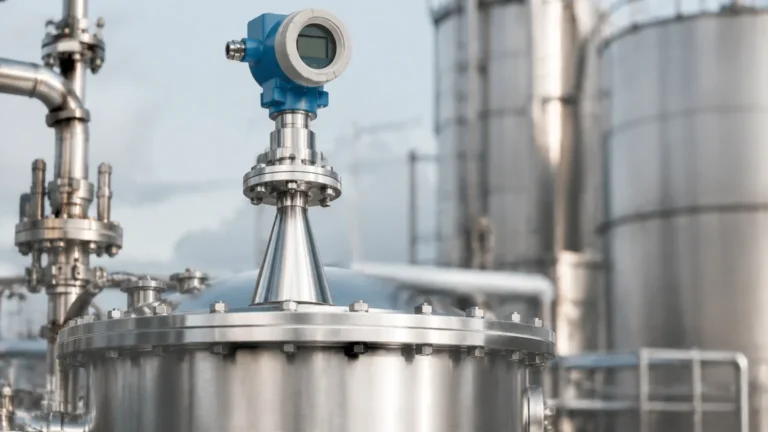
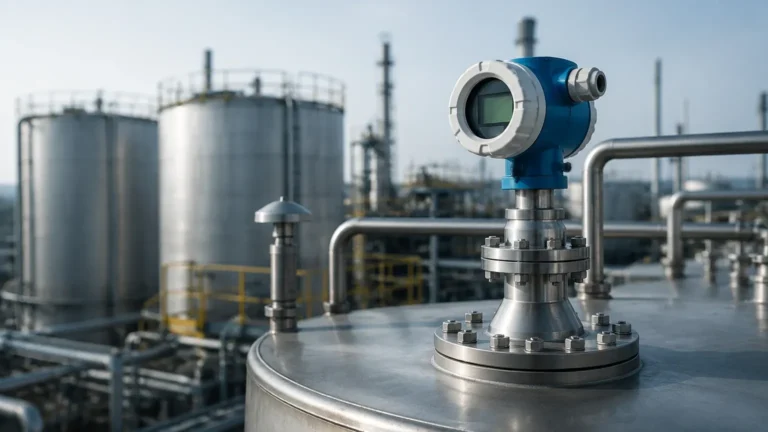
Radar Type Level Transmitter vs Ultrasonic
Radar Type Level Transmitter vs Ultrasonic: A Practical Engineering Guide
In the field of industrial automation, selecting the correct non-contact level measurement technology is critical for process stability, safety, and cost-efficiency. While several methods exist, the debate often centers on radar type level transmitter vs ultrasonic sensors. Both technologies offer the advantage of measuring level without touching the medium, reducing maintenance and preventing contamination. However, their underlying physical principles differ significantly, leading to distinct performance characteristics in varying industrial environments.
This guide provides a technical comparison of Radar Level Meters and ultrasonic transmitters, explaining their operating principles, selection criteria, and installation requirements to help engineers and procurement specialists make informed decisions.
Understanding the Measurement Principles
Before comparing the two technologies, it is essential to understand how each interacts with the process environment.
Ultrasonic Level Measurement
Ultrasonic transmitters operate on the Time-of-Flight (ToF) principle using mechanical sound waves. The sensor emits a high-frequency acoustic pulse (typically between 20 kHz and 200 kHz) toward the material surface. The pulse reflects off the surface and returns to the transducer.
The distance is calculated using the formula:
*Distance = (Speed of Sound × Time) / 2*
Because sound requires a physical medium (usually air) to travel, the accuracy of ultrasonic measurement is directly influenced by anything that alters the speed of sound, such as air temperature, pressure, and gas composition.
Radar Level Measurement
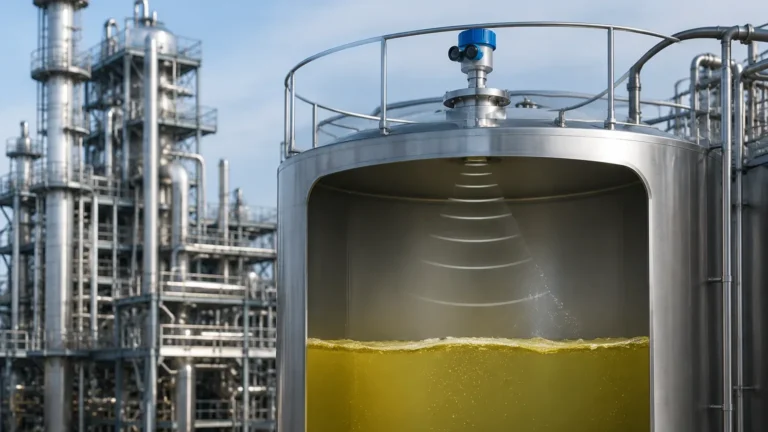
Radar transmitters also use the ToF principle but employ electromagnetic waves instead of sound. These waves travel at the speed of light. Modern industrial radar units typically use either Pulse Radar or Frequency Modulated Continuous Wave (FMCW) technology.
* Pulse Radar: Sends short microwave bursts and measures the time delay of the return signal.
* FMCW Radar: Emits a continuous signal with a changing frequency. The difference in frequency between the emitted and received signal is proportional to the distance.
Unlike sound, electromagnetic waves do not require a medium and are largely unaffected by the atmosphere within the tank.
Comparative Analysis: Radar Type Level Transmitter vs Ultrasonic
When evaluating a radar type level transmitter vs ultrasonic solution, engineers must consider the following environmental and process factors.
1. Atmospheric Influence (Vapor, Dust, and Steam)
Ultrasonic waves are mechanical vibrations. In environments with heavy dust (e.g., grain silos) or thick steam (e.g., hot water tanks), the sound waves are scattered or absorbed, leading to signal loss. Furthermore, if the air temperature is inconsistent, the speed of sound changes, necessitating temperature compensation sensors which may still struggle in stratified layers.
Radar waves are electromagnetic. They easily penetrate dust, vapor, and steam. This makes radar the preferred choice for high-temperature chemical reactions or volatile storage where the headspace is not clear air.
2. Pressure and Vacuum Conditions
Sound cannot travel in a vacuum. Therefore, ultrasonic sensors are completely non-functional in vacuum-sealed process vessels. Additionally, high pressure changes the density of the air, significantly affecting ultrasonic accuracy.
Radar operates effectively in a total vacuum and is virtually unaffected by pressure changes. High-frequency radar level meters can maintain precision in high-pressure reactors where ultrasonic sensors would fail.
3. Surface Characteristics and Foam
The reflection of the signal depends on the surface of the medium.
* Ultrasonic: Relies on a solid physical reflection. Heavy foam can absorb the sound pulse, resulting in a "lost echo."
* Radar: Relies on the Dielectric Constant (εr) of the material. Materials with a high dielectric constant (like water, εr ≈ 80) reflect radar waves very well. For materials with low dielectric constants (like oils or certain solvents), the signal may be weak, requiring specialized high-sensitivity radar or guided wave radar.
4. Measurement Range and Accuracy
Ultrasonic sensors generally have a shorter effective range, typically up to 15–30 meters (approx. 49–98 ft). Their accuracy is usually around 0.25% of the range.
Radar level meters offer much greater range, with some models reaching 70–100 meters (approx. 230–328 ft). They also provide higher precision, often within ±2 mm or ±1 mm, making them suitable for custody transfer and high-value inventory management.
Technical Selection Table
| Feature | Ultrasonic Transmitter | Radar Level Meter |
| :— | :— | :— |
| Medium of Propagation | Sound Waves (Mechanical) | Microwaves (Electromagnetic) |
| Vacuum Compatibility | No | Yes |
| Effect of Temperature | High (Requires compensation) | Negligible |
| Effect of Dust/Steam | Significant interference | Minimal interference |
| Typical Range | 0.3m to 30m (1ft to 98ft) | 0.1m to 100m (0.3ft to 328ft) |
| Standard Accuracy | ±0.25% to ±0.5% of span | ±1mm to ±5mm |
| Relative Cost | Lower | Higher (but decreasing) |
| Best Use Case | Open channels, water tanks | Chemical reactors, oil tanks, silos |
Installation Considerations
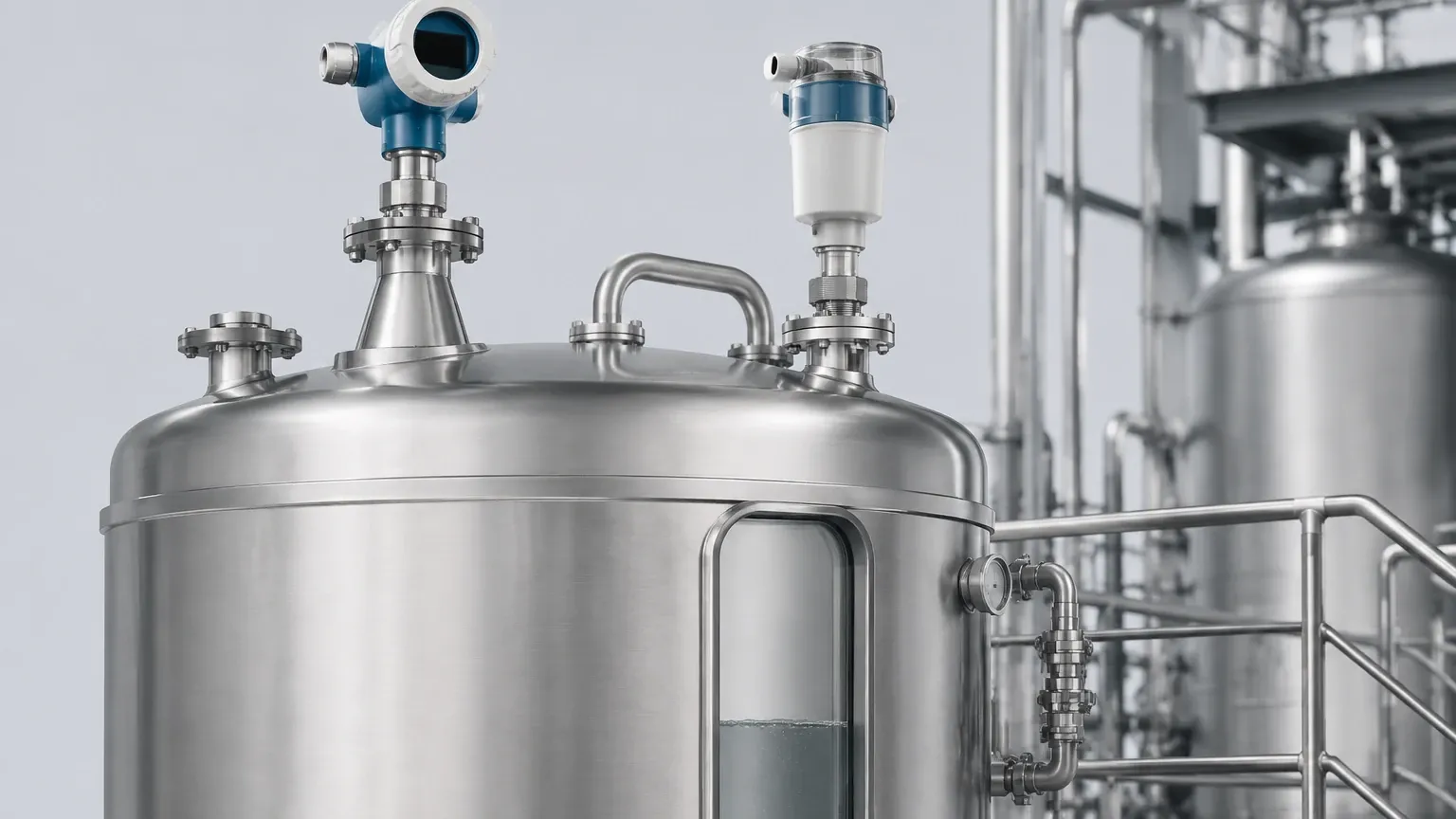
Correct installation is paramount for both technologies to avoid "false echoes" from internal tank structures like ladders, agitators, or heating coils.
Beam Angle and Obstructions
Every sensor has a beam angle. Any object within this cone will reflect the signal.
* Ultrasonic: Typically has a wider beam angle (10°–12°). This requires a clear path and often limits how close the sensor can be mounted to a tank wall.
* Radar: High-frequency radar (e.g., 80 GHz) has a very narrow beam angle (as small as 3°). This allows for installation in narrow nozzles or tanks with complex internal geometry without interference.
The Blocking Distance (Dead Zone)
Both sensors have a "dead zone" directly beneath the transducer where measurement is impossible.
* For ultrasonic, this is usually 0.2m to 0.5m (8" to 20").
* For radar, the dead zone is often smaller, but the nozzle height must still be accounted for to ensure the signal can clear the mounting flange.
Mounting Position
* Avoid mounting the sensor in the exact center of a domed tank, as this can concentrate reflected signals and cause errors.
* Do not mount the sensor directly above the material inlet, as the falling stream will interfere with the signal.
Limitations and Application Risks
Ultrasonic Limitations
* Wind and Turbulence: In outdoor open-channel flow applications, strong winds can "blow" the sound wave away from the receiver.
* Chemical Compatibility: The transducer face is often made of PVDF or UPVC. Ensure these materials are compatible with process vapors.
Radar Limitations
* Low Dielectric Media: If the material has a dielectric constant below 1.4, standard non-contact radar may struggle to receive a return signal. In these cases, Guided Wave Radar (GWR) is often recommended.
* Conductive Foam: While radar can penetrate some foam, dense conductive foam can act as a false surface.
Frequently Asked Questions (FAQ)
Q: Can I use an ultrasonic sensor for boiling liquids?
A: It is not recommended. Boiling creates heavy steam and turbulence. The steam changes the speed of sound and absorbs the signal. A radar level meter is a much more reliable choice for boiling or steaming processes.
Q: Is radar always better than ultrasonic?
A: Not necessarily. For simple water level monitoring in a sump or an open reservoir where conditions are stable and the budget is limited, ultrasonic is a cost-effective and highly reliable solution.
Q: How does the dielectric constant affect radar?
A: The dielectric constant determines how much energy is reflected back to the sensor. High dielectric materials (water-based) reflect strongly. Low dielectric materials (hydrocarbons) allow more energy to pass through, resulting in a weaker reflection.
Q: What information should I provide to a supplier when ordering?
A: To ensure the right fit, specify the medium name, dielectric constant (if known), operating temperature, process pressure, tank height, nozzle dimensions, and whether there is an agitator present.
Conclusion
Choosing between a radar type level transmitter vs ultrasonic sensor depends on the specific demands of the application. Ultrasonic sensors remain an excellent choice for water treatment and simple liquid storage where atmospheric conditions are stable. However, for complex industrial processes involving pressure, temperature extremes, dust, or steam, Radar Level Meters provide the precision and reliability required for modern process control. By understanding the physical boundaries of each technology, engineers can ensure long-term measurement stability and minimize maintenance overhead.
Download Radar Type Level Transmitter vs Ultrasonic as a PDF