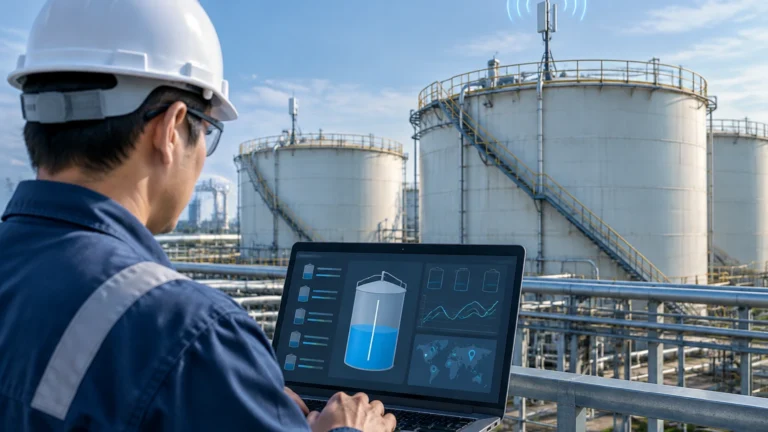
Epri Conference 2026
Epri Conference 2026
As the power generation and utility sectors move toward a more digitized and efficient future, the upcoming Epri Conference 2026 stands as a pivotal event for industry professionals. The Electric Power Research Institute (EPRI) continues to drive innovation in grid modernization, decarbonization, and operational excellence. For engineers and plant managers, the conference highlights a critical reality: the success of advanced power systems depends heavily on the accuracy and reliability of field instrumentation, particularly level measurement technologies.
In the context of the Epri Conference 2026, the focus on "Digital Twins" and "Autonomous Operations" requires high-fidelity data from the plant floor. Level meters—ranging from radar and ultrasonic sensors to hydrostatic transmitters—provide the primary data points necessary for managing cooling water, fuel storage, boiler feedwater, and chemical treatment processes. This guide explores the technical principles of these instruments and provides a framework for selecting the right technology for power and industrial applications.
Core Principles of Level Measurement
Before selecting an instrument for a power plant or industrial facility, it is essential to understand the physics behind the measurement. Different technologies interact with the process media and environment in distinct ways.
Radar Level Measurement (ToF)
Radar level meters operate on the Time-of-Flight (ToF) principle. The sensor emits high-frequency microwave pulses (typically in the 26GHz or 80GHz range). These pulses travel at the speed of light, reflect off the surface of the medium, and return to the sensor. The distance is calculated based on the time interval between emission and reception.
* Non-Contact Radar: Ideal for corrosive or high-temperature liquids where the sensor should not touch the media.
* Guided Wave Radar (GWR): Uses a probe to guide the microwave signal. This is highly effective for low dielectric constants or internal obstructions where a free-space signal might be lost.
Ultrasonic Level Sensors
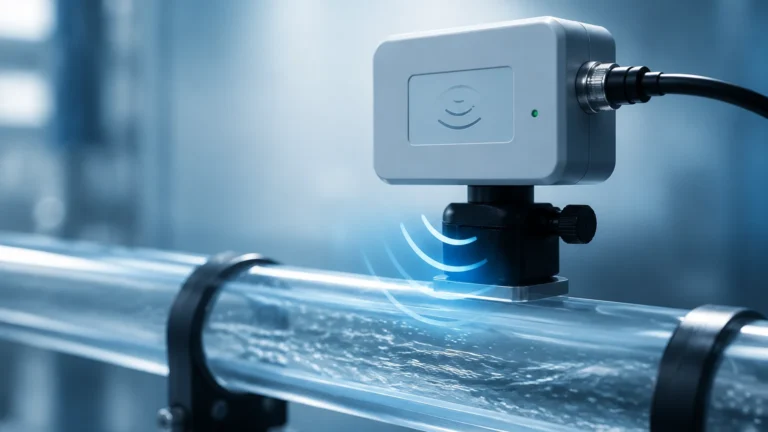
Ultrasonic sensors also use the ToF principle but utilize sound waves instead of electromagnetic waves. A transducer emits an ultrasonic pulse that reflects off the liquid surface. Because sound speed is affected by air temperature, these sensors usually include integrated temperature compensation.
Hydrostatic Level Transmitters
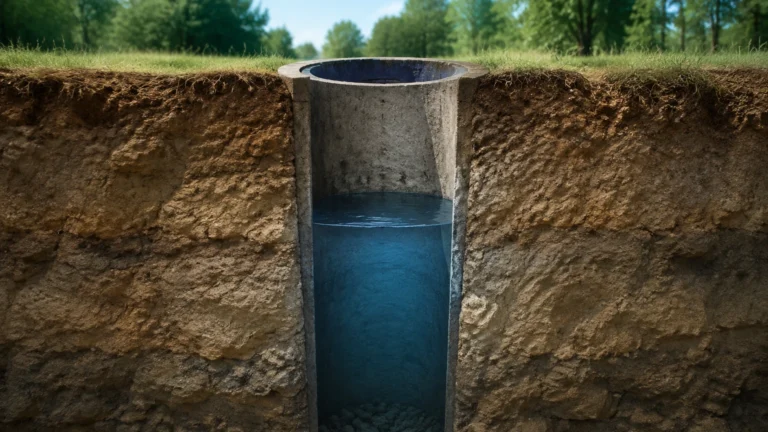
Hydrostatic measurement is based on the principle that the pressure at a specific depth in a liquid is proportional to the height of the liquid column above it. The formula used is $P = \rho \cdot g \cdot h$, where $P$ is pressure, $\rho$ is the density of the liquid, $g$ is gravity, and $h$ is the height. This technology is robust and widely used for deep wells and vented tanks.
Magnetic Level Gauges
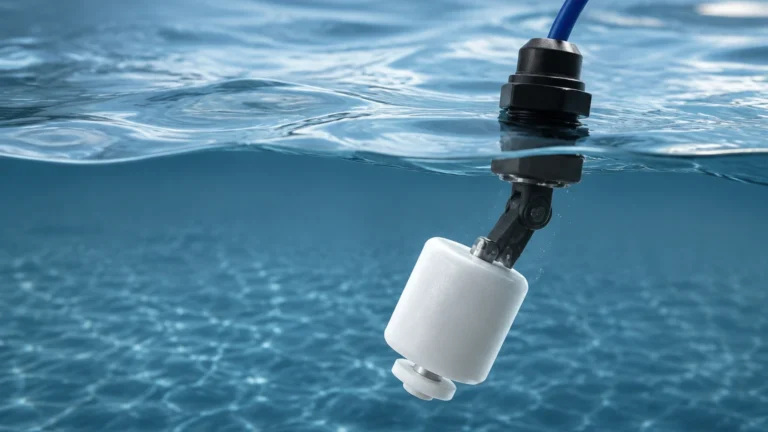
Magnetic level gauges utilize a float containing a permanent magnet. As the liquid level changes, the float moves a series of magnetic flags or a transmitter outside the chamber. This provides a clear visual indication and a secondary electronic signal without the risk of glass breakage associated with traditional sight glasses.
Industrial Applications and the Epri Conference 2026 Themes
The discussions at the Epri Conference 2026 are expected to center on plant longevity and the integration of renewable energy. These themes directly influence how level measurement is deployed.
Cooling Tower Management
In thermal power plants, cooling towers require precise level control to prevent pump cavitation and ensure efficient heat exchange. Ultrasonic sensors are often preferred here due to their cost-effectiveness in open-air water basins. However, in areas with significant steam or vapor, 80GHz radar is becoming the standard to ensure signal penetration.
Boiler Feedwater and Steam Drums
High-pressure and high-temperature environments are common in power generation. For steam drum level measurement, magnetic level gauges with high-pressure ratings or guided wave radar with steam compensation are critical. These instruments must withstand temperatures exceeding $300^{\circ}C$ ($572^{\circ}F$) and pressures up to $100\text{ bar}$ ($1450\text{ psi}$).
Chemical and Wastewater Treatment
Power plants utilize various chemicals for water demineralization and flue gas desulfurization. Level switches and hydrostatic transmitters with specialized diaphragm materials (such as Tantalum or PTFE) are necessary to resist corrosion in these harsh chemical tanks.
Technical Selection Matrix
Choosing the correct instrument requires a comparison of technical capabilities against process requirements. The following table provides a general reference for selection.
| Technology | Accuracy | Max Range | Media Type | Key Advantage |
| :— | :— | :— | :— | :— |
| Radar (80GHz) | $\pm 1\text{ mm}$ | Up to $120\text{ m}$ | Liquids/Solids | Unaffected by vapor/dust |
| Ultrasonic | $\pm 0.25\%$ | Up to $30\text{ m}$ | Liquids | Cost-effective, non-contact |
| Hydrostatic | $\pm 0.1\%$ | Up to $200\text{ m}$ | Liquids | Excellent for deep wells |
| Magnetic Gauge | $\pm 5\text{ mm}$ | Custom | Liquids | Visual local indication |
| Level Switch | N/A | Point Level | Liquids/Solids | Overfill protection |
For comprehensive technical specifications and to explore the full range of industrial sensors, visit the Main Page.
Installation Considerations
Even the most advanced level meter will fail if installed incorrectly. Engineers preparing for the infrastructure upgrades discussed at the Epri Conference 2026 should adhere to the following installation guidelines:
1. Blocking Distance (Dead Zone): All ToF sensors (radar and ultrasonic) have a minimum distance near the sensor where measurements cannot be taken. Ensure the maximum liquid level does not enter this zone.
2. Nozzle Geometry: For radar installations, the nozzle height and diameter must be optimized to prevent internal reflections. A taller nozzle may require a horn antenna or a specific beam angle adjustment.
3. Turbulence and Foam: In tanks with heavy agitation or foam, hydrostatic transmitters or guided wave radar are often more reliable than non-contact ultrasonic sensors, as foam can absorb sound waves.
4. Stilling Wells: If the liquid surface is turbulent, installing the sensor inside a stilling well or bypass chamber can stabilize the reading and protect the instrument.

Limitations and Common Risks
While modern instrumentation is highly reliable, certain environmental factors can introduce risks:
* Dielectric Constant (dk): Radar signals rely on the dielectric difference between the air and the medium. Liquids with a very low dk (like certain oils or liquefied gases) may reflect a weak signal, necessitating guided wave radar.
* Temperature Shifting: In hydrostatic measurement, if the liquid density changes significantly due to temperature fluctuations, the level reading will drift unless density compensation is applied via a secondary temperature sensor.
* Signal Interference: In large metal tanks, internal structures like ladders, agitators, or heating coils can create "false echoes." Modern radar units use software-based false signal suppression to map out these obstructions.
Preparing for the Future: Epri Conference 2026 Insights
The Epri Conference 2026 will likely emphasize the role of IIoT (Industrial Internet of Things) in level measurement. Modern level transmitters are no longer just 4-20mA devices; they now support HART, Modbus, and Profibus protocols, allowing for remote diagnostics and predictive maintenance. This shift reduces the need for manual tank gauging and improves personnel safety by keeping workers away from hazardous areas.
When evaluating new projects or retrofits, confirm that the selected instruments are compatible with the plant's digital architecture. The move toward "Smart Power Plants" means that level data will be integrated into broader asset management systems to optimize chemical dosing and water usage.
Frequently Asked Questions (FAQ)
Q: Can radar level meters work in a vacuum?
A: Yes. Unlike ultrasonic sensors, which require a medium (air) to transmit sound waves, radar uses electromagnetic waves that can travel through a vacuum, making them ideal for vacuum distillation columns.
Q: How often should hydrostatic level transmitters be calibrated?
A: Calibration frequency depends on the stability of the media and the criticality of the process. In standard water applications, an annual check is typical. However, in corrosive environments where diaphragm coating or scaling may occur, bi-annual inspections are recommended.
Q: What is the benefit of 80GHz radar over 26GHz radar?
A: 80GHz radar has a much narrower beam angle. This allows it to avoid internal tank obstructions more easily and provides better performance in small tanks or through narrow nozzles.
Q: Is ultrasonic measurement suitable for fuel tanks?
A: Generally, no. Fuel vapors can change the speed of sound, leading to inaccuracies. Furthermore, many fuels have low conductivity or specific safety requirements where explosion-proof radar or magnetic gauges are more appropriate.
By staying informed on the latest technological advancements and participating in forums like the Epri Conference 2026, industrial professionals can ensure their facilities remain at the forefront of efficiency and safety. Selecting the right level measurement solution is a foundational step in that journey.