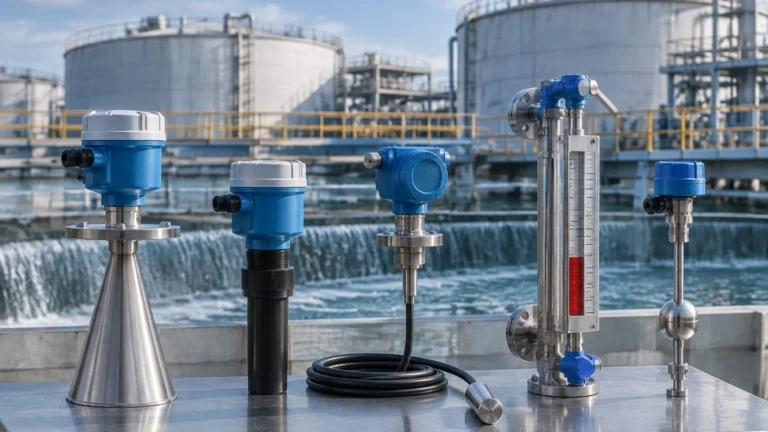
Remote Tank Monitors
Remote Tank Monitors
In modern industrial environments, the ability to monitor fluid levels from a distance is no longer a luxury but a fundamental requirement for operational efficiency, safety, and inventory management. Remote tank monitors integrate advanced sensing technologies with telemetric communication to provide real-time data to operators, regardless of their physical location. Whether managing a single chemical storage unit or a vast network of water treatment facilities, understanding the underlying principles and selection criteria for these systems is essential for engineering and procurement teams.
Industrial level measurement has evolved from simple mechanical floats to sophisticated digital systems. Today, remote tank monitors utilize a variety of physical principles—ranging from electromagnetic waves to hydrostatic pressure—to convert the physical presence of a liquid or solid into a digital signal that can be transmitted via cellular, satellite, or local industrial networks.
Core Measurement Principles in Remote Level Sensing
Before selecting a remote monitoring solution, it is vital to understand how the sensor interacts with the medium. The choice of technology impacts the accuracy, reliability, and maintenance requirements of the system.
Radar Level Measurement (Non-Contact)
Radar level meters operate on the Time-of-Flight (ToF) principle. The device emits high-frequency microwave pulses (typically in the 26 GHz or 80 GHz range) toward the surface of the material. These pulses are reflected back to the sensor. By measuring the time interval between emission and reception, the system calculates the distance to the product surface.
Because microwaves travel at the speed of light and are largely unaffected by air temperature, pressure, or dust, radar is considered one of the most reliable methods for remote tank monitors in challenging environments. It is particularly effective for volatile chemicals or liquids with varying vapor pressures.
Ultrasonic Level Measurement
Ultrasonic sensors also use the ToF principle but utilize sound waves instead of electromagnetic waves. The sensor emits an ultrasonic pulse (usually between 20 kHz and 200 kHz) that reflects off the liquid surface.
While cost-effective and easy to install, ultrasonic measurement is sensitive to the medium through which the sound travels. Changes in air temperature, heavy foam on the liquid surface, or high-pressure environments can alter the speed of sound or dissipate the signal, leading to inaccuracies. Consequently, these are best suited for stable environments like water storage or wastewater sumps.
Hydrostatic Pressure Measurement
Hydrostatic level transmitters measure the pressure exerted by a liquid column at the bottom of a tank. According to the principle of hydrostatics, the pressure is directly proportional to the height of the liquid and its specific gravity ($P = \rho \cdot g \cdot h$).
For remote monitoring, submersible pressure transducers are often used. These are lowered into the tank and provide a continuous 4-20mA or digital signal. This method is highly reliable for deep wells and vented tanks where the liquid density remains constant.
Magnetic Level Gauges and Switches
Magnetic level gauges utilize a float containing a permanent magnet that moves with the liquid level inside a bypass chamber. This motion is coupled with an external indicator or a reed-switch transmitter. For remote applications, a magnetostrictive transmitter is often attached to the gauge to provide a high-precision electrical output. This technology is preferred for high-pressure and high-temperature applications where direct contact with the process fluid must be managed through a robust physical barrier.
Key Components of an Industrial Remote Monitoring System
A complete remote tank monitoring setup consists of more than just the sensor. To function as a "remote" system, several layers of technology must work in unison:
1. The Primary Sensor: This is the instrument (Radar, Ultrasonic, etc.) that performs the actual measurement.
2. The Transmitter/Controller: This component processes the raw signal from the sensor and converts it into a standardized protocol (such as Modbus RTU, HART, or 4-20mA).
3. Communication Gateway: For remote access, the data must leave the local site. Gateways may use NB-IoT (Narrowband Internet of Things), LoRaWAN, or 4G/5G cellular networks to push data to a cloud server.
4. Data Platform: A web-based interface or mobile app where users can view levels, set alarms, and analyze historical trends.
Technical Selection Criteria for Remote Tank Monitors
Selecting the appropriate instrument requires a detailed analysis of the application. The following table provides a comparison of common technologies used in remote monitoring systems.
| Feature | Radar (Non-Contact) | Ultrasonic | Hydrostatic | Magnetic Gauge |
| :— | :— | :— | :— | :— |
| Typical Range | Up to 30m – 120m | 0.5m to 15m | 1m to 200m | 0.3m to 6m |
| Accuracy | ±2mm to ±5mm | ±0.25% of range | ±0.1% to ±0.5% | ±5mm |
| Pressure Limit | Up to 160 Bar | Atmospheric | Varies by sensor | Up to 320 Bar |
| Temperature Limit | -40°C to +250°C | -40°C to +80°C | -20°C to +80°C | -196°C to +450°C |
| Best Use Case | Corrosive chemicals, high temp | Water tanks, open channels | Deep wells, fuel tanks | High-pressure boilers |
When evaluating remote tank monitors, engineers should prioritize the chemical compatibility of the wetted parts. For instance, a hydrostatic sensor used in a sulfuric acid tank must feature a PVDF or Hastelloy diaphragm to prevent corrosion. For more information on specific instrument specifications and custom industrial solutions, you may visit the Main Page of our technical resource center.
Installation Considerations and Best Practices
The reliability of remote tank monitors is often determined during the installation phase. Even the most advanced radar meter will fail if it is poorly positioned.
Avoiding Obstructions
For non-contact sensors (Radar and Ultrasonic), the "beam angle" is a critical factor. The sensor should be installed away from the tank wall and internal structures like ladders, agitators, or heating coils. If an obstruction is unavoidable, many modern transmitters offer "false echo suppression" software to ignore these static reflections.
Nozzle Geometry
The mounting nozzle should be as short as possible. If the nozzle is too long or narrow, it can create internal reflections that interfere with the signal near the top of the tank, creating a "dead zone" where the sensor cannot measure accurately.
Environmental Protection
Remote monitors are often installed outdoors. Sensors should be rated at least IP67 or IP68 for moisture protection. Additionally, surge protection is recommended for wired systems to prevent damage from lightning strikes, which are a common cause of failure in remote tank farms.
Power Management
In remote locations without mains power, battery-powered or solar-powered monitors are used. It is essential to calculate the power budget based on the frequency of data transmission. For example, a sensor transmitting data every 15 minutes will deplete its battery significantly faster than one transmitting once every 24 hours.

Limitations and Operational Challenges
While remote tank monitors offer significant advantages, they are not without limitations. Understanding these challenges prevents unexpected downtime.
* Signal Interference: In cellular-based remote systems, signal strength can fluctuate due to weather or new construction. High-gain antennas or satellite fallbacks may be required in extremely remote areas.
* Surface Conditions: Heavy foam, turbulence, or dust can attenuate signals for non-contact sensors. In such cases, a guided wave radar or a hydrostatic transmitter may be a more robust choice.
* Maintenance of Wetted Parts: Hydrostatic and contact-based sensors can suffer from "bridging" or buildup of solids, which can lead to offset errors. Regular cleaning cycles must be factored into the operational plan.
* Data Security: As soon as tank data is transmitted to the cloud, it becomes a digital asset. Utilizing encrypted protocols and secure APNs (Access Point Names) is necessary to protect industrial data from unauthorized access.
Frequently Asked Questions (FAQs)
Q: Can remote tank monitors be used for solids like grain or cement?
A: Yes, but high-frequency radar (80 GHz) is typically required. Solids do not reflect waves as uniformly as liquids, and the angle of repose must be considered during installation to ensure the signal returns to the sensor.
Q: How often do these sensors need calibration?
A: This depends on the technology. Radar and ultrasonic sensors are generally "drift-free" and may only need a functional check once a year. Hydrostatic sensors may require more frequent zero-point calibration due to diaphragm aging or changes in liquid density.
Q: What is the maximum distance for a remote monitor?
A: If using cellular or satellite communication, the distance is virtually unlimited. For local wireless protocols like LoRaWAN, the range is typically 2km to 15km depending on the terrain and gateway height.
Q: Are these systems compatible with existing PLC/SCADA systems?
A: Most industrial remote monitors provide standard outputs like 4-20mA or Modbus, making them easily integrable with existing PLC (Programmable Logic Controller) architectures. Many also offer API access for integration into modern ERP software.
Conclusion
Implementing remote tank monitors is a strategic move for any industrial operation looking to reduce manual inspections and optimize logistics. By understanding the physics of measurement—whether it be the precision of radar or the simplicity of hydrostatic pressure—and accounting for the realities of remote data transmission, organizations can build a resilient monitoring infrastructure. For a comprehensive review of available hardware and engineering support for your specific application, please refer to the Main Page to explore our full range of level measurement solutions.