Low Pressure Transmitters
Low Pressure Transmitters
In the landscape of industrial automation and process control, the ability to measure subtle changes in pressure is critical for maintaining safety, efficiency, and product quality. Low pressure transmitters are specialized instruments designed to detect and communicate pressure values that fall at the lower end of the spectrum—often ranging from a few pascals (Pa) to several hundred millibars (mbar). While high-pressure systems focus on structural integrity and power, low-pressure applications are frequently concerned with delicate balances, such as cleanroom pressurization, draft control in furnaces, and hydrostatic level measurement in shallow tanks.
For engineers and procurement specialists, selecting the right low pressure transmitters requires a deep understanding of the underlying sensing technologies, the environmental conditions of the installation site, and the specific requirements of the media being measured. This guide provides a technical overview of these instruments, their principles of operation, and practical advice for industrial implementation.
Understanding Low Pressure Measurement Principles
Low pressure transmitters convert mechanical force into an electrical signal, typically 4-20mA, 0-10V, or digital protocols like Modbus or HART. Because the force exerted by low pressure is minimal, the sensing elements must be exceptionally sensitive and responsive. Several primary technologies are utilized to achieve this sensitivity.
Piezoresistive Sensing
This is one of the most common technologies used in industrial transmitters. It utilizes a silicon diaphragm with integrated resistors. When pressure is applied, the diaphragm deforms slightly, changing the electrical resistance of the resistors (the piezoresistive effect). For low-pressure applications, the silicon diaphragm is etched to be extremely thin, allowing it to respond to pressures as low as 10 mbar (0.15 psi). This technology offers high accuracy and long-term stability but often requires sophisticated temperature compensation due to silicon's sensitivity to thermal changes.
Capacitive Sensing
Capacitive pressure sensors measure the change in electrical capacitance between a flexible diaphragm and a fixed metal plate. As pressure moves the diaphragm, the distance between the plates changes, altering the capacitance. Capacitive sensors are inherently robust and are particularly effective for very low pressure ranges (down to 1 mbar or 0.4 inH2O). They are less susceptible to environmental noise and offer excellent overpressure protection, which is vital in systems where surges might occur.
Differential Pressure (DP) Principles
Many low pressure transmitters are configured to measure differential pressure—the difference between two pressure points. This is essential for monitoring filter health or air flow in HVAC systems. In level measurement, a DP transmitter can measure the pressure at the bottom of a tank relative to the top, effectively canceling out the headspace pressure to provide an accurate liquid level reading based on hydrostatic head.
Types of Low Pressure Transmitters in Industrial Processes
Depending on the reference point used for measurement, low pressure transmitters are categorized into three main types:
1. Gauge Pressure Transmitters: These measure pressure relative to the local atmospheric pressure. They are used in open-vented tanks and general duct pressure monitoring.
2. Absolute Pressure Transmitters: These measure pressure relative to a perfect vacuum. These are less common in "low pressure" industrial air applications but are critical in vacuum distillation and specific chemical reactions where atmospheric fluctuations would interfere with the process data.
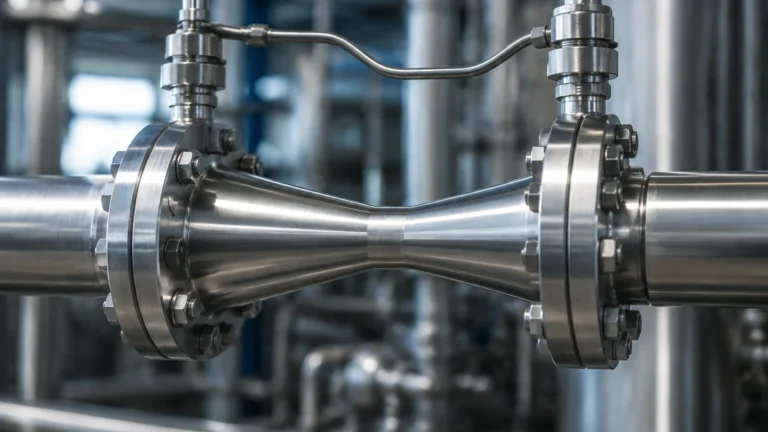
3. Differential Pressure Transmitters: These feature two ports (High and Low). They are the industry standard for measuring flow across an orifice plate or monitoring the pressure drop across a HEPA filter.
Key Evaluation Criteria for Selection
When evaluating low pressure transmitters for a specific project, technical specifications must be matched to the application’s demands. Over-specifying can lead to unnecessary costs, while under-specifying can result in frequent failures or inaccurate data.
Measurement Range and Turndown Ratio
It is vital to select a transmitter whose calibrated range closely matches the expected operating pressure. If a transmitter with a 0-100 mbar range is used to measure a 0-5 mbar process, the resolution and accuracy will be significantly degraded. Look for instruments with a high "turndown ratio" (or rangeability), which allows the device to be recalibrated to a narrower span without losing its rated accuracy.
Media Compatibility and Wetted Materials
In the chemical and water treatment industries, the transmitter's diaphragm and housing must withstand corrosive media. While 316L stainless steel is standard, some low-pressure applications involving acids or brackish water may require specialized materials like Hastelloy C, Monel, or Tantalum coatings. For air-only applications, such as HVAC, plastic or brass connections may suffice, but industrial-grade sensors usually favor metallic or ceramic diaphragms for durability.
Accuracy and Total Error Band (TEB)
Accuracy is often stated as a percentage of Full Scale (FS). However, for low pressure transmitters, the Total Error Band is a more meaningful metric. TEB accounts for accuracy, repeatability, hysteresis, and temperature effects over a specific range. In cleanroom environments, an accuracy of ±0.25% FS or better is often required to maintain the strict pressure gradients needed to prevent contamination.
Environmental Protection
Industrial environments are often harsh. Transmitters should have an appropriate Ingress Protection (IP) rating. IP65 is generally sufficient for indoor dust and splash protection, but IP67 or IP68 is necessary for equipment that might be submerged or subjected to high-pressure washdowns. For more information on robust industrial sensing solutions, you can visit the Main Page of our technical resource site.
Installation Best Practices and Considerations
Even the most accurate low pressure transmitter will provide poor data if installed incorrectly. Low-pressure systems are particularly sensitive to installation errors.
* Mounting Position: Gravity can affect the diaphragm of a low-pressure sensor. If a sensor is calibrated in a vertical position but installed horizontally, the weight of the diaphragm itself can cause a "zero shift." Always zero the instrument in its final mounting orientation.
* Impulse Piping: For gas applications, impulse lines should be sloped to allow any condensation to drain away from the sensor. For liquid applications, the lines should be sloped to allow air bubbles to escape back into the process tank.
* Vibration Isolation: Low-pressure diaphragms are sensitive to mechanical vibration. Mount the transmitter on a stable, vibration-free surface rather than directly on a vibrating pump or motor housing.
* Thermal Protection: While most modern transmitters include internal temperature compensation, extreme heat can still cause drift. Use capillary tubes or cooling siphons if the process temperature exceeds the transmitter's operating limit (typically 85°C for standard electronics).

Limitations and Mitigation of Risks
Low pressure transmitters face specific challenges that high-pressure units do not.
1. Overpressure Events:
Because the diaphragms are thin, they are susceptible to damage from pressure spikes. For example, a water hammer in a piping system can easily rupture a low-pressure sensing element. Selecting a transmitter with a high overpressure rating (e.g., 5x or 10x the nominal range) is a critical safety measure.
2. Signal Noise:
At very low pressures, the electrical signal can be small and prone to electromagnetic interference (EMI). Using shielded cables and ensuring proper grounding is essential to maintain signal integrity. In modern facilities, digital outputs like RS485/Modbus are preferred over analog signals to eliminate the risk of voltage drops over long cable runs.
3. Long-term Drift:
All sensors drift over time. In low-pressure applications, a drift of even 1 mbar can represent a significant percentage of the total measurement. Regular calibration cycles—typically every 12 to 24 months—are necessary to ensure the instrument remains within its specified accuracy limits.
Practical Selection Table for Engineers
The following table provides a general guideline for selecting transmitter specifications based on common industrial applications.
| Application | Typical Pressure Range | Recommended Technology | Key Requirement |
| :— | :— | :— | :— |
| Cleanroom Monitoring | 0 to 60 Pa (0.6 mbar) | Capacitive | High precision, long-term stability |
| Tank Level (Water) | 0 to 200 mbar (approx. 2m) | Piezoresistive | IP68 rating, chemical compatibility |
| Filter Monitoring | 0 to 10 mbar | Differential Pressure | Robustness against dust/clogging |
| Furnace Draft | -5 to +5 mbar | Capacitive / DP | Temperature compensation, bidirectional |
| Vacuum Distillation | 0 to 50 mbar (Absolute) | Absolute Piezoresistive | Hermetic sealing, vacuum reference |
Frequently Asked Questions (FAQ)
Q: Can I use a high-pressure transmitter for a low-pressure application if I recalibrate it?
No, this is generally not recommended. While some transmitters have high turndown ratios, a sensor designed for 0-10 bar will have a diaphragm that is too stiff to accurately resolve changes in the 0-10 mbar range. The signal-to-noise ratio will be too low, leading to unstable and inaccurate readings.
Q: What is the difference between "Dry Air Only" and "All Media" transmitters?
Dry air transmitters often use silicon sensors without a protective isolating diaphragm. These are cost-effective for HVAC but will be destroyed if they come into contact with liquids or corrosive gases. "All media" transmitters use a stainless steel or ceramic isolating diaphragm to protect the internal sensor.
Q: How do I prevent condensation from affecting my low pressure transmitter in outdoor installations?
In gas or air applications, use a "pigtail" siphon or an upward-sloping impulse line to ensure that moisture does not pool against the diaphragm. For the electronics, ensure the cable gland is tightened and use a vent plug with a GORE-TEX® or similar breathable membrane to prevent internal pressure buildup while blocking moisture.
Q: Is HART protocol necessary for low pressure transmitters?
While not strictly necessary for basic measurement, HART (Highway Addressable Remote Transducer) is highly beneficial for low-pressure units. It allows for remote zeroing and calibration, which is much safer and more efficient than manual adjustment at the sensor location, especially in hard-to-reach areas.
Conclusion
Low pressure transmitters are precision instruments that serve as the eyes of an industrial control system in delicate environments. Whether monitoring the subtle pressure gradients of a pharmaceutical cleanroom or the hydrostatic level of a chemical storage tank, the choice of transmitter impacts both safety and operational costs. By prioritizing sensing technology, material compatibility, and proper installation techniques, engineers can ensure reliable performance over the long term.
For those seeking comprehensive solutions in level and pressure measurement, including radar, ultrasonic, and hydrostatic technologies, exploring the Main Page of a specialized manufacturer like Welk provides access to the technical data and product support required for complex industrial projects. Accurate measurement begins with selecting the right tool for the specific pressures of your process.